Think Forward.

FRANKENSTEIN - Letter 2[1/2] 5473

To Mrs. Saville, England. Archangel, 28th March, 17—. How slowly the time passes here, encompassed as I am by frost and snow! Yet a second step is taken towards my enterprise. I have hired a vessel and am occupied in collecting my sailors; those whom I have already engaged appear to be men on whom I can depend and are certainly possessed of dauntless courage. But I have one want which I have never yet been able to satisfy, and the absence of the object of which I now feel as a most severe evil, I have no friend, Margaret: when I am glowing with the enthusiasm of success, there will be none to participate my joy; if I am assailed by disappointment, no one will endeavour to sustain me in dejection. I shall commit my thoughts to paper, it is true; but that is a poor medium for the communication of feeling. I desire the company of a man who could sympathise with me, whose eyes would reply to mine. You may deem me romantic, my dear sister, but I bitterly feel the want of a friend. I have no one near me, gentle yet courageous, possessed of a cultivated as well as of a capacious mind, whose tastes are like my own, to approve or amend my plans. How would such a friend repair the faults of your poor brother! I am too ardent in execution and too impatient of difficulties. But it is a still greater evil to me that I am self-educated: for the first fourteen years of my life I ran wild on a common and read nothing but our Uncle Thomas’ books of voyages. At that age I became acquainted with the celebrated poets of our own country; but it was only when it had ceased to be in my power to derive its most important benefits from such a conviction that I perceived the necessity of becoming acquainted with more languages than that of my native country. Now I am twenty-eight and am in reality more illiterate than many schoolboys of fifteen. It is true that I have thought more and that my daydreams are more extended and magnificent, but they want (as the painters call it) keeping; and I greatly need a friend who would have sense enough not to despise me as romantic, and affection enough for me to endeavour to regulate my mind. Well, these are useless complaints; I shall certainly find no friend on the wide ocean, nor even here in Archangel, among merchants and seamen. Yet some feelings, unallied to the dross of human nature, beat even in these rugged bosoms. My lieutenant, for instance, is a man of wonderful courage and enterprise; he is madly desirous of glory, or rather, to word my phrase more characteristically, of advancement in his profession. He is an Englishman, and in the midst of national and professional prejudices, unsoftened by cultivation, retains some of the noblest endowments of humanity. I first became acquainted with him on board a whale vessel; finding that he was unemployed in this city, I easily engaged him to assist in my enterprise. The master is a person of an excellent disposition and is remarkable in the ship for his gentleness and the mildness of his discipline. This circumstance, added to his well-known integrity and dauntless courage, made me very desirous to engage him. A youth passed in solitude, my best years spent under your gentle and feminine fosterage, has so refined the groundwork of my character that I cannot overcome an intense distaste to the usual brutality exercised on board ship: I have never believed it to be necessary, and when I heard of a mariner equally noted for his kindliness of heart and the respect and obedience paid to him by his crew, I felt myself peculiarly fortunate in being able to secure his services. I heard of him first in rather a romantic manner, from a lady who owes to him the happiness of her life. This, briefly, is his story. Some years ago he loved a young Russian lady of moderate fortune, and having amassed a considerable sum in prize-money, the father of the girl consented to the match. He saw his mistress once before the destined ceremony; but she was bathed in tears, and throwing herself at his feet, entreated him to spare her, confessing at the same time that she loved another, but that he was poor, and that her father would never consent to the union. My generous friend reassured the suppliant, and on being informed of the name of her lover, instantly abandoned his pursuit. He had already bought a farm with his money, on which he had designed to pass the remainder of his life; but he bestowed the whole on his rival, together with the remains of his prize-money to purchase stock, and then himself solicited the young woman’s father to consent to her marriage with her lover. But the old man decidedly refused, thinking himself bound in honour to my friend, who, when he found the father inexorable, quitted his country, nor returned until he heard that his former mistress was married according to her inclinations. “What a noble fellow!” you will exclaim. He is so; but then he is wholly uneducated: he is as silent as a Turk, and a kind of ignorant carelessness attends him, which, while it renders his conduct the more astonishing, detracts from the interest and sympathy which otherwise he would command. Yet do not suppose, because I complain a little or because I can conceive a consolation for my toils which I may never know, that I am wavering in my resolutions. Those are as fixed as fate, and my voyage is only now delayed until the weather shall permit my embarkation. The winter has been dreadfully severe, but the spring promises well, and it is considered as a remarkably early season, so that perhaps I may sail sooner than I expected. I shall do nothing rashly: you know me sufficiently to confide in my prudence and considerateness whenever the safety of others is committed to my care. I cannot describe to you my sensations on the near prospect of my undertaking. It is impossible to communicate to you a conception of the trembling sensation, half pleasurable and half fearful, with which I am preparing to depart. I am going to unexplored regions, to “the land of mist and snow,” but I shall kill no albatross; therefore do not be alarmed for my safety or if I should come back to you as worn and woeful as the “Ancient Mariner.” You will smile at my allusion, but I will disclose a secret. I have often attributed my attachment to, my passionate enthusiasm for, the dangerous mysteries of ocean to that production of the most imaginative of modern poets. There is something at work in my soul which I do not understand. I am practically industrious—painstaking, a workman to execute with perseverance and labour—but besides this there is a love for the marvellous, a belief in the marvellous, intertwined in all my projects, which hurries me out of the common pathways of men, even to the wild sea and unvisited regions I am about to explore.

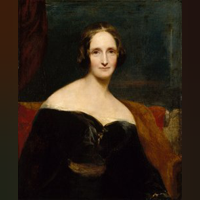
Bluwr X Commons: Mary Shelley Bluwr X Commons: Mary Shelley

Bluwr X Commons: Mary Shelley

Mary Shelley (30 August 1797 – 1 February 1851) was an English novelist best know for her novel "Frankenstein; or, The Modern Prometheus" published (1818). This early example of science fiction literature remains highly relevant today.


100

0

THE ENCHIRIDION - I 5288

There are things which are within our power, and there are things which are beyond our power. Within our power are opinion, aim, desire, aversion, and, in one word, whatever affairs are our own. Beyond our power are body, property, reputation, office, and, in one word, whatever are not properly our own affairs. Now the things within our power are by nature free, unrestricted, unhindered; but those beyond our power are weak, dependent, restricted, alien. Remember, then, that if you attribute freedom to things by nature dependent and take what belongs to others for your own, you will be hindered, you will lament, you will be disturbed, you will find fault both with gods and men. But if you take for your own only that which is your own and view what belongs to others just as it really is, then no one will ever compel you, no one will restrict you; you will find fault with no one, you will accuse no one, you will do nothing against your will; no one will hurt you, you will not have an enemy, nor will you suffer any harm. Aiming, therefore, at such great things, remember that you must not allow yourself any inclination, however slight, toward the attainment of the others; but that you must entirely quit some of them, and for the present postpone the rest. But if you would have these, and possess power and wealth likewise, you may miss the latter in seeking the former; and you will certainly fail of that by which alone happiness and freedom are procured. Seek at once, therefore, to be able to say to every unpleasing semblance, “You are but a semblance and by no means the real thing.” And then examine it by those rules which you have; and first and chiefly by this: whether it concerns the things which are within our own power or those which are not; and if it concerns anything beyond our power, be prepared to say that it is nothing to you.

THE ADVENTURES OF TOM SAWYER - PREFACE 5487

Most of the adventures recorded in this book really occurred; one or two were experiences of my own, the rest those of boys who were schoolmates of mine. Huck Finn is drawn from life; Tom Sawyer also, but not from an individual—he is a combination of the characteristics of three boys whom I knew, and therefore belongs to the composite order of architecture. The odd superstitions touched upon were all prevalent among children and slaves in the West at the period of this story—that is to say, thirty or forty years ago. Although my book is intended mainly for the entertainment of boys and girls, I hope it will not be shunned by men and women on that account, for part of my plan has been to try to pleasantly remind adults of what they once were themselves, and of how they felt and thought and talked, and what queer enterprises they sometimes engaged in. THE AUTHOR. HARTFORD, 1876.

THE MEDITATIONS - Book I.[1/3] 5629

1. I learned from my grandfather, Verus, to use good manners, and to put restraint on anger. 2. In the famous memory of my father I had a pattern of modesty and manliness. 3. Of my mother I learned to be pious and generous; to keep myself not only from evil deeds, but even from evil thoughts; and to live with a simplicity which is far from customary among the rich. 4. I owe it to my great-grandfather that I did not attend public lectures and discussions, but had good and able teachers at home; and I owe him also the knowledge that for things of this nature a man should count no expense too great. 5. My tutor taught me not to favour either green or blue at the chariot races, nor, in the contests of gladiators, to be a supporter either of light or heavy armed. He taught me also to endure labour; not to need many things; to serve myself without troubling others; not to intermeddle in the affairs of others, and not easily to listen to slanders against them. 6. Of Diognetus I had the lesson not to busy myself about vain things; not to credit the great professions of such as pretend to work wonders, or of sorcerers about their charms, and their expelling of Demons and the like; not to keep quails (for fighting or divination), nor to run after such things; to suffer freedom of speech in others, and to apply myself heartily to philosophy. Him also I must thank for my hearing first Bacchius, then Tandasis and Marcianus; that I wrote dialogues in my youth, and took a liking to the philosopher’s pallet and skins, and to the other things which, by the Grecian discipline, belong to that profession. 7. To Rusticus I owe my first apprehensions that my nature needed reform and cure; and that I did not fall into the ambition of the common Sophists, either by composing speculative writings or by declaiming harangues of exhortation in public; further, that I never strove to be admired by ostentation of great patience in an ascetic life, or by display of activity and application; that I gave over the study of rhetoric, poetry, and the graces of language; and that I did not pace my house in my senatorial robes, or practise any similar affectation. I observed also the simplicity of style in his letters, particularly in that which he wrote to my mother from Sinuessa. I learned from him to be easily appeased, and to be readily reconciled with those who had displeased me or given cause of offence, so soon as they inclined to make their peace; to read with care; not to rest satisfied with a slight and superficial knowledge; nor quickly to assent to great talkers. I have him to thank that I met with the discourses of Epictetus, which he furnished me from his own library. 8. From Apollonius I learned true liberty, and tenacity of purpose; to regard nothing else, even in the smallest degree, but reason always; and always to remain unaltered in the agonies of pain, in the losses of children, or in long diseases. He afforded me a living example of how the same man can, upon occasion, be most yielding and most inflexible. He was patient in exposition; and, as might well be seen, esteemed his fine skill and ability in teaching others the principles of philosophy as the least of his endowments. It was from him that I learned how to receive from friends what are thought favours without seeming humbled by the giver or insensible to the gift. 9. Sextus was my pattern of a benign temper, and his family the model of a household governed by true paternal affection, and a steadfast purpose of living according to nature. Here I could learn to be grave without affectation, to observe sagaciously the several dispositions and inclinations of my friends, to tolerate the ignorant and those who follow current opinions without examination. His conversation showed how a man may accommodate himself to all men and to all companies; for though companionship with him was sweeter and more pleasing than any sort of flattery, yet he was at the same time highly respected and reverenced. No man was ever more happy than he in comprehending, finding out, and arranging in exact order the great maxims necessary for the conduct of life. His example taught me to suppress even the least appearance of anger or any other passion; but still, with all this perfect tranquillity, to possess the tenderest and most affectionate heart; to be apt to approve others yet without noise; to have much learning and little ostentation. 10. I learned from Alexander the Grammarian to avoid censuring others, to refrain from flouting them for a barbarism, solecism, or any false pronunciation. Rather was I dexterously to pronounce the words rightly in my answer, confining approval or objection to the matter itself, and avoiding discussion of the expression, or to use some other form of courteous suggestion. 11. Fronto made me sensible how much of envy, deceit and hypocrisy surrounds princes; and that generally those whom we account nobly born have somehow less natural affection. 12. I learned from Alexander the Platonist not often nor without great necessity to say, or write to any man in a letter, that I am not at leisure; nor thus, under pretext of urgent affairs, to make a practice of excusing myself from the duties which, according to our various ties, we owe to those with whom we live. 13. Of Catulus I learned not to condemn any friend’s expostulation even though it were unjust, but to try to recall him to his former disposition; to stint no praise in speaking of my masters, as is recounted of Domitius and Athenodorus; and to love my children with true affection. 14. Of Severus, my brother, I learned to love my kinsmen, to love truth, to love justice. Through him I came to know Thrasea, Helvidius, Cato, Dion, and Brutus. He gave me my first conception of a Commonwealth founded upon equitable laws and administered with equality of right; and of a Monarchy whose chief concern is the freedom of its subjects. Of him I learned likewise a constant and harmonious devotion to Philosophy; to be ready to do good, to be generous with all my heart. He taught me to be of good hope and trustful of the affection of my friends. I observed in him candour in declaring what he condemned in the conduct of others; and so frank and open was his behaviour, that his friends might easily see without the trouble of conjecture what he liked or disliked.