Think Forward.

CAN2025: Pourquoi le Maroc devrait remporter son quart devant le Cameroun... 1401

Le quart de finale de la Coupe d'Afrique des Nations 2025 entre le Maroc et le Cameroun, programmé pour le 9 janvier 2026 au Stade Prince Moulay Abdellah de Rabat, s'annonce comme le choc le plus brûlant des quarts. Une rencontre au gout de la revanche d'une autre CAN, celle de 1988. Mais nous sommes en 2025 et beaucoup d'eau a coulé sous les ponts depuis. Pays hôte invaincu, les Lions de l'Atlas affichent une maîtrise totale avec 7 buts marqués pour seulement 1 encaissé sur penalty en quatre matchs, surpassant les Lions Indomptables et leurs 6 buts pour 3 encaissés. Cette supériorité chiffrée, portée par l'étincelle de Brahim Díaz, l'indomptabilité d'El Kaabi, un milieu récupérateur à toute épreuve, une défense rugueuse et l'avantage du public, positionne le Maroc comme grand favori d'un duel technicotactique intense. Même s'il n'est pas jugé impeccable par certains, le parcours du Maroc l'a été au plan de l'efficacité malgré la perte des deux pièces maitresses que sont Saiss et plus encore, du meneur de jeu Azzedine Ounahi. Les Lions de l'Atlas ont survolé le Groupe A avec 7 points : une victoire 2-0 clinique contre les Comores, un festival offensif 3-0 face à la Zambie et un nul que l'on peut comprendre stratégique 1-1 devant le Mali, prouvant une polyvalence rare. En huitièmes, un 1-0 maîtrisé contre la Tanzanie a confirmé leur solidité, avec zéro but encaissé lors de trois de leurs quatre sorties. Cette défense de fer, menée par un trio Yassine Bounou, Nayef Aguerd et Mazraoui, soulagé par unEl Aynaoui infatigable, n'a cédé qu'une fois sur penalty face au Mali. Au total, une différence de buts de +6 qui évoque la discipline d'une équipe en quête de sacre continental à domicile. Et encore Hakimi ne faisait que revenir lors de la dernière rencontre disputée. Cette fois ci pour les quarts, ils auront en face un Cameroun solide mais vulnérable par ailleurs par la jeunesse de l'équipe et le caractère décousu sur de nombreuses phases de jeu, lors de leurs prestations jusqu'ici. Cependant leur marge de progression est énorme et la métamorphose et montée en gamme, peut justement se produire là en quart de finale. Les Lions Indomptables ont arraché la première place du Groupe F avec également 7 points: un 1-0 précieux contre le Gabon, un 1-1 accroché face à la Côte d'Ivoire et un 2-1 laborieux devant le Mozambique. Les deux buts encaissés en poules ont déjà alerté sur les défaillances défensives du collectif. Leur qualification en quarts avec 2-1 contre l'Afrique du Sud en huitièmes, a révélé du caractère, mais aussi des failles : trois buts concédés en tout, dont un sur erreur individuelle face aux Bafana Bafana. Moins tranchants devant avec seulement 6 buts, ils dépendent d'un réalisme opportuniste, loin de la fluidité marocaine. Le Maroc lui profite d'un Brahim Díaz, maestro en pleine lumière. Il vit sans doute son âge d'or en CAN : 4 buts en 4 matchs, un record historique pour un Marocain en une phase finale de CAN, dont le bijou à la 64e contre la Tanzanie. Il répond clairement à son entraineur de club qui semble ne pas savoir comment profiter de son génie. Premier Lion à claquer un but par match consécutif, le Madrilène excelle dans les espaces réduits, avec Ayoub El Kaabi (3 buts) en lieutenant fidèle et tranchant. Face à une défense camerounaise solide avec André Onana impérial mais hésitant des fois, cette menace individuelle, même de petite taille : 4 tirs cadrés par match en moyenne, pourrait faire basculer un scénario verrouillé, comme lors des huitièmes où ses appels ont déstabilisé les Taïfa Stars. La maîtrise technique globale et la domination du ballon penchent aussi du côté du Maroc qui écrase les statistiques collectives : 2 184 passes réussies, un record absolu, 89% de précision et 71% de possession contre la Tanzanie, un océan de contrôle. Achraf Hakimi, de retour en trombe avec une passe décisive, va surement animer un couloir droit infernal, tandis qu'El Khanouss qui prend à peine ses marques, dicte le tempo au milieu malgré l'absence d'Azzedine Ounahi. A l'inverse, le Cameroun végète à 77% de précision et 43% de possession moyenne, luttant en transitions rapides. Cette asymétrie technique promet un siège prolongé des Lions de l'Atlas sur la surface adverse. Avec un Amrabet en sentinelle pour s'occuper de Anguissa et le tour est joué. D'autres faits et atouts sont également en faveur des Lions de l'Atlas: les facteurs psychologiques et historiques peuvent être décisifs. Hôtes euphoriques, les Marocains surfent sur 23 matchs invaincus et un public en fusion à Rabat, où l'ambiance rappellera la Coupe du Monde 2022. L'historique global sourit au Cameroun avec 6 victoires, 5 nuls, 2 défaites en 13 duels, intouchable en CAN avec 2 victoires et 1 nuls, mais les deux dernières confrontations penchent pour le Maroc : un 1-0 en qualifications de la CAN 2019 et un 4-0 humiliant au CHAN 2020. Il s'agit donc ici d'un bras de fer générationnel sans doute, mais la fraîcheur marocaine avec moins de minutes jouées et l'adaptation parfaite au condition climatique, l'emportent sur l'expérience des Lions Indomptables. Ces éléments conjugués forgent un scénario idéal pour un Maroc conquérant en quête d'une seconde étoile qui se décidera là au sifflet final, au complexe Moulay Abdallah, vendredi aux environs de 22 heures. Si une élimination surprise reste toujours possible dans une compétition aussi serrée que la CAN, le Maroc possède aujourd’hui les signaux statistiques les plus forts pour l’emporter : ✔ Meilleure production offensive globale ✔ Une seule équipe encaissée contre deux pour le Cameroun ✔ Maîtrise collective du ballon et du rythme ✔ Deux buteurs en pleine forme (Díaz et El Kaabi) ✔ L’avantage du terrain et du soutien populaire Ces éléments forment une base objective pour plaider en faveur d’un succès marocain dans ce quart de finale.

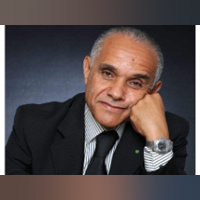
Aziz Daouda Aziz Daouda

Aziz Daouda

Directeur Technique et du Développement de la Confédération Africaine d'Athlétisme. Passionné du Maroc, passionné d'Afrique. Concerné par ce qui se passe, formulant mon point de vue quand j'en ai un. Humaniste, j'essaye de l'être, humain je veux l'être. Mon histoire est intimement liée à l'athlétisme marocain et mondial. J'ai eu le privilège de participer à la gloire de mon pays .


9300

33.0

THE ENCHIRIDION - I 5210

There are things which are within our power, and there are things which are beyond our power. Within our power are opinion, aim, desire, aversion, and, in one word, whatever affairs are our own. Beyond our power are body, property, reputation, office, and, in one word, whatever are not properly our own affairs. Now the things within our power are by nature free, unrestricted, unhindered; but those beyond our power are weak, dependent, restricted, alien. Remember, then, that if you attribute freedom to things by nature dependent and take what belongs to others for your own, you will be hindered, you will lament, you will be disturbed, you will find fault both with gods and men. But if you take for your own only that which is your own and view what belongs to others just as it really is, then no one will ever compel you, no one will restrict you; you will find fault with no one, you will accuse no one, you will do nothing against your will; no one will hurt you, you will not have an enemy, nor will you suffer any harm. Aiming, therefore, at such great things, remember that you must not allow yourself any inclination, however slight, toward the attainment of the others; but that you must entirely quit some of them, and for the present postpone the rest. But if you would have these, and possess power and wealth likewise, you may miss the latter in seeking the former; and you will certainly fail of that by which alone happiness and freedom are procured. Seek at once, therefore, to be able to say to every unpleasing semblance, “You are but a semblance and by no means the real thing.” And then examine it by those rules which you have; and first and chiefly by this: whether it concerns the things which are within our own power or those which are not; and if it concerns anything beyond our power, be prepared to say that it is nothing to you.

THE ADVENTURES OF TOM SAWYER - PREFACE 5404

Most of the adventures recorded in this book really occurred; one or two were experiences of my own, the rest those of boys who were schoolmates of mine. Huck Finn is drawn from life; Tom Sawyer also, but not from an individual—he is a combination of the characteristics of three boys whom I knew, and therefore belongs to the composite order of architecture. The odd superstitions touched upon were all prevalent among children and slaves in the West at the period of this story—that is to say, thirty or forty years ago. Although my book is intended mainly for the entertainment of boys and girls, I hope it will not be shunned by men and women on that account, for part of my plan has been to try to pleasantly remind adults of what they once were themselves, and of how they felt and thought and talked, and what queer enterprises they sometimes engaged in. THE AUTHOR. HARTFORD, 1876.

THE MEDITATIONS - Book I.[1/3] 5545

1. I learned from my grandfather, Verus, to use good manners, and to put restraint on anger. 2. In the famous memory of my father I had a pattern of modesty and manliness. 3. Of my mother I learned to be pious and generous; to keep myself not only from evil deeds, but even from evil thoughts; and to live with a simplicity which is far from customary among the rich. 4. I owe it to my great-grandfather that I did not attend public lectures and discussions, but had good and able teachers at home; and I owe him also the knowledge that for things of this nature a man should count no expense too great. 5. My tutor taught me not to favour either green or blue at the chariot races, nor, in the contests of gladiators, to be a supporter either of light or heavy armed. He taught me also to endure labour; not to need many things; to serve myself without troubling others; not to intermeddle in the affairs of others, and not easily to listen to slanders against them. 6. Of Diognetus I had the lesson not to busy myself about vain things; not to credit the great professions of such as pretend to work wonders, or of sorcerers about their charms, and their expelling of Demons and the like; not to keep quails (for fighting or divination), nor to run after such things; to suffer freedom of speech in others, and to apply myself heartily to philosophy. Him also I must thank for my hearing first Bacchius, then Tandasis and Marcianus; that I wrote dialogues in my youth, and took a liking to the philosopher’s pallet and skins, and to the other things which, by the Grecian discipline, belong to that profession. 7. To Rusticus I owe my first apprehensions that my nature needed reform and cure; and that I did not fall into the ambition of the common Sophists, either by composing speculative writings or by declaiming harangues of exhortation in public; further, that I never strove to be admired by ostentation of great patience in an ascetic life, or by display of activity and application; that I gave over the study of rhetoric, poetry, and the graces of language; and that I did not pace my house in my senatorial robes, or practise any similar affectation. I observed also the simplicity of style in his letters, particularly in that which he wrote to my mother from Sinuessa. I learned from him to be easily appeased, and to be readily reconciled with those who had displeased me or given cause of offence, so soon as they inclined to make their peace; to read with care; not to rest satisfied with a slight and superficial knowledge; nor quickly to assent to great talkers. I have him to thank that I met with the discourses of Epictetus, which he furnished me from his own library. 8. From Apollonius I learned true liberty, and tenacity of purpose; to regard nothing else, even in the smallest degree, but reason always; and always to remain unaltered in the agonies of pain, in the losses of children, or in long diseases. He afforded me a living example of how the same man can, upon occasion, be most yielding and most inflexible. He was patient in exposition; and, as might well be seen, esteemed his fine skill and ability in teaching others the principles of philosophy as the least of his endowments. It was from him that I learned how to receive from friends what are thought favours without seeming humbled by the giver or insensible to the gift. 9. Sextus was my pattern of a benign temper, and his family the model of a household governed by true paternal affection, and a steadfast purpose of living according to nature. Here I could learn to be grave without affectation, to observe sagaciously the several dispositions and inclinations of my friends, to tolerate the ignorant and those who follow current opinions without examination. His conversation showed how a man may accommodate himself to all men and to all companies; for though companionship with him was sweeter and more pleasing than any sort of flattery, yet he was at the same time highly respected and reverenced. No man was ever more happy than he in comprehending, finding out, and arranging in exact order the great maxims necessary for the conduct of life. His example taught me to suppress even the least appearance of anger or any other passion; but still, with all this perfect tranquillity, to possess the tenderest and most affectionate heart; to be apt to approve others yet without noise; to have much learning and little ostentation. 10. I learned from Alexander the Grammarian to avoid censuring others, to refrain from flouting them for a barbarism, solecism, or any false pronunciation. Rather was I dexterously to pronounce the words rightly in my answer, confining approval or objection to the matter itself, and avoiding discussion of the expression, or to use some other form of courteous suggestion. 11. Fronto made me sensible how much of envy, deceit and hypocrisy surrounds princes; and that generally those whom we account nobly born have somehow less natural affection. 12. I learned from Alexander the Platonist not often nor without great necessity to say, or write to any man in a letter, that I am not at leisure; nor thus, under pretext of urgent affairs, to make a practice of excusing myself from the duties which, according to our various ties, we owe to those with whom we live. 13. Of Catulus I learned not to condemn any friend’s expostulation even though it were unjust, but to try to recall him to his former disposition; to stint no praise in speaking of my masters, as is recounted of Domitius and Athenodorus; and to love my children with true affection. 14. Of Severus, my brother, I learned to love my kinsmen, to love truth, to love justice. Through him I came to know Thrasea, Helvidius, Cato, Dion, and Brutus. He gave me my first conception of a Commonwealth founded upon equitable laws and administered with equality of right; and of a Monarchy whose chief concern is the freedom of its subjects. Of him I learned likewise a constant and harmonious devotion to Philosophy; to be ready to do good, to be generous with all my heart. He taught me to be of good hope and trustful of the affection of my friends. I observed in him candour in declaring what he condemned in the conduct of others; and so frank and open was his behaviour, that his friends might easily see without the trouble of conjecture what he liked or disliked.