Think Forward.

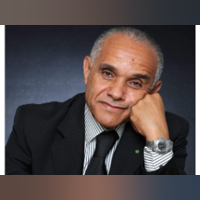
Ahmed Faras: The Eternal Legend of Moroccan Football 21442

I have been fortunate enough to know Ahmed Faras. It is unbearable for me to speak of him in the past tense, someone who has been part of my life for so long. It had been ages since he last touched a ball. Few are still alive who saw him play, those who, match after match, would await his dribble, his runs down the wing, his shot, his goal. Faras was an outstanding man, with an incredible shyness and reserve. Even when present somewhere, he was always on the sidelines: discreet, courteous, kind, with deep sensitivity, affection, and great touchiness. But Faras will always be part of the present. He is a true legend of Moroccan and African football; legends never die. Fedala saw him born in the cold of December 1947. Mohammedia would be his city and Chabab his eternal club. At the time, there was no such thing as a transfer market, no migrations, no football mercenary spirit. You were born in a club, learned to play there, and you stayed. His temperament was not that of a typical striker: there was no aggressiveness, no cunning. He compensated with his genius and never needed to dive or roll on the ground to sway a referee or create confusion. His genius spared him all that. He was an exceptional striker who marked the history of Moroccan and continental football. The turf at El Bachir football stadium helped him, at that time, it was the best in Morocco. Ahmed Faras was the product of a generation shaped by the structured environment of the youth sports schools run by the Ministry of Youth and Sports, a system supposedly dismantled by so-called administrative and political reforms. Yet, it was there that Morocco's champions were formed, across all sports. His early path was marked by the guidance of renowned trainers such as Lakhmiri, who helped shape numerous Moroccan talents. This solid foundation allowed him to develop technical skills and a sense of teamwork very early on, which would become hallmarks of his play. Ahmed Faras spent his entire career at Chabab Mohammedia, from 1965 to 1982, never having a professional contract—such things didn’t exist in Morocco then. There’s no need to mention signing bonuses or performance awards, even with the national team. His loyalty to Chabab is remarkable. He would lead the club to a Moroccan championship and become its top scorer. He would bring along with him his playing friends—Acila, Glaoua, Haddadi, and many more. Faras was a pillar of the Moroccan national team. With 36 goals in 94 caps, what a historic scorer for the Atlas Lions! He captained the national team for eight years, playing in the 1970 World Cup in Mexico and the 1972 Munich Olympic Games. In 1975, Ahmed Faras entered the legend by becoming the first Moroccan to win the African Ballon d’Or, an award that underlined the quality and consistency of his play. This distinction placed him among the greatest players on the continent, competing with the top African stars of his era. There was talk of a transfer to Real Madrid...but at the time Moroccan league players were barred from moving abroad under penalty of losing their place in the national team. The idea was, thus, to strengthen the domestic league... The peak of his career was surely the 1976 Africa Cup of Nations (CAN), won by Morocco in Ethiopia. Faras was the leader on the pitch, the tournament’s top scorer, and his influence was decisive for this historic triumph—the only major African title that Morocco has ever won. He scored crucial goals against Nigeria and Egypt in that tournament, perfectly embodying the role of playmaker and team leader on the field. To this day, he remains the only Moroccan captain ever to lift the coveted African trophy. I have been a few times to that ground in Addis Ababa where he lifted the trophy, and every time, his image dominates my thoughts. An indelible black-and-white, forever etched in the history of the Kingdom and in the memory of Moroccans who followed the match at the time through the voice of one Ahmed Elgharbi...no live broadcasts back then. He was a respected and heeded captain, guided by great coaches: Abdelkader Lakhmiri, Blagoe Vidinic, Abdellah Settati, Jabrane, and especially Gheorghe Mardarescu during that epic campaign in the land of Emperor Haile Selassie. His charisma and vision of the game were crucial in unifying the team and leading them to the summit of African football. Faras embodied the spirit of conquest and national pride throughout the tournament. The squad was selected and led by an outstanding manager as well Colonel Mehdi Belmejdoub. His name is forever bound to that legendary achievement, a symbol of the potential of Moroccan football when guided by exemplary leadership, committed and knowledgeable managers, and players who were true warriors for their jersey’s colors. Ahmed Faras was not just a talented player. After his retirement, he continued to share his passion, getting involved in youth training, passing on his knowledge and love for the game to the new generation. He has been a source of inspiration for so many generations of players. Knowing Lhaj Ahmed Faras meant knowing a symbol of loyalty, talent, and unique leadership in Moroccan sports. His name will forever remain inscribed in collective memory as that of a football giant, whose legacy goes beyond sport to inspire entire generations. Rest in peace, my friend. One day, a great football stadium in this country will bear your name, and it will be fitting, if the players follow your example, honor your career, and if the public rises to your greatness, paying tribute to your distinguished name. So Lhaj Ahmed Faras, if you ever meet Acila up there, ask him to give you another nice pass, and tell Glaoua to defend well... Know that your star shines and will always shine above us in the sky of the beautiful country you cherished so much. ---

Aziz Daouda Aziz Daouda

Aziz Daouda

Directeur Technique et du Développement de la Confédération Africaine d'Athlétisme. Passionné du Maroc, passionné d'Afrique. Concerné par ce qui se passe, formulant mon point de vue quand j'en ai un. Humaniste, j'essaye de l'être, humain je veux l'être. Mon histoire est intimement liée à l'athlétisme marocain et mondial. J'ai eu le privilège de participer à la gloire de mon pays .


9600

33.0

THE MEDITATIONS - Book I.[1/3] 5941

1. I learned from my grandfather, Verus, to use good manners, and to put restraint on anger. 2. In the famous memory of my father I had a pattern of modesty and manliness. 3. Of my mother I learned to be pious and generous; to keep myself not only from evil deeds, but even from evil thoughts; and to live with a simplicity which is far from customary among the rich. 4. I owe it to my great-grandfather that I did not attend public lectures and discussions, but had good and able teachers at home; and I owe him also the knowledge that for things of this nature a man should count no expense too great. 5. My tutor taught me not to favour either green or blue at the chariot races, nor, in the contests of gladiators, to be a supporter either of light or heavy armed. He taught me also to endure labour; not to need many things; to serve myself without troubling others; not to intermeddle in the affairs of others, and not easily to listen to slanders against them. 6. Of Diognetus I had the lesson not to busy myself about vain things; not to credit the great professions of such as pretend to work wonders, or of sorcerers about their charms, and their expelling of Demons and the like; not to keep quails (for fighting or divination), nor to run after such things; to suffer freedom of speech in others, and to apply myself heartily to philosophy. Him also I must thank for my hearing first Bacchius, then Tandasis and Marcianus; that I wrote dialogues in my youth, and took a liking to the philosopher’s pallet and skins, and to the other things which, by the Grecian discipline, belong to that profession. 7. To Rusticus I owe my first apprehensions that my nature needed reform and cure; and that I did not fall into the ambition of the common Sophists, either by composing speculative writings or by declaiming harangues of exhortation in public; further, that I never strove to be admired by ostentation of great patience in an ascetic life, or by display of activity and application; that I gave over the study of rhetoric, poetry, and the graces of language; and that I did not pace my house in my senatorial robes, or practise any similar affectation. I observed also the simplicity of style in his letters, particularly in that which he wrote to my mother from Sinuessa. I learned from him to be easily appeased, and to be readily reconciled with those who had displeased me or given cause of offence, so soon as they inclined to make their peace; to read with care; not to rest satisfied with a slight and superficial knowledge; nor quickly to assent to great talkers. I have him to thank that I met with the discourses of Epictetus, which he furnished me from his own library. 8. From Apollonius I learned true liberty, and tenacity of purpose; to regard nothing else, even in the smallest degree, but reason always; and always to remain unaltered in the agonies of pain, in the losses of children, or in long diseases. He afforded me a living example of how the same man can, upon occasion, be most yielding and most inflexible. He was patient in exposition; and, as might well be seen, esteemed his fine skill and ability in teaching others the principles of philosophy as the least of his endowments. It was from him that I learned how to receive from friends what are thought favours without seeming humbled by the giver or insensible to the gift. 9. Sextus was my pattern of a benign temper, and his family the model of a household governed by true paternal affection, and a steadfast purpose of living according to nature. Here I could learn to be grave without affectation, to observe sagaciously the several dispositions and inclinations of my friends, to tolerate the ignorant and those who follow current opinions without examination. His conversation showed how a man may accommodate himself to all men and to all companies; for though companionship with him was sweeter and more pleasing than any sort of flattery, yet he was at the same time highly respected and reverenced. No man was ever more happy than he in comprehending, finding out, and arranging in exact order the great maxims necessary for the conduct of life. His example taught me to suppress even the least appearance of anger or any other passion; but still, with all this perfect tranquillity, to possess the tenderest and most affectionate heart; to be apt to approve others yet without noise; to have much learning and little ostentation. 10. I learned from Alexander the Grammarian to avoid censuring others, to refrain from flouting them for a barbarism, solecism, or any false pronunciation. Rather was I dexterously to pronounce the words rightly in my answer, confining approval or objection to the matter itself, and avoiding discussion of the expression, or to use some other form of courteous suggestion. 11. Fronto made me sensible how much of envy, deceit and hypocrisy surrounds princes; and that generally those whom we account nobly born have somehow less natural affection. 12. I learned from Alexander the Platonist not often nor without great necessity to say, or write to any man in a letter, that I am not at leisure; nor thus, under pretext of urgent affairs, to make a practice of excusing myself from the duties which, according to our various ties, we owe to those with whom we live. 13. Of Catulus I learned not to condemn any friend’s expostulation even though it were unjust, but to try to recall him to his former disposition; to stint no praise in speaking of my masters, as is recounted of Domitius and Athenodorus; and to love my children with true affection. 14. Of Severus, my brother, I learned to love my kinsmen, to love truth, to love justice. Through him I came to know Thrasea, Helvidius, Cato, Dion, and Brutus. He gave me my first conception of a Commonwealth founded upon equitable laws and administered with equality of right; and of a Monarchy whose chief concern is the freedom of its subjects. Of him I learned likewise a constant and harmonious devotion to Philosophy; to be ready to do good, to be generous with all my heart. He taught me to be of good hope and trustful of the affection of my friends. I observed in him candour in declaring what he condemned in the conduct of others; and so frank and open was his behaviour, that his friends might easily see without the trouble of conjecture what he liked or disliked.