Think Forward.

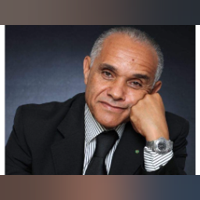
Abdou Cherif est parti, emporté par sa voix vers les cieux. 3836

Je conduisais rentrant de Fès, quand la chaine de radio qui me tenait compagnie dans l’habitacle de ma voiture annonça la disparition subite, dramatique, incompréhensible, inattendue, rapide, foudroyante et triste de Abdou Cherif. J’adorais, j’adore et adorerais jusqu’à la fin de mes jours ce virtuose que je n’ai jamais eu la chance de rencontrer mais que la télévision et YouTube par la suite m’ont fait découvrir et aimé. Moi qui adore Abdelhalim Hafed ou Hafez et la belle chanson égyptienne trouve en lui une certaine continuité de la belle époque ; celle du gout musical sublime ; celle où les paroliers comme les compositeurs, les chefs d’orchestre et les interprètes se surpassaient pour offrir au public arabe et pas que, le meilleur de la musique. Inspirés tantôt des arts populaires profondément enracinés, tantôt d’airs musicaux d’ailleurs, allant même jusqu’à explorer le tango argentin, ils nous ont légué un patrimoine musical unique dont on ne mesure pas encore assez la richesse. A écouter Abdou Cherif interpréter Gabar ou habibaha, on est pris dans un tourbillon de magie par sa voix envoutante, forte, douce, expressive. Le son est limpide et la diction claire. Abdou sublime ce genre de chanson à vous faire oublier l’original… Et puis surprise un soir, à l’Olympia du Caire, il annonce douteusement avec douceur qu’il allait s’aventurer à chanter la Bohème. Charles Aznavour aurait tant aimé cet instant. Ce fut un triomphe. Et ce n’est point fini Abdou va tenter l’impossible et à l’impossible nul n’est tenu, il va un soir casablancais étonner, surprendre, en revisitant l’un des standards du Malhoum marocain: Ghita. Qui aurait pensé qu’un jour ce fidèle invétéré de Abdelhalim allait toquer à la porte de Lhaj Driss Benali Al malki et le faire se redresser dans sa tombe vielle de près de deux siècles. Je suis persuadé que là où il est, Driss Benali a du sourire de satisfaction. Jamais personne n’a interprété Ghita comme Abdou Cherif, même pas le grand maitre Driss Toulali. Voilà c’est cet homme qui nous quitte aujourd’hui à jamais nous laissant sa voix, son sourire, son élégance, sa sensibilité et son audace à ce mettre debout dans de grandes salles de spectacle et à faire voyager ses fans au delà du temps. En arrivant à la maison, je me suis mis dans un coin, pris mon téléphone et commencé à écouter en boucle des extraits de ses interprétations passant plus de temps sur quelques unes où il avait été au summum de son art comme par exemple Rahila, composée par un autre de la musique marocaine: Abdesalam Amer et interprété par une autre belle voix celle du crooner Mohamed ElHayani. Lui aussi parti tôt. Une façon de le défunt Abdou Cherif à distance et de prier pour la paix de son âme. J’ai hésité avant de vous faire la proposition d’une quelconque de ses interprétations: toutes sont aussi parfaites et belles les unes que les autres. Finalement je me suis dit pourquoi pas la Bohème. Vous en avez un lien ici bas. Nous sommes à Dieu et à lui nous retournons. Repose en paix Abdou.
youtu.be/hvM66SxNfJY?si=EAZNznev...
Aziz Daouda Aziz Daouda

Aziz Daouda

Directeur Technique et du Développement de la Confédération Africaine d'Athlétisme. Passionné du Maroc, passionné d'Afrique. Concerné par ce qui se passe, formulant mon point de vue quand j'en ai un. Humaniste, j'essaye de l'être, humain je veux l'être. Mon histoire est intimement liée à l'athlétisme marocain et mondial. J'ai eu le privilège de participer à la gloire de mon pays .


9300

33.0

Football: When Passion Kills the Game in Impunity and Tolerance.. 426

Football (Soccer for Americans) is first and foremost a matter of emotions. By its very essence, it is an open-air theater where human passions play out in their rawest, most primal form. It generates joy, anger, pride, humiliation, and a sense of belonging. From the stands of Camp Nou to those of the Diego Armando Maradona Stadium, through the fervor of the Mohamed V sport Complex in Casablanca, the vibrant enclosures of Stade Léopold Sédar Senghor in Dakar, or even the Parc des Princes in Paris, the Vélodrome In Marseille, and the Bernabeu In Madrid, football transcends the mere framework of the game to become a total social phenomenon. But this emotional intensity, which makes football's beauty, also constitutes its danger. For without rigorous regulation, it quickly tips into excess, then into violence. Today, it must be acknowledged that the rules exist, but they are too often circumvented, stripped of their substance, or applied with disconcerting leniency. On the pitches as in the stands, excesses are multiplying: insults toward referees, provocations between players, systematic challenges, physical violence, projectile throwing, pitch invasions, xenophobic remarks, racist offenses. What was once the exception is tending to become a tolerated norm. Astonishingly, we are starting to get used to it. Recent examples are telling. In Spain, in stadiums renowned for their football culture, racist chants continue to be belted out without shame, targeting players like Vinícius Júnior. Most recently, it was the Muslim community that was insulted. And yet, Spain's current football prodigy is Muslim. An overheated crowd that has doubtless forgotten it wasn't so long ago that it was Muslim itself. Among those chanting these remarks, and without a doubt, some still carry the genes of that recent past... In Dakar, just a few days ago, clashes escalated, turning a sports celebration into a scene of chaos. In Italy, incidents involving supporters who invaded the pitch, during a friendly match, no less, endangered players and officials, recalling the dark hours of European hooliganism in the 1980s. These episodes are not isolated; they reflect a worrying normalization of violence in and around stadiums. Even at the highest level of African football, behavioral excesses are becoming problematic. The 2025 Africa Cup of Nations final left a bitter taste. What should have been a moment of celebration for continental football was marred by behaviors contrary to sporting ethics. Pressures on refereeing, excessive challenges, and game interruptions have become commonplace. When a coach manipulates a match's rhythm to influence a refereeing decision, it is no longer strategy but a challenge to the very foundations of the sport. Despite international outrage, the sanctions imposed on teams, clubs, or players involved remain often symbolic, insufficient to eradicate these behaviors. A very surprising phenomenon: rarely have clubs or federations clearly distanced themselves from such crowds. They accommodate them, and when they condemn them, it is half-heartedly, in a muffled, timid tone with no effect. The problem is twofold. On one hand, disciplinary regulations exist but lack firmness. On the other, their application suffers from a lack of consistency and political courage. Bodies like FIFA, continental confederations, and national federations hesitate to impose truly dissuasive sanctions such as point deductions, prolonged closed-door matches, competition exclusions, or even administrative relegations. Yet without fear of sanction, the rule loses all effectiveness. It suffices to compare with other sports to measure the gap. In rugby, for example, respect for the referee is a cardinal value. The slightest challenge is immediately sanctioned. In athletics, a false start leads to immediate disqualification, no discussion. Football, meanwhile, still tolerates too many behaviors that should be unacceptable. This permissiveness has a cost. It undermines football's image, discourages some families from attending stadiums, and endangers the safety of the game's actors. More gravely, it paves the way for future tragedies. History has already taught us, through catastrophes like the Heysel Stadium disaster, that violence in stadiums can have tragic consequences. It is therefore urgent to react. Regulating football does not mean killing its soul, but rather preserving it. It is not about extinguishing passions, but channeling them. This requires strong measures, exemplary sanctions against offending clubs and players, accountability for national federations, increased use of technology to identify troublemakers, and above all, a clear political will from national and international governing bodies. Football cannot continue to be this "market of emotion" left to its own devices. For by tolerating the intolerable, it risks losing what makes its greatness and its ability to unite rather than divide. If FIFA does not decide to act firmly, the danger is real: that of seeing football sink into a spiral where violence triumphs over the game, and where, one day, tragedies exceed the mere framework of sport. The long-awaited decision of the Court of Arbitration for Sport (CAS) in the 2025 AFCON final case should confirm rigor and integrity in the application of rules, at least at this level, thereby strengthening the credibility of the pan-African competition and football in general.