Think Forward.

Mezzour–Zidane : la petite phrase qui fissure la façade gouvernementale... 126

À mesure que l’échéance électorale se rapproche, le paysage politique marocain se transforme subtilement, parfois de manière maladroite. Les solidarités de circonstance qui caractérisent souvent les débuts de mandat semblent s’effriter, laissant place à des positionnements plus individuels. Le « clan gouvernemental », autrefois soudé par la logique de la majorité, relève désormais davantage du souvenir que de la réalité. Chaque acteur politique affine, ou non, sa stratégie; mesure, ou non, son audience et prépare, déjà ou pas, la séquence électorale à venir. Dans ce contexte de pré‑campagne implicite, la récente polémique autour des déclarations du ministre de l’Industrie et du Commerce, Ryad Mezzour, a servi de révélateur des tensions latentes au sein de l’exécutif dirigé par Aziz Akhannouch. Lors d’une rencontre avec de jeunes Marocains résidant à l’étranger (MRE), le ministre, sur un ton qu’il voulait sans doute léger et direct, a suggéré que ceux qui choisissent de revenir au pays devraient le faire par conviction et par engagement, et non dans l’espoir d’en tirer des avantages particuliers. Le ton blagueur à la façon Mezzour n’a pas été perçu comme tel : rigueur lui en sera tenue. La formule, rapidement sortie de son contexte et amplifiée par les réseaux sociaux, politiques et médiatiques, a suscité une vive réaction. Certains y ont vu une remise en cause du rôle et de la contribution de la diaspora marocaine, forte de plusieurs millions de personnes à travers le monde. L’affaire a pris une dimension inattendue lorsque le ministre délégué chargé de l’Investissement, Karim Zidane, a publiquement pris ses distances avec les propos de son collègue. L’un est membre de l’Istiqlal, l’autre du RNI, faut‑il le rappeler. Lors d’un meeting politique organisé par le Rassemblement National des Indépendants, formation qui dirige actuellement le gouvernement, Zidane n’a pas caché son désaccord, se disant choqué par ce qu’il considère comme des propos inadmissibles. Il a tenu à rappeler en termes forts l’importance stratégique et symbolique de la diaspora pour le Maroc, comme si quelqu’un en doutait. Son intervention comportait également une dimension personnelle : lui‑même issu de cette communauté, il a expliqué être revenu au pays non pour bénéficier d’avantages, mais parce que son parti lui a proposé de mettre ses compétences au service de l’action publique. Il a rang de ministre, faut‑il le rappeler. Serait‑il revenu si on ne lui avait pas proposé ce poste là et ce qui l’accompagne comme avantages ? on ne le saura jamais. Dans son discours, le ministre délégué à l’Investissement a défendu l’idée que les Marocains établis à l’étranger ne doivent pas être réduits à leur rôle économique ou à leurs transferts financiers, point sur lequel tout le monde est d’accord, Mezzour compris. Selon Zidane, les jeunes issus de l’immigration qui choisissent de revenir au Maroc constituent une richesse humaine et un levier de modernisation. **Mais qui en doute ?** Zidane a conclu son intervention sur une note à la fois ferme et émotionnelle, affirmant que « les sept millions de Marocains vivant à l’étranger sont toujours les bienvenus », et qu’ils demeurent parmi les meilleurs ambassadeurs du Royaume dans leurs pays d’accueil. **Mezzour a‑t‑il nié ou remis cela en cause ?** Certainement pas, la preuve étant qu’il débattait précisément avec de jeunes MRE lors de la rencontre à l’origine de la polémique. Il essayait justement de les motiver et de les inciter à rentrer au pays. *L’épisode a toutefois mis en lumière une réalité plus large : la fragilité apparente de la cohésion gouvernementale. Voir deux ministres d’un même exécutif s’opposer publiquement sur une question aussi sensible renvoie l’image d’un attelage politique où la discipline collective s’effrite, à mesure que se profile la compétition électorale.* Cette situation pose également la question de la répartition des compétences ministérielles : **le portefeuille de l’Investissement et celui de l’Industrie et du Commerce se recoupent partiellement, ce qui nourrit parfois des chevauchements de discours et des rivalités de positionnement. Certains observateurs y voient la conséquence d’une architecture gouvernementale où les frontières des responsabilités n’ont pas toujours été tracées avec la plus grande clarté.** Cela devrait être évité dans le prochain gouvernement. Il s'agit autant d'efficacité que d'économie de deniers publics. La controverse ne se résume pas à une simple incartade ou à une erreur d’expression politique. Les défenseurs de Mezzour soulignent que ce dernier est l’un des rares ministres à s’exprimer régulièrement en public avec hardiesse, à débattre avec les jeunes et à assumer ses positions, quitte à susciter la polémique. Dans un univers politique souvent marqué par la prudence excessive et la communication verrouillée, cette franchise peut être perçue par certains comme une forme de courage politique dont manquent manifestement de nombreux membres du gouvernement. À l’inverse de Mezzour, d’autres membres de l’exécutif cultivent une discrétion presque totale, au point que nombre de citoyens peinent à identifier leurs actions, voire leurs visages. Cette différence de style nourrit un contraste frappant entre une parole mal formulée, parfois maladroite ou incomprise mais visible, et un silence institutionnel qui entretient la distance entre gouvernants et gouvernés. Au‑delà de la polémique, l’incident révèle surtout l’entrée progressive du système politique national dans une phase préélectorale. Les ministres redeviennent des figures partisanes à part entière, et chaque déclaration peut être interprétée à l’aune de la compétition à venir. Les lignes de fracture se dessinent, les sensibilités s’affirment et la solidarité gouvernementale cède peu à peu la place à la logique du positionnement. Reste une interrogation, partagée par de nombreux citoyens : combien de temps encore cette majorité pourra‑t‑elle préserver l’apparence de l’unité ? Et surtout, lorsque s’approchera le 26 septembre, moment où les électeurs trancheront et décideront du sort de cette génération politique, quelle lecture feront‑ils de ces tensions exposées au grand jour ? Car, à mesure que l’horizon électoral se rapproche, une certitude s’impose : tôt ou tard, c’est dans les urnes que tout ce « beau monde » devra rendre des comptes. Mezzour–Zidane : la petite phrase qui fissure la façade gouvernementale ne sera plus qu'un vague souvenir d'ici là. Les citoyens ont d'autres grilles de lecture.
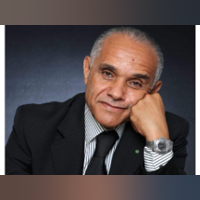
Aziz Daouda Aziz Daouda

Aziz Daouda

Directeur Technique et du Développement de la Confédération Africaine d'Athlétisme. Passionné du Maroc, passionné d'Afrique. Concerné par ce qui se passe, formulant mon point de vue quand j'en ai un. Humaniste, j'essaye de l'être, humain je veux l'être. Mon histoire est intimement liée à l'athlétisme marocain et mondial. J'ai eu le privilège de participer à la gloire de mon pays .


8800

33.0

THE ADVENTURES OF TOM SAWYER - PREFACE 5013

Most of the adventures recorded in this book really occurred; one or two were experiences of my own, the rest those of boys who were schoolmates of mine. Huck Finn is drawn from life; Tom Sawyer also, but not from an individual—he is a combination of the characteristics of three boys whom I knew, and therefore belongs to the composite order of architecture. The odd superstitions touched upon were all prevalent among children and slaves in the West at the period of this story—that is to say, thirty or forty years ago. Although my book is intended mainly for the entertainment of boys and girls, I hope it will not be shunned by men and women on that account, for part of my plan has been to try to pleasantly remind adults of what they once were themselves, and of how they felt and thought and talked, and what queer enterprises they sometimes engaged in. THE AUTHOR. HARTFORD, 1876.

THE MEDITATIONS - Book I.[1/3] 5155

1. I learned from my grandfather, Verus, to use good manners, and to put restraint on anger. 2. In the famous memory of my father I had a pattern of modesty and manliness. 3. Of my mother I learned to be pious and generous; to keep myself not only from evil deeds, but even from evil thoughts; and to live with a simplicity which is far from customary among the rich. 4. I owe it to my great-grandfather that I did not attend public lectures and discussions, but had good and able teachers at home; and I owe him also the knowledge that for things of this nature a man should count no expense too great. 5. My tutor taught me not to favour either green or blue at the chariot races, nor, in the contests of gladiators, to be a supporter either of light or heavy armed. He taught me also to endure labour; not to need many things; to serve myself without troubling others; not to intermeddle in the affairs of others, and not easily to listen to slanders against them. 6. Of Diognetus I had the lesson not to busy myself about vain things; not to credit the great professions of such as pretend to work wonders, or of sorcerers about their charms, and their expelling of Demons and the like; not to keep quails (for fighting or divination), nor to run after such things; to suffer freedom of speech in others, and to apply myself heartily to philosophy. Him also I must thank for my hearing first Bacchius, then Tandasis and Marcianus; that I wrote dialogues in my youth, and took a liking to the philosopher’s pallet and skins, and to the other things which, by the Grecian discipline, belong to that profession. 7. To Rusticus I owe my first apprehensions that my nature needed reform and cure; and that I did not fall into the ambition of the common Sophists, either by composing speculative writings or by declaiming harangues of exhortation in public; further, that I never strove to be admired by ostentation of great patience in an ascetic life, or by display of activity and application; that I gave over the study of rhetoric, poetry, and the graces of language; and that I did not pace my house in my senatorial robes, or practise any similar affectation. I observed also the simplicity of style in his letters, particularly in that which he wrote to my mother from Sinuessa. I learned from him to be easily appeased, and to be readily reconciled with those who had displeased me or given cause of offence, so soon as they inclined to make their peace; to read with care; not to rest satisfied with a slight and superficial knowledge; nor quickly to assent to great talkers. I have him to thank that I met with the discourses of Epictetus, which he furnished me from his own library. 8. From Apollonius I learned true liberty, and tenacity of purpose; to regard nothing else, even in the smallest degree, but reason always; and always to remain unaltered in the agonies of pain, in the losses of children, or in long diseases. He afforded me a living example of how the same man can, upon occasion, be most yielding and most inflexible. He was patient in exposition; and, as might well be seen, esteemed his fine skill and ability in teaching others the principles of philosophy as the least of his endowments. It was from him that I learned how to receive from friends what are thought favours without seeming humbled by the giver or insensible to the gift. 9. Sextus was my pattern of a benign temper, and his family the model of a household governed by true paternal affection, and a steadfast purpose of living according to nature. Here I could learn to be grave without affectation, to observe sagaciously the several dispositions and inclinations of my friends, to tolerate the ignorant and those who follow current opinions without examination. His conversation showed how a man may accommodate himself to all men and to all companies; for though companionship with him was sweeter and more pleasing than any sort of flattery, yet he was at the same time highly respected and reverenced. No man was ever more happy than he in comprehending, finding out, and arranging in exact order the great maxims necessary for the conduct of life. His example taught me to suppress even the least appearance of anger or any other passion; but still, with all this perfect tranquillity, to possess the tenderest and most affectionate heart; to be apt to approve others yet without noise; to have much learning and little ostentation. 10. I learned from Alexander the Grammarian to avoid censuring others, to refrain from flouting them for a barbarism, solecism, or any false pronunciation. Rather was I dexterously to pronounce the words rightly in my answer, confining approval or objection to the matter itself, and avoiding discussion of the expression, or to use some other form of courteous suggestion. 11. Fronto made me sensible how much of envy, deceit and hypocrisy surrounds princes; and that generally those whom we account nobly born have somehow less natural affection. 12. I learned from Alexander the Platonist not often nor without great necessity to say, or write to any man in a letter, that I am not at leisure; nor thus, under pretext of urgent affairs, to make a practice of excusing myself from the duties which, according to our various ties, we owe to those with whom we live. 13. Of Catulus I learned not to condemn any friend’s expostulation even though it were unjust, but to try to recall him to his former disposition; to stint no praise in speaking of my masters, as is recounted of Domitius and Athenodorus; and to love my children with true affection. 14. Of Severus, my brother, I learned to love my kinsmen, to love truth, to love justice. Through him I came to know Thrasea, Helvidius, Cato, Dion, and Brutus. He gave me my first conception of a Commonwealth founded upon equitable laws and administered with equality of right; and of a Monarchy whose chief concern is the freedom of its subjects. Of him I learned likewise a constant and harmonious devotion to Philosophy; to be ready to do good, to be generous with all my heart. He taught me to be of good hope and trustful of the affection of my friends. I observed in him candour in declaring what he condemned in the conduct of others; and so frank and open was his behaviour, that his friends might easily see without the trouble of conjecture what he liked or disliked.