Pensez le Futur.

DRACULA - CHAPTER I JONATHAN HARKER’S JOURNAL [3/5] 3811

I soon lost sight and recollection of ghostly fears in the beauty of the scene as we drove along, although had I known the language, or rather languages, which my fellow-passengers were speaking, I might not have been able to throw them off so easily. Before us lay a green sloping land full of forests and woods, with here and there steep hills, crowned with clumps of trees or with farmhouses, the blank gable end to the road. There was everywhere a bewildering mass of fruit blossom—apple, plum, pear, cherry; and as we drove by I could see the green grass under the trees spangled with the fallen petals. In and out amongst these green hills of what they call here the “Mittel Land” ran the road, losing itself as it swept round the grassy curve, or was shut out by the straggling ends of pine woods, which here and there ran down the hillsides like tongues of flame. The road was rugged, but still we seemed to fly over it with a feverish haste. I could not understand then what the haste meant, but the driver was evidently bent on losing no time in reaching Borgo Prund. I was told that this road is in summertime excellent, but that it had not yet been put in order after the winter snows. In this respect it is different from the general run of roads in the Carpathians, for it is an old tradition that they are not to be kept in too good order. Of old the Hospadars would not repair them, lest the Turk should think that they were preparing to bring in foreign troops, and so hasten the war which was always really at loading point. Beyond the green swelling hills of the Mittel Land rose mighty slopes of forest up to the lofty steeps of the Carpathians themselves. Right and left of us they towered, with the afternoon sun falling full upon them and bringing out all the glorious colours of this beautiful range, deep blue and purple in the shadows of the peaks, green and brown where grass and rock mingled, and an endless perspective of jagged rock and pointed crags, till these were themselves lost in the distance, where the snowy peaks rose grandly. Here and there seemed mighty rifts in the mountains, through which, as the sun began to sink, we saw now and again the white gleam of falling water. One of my companions touched my arm as we swept round the base of a hill and opened up the lofty, snow-covered peak of a mountain, which seemed, as we wound on our serpentine way, to be right before us:— “Look! Isten szek!”—“God’s seat!”—and he crossed himself reverently. As we wound on our endless way, and the sun sank lower and lower behind us, the shadows of the evening began to creep round us. This was emphasised by the fact that the snowy mountain-top still held the sunset, and seemed to glow out with a delicate cool pink. Here and there we passed Cszeks and Slovaks, all in picturesque attire, but I noticed that goitre was painfully prevalent. By the roadside were many crosses, and as we swept by, my companions all crossed themselves. Here and there was a peasant man or woman kneeling before a shrine, who did not even turn round as we approached, but seemed in the self-surrender of devotion to have neither eyes nor ears for the outer world. There were many things new to me: for instance, hay-ricks in the trees, and here and there very beautiful masses of weeping birch, their white stems shining like silver through the delicate green of the leaves. Now and again we passed a leiter-wagon—the ordinary peasant’s cart—with its long, snake-like vertebra, calculated to suit the inequalities of the road. On this were sure to be seated quite a group of home-coming peasants, the Cszeks with their white, and the Slovaks with their coloured, sheepskins, the latter carrying lance-fashion their long staves, with axe at end. As the evening fell it began to get very cold, and the growing twilight seemed to merge into one dark mistiness the gloom of the trees, oak, beech, and pine, though in the valleys which ran deep between the spurs of the hills, as we ascended through the Pass, the dark firs stood out here and there against the background of late-lying snow. Sometimes, as the road was cut through the pine woods that seemed in the darkness to be closing down upon us, great masses of greyness, which here and there bestrewed the trees, produced a peculiarly weird and solemn effect, which carried on the thoughts and grim fancies engendered earlier in the evening, when the falling sunset threw into strange relief the ghost-like clouds which amongst the Carpathians seem to wind ceaselessly through the valleys. Sometimes the hills were so steep that, despite our driver’s haste, the horses could only go slowly. I wished to get down and walk up them, as we do at home, but the driver would not hear of it. “No, no,” he said; “you must not walk here; the dogs are too fierce”; and then he added, with what he evidently meant for grim pleasantry—for he looked round to catch the approving smile of the rest—“and you may have enough of such matters before you go to sleep.” The only stop he would make was a moment’s pause to light his lamps.

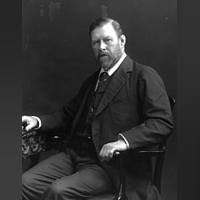
Bluwr X Commons: Bram Stoker Bluwr X Commons: Bram Stoker

Bluwr X Commons: Bram Stoker

Abraham Stoker (8 November 1847 – 20 April 1912) was an Irish author, his novel ‘Dracula’ is regarded as one of the most recognizable works of English literature.


200

0

Un Triptyque Historique : Comment le Maroc, l'Espagne et le Portugal Forgent le Succès de la Coupe du Monde 2030 53

L'attribution de l'organisation de la Coupe du Monde de la FIFA 2030 au trio inédit formé par le Maroc, le Portugal et l'Espagne marque l'ouverture d'un nouveau chapitre dans l'histoire des relations internationales et sportives. L'organisation conjointe de cet évènement consacre une dynamique sans pareil, engageant les trois nations dans une coopération triangulaire dont l'efficacité sera le marqueur décisif du succès de cet événement planétaire. Ce partenariat trilatéral transcende la simple collaboration logistique pour devenir un véritable levier de développement stratégique. La question n'est plus de savoir si les relations bilatérales sont prêtes, mais comment leur intégration en un cadre trilatéral renforcé garantira la réussite d'un méga-événement appelé à relier, pour la première fois, deux continents par le biais du sport. Les liens historiques et la proximité géographique confèrent aux relations entre ces trois partenaires un terreau propice à une intensification remarquable. L'annonce de leur candidature tripartite a, de fait, propulsé la nécessité d'une coordination harmonisée dans les domaines logistiques, économiques et sécuritaires au rang d'impératif stratégique I. Les Fondations Politiques et Économiques de la Coopération Renforcée L'alignement autour du projet 2030 n'est pas fortuit ; il s'ancre dans des considérations politiques et économiques profondes qui mutualisent les intérêts des trois pays. • L'Impératif de la Convergence ne souffre aucune ambivalence : l'Espagne et le Portugal, tout en s'inscrivant dans le cadre structurel de l'Union européenne, reconnaissent au Maroc le statut de partenaire stratégique incontournable, véritable porte d'entrée et pivot vers le continent africain. Cette dynamique n'est pas unilatérale ; le Royaume consolide, par cette même alliance, son ancrage eurafricain avec une netteté accrue. L'échéance du Mondial, loin d'être une simple contrainte calendaire, agit comme un puissant levier, forçant l'accélération — jugée souvent trop lente — des processus de convergence réglementaire, douanière et sécuritaire entre les trois capitales. Surtout, la volonté politique affichée au sommet — symbolisée par le suivi direct de Sa Majesté le Roi Mohammed VI des engagements marocains — s'érige en catalyseur décisif, garantissant l'établissement d'une ligne directrice unifiée et pérenne, même face aux contingences et aux fluctuations des majorités au sein des échiquiers politiques des États alliés. • La Mutualisation des Investissements et des Retombées : Sur le plan économique, le Mondial représente une opportunité sans précédent de dynamiser le commerce et l'investissement. Les accords trilatéraux influencent directement la planification des grands travaux : il ne s'agit plus de construire des infrastructures isolées, mais des réseaux intégrés (ports, liaisons aériennes, potentielles liaisons ferroviaires à grande vitesse) pensés pour l'interopérabilité. L'harmonisation des offres touristiques et des régimes fiscaux incitatifs pour les sponsors et les investisseurs est cruciale pour maximiser les retombées partagées. La réussite de la coordination dans les domaines logistiques, économiques et sécuritaires ne sera pas qu'un simple indicateur de performance ; elle sera le symbole d'une capacité collective à gérer un événement complexe à l'échelle transcontinentale. II. Gérer les Complexités : Les Défis du Codéveloppement Un événement de cette ampleur, opéré par trois États souverains, engendre naturellement des frictions et des défis de coordination qui nécessitent une gestion diplomatique et technique de premier ordre. • Le Défi de la Sécurité Globale et du Transport Intégré : Le premier obstacle est la création d'un espace sécuritaire unifié pour les millions de supporters en mouvement. Cela exige le partage d'informations en temps réel, la coordination des forces de l'ordre et l'harmonisation des protocoles d'urgence. Parallèlement, le système de transport doit être pensé comme un réseau unique. L'acheminement des équipes et des supporters entre l'Europe et l'Afrique doit être fluide, fiable et écologique, nécessitant des investissements ciblés dans les capacité d'accueil aéroportuaires et les dessertes maritimes. • Le Vecteur Culturel et Civilisationnel : Au-delà du sport, le Mondial est une plateforme diplomatique. Le défi secondaire, mais fondamental, est de dépasser la simple organisation technique pour présenter un modèle idéal de coexistence interculturelle. Le Maroc, l'Espagne et le Portugal doivent investir dans la promotion de leurs patrimoines croisés, consolidant les valeurs de paix et de respect mutuel. Cela implique la qualification des institutions nationales non seulement en logistique, mais aussi dans la gestion des publics et l'interaction médiatique mondiale, afin d'éviter les pièges d'une couverture fragmentée ou sensationnaliste. III. L'Influence Structurante des Accords Bilatéraux sur la Logistique L'influence des accords existants entre les trois pays est vitale pour le développement des infrastructures. L'étape actuelle est caractérisée par une forte attente des secteurs privés et des observateurs sportifs, qui guettent l'accélération concrète des chantiers. L'efficacité globale de l'opération, que l'on considère la phase pré-événementielle, l'exécution pendant le tournoi ou le legs post-réalisation, repose intégralement sur la solidité de l'engagement triangulaire. La transformation des infrastructures, des stades aux centres de formation et aux zones d'accueil, doit être menée dans un esprit d'alignement normatif. En conclusion, la Coupe du Monde 2030 n'est pas une simple somme de trois organisations nationales ; c'est un projet de co-développement stratégique. Les relations historiques et solides unissant le Royaume du Maroc, le Portugal et l'Espagne, amplifiées par une volonté politique constante et de haut niveau, constituent l'élément décisif pour transformer cette candidature en un succès retentissant, offrant au monde un précédent d'intégration réussie entre deux rives.