Think Forward.

Morocco, 18th Global Power in the World Athletics Championships Thanks to a Rich History of Medals 9548

The national sports memory proudly retains the very rich medal record of the country, accumulated since the advent of the World Athletics Championships in 1983. This idea was born from a visionary and innovative president of the IAAF, the Italian Primo Nebiolo. At that time, the athletics world gathered in Helsinki for an unprecedented experience. Athletics was just beginning to organize quality meetings and barely tolerating that athletes receive some monetary compensation for their performances. Until then, at the global level, athletes only competed at the Olympic Games and were not entitled to any payment or commercial contracts. While Morocco was not present at the first Olympic Games, it made its mark at this inaugural edition of the World Championships alongside two other African countries: Ethiopia, which won a silver medal, and Nigeria which, like Morocco, won a bronze. Since then, Morocco has ensured a certain continuity with very honorable results. Notably, a 5th place finish in 1999 in Seville, an edition marked by controversy: Nezha Bidouane was wrongly deprived of the gold medal in the 400m hurdles due to a judging error. Despite an appeal to the jury and clear evidence brought by the left photo-finish, the decision was not overturned. President Nebiolo had promised to repair this injustice at the first IAAF council meeting but unfortunately passed away in the meantime. He was replaced by Senegalese Lamine Diack, the jury president who refused to revise the result, likely to avoid contradicting competition officials. At this Seville edition, Morocco won five medals, including gold by Hicham El Guerrouj in the 1500m and Salah Hissou in the 5000m. Two other silver medals were won by Nezha Bidouane in the 400m hurdles and Zahra Ouaaziz in the 5000m, while Ali Ezzine took bronze in the 3000m steeplechase. These achievements, realized under intense heat and a special atmosphere, allowed Morocco to rise to fifth place in the world medals table. It is worth recalling that this success occurred at the very beginning of His Majesty King Mohammed VI's reign, who has surrounded athletes with his generous royal care. Despite a recent decrease in the number of medals, Morocco still occupies the 18th place in the global medals table at the World Athletics Championships today. It was Said Aouita who opened the way at the first edition in Helsinki in 1983 by winning bronze in the 1500 meters. With a little more experience, he could have won the race, which was dominated by the British Steve Cram in just 3 minutes 41.59 seconds, and American Steve Scott, who finished second. Morocco was truly new at this level of competition. Among individual athletes, legend Hicham El Guerrouj is today the most decorated Moroccan at the World Athletics Championships, with six medals: four golds in the 1500 meters, and two silvers in the 1500m and 5000m. Another legend, Nezha Bidouane, leads the women's medal tally with three world medals, including two gold and one silver. She remains, like Hicham El Guerrouj in the 1500m, the most decorated in the world in the 400m hurdles. An analysis of results shows that it is in the 1500m that Morocco has won the most medals, including the four golds of Hicham El Guerrouj and the silver of Adil Kaouch, former junior world champion in this distance. Adding to this are Said Aouita and Abdelati Iguider, who each hold a bronze medal over this distance. On the women's side, the most medals were won in the 400m hurdles, thanks to Nezha Bidouane. The historical record of Moroccan athletics at the World Championships is rich: twelve male and four female athletes have represented Morocco at this level in seven disciplines: 400m hurdles, 800m, 1500m, 5000m, 10,000m, 3000m steeplechase, and the marathon. Let us not forget also the long jump with Yahya Berrabah's 4th place at the 2011 World Championships in Daegu. For the 20th edition, starting on September 13 in Tokyo, Morocco is participating with about twenty athletes. Hopes rest especially on Soufiane El Bakkali, who could join Hicham El Guerrouj in the number of gold medals if victorious. Fatima Ezzahara Gardadi is also cited as a potential medalist, her 2023 feat in Budapest where she won bronze in the marathon remaining fresh in everyone's memory. Summary of Morocco's medal record at the World Athletics Championships throughout history: - 1st edition, Helsinki 1983: Said Aouita, bronze in 1500m; Morocco's ranking: 21st - 2nd edition, Rome 1987: Said Aouita, gold in 5000m; Morocco's ranking: 9th - 3rd edition, Tokyo 1991: Moulay Brahim Boutayeb, bronze in 5000m; Khalid Sekkah, bronze in 10,000m; Morocco's ranking: 28th - 4th edition, Stuttgart 1993: no medal - 5th edition, Gothenburg 1995: Hicham El Guerrouj, gold in 1500m; Khalid Sekkah, silver in 10,000m; Khalid Boulami, silver in 5000m; Zahra Ouaaziz, bronze in 5000m; Morocco's ranking: 25th - 6th edition, Athens 1997: Hicham El Guerrouj, gold in 1500m; Nezha Bidouane, gold in 400m hurdles; Khalid Boulami, silver in 5000m; Salah Hissou, bronze in 10,000m; Morocco's ranking: 6th - 7th edition, Seville 1999: Hicham El Guerrouj, gold in 1500m; Salah Hissou, gold in 5000m; Nezha Bidouane, silver in 400m hurdles; Zahra Ouaaziz, silver in 5000m; Ali Ezzine, bronze in 3000m steeplechase; Morocco's ranking: 5th - 8th edition, Edmonton 2001: Nezha Bidouane, gold in 400m hurdles; Hicham El Guerrouj, gold in 1500m; Ali Ezzine, silver in 3000m steeplechase; Morocco's ranking: 10th - 9th edition, Paris 2003: Jaouad Gharib, gold in marathon; Hicham El Guerrouj, gold in 1500m; Hicham El Guerrouj, silver in 5000m; Morocco's ranking: 9th - 10th edition, Helsinki 2005: Jaouad Gharib, gold in marathon; Hasna Benhassi, silver in 800m; Adil Kaouch, silver in 1500m; Morocco's ranking: 10th - 11th edition, Osaka 2007: Hasna Benhassi, silver in 800m; Morocco's ranking: 28th - 12th to 14th editions (Berlin 2009, Daegu 2011, Moscow 2013): no medals - 15th edition, Beijing 2015: Abdelati Iguider, bronze in 1500m; Morocco's ranking: 32nd - 16th edition, London 2017: Soufiane El Bakkali, silver in 3000m steeplechase; Morocco's ranking: 31st - 17th edition, Doha 2019: Soufiane El Bakkali, bronze in 3000m steeplechase; Morocco's ranking: 31st - 18th edition, Eugene 2022: Soufiane El Bakkali, gold in 3000m steeplechase; Morocco's ranking: 22nd - 19th edition, Budapest 2023: Soufiane El Bakkali, gold in 3000m steeplechase; Fatima Zahra Gardadi, bronze in marathon; Morocco's ranking: 15th.

Aziz Daouda Aziz Daouda

Aziz Daouda

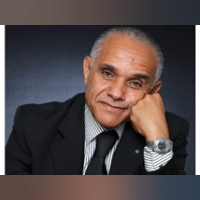
Directeur Technique et du Développement de la Confédération Africaine d'Athlétisme. Passionné du Maroc, passionné d'Afrique. Concerné par ce qui se passe, formulant mon point de vue quand j'en ai un. Humaniste, j'essaye de l'être, humain je veux l'être. Mon histoire est intimement liée à l'athlétisme marocain et mondial. J'ai eu le privilège de participer à la gloire de mon pays .


9300

33.0

THE ENCHIRIDION - I 5210

There are things which are within our power, and there are things which are beyond our power. Within our power are opinion, aim, desire, aversion, and, in one word, whatever affairs are our own. Beyond our power are body, property, reputation, office, and, in one word, whatever are not properly our own affairs. Now the things within our power are by nature free, unrestricted, unhindered; but those beyond our power are weak, dependent, restricted, alien. Remember, then, that if you attribute freedom to things by nature dependent and take what belongs to others for your own, you will be hindered, you will lament, you will be disturbed, you will find fault both with gods and men. But if you take for your own only that which is your own and view what belongs to others just as it really is, then no one will ever compel you, no one will restrict you; you will find fault with no one, you will accuse no one, you will do nothing against your will; no one will hurt you, you will not have an enemy, nor will you suffer any harm. Aiming, therefore, at such great things, remember that you must not allow yourself any inclination, however slight, toward the attainment of the others; but that you must entirely quit some of them, and for the present postpone the rest. But if you would have these, and possess power and wealth likewise, you may miss the latter in seeking the former; and you will certainly fail of that by which alone happiness and freedom are procured. Seek at once, therefore, to be able to say to every unpleasing semblance, “You are but a semblance and by no means the real thing.” And then examine it by those rules which you have; and first and chiefly by this: whether it concerns the things which are within our own power or those which are not; and if it concerns anything beyond our power, be prepared to say that it is nothing to you.

THE ADVENTURES OF TOM SAWYER - PREFACE 5403

Most of the adventures recorded in this book really occurred; one or two were experiences of my own, the rest those of boys who were schoolmates of mine. Huck Finn is drawn from life; Tom Sawyer also, but not from an individual—he is a combination of the characteristics of three boys whom I knew, and therefore belongs to the composite order of architecture. The odd superstitions touched upon were all prevalent among children and slaves in the West at the period of this story—that is to say, thirty or forty years ago. Although my book is intended mainly for the entertainment of boys and girls, I hope it will not be shunned by men and women on that account, for part of my plan has been to try to pleasantly remind adults of what they once were themselves, and of how they felt and thought and talked, and what queer enterprises they sometimes engaged in. THE AUTHOR. HARTFORD, 1876.

THE MEDITATIONS - Book I.[1/3] 5545

1. I learned from my grandfather, Verus, to use good manners, and to put restraint on anger. 2. In the famous memory of my father I had a pattern of modesty and manliness. 3. Of my mother I learned to be pious and generous; to keep myself not only from evil deeds, but even from evil thoughts; and to live with a simplicity which is far from customary among the rich. 4. I owe it to my great-grandfather that I did not attend public lectures and discussions, but had good and able teachers at home; and I owe him also the knowledge that for things of this nature a man should count no expense too great. 5. My tutor taught me not to favour either green or blue at the chariot races, nor, in the contests of gladiators, to be a supporter either of light or heavy armed. He taught me also to endure labour; not to need many things; to serve myself without troubling others; not to intermeddle in the affairs of others, and not easily to listen to slanders against them. 6. Of Diognetus I had the lesson not to busy myself about vain things; not to credit the great professions of such as pretend to work wonders, or of sorcerers about their charms, and their expelling of Demons and the like; not to keep quails (for fighting or divination), nor to run after such things; to suffer freedom of speech in others, and to apply myself heartily to philosophy. Him also I must thank for my hearing first Bacchius, then Tandasis and Marcianus; that I wrote dialogues in my youth, and took a liking to the philosopher’s pallet and skins, and to the other things which, by the Grecian discipline, belong to that profession. 7. To Rusticus I owe my first apprehensions that my nature needed reform and cure; and that I did not fall into the ambition of the common Sophists, either by composing speculative writings or by declaiming harangues of exhortation in public; further, that I never strove to be admired by ostentation of great patience in an ascetic life, or by display of activity and application; that I gave over the study of rhetoric, poetry, and the graces of language; and that I did not pace my house in my senatorial robes, or practise any similar affectation. I observed also the simplicity of style in his letters, particularly in that which he wrote to my mother from Sinuessa. I learned from him to be easily appeased, and to be readily reconciled with those who had displeased me or given cause of offence, so soon as they inclined to make their peace; to read with care; not to rest satisfied with a slight and superficial knowledge; nor quickly to assent to great talkers. I have him to thank that I met with the discourses of Epictetus, which he furnished me from his own library. 8. From Apollonius I learned true liberty, and tenacity of purpose; to regard nothing else, even in the smallest degree, but reason always; and always to remain unaltered in the agonies of pain, in the losses of children, or in long diseases. He afforded me a living example of how the same man can, upon occasion, be most yielding and most inflexible. He was patient in exposition; and, as might well be seen, esteemed his fine skill and ability in teaching others the principles of philosophy as the least of his endowments. It was from him that I learned how to receive from friends what are thought favours without seeming humbled by the giver or insensible to the gift. 9. Sextus was my pattern of a benign temper, and his family the model of a household governed by true paternal affection, and a steadfast purpose of living according to nature. Here I could learn to be grave without affectation, to observe sagaciously the several dispositions and inclinations of my friends, to tolerate the ignorant and those who follow current opinions without examination. His conversation showed how a man may accommodate himself to all men and to all companies; for though companionship with him was sweeter and more pleasing than any sort of flattery, yet he was at the same time highly respected and reverenced. No man was ever more happy than he in comprehending, finding out, and arranging in exact order the great maxims necessary for the conduct of life. His example taught me to suppress even the least appearance of anger or any other passion; but still, with all this perfect tranquillity, to possess the tenderest and most affectionate heart; to be apt to approve others yet without noise; to have much learning and little ostentation. 10. I learned from Alexander the Grammarian to avoid censuring others, to refrain from flouting them for a barbarism, solecism, or any false pronunciation. Rather was I dexterously to pronounce the words rightly in my answer, confining approval or objection to the matter itself, and avoiding discussion of the expression, or to use some other form of courteous suggestion. 11. Fronto made me sensible how much of envy, deceit and hypocrisy surrounds princes; and that generally those whom we account nobly born have somehow less natural affection. 12. I learned from Alexander the Platonist not often nor without great necessity to say, or write to any man in a letter, that I am not at leisure; nor thus, under pretext of urgent affairs, to make a practice of excusing myself from the duties which, according to our various ties, we owe to those with whom we live. 13. Of Catulus I learned not to condemn any friend’s expostulation even though it were unjust, but to try to recall him to his former disposition; to stint no praise in speaking of my masters, as is recounted of Domitius and Athenodorus; and to love my children with true affection. 14. Of Severus, my brother, I learned to love my kinsmen, to love truth, to love justice. Through him I came to know Thrasea, Helvidius, Cato, Dion, and Brutus. He gave me my first conception of a Commonwealth founded upon equitable laws and administered with equality of right; and of a Monarchy whose chief concern is the freedom of its subjects. Of him I learned likewise a constant and harmonious devotion to Philosophy; to be ready to do good, to be generous with all my heart. He taught me to be of good hope and trustful of the affection of my friends. I observed in him candour in declaring what he condemned in the conduct of others; and so frank and open was his behaviour, that his friends might easily see without the trouble of conjecture what he liked or disliked.