Think Forward.

Le Gazoduc Afrique Atlantique : Un projet stratégique au cœur de la rivalité régionale 1907

Alors que les médias algériens s'obstinent à dénigrer le projet de gazoduc Nigeria Maroc, également appelé Gazoduc Afrique Atlantique (GAA), ce mégaprojet d’envergure transcontinentale suscite, paradoxalement, un intérêt grandissant et un soutien international croissant. Plus qu’un simple tuyau, le GAA incarne une vision ambitieuse de coopération Sud-Sud, d’intégration régionale et de développement durable, traversant des pays souvent enclavés et fragiles, et offrant un complément et ou une alternative crédible de gaz pour l’Europe. Le GAA vise à transporter jusqu’à 30 milliards de m3 de gaz par an, depuis les riches gisements nigérians, passant par une quinzaine de pays d’Afrique de l’Ouest, jusqu’au Maroc, puis vers l’Europe via le détroit de Gibraltar. Cette capacité significative permettra non seulement de diversifier les sources d’approvisionnement énergétique de l’Europe, mais aussi et surtout de répondre aux besoins croissants en énergie des pays ouest-africains. Contrairement au projet algérien de gazoduc transsaharien, plus court d’environ 1 500 km mais coûteux (près de 20 milliards usd) et traversant une zone instable, le GAA se distingue par son approche inclusive. Il ne s'agit pas que d'un conduit de transit vers l’Europe, mais d'un réseau énergétique régional qui va irriguer les pays riverains, permettant aux producteurs d’y injecter leurs gaz et aux autres d’en alimenter leur développement industriel, agricole et urbain. Le GAA s’inscrit dans une logique de coopération Sud-Sud, fondé sur la solidarité, le partage d’expertise et la complémentarité économique. En traversant des pays souvent enclavés, le gazoduc contribuera à réduire leur isolement énergétique, à renforcer leurs infrastructures et à stimuler leur croissance économique. Le choix d’un tracé majoritairement offshore jusqu’à Dakhla, puis onshore le long de la côte atlantique marocaine, illustre la volonté d’intégrer pleinement la région sahélo-saharienne dans un corridor énergétique moderne. Dakhla, qui deviendra un hub portuaire, industriel et logistique majeur, est appelé à jouer un rôle central dans cette dynamique, favorisant la création d’emplois, l’essor des activités industrielles et la diversification économique, point fort et atout majeur de la vision marocaine. L’Algérie quant à elle, le perçoit comme une menace directe à sa position dominante dans le secteur énergétique régional. Son projet de gazoduc transsaharien, plus court, est limité à un rôle de simple transit du gaz nigérian vers l’Europe, sans véritable impact sur le développement des contrées traversés. En revanche, le GAA marocain propose une vision plus ambitieuse, intégrant un réseau régional qui va bénéficier à l’ensemble des partenaires et à leurs populations de plus en plus exigeantes. L'animosité algérienne se manifeste par une intense campagne médiatique algérienne visant à minimiser la faisabilité du projet marocain. Au-delà des médias, l’Algérie multiplie les actions diplomatiques pour renforcer ses liens avec le Nigeria et accélérer son propre projet. Des délégations officielles se succèdent, tandis que sur les réseaux sociaux, des campagnes de dénigrement acharné, surement orchestrées, cherchent à discréditer le GAA. Cet antagonisme s’inscrit dans une logique politique plus large, le Maroc étant l’« ennemi classique » à affaiblir. L'entêtement idéologique conduit à des choix ridicules qui, paradoxalement, nuisent aux intérêts économiques et sociaux de l’Algérie elle-même. Le conflit artificiel autour du Sahara occidental est toujours en filigrane; La survie du Polisario mobilisant une grande part des ressources, des efforts et de l’attention du pouvoir algérien depuis 50 ans. Contrairement aux affirmations algériennes, le GAA bénéficie d’un soutien solide de la part d’institutions financières et d’investisseurs importants. Les Émirats Arabes Unis (25 Milliards USD), la Banque Islamique de Développement, la Banque Européenne d’Investissement, le Fonds de l’OPEP pour le développement international, ainsi que les USA, ont manifesté leur intérêt et leur engagement dans le projet. Sur le plan industriel, le groupe chinois Jingye Steel a déjà remporté le contrat des conduites métalliques, témoignant de la dimension internationale et industrielle du projet. Cette implication d’acteurs mondiaux renforce la crédibilité technique et financière du GAA et consolide l’adhésion à la volonté de faire de la région un pôle de développement et non plus un pourvoyeur d’immigration et de déplacements forcés des populations. Le projet marocain est divisé en plusieurs phases, avec des études de faisabilité, d’ingénierie de base et environnementales, achevées ou en cours. Un appel d’offres est prévu afin d’accélérer la construction, avec une mise en service des premiers tronçons envisagée dès 2029. Au-delà des enjeux énergétiques, le GAA s’inscrit dans une stratégie plus large de développement durable, de réduction de la pauvreté énergétique, de la pauvreté tout courte et de renforcement de la stabilité régionale. En favorisant l’intégration économique et la complémentarité entre les pays d’Afrique de l’Ouest, le projet contribuera à créer un environnement propice à l’investissement, à la création d’emplois, à la croissance inclusive et à la prospérité. C'est ce qui vient d'être consolidé dans la déclaration de Praia à l'occasion des la 5è réunion de l'African Atlantic States Process (AASP) Cette approche contraste fortement avec la stratégie algérienne, qui reste focalisée sur la confrontation politique et idéologique, au détriment des opportunités économiques et sociales pour ses propres populations. L’Algérie va jusqu’à ne pas intégrer l’émergence de nouveaux producteurs de gaz, notamment le Sénégal et la Mauritanie, qui participent activement au projet marocain. Ces pays adoptent une logique pragmatique, privilégiant le développement économique et la coopération régionale plutôt que les rivalités idéologiques. Le premier tronçon du GAA intègre justement ces États, illustrant une dynamique d’ouverture et de partenariat qui pourrait redessiner la carte énergétique de l’Afrique de l’Ouest. Le Gazoduc Afrique Atlantique est plus qu’un simple projet d’infrastructure : il incarne une vision ambitieuse de coopération, d’intégration et de développement durable de l' Afrique de l'Ouest que les populations concernées ont parfaitement bien compris. Face à cette dynamique, l’Algérie semble toujours enfermée dans sa posture chronique de confrontation freinant son propre développement et hélas celui de la région. À l’heure où les défis énergétiques, économiques et géopolitiques se multiplient, le GAA est un modèle d’avenir, fondé sur la complémentarité, la solidarité et l’innovation. Sa réussite pourrait ouvrir la voie à une nouvelle ère de prospérité partagée et de stabilité pour l’Afrique de l’Ouest et ses partenaires internationaux, n’en déplaise à ceux qui luttent contre, ceux qui ne veulent pas l’admettre ou simplement le comprendre.

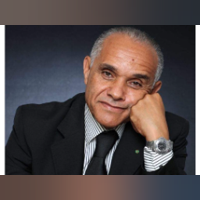
Aziz Daouda Aziz Daouda

Aziz Daouda

Directeur Technique et du Développement de la Confédération Africaine d'Athlétisme. Passionné du Maroc, passionné d'Afrique. Concerné par ce qui se passe, formulant mon point de vue quand j'en ai un. Humaniste, j'essaye de l'être, humain je veux l'être. Mon histoire est intimement liée à l'athlétisme marocain et mondial. J'ai eu le privilège de participer à la gloire de mon pays .


8100

33.0

THE ADVENTURES OF TOM SAWYER - PREFACE 3685

Most of the adventures recorded in this book really occurred; one or two were experiences of my own, the rest those of boys who were schoolmates of mine. Huck Finn is drawn from life; Tom Sawyer also, but not from an individual—he is a combination of the characteristics of three boys whom I knew, and therefore belongs to the composite order of architecture. The odd superstitions touched upon were all prevalent among children and slaves in the West at the period of this story—that is to say, thirty or forty years ago. Although my book is intended mainly for the entertainment of boys and girls, I hope it will not be shunned by men and women on that account, for part of my plan has been to try to pleasantly remind adults of what they once were themselves, and of how they felt and thought and talked, and what queer enterprises they sometimes engaged in. THE AUTHOR. HARTFORD, 1876.

THE MEDITATIONS - Book I.[1/3] 3803

1. I learned from my grandfather, Verus, to use good manners, and to put restraint on anger. 2. In the famous memory of my father I had a pattern of modesty and manliness. 3. Of my mother I learned to be pious and generous; to keep myself not only from evil deeds, but even from evil thoughts; and to live with a simplicity which is far from customary among the rich. 4. I owe it to my great-grandfather that I did not attend public lectures and discussions, but had good and able teachers at home; and I owe him also the knowledge that for things of this nature a man should count no expense too great. 5. My tutor taught me not to favour either green or blue at the chariot races, nor, in the contests of gladiators, to be a supporter either of light or heavy armed. He taught me also to endure labour; not to need many things; to serve myself without troubling others; not to intermeddle in the affairs of others, and not easily to listen to slanders against them. 6. Of Diognetus I had the lesson not to busy myself about vain things; not to credit the great professions of such as pretend to work wonders, or of sorcerers about their charms, and their expelling of Demons and the like; not to keep quails (for fighting or divination), nor to run after such things; to suffer freedom of speech in others, and to apply myself heartily to philosophy. Him also I must thank for my hearing first Bacchius, then Tandasis and Marcianus; that I wrote dialogues in my youth, and took a liking to the philosopher’s pallet and skins, and to the other things which, by the Grecian discipline, belong to that profession. 7. To Rusticus I owe my first apprehensions that my nature needed reform and cure; and that I did not fall into the ambition of the common Sophists, either by composing speculative writings or by declaiming harangues of exhortation in public; further, that I never strove to be admired by ostentation of great patience in an ascetic life, or by display of activity and application; that I gave over the study of rhetoric, poetry, and the graces of language; and that I did not pace my house in my senatorial robes, or practise any similar affectation. I observed also the simplicity of style in his letters, particularly in that which he wrote to my mother from Sinuessa. I learned from him to be easily appeased, and to be readily reconciled with those who had displeased me or given cause of offence, so soon as they inclined to make their peace; to read with care; not to rest satisfied with a slight and superficial knowledge; nor quickly to assent to great talkers. I have him to thank that I met with the discourses of Epictetus, which he furnished me from his own library. 8. From Apollonius I learned true liberty, and tenacity of purpose; to regard nothing else, even in the smallest degree, but reason always; and always to remain unaltered in the agonies of pain, in the losses of children, or in long diseases. He afforded me a living example of how the same man can, upon occasion, be most yielding and most inflexible. He was patient in exposition; and, as might well be seen, esteemed his fine skill and ability in teaching others the principles of philosophy as the least of his endowments. It was from him that I learned how to receive from friends what are thought favours without seeming humbled by the giver or insensible to the gift. 9. Sextus was my pattern of a benign temper, and his family the model of a household governed by true paternal affection, and a steadfast purpose of living according to nature. Here I could learn to be grave without affectation, to observe sagaciously the several dispositions and inclinations of my friends, to tolerate the ignorant and those who follow current opinions without examination. His conversation showed how a man may accommodate himself to all men and to all companies; for though companionship with him was sweeter and more pleasing than any sort of flattery, yet he was at the same time highly respected and reverenced. No man was ever more happy than he in comprehending, finding out, and arranging in exact order the great maxims necessary for the conduct of life. His example taught me to suppress even the least appearance of anger or any other passion; but still, with all this perfect tranquillity, to possess the tenderest and most affectionate heart; to be apt to approve others yet without noise; to have much learning and little ostentation. 10. I learned from Alexander the Grammarian to avoid censuring others, to refrain from flouting them for a barbarism, solecism, or any false pronunciation. Rather was I dexterously to pronounce the words rightly in my answer, confining approval or objection to the matter itself, and avoiding discussion of the expression, or to use some other form of courteous suggestion. 11. Fronto made me sensible how much of envy, deceit and hypocrisy surrounds princes; and that generally those whom we account nobly born have somehow less natural affection. 12. I learned from Alexander the Platonist not often nor without great necessity to say, or write to any man in a letter, that I am not at leisure; nor thus, under pretext of urgent affairs, to make a practice of excusing myself from the duties which, according to our various ties, we owe to those with whom we live. 13. Of Catulus I learned not to condemn any friend’s expostulation even though it were unjust, but to try to recall him to his former disposition; to stint no praise in speaking of my masters, as is recounted of Domitius and Athenodorus; and to love my children with true affection. 14. Of Severus, my brother, I learned to love my kinsmen, to love truth, to love justice. Through him I came to know Thrasea, Helvidius, Cato, Dion, and Brutus. He gave me my first conception of a Commonwealth founded upon equitable laws and administered with equality of right; and of a Monarchy whose chief concern is the freedom of its subjects. Of him I learned likewise a constant and harmonious devotion to Philosophy; to be ready to do good, to be generous with all my heart. He taught me to be of good hope and trustful of the affection of my friends. I observed in him candour in declaring what he condemned in the conduct of others; and so frank and open was his behaviour, that his friends might easily see without the trouble of conjecture what he liked or disliked.