Think Forward.

Moroccan cybersecurity dangerously undermined by successive attacks 7615

Since April 2025, Morocco has been facing a series of major cyberattacks claimed by a collective of hackers allegedly Algerian, named "JabaRoot DZ." These cyberattacks have targeted key economic and administrative institutions, notably the Ministry of Employment, the National Social Security Fund (CNSS), and more recently the Ministry of Justice, as well as platforms related to land registry and property conservation. What is clear, let’s say it outright, is that Algeria does not possess the technological power or expertise for such operations. It is highly likely that its services call upon "skills," notably from Eastern Europe, to attack the Kingdom’s interests in its ongoing global war against its "classic enemy." If this hypothesis proves true, the question would then be who else might have the hacked information and for what purpose. The first intrusion, which occurred in early April 2025, began with the hacking of the Ministry of Employment’s website and quickly extended to the CNSS database. This attack led to the leak of thousands of sensitive documents, exposing the personal information of nearly two million employees and the administrative data of about 500,000 Moroccan companies. Among the leaked data were pay slips detailing names, social security numbers, salaries, and sometimes identity card numbers of very important personalities and leaders of Royal Air Maroc, Attijariwafa Bank, Banque Centrale Populaire, and the Mohammed VI Investment Fund. Less than two months later, in June 2025, JabaRoot DZ claimed a new "large-scale" cyberattack against the National Agency for Land Conservation, Cadastre, and Cartography (ANCFCC). Although the ANCFCC denied any direct intrusion into its servers, it was revealed that the vulnerability originated from an electronic platform used by some notary offices for archiving land documents. The hackers claim to have obtained about 4 terabytes of data, including millions of land titles, contractual documents, copies of identity cards, passports, as well as banking documents and information concerning high-ranking officials and public figures. This leak led to the temporary shutdown of the platform by the ANCFCC for security reasons. The hackers justify these attacks as retaliation for alleged Moroccan hacking attempts against Algerian institutions, notably the Twitter account of the Algerian Press Agency (APS). They also threatened further actions in case of future attacks against Algerian interests. These events occur in the context of geopolitical tensions between Morocco and Algeria, exacerbated by recent developments related to the Sahara issue and regional rivalries; Morocco has been recording victory after victory at a rapid pace. Algeria, in its official and unofficial media, no longer hides and even implicitly claims responsibility for the hacking, ignoring that this amounts to a form of state terrorism. These cyberattacks have had serious consequences: they have eroded citizens’ trust in digital public services, increased the risks of identity theft and banking fraud, and damaged the reputation of the affected companies. The Moroccan government has condemned these acts as "criminal" and announced measures to strengthen cybersecurity while launching internal investigations. The series of attacks especially highlights major vulnerabilities in the cybersecurity of Moroccan institutions. The massive centralization of sensitive data on single platforms and the creation of junctions between multiple actors and platforms facilitate things for citizens and institutions in the context of digitalization, but also make it easier for hackers to gain massive access in case of a breach. It is therefore crucial to thoroughly and promptly review the national data protection strategy. To better distribute its data and strengthen its security, Morocco could adopt several complementary strategies, relying notably on the 2030 National Cybersecurity Strategy and international best practices. It should likely avoid excessive centralization by distributing sensitive data across multiple secure systems, segment networks to limit lateral movements by hackers, and use data transmission techniques through several distinct channels to reduce the risk of simultaneous theft. Morocco must also integrate decentralized cybersecurity solutions based on blockchain and collective intelligence, establish a national sovereign cloud with local hosting and end-to-end encryption guaranteeing the protection of critical information. Moreover, the country should develop an agile and adapted legal framework, build a national pool of qualified cybersecurity professionals through specialized curricula and certifications, and establish a high-performance Security Operations Center combining advanced detection tools and local teams capable of managing threats specific to the Moroccan context. A higher cybersecurity school, where carefully selected students—true specialists—would be trained, could be a major strategic advance guaranteeing both competence and independence in this field. Faced with rising cyber threats, it is urgent for Morocco to adopt a proactive and innovative cybersecurity policy based on a decentralized technical architecture. Strengthening regional and international cooperation is not a luxury here. The real-time exchange of critical information is crucial; as is encouraging public-private collaboration through threat intelligence-sharing platforms to anticipate and respond quickly to incidents. Today, it is clear that many claim to master the issue, offering services that will soon expose their limits and incompetence. Administrations and companies must be very cautious before engaging or hiring skills in this very sensitive domain. This sphere relies on agile governance, the development of human skills, and active cooperation at national and international levels. An integrated approach is essential to build a resilient, sovereign cyberspace capable of supporting the country’s ambitious digital transformation while effectively protecting its security, institutions, citizens, and economy.

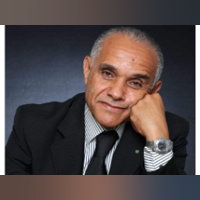
Aziz Daouda Aziz Daouda

Aziz Daouda

Directeur Technique et du Développement de la Confédération Africaine d'Athlétisme. Passionné du Maroc, passionné d'Afrique. Concerné par ce qui se passe, formulant mon point de vue quand j'en ai un. Humaniste, j'essaye de l'être, humain je veux l'être. Mon histoire est intimement liée à l'athlétisme marocain et mondial. J'ai eu le privilège de participer à la gloire de mon pays .


8100

33.0

THE ADVENTURES OF TOM SAWYER - PREFACE 3752

Most of the adventures recorded in this book really occurred; one or two were experiences of my own, the rest those of boys who were schoolmates of mine. Huck Finn is drawn from life; Tom Sawyer also, but not from an individual—he is a combination of the characteristics of three boys whom I knew, and therefore belongs to the composite order of architecture. The odd superstitions touched upon were all prevalent among children and slaves in the West at the period of this story—that is to say, thirty or forty years ago. Although my book is intended mainly for the entertainment of boys and girls, I hope it will not be shunned by men and women on that account, for part of my plan has been to try to pleasantly remind adults of what they once were themselves, and of how they felt and thought and talked, and what queer enterprises they sometimes engaged in. THE AUTHOR. HARTFORD, 1876.

THE MEDITATIONS - Book I.[1/3] 3872

1. I learned from my grandfather, Verus, to use good manners, and to put restraint on anger. 2. In the famous memory of my father I had a pattern of modesty and manliness. 3. Of my mother I learned to be pious and generous; to keep myself not only from evil deeds, but even from evil thoughts; and to live with a simplicity which is far from customary among the rich. 4. I owe it to my great-grandfather that I did not attend public lectures and discussions, but had good and able teachers at home; and I owe him also the knowledge that for things of this nature a man should count no expense too great. 5. My tutor taught me not to favour either green or blue at the chariot races, nor, in the contests of gladiators, to be a supporter either of light or heavy armed. He taught me also to endure labour; not to need many things; to serve myself without troubling others; not to intermeddle in the affairs of others, and not easily to listen to slanders against them. 6. Of Diognetus I had the lesson not to busy myself about vain things; not to credit the great professions of such as pretend to work wonders, or of sorcerers about their charms, and their expelling of Demons and the like; not to keep quails (for fighting or divination), nor to run after such things; to suffer freedom of speech in others, and to apply myself heartily to philosophy. Him also I must thank for my hearing first Bacchius, then Tandasis and Marcianus; that I wrote dialogues in my youth, and took a liking to the philosopher’s pallet and skins, and to the other things which, by the Grecian discipline, belong to that profession. 7. To Rusticus I owe my first apprehensions that my nature needed reform and cure; and that I did not fall into the ambition of the common Sophists, either by composing speculative writings or by declaiming harangues of exhortation in public; further, that I never strove to be admired by ostentation of great patience in an ascetic life, or by display of activity and application; that I gave over the study of rhetoric, poetry, and the graces of language; and that I did not pace my house in my senatorial robes, or practise any similar affectation. I observed also the simplicity of style in his letters, particularly in that which he wrote to my mother from Sinuessa. I learned from him to be easily appeased, and to be readily reconciled with those who had displeased me or given cause of offence, so soon as they inclined to make their peace; to read with care; not to rest satisfied with a slight and superficial knowledge; nor quickly to assent to great talkers. I have him to thank that I met with the discourses of Epictetus, which he furnished me from his own library. 8. From Apollonius I learned true liberty, and tenacity of purpose; to regard nothing else, even in the smallest degree, but reason always; and always to remain unaltered in the agonies of pain, in the losses of children, or in long diseases. He afforded me a living example of how the same man can, upon occasion, be most yielding and most inflexible. He was patient in exposition; and, as might well be seen, esteemed his fine skill and ability in teaching others the principles of philosophy as the least of his endowments. It was from him that I learned how to receive from friends what are thought favours without seeming humbled by the giver or insensible to the gift. 9. Sextus was my pattern of a benign temper, and his family the model of a household governed by true paternal affection, and a steadfast purpose of living according to nature. Here I could learn to be grave without affectation, to observe sagaciously the several dispositions and inclinations of my friends, to tolerate the ignorant and those who follow current opinions without examination. His conversation showed how a man may accommodate himself to all men and to all companies; for though companionship with him was sweeter and more pleasing than any sort of flattery, yet he was at the same time highly respected and reverenced. No man was ever more happy than he in comprehending, finding out, and arranging in exact order the great maxims necessary for the conduct of life. His example taught me to suppress even the least appearance of anger or any other passion; but still, with all this perfect tranquillity, to possess the tenderest and most affectionate heart; to be apt to approve others yet without noise; to have much learning and little ostentation. 10. I learned from Alexander the Grammarian to avoid censuring others, to refrain from flouting them for a barbarism, solecism, or any false pronunciation. Rather was I dexterously to pronounce the words rightly in my answer, confining approval or objection to the matter itself, and avoiding discussion of the expression, or to use some other form of courteous suggestion. 11. Fronto made me sensible how much of envy, deceit and hypocrisy surrounds princes; and that generally those whom we account nobly born have somehow less natural affection. 12. I learned from Alexander the Platonist not often nor without great necessity to say, or write to any man in a letter, that I am not at leisure; nor thus, under pretext of urgent affairs, to make a practice of excusing myself from the duties which, according to our various ties, we owe to those with whom we live. 13. Of Catulus I learned not to condemn any friend’s expostulation even though it were unjust, but to try to recall him to his former disposition; to stint no praise in speaking of my masters, as is recounted of Domitius and Athenodorus; and to love my children with true affection. 14. Of Severus, my brother, I learned to love my kinsmen, to love truth, to love justice. Through him I came to know Thrasea, Helvidius, Cato, Dion, and Brutus. He gave me my first conception of a Commonwealth founded upon equitable laws and administered with equality of right; and of a Monarchy whose chief concern is the freedom of its subjects. Of him I learned likewise a constant and harmonious devotion to Philosophy; to be ready to do good, to be generous with all my heart. He taught me to be of good hope and trustful of the affection of my friends. I observed in him candour in declaring what he condemned in the conduct of others; and so frank and open was his behaviour, that his friends might easily see without the trouble of conjecture what he liked or disliked.