Think Forward.

Kingdom of Morocco: 2030 Foundation, the New Momentum for Major Sporting Events 19594

The Moroccan Government Council recently formalized the creation of the **2030 Foundation**, an innovative strategic entity tasked with leading the preparation, organization, and successful hosting of major international sporting events that the Kingdom will welcome in the coming years. This initiative aligns with an ambitious vision driven by royal directives and the instructions given at the Council of Ministers on December 4, 2024, aiming to establish Morocco as a global benchmark for hosting major sporting events. The **2030 Foundation** is not merely an organizing committee; it is designed as a true lever for economic, social, and infrastructural transformation. Its mission encompasses the comprehensive management of flagship events such as the **2025 Africa Cup of Nations**, which will serve as a full-scale rehearsal, and the **2030 FIFA World Cup**, co-hosted with Spain and Portugal. Through this new entity, Morocco intends not only to guarantee the technical and logistical success of these competitions but also to maximize their positive impact across the entire national territory. To achieve this, the Foundation’s mission rests on **six strategic pillars**: 1. **Optimal planning and coordination:** The Foundation will ensure rigorous and detailed planning covering all phases from preparation to event closure. It will effectively mobilize public and private stakeholders to respect timelines and international standards, with global logistical management—including delegation reception, security, communication, and media—at its core. 2. **Acceleration of infrastructure projects:** Hosting these sporting events is a powerful driver for infrastructure development. The Foundation will oversee the completion and modernization of stadiums, training centers, and related facilities according to FIFA and CAF requirements. It will also lead the development of airports, the expansion of the high-speed rail network, and improvement of roadways to facilitate mobility for spectators and teams. Renovation and construction of hotels, as well as enhancement of tourism services and urban infrastructure in host cities, are integral to this large-scale effort. 3. **Transparent, rigorous project management:** The Foundation commits to exemplary management with strict monitoring of budgets, deadlines, and specifications. It will implement control and evaluation tools to guarantee the effectiveness of actions undertaken, ensuring Morocco fully honors its international commitments and strengthens its global credibility and image. 4. **Administrative coordination and international dialogue:** Acting as the sole interlocutor with international bodies such as FIFA and CAF, the Foundation will centralize decisions and harmonize Morocco’s positions. This centralization will facilitate exchanges, accelerate negotiations, and swiftly resolve potential issues, ensuring essential administrative and diplomatic fluidity for event success. 5. **Promotion of a positive and sustainable image of Morocco:** Beyond technical aspects, the Foundation will play a key role in long-term strategic planning, integrating economic, social, and environmental benefits. It will highlight Morocco’s cultural, tourist, and economic assets and deploy proactive communication to attract investors, media, and visitors, thereby enhancing the Kingdom’s international appeal. 6. **Enhanced support for host regions and provinces:** Aware of the importance of balanced territorial development, the Foundation will provide technical and financial support to organizing regions and provinces. It will ensure local human resource training and mobilization while developing public and private services (transport, security, health, accommodation) to offer an optimal visitor experience. This approach guarantees that event benefits extend throughout Morocco, helping reduce regional disparities. The **2030 Foundation** embodies a dynamic of sustainable and inclusive development, aiming to create jobs, stimulate the local economy, strengthen modern infrastructure, and improve social cohesion and Morocco’s cultural influence. These sporting events become catalysts to accelerate the Kingdom’s economic and social transformation. Underlying this vision is the goal to depoliticize the action to ensure guaranteed success. The Foundation transcends time, competition, and political calculation. One major challenge is to shield these mega sports projects from political uncertainties and administrative delays. By ensuring centralized, rigorous, and multidisciplinary management, it guarantees optimal project efficiency and safeguards against bureaucratic stagnation. The **2030 Foundation** is thus the cornerstone of an ambitious national strategy that promises not only the exemplary success of CAN 2025 and the 2030 FIFA World Cup but also the emergence of a new dynamic of harmonious and sustainable development for Morocco. This innovation reflects the Kingdom’s determination to combine sporting excellence with socio-economic progress. It embodies a modern, proactive vision capable of transforming international sporting events into genuine levers of long-term growth and influence. Morocco will position itself as a key player on the global sports stage, ready to meet tomorrow’s challenges with ambition and responsibility.

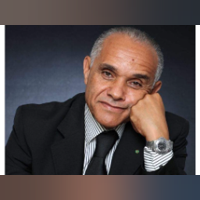
Aziz Daouda Aziz Daouda

Aziz Daouda

Directeur Technique et du Développement de la Confédération Africaine d'Athlétisme. Passionné du Maroc, passionné d'Afrique. Concerné par ce qui se passe, formulant mon point de vue quand j'en ai un. Humaniste, j'essaye de l'être, humain je veux l'être. Mon histoire est intimement liée à l'athlétisme marocain et mondial. J'ai eu le privilège de participer à la gloire de mon pays .


10200

33.0

THE ADVENTURES OF TOM SAWYER - PREFACE 5846

Most of the adventures recorded in this book really occurred; one or two were experiences of my own, the rest those of boys who were schoolmates of mine. Huck Finn is drawn from life; Tom Sawyer also, but not from an individual—he is a combination of the characteristics of three boys whom I knew, and therefore belongs to the composite order of architecture. The odd superstitions touched upon were all prevalent among children and slaves in the West at the period of this story—that is to say, thirty or forty years ago. Although my book is intended mainly for the entertainment of boys and girls, I hope it will not be shunned by men and women on that account, for part of my plan has been to try to pleasantly remind adults of what they once were themselves, and of how they felt and thought and talked, and what queer enterprises they sometimes engaged in. THE AUTHOR. HARTFORD, 1876.

THE MEDITATIONS - Book I.[1/3] 6000

1. I learned from my grandfather, Verus, to use good manners, and to put restraint on anger. 2. In the famous memory of my father I had a pattern of modesty and manliness. 3. Of my mother I learned to be pious and generous; to keep myself not only from evil deeds, but even from evil thoughts; and to live with a simplicity which is far from customary among the rich. 4. I owe it to my great-grandfather that I did not attend public lectures and discussions, but had good and able teachers at home; and I owe him also the knowledge that for things of this nature a man should count no expense too great. 5. My tutor taught me not to favour either green or blue at the chariot races, nor, in the contests of gladiators, to be a supporter either of light or heavy armed. He taught me also to endure labour; not to need many things; to serve myself without troubling others; not to intermeddle in the affairs of others, and not easily to listen to slanders against them. 6. Of Diognetus I had the lesson not to busy myself about vain things; not to credit the great professions of such as pretend to work wonders, or of sorcerers about their charms, and their expelling of Demons and the like; not to keep quails (for fighting or divination), nor to run after such things; to suffer freedom of speech in others, and to apply myself heartily to philosophy. Him also I must thank for my hearing first Bacchius, then Tandasis and Marcianus; that I wrote dialogues in my youth, and took a liking to the philosopher’s pallet and skins, and to the other things which, by the Grecian discipline, belong to that profession. 7. To Rusticus I owe my first apprehensions that my nature needed reform and cure; and that I did not fall into the ambition of the common Sophists, either by composing speculative writings or by declaiming harangues of exhortation in public; further, that I never strove to be admired by ostentation of great patience in an ascetic life, or by display of activity and application; that I gave over the study of rhetoric, poetry, and the graces of language; and that I did not pace my house in my senatorial robes, or practise any similar affectation. I observed also the simplicity of style in his letters, particularly in that which he wrote to my mother from Sinuessa. I learned from him to be easily appeased, and to be readily reconciled with those who had displeased me or given cause of offence, so soon as they inclined to make their peace; to read with care; not to rest satisfied with a slight and superficial knowledge; nor quickly to assent to great talkers. I have him to thank that I met with the discourses of Epictetus, which he furnished me from his own library. 8. From Apollonius I learned true liberty, and tenacity of purpose; to regard nothing else, even in the smallest degree, but reason always; and always to remain unaltered in the agonies of pain, in the losses of children, or in long diseases. He afforded me a living example of how the same man can, upon occasion, be most yielding and most inflexible. He was patient in exposition; and, as might well be seen, esteemed his fine skill and ability in teaching others the principles of philosophy as the least of his endowments. It was from him that I learned how to receive from friends what are thought favours without seeming humbled by the giver or insensible to the gift. 9. Sextus was my pattern of a benign temper, and his family the model of a household governed by true paternal affection, and a steadfast purpose of living according to nature. Here I could learn to be grave without affectation, to observe sagaciously the several dispositions and inclinations of my friends, to tolerate the ignorant and those who follow current opinions without examination. His conversation showed how a man may accommodate himself to all men and to all companies; for though companionship with him was sweeter and more pleasing than any sort of flattery, yet he was at the same time highly respected and reverenced. No man was ever more happy than he in comprehending, finding out, and arranging in exact order the great maxims necessary for the conduct of life. His example taught me to suppress even the least appearance of anger or any other passion; but still, with all this perfect tranquillity, to possess the tenderest and most affectionate heart; to be apt to approve others yet without noise; to have much learning and little ostentation. 10. I learned from Alexander the Grammarian to avoid censuring others, to refrain from flouting them for a barbarism, solecism, or any false pronunciation. Rather was I dexterously to pronounce the words rightly in my answer, confining approval or objection to the matter itself, and avoiding discussion of the expression, or to use some other form of courteous suggestion. 11. Fronto made me sensible how much of envy, deceit and hypocrisy surrounds princes; and that generally those whom we account nobly born have somehow less natural affection. 12. I learned from Alexander the Platonist not often nor without great necessity to say, or write to any man in a letter, that I am not at leisure; nor thus, under pretext of urgent affairs, to make a practice of excusing myself from the duties which, according to our various ties, we owe to those with whom we live. 13. Of Catulus I learned not to condemn any friend’s expostulation even though it were unjust, but to try to recall him to his former disposition; to stint no praise in speaking of my masters, as is recounted of Domitius and Athenodorus; and to love my children with true affection. 14. Of Severus, my brother, I learned to love my kinsmen, to love truth, to love justice. Through him I came to know Thrasea, Helvidius, Cato, Dion, and Brutus. He gave me my first conception of a Commonwealth founded upon equitable laws and administered with equality of right; and of a Monarchy whose chief concern is the freedom of its subjects. Of him I learned likewise a constant and harmonious devotion to Philosophy; to be ready to do good, to be generous with all my heart. He taught me to be of good hope and trustful of the affection of my friends. I observed in him candour in declaring what he condemned in the conduct of others; and so frank and open was his behaviour, that his friends might easily see without the trouble of conjecture what he liked or disliked.