Think Forward.

DRACULA - CHAPTER I JONATHAN HARKER’S JOURNAL [4/5] 4043

When it grew dark there seemed to be some excitement amongst the passengers, and they kept speaking to him, one after the other, as though urging him to further speed. He lashed the horses unmercifully with his long whip, and with wild cries of encouragement urged them on to further exertions. Then through the darkness I could see a sort of patch of grey light ahead of us, as though there were a cleft in the hills. The excitement of the passengers grew greater; the crazy coach rocked on its great leather springs, and swayed like a boat tossed on a stormy sea. I had to hold on. The road grew more level, and we appeared to fly along. Then the mountains seemed to come nearer to us on each side and to frown down upon us; we were entering on the Borgo Pass. One by one several of the passengers offered me gifts, which they pressed upon me with an earnestness which would take no denial; these were certainly of an odd and varied kind, but each was given in simple good faith, with a kindly word, and a blessing, and that strange mixture of fear-meaning movements which I had seen outside the hotel at Bistritz—the sign of the cross and the guard against the evil eye. Then, as we flew along, the driver leaned forward, and on each side the passengers, craning over the edge of the coach, peered eagerly into the darkness. It was evident that something very exciting was either happening or expected, but though I asked each passenger, no one would give me the slightest explanation. This state of excitement kept on for some little time; and at last we saw before us the Pass opening out on the eastern side. There were dark, rolling clouds overhead, and in the air the heavy, oppressive sense of thunder. It seemed as though the mountain range had separated two atmospheres, and that now we had got into the thunderous one. I was now myself looking out for the conveyance which was to take me to the Count. Each moment I expected to see the glare of lamps through the blackness; but all was dark. The only light was the flickering rays of our own lamps, in which the steam from our hard-driven horses rose in a white cloud. We could see now the sandy road lying white before us, but there was on it no sign of a vehicle. The passengers drew back with a sigh of gladness, which seemed to mock my own disappointment. I was already thinking what I had best do, when the driver, looking at his watch, said to the others something which I could hardly hear, it was spoken so quietly and in so low a tone; I thought it was “An hour less than the time.” Then turning to me, he said in German worse than my own:— “There is no carriage here. The Herr is not expected after all. He will now come on to Bukovina, and return to-morrow or the next day; better the next day.” Whilst he was speaking the horses began to neigh and snort and plunge wildly, so that the driver had to hold them up. Then, amongst a chorus of screams from the peasants and a universal crossing of themselves, a calèche, with four horses, drove up behind us, overtook us, and drew up beside the coach. I could see from the flash of our lamps, as the rays fell on them, that the horses were coal-black and splendid animals. They were driven by a tall man, with a long brown beard and a great black hat, which seemed to hide his face from us. I could only see the gleam of a pair of very bright eyes, which seemed red in the lamplight, as he turned to us. He said to the driver:— “You are early to-night, my friend.” The man stammered in reply:— “The English Herr was in a hurry,” to which the stranger replied:— “That is why, I suppose, you wished him to go on to Bukovina. You cannot deceive me, my friend; I know too much, and my horses are swift.” As he spoke he smiled, and the lamplight fell on a hard-looking mouth, with very red lips and sharp-looking teeth, as white as ivory. One of my companions whispered to another the line from Burger’s “Lenore”:— The strange driver evidently heard the words, for he looked up with a gleaming smile. The passenger turned his face away, at the same time putting out his two fingers and crossing himself. “Give me the Herr’s luggage,” said the driver; and with exceeding alacrity my bags were handed out and put in the calèche. Then I descended from the side of the coach, as the calèche was close alongside, the driver helping me with a hand which caught my arm in a grip of steel; his strength must have been prodigious. Without a word he shook his reins, the horses turned, and we swept into the darkness of the Pass. As I looked back I saw the steam from the horses of the coach by the light of the lamps, and projected against it the figures of my late companions crossing themselves. Then the driver cracked his whip and called to his horses, and off they swept on their way to Bukovina. As they sank into the darkness I felt a strange chill, and a lonely feeling came over me; but a cloak was thrown over my shoulders, and a rug across my knees, and the driver said in excellent German:— “The night is chill, mein Herr, and my master the Count bade me take all care of you. There is a flask of slivovitz (the plum brandy of the country) underneath the seat, if you should require it.” I did not take any, but it was a comfort to know it was there all the same. I felt a little strangely, and not a little frightened. I think had there been any alternative I should have taken it, instead of prosecuting that unknown night journey. The carriage went at a hard pace straight along, then we made a complete turn and went along another straight road. It seemed to me that we were simply going over and over the same ground again; and so I took note of some salient point, and found that this was so. I would have liked to have asked the driver what this all meant, but I really feared to do so, for I thought that, placed as I was, any protest would have had no effect in case there had been an intention to delay. By-and-by, however, as I was curious to know how time was passing, I struck a match, and by its flame looked at my watch; it was within a few minutes of midnight. This gave me a sort of shock, for I suppose the general superstition about midnight was increased by my recent experiences. I waited with a sick feeling of suspense.

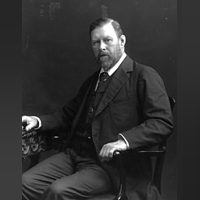
Bluwr X Commons: Bram Stoker Bluwr X Commons: Bram Stoker

Bluwr X Commons: Bram Stoker

Abraham Stoker (8 November 1847 – 20 April 1912) was an Irish author, his novel ‘Dracula’ is regarded as one of the most recognizable works of English literature.


200

0

Chapter 5: Synthesis- The Consilience of the Framework 111

The evidentiary power and utility of this integrated framework—Orbits, Latticework, Pipeline—lies in its consilience. It weaves breakthroughs from wildly disparate fields into a single, coherent explanatory tapestry, revealing a universal pattern of successful inquiry. From Ballpark to Trading Floor: The narratives of Moneyball and The Big Short are isomorphic: Both begin with a philosophical reframing of value (what makes a baseball player valuable; what is the true risk of a mortgage bond). Both proceed through scientific, data-driven discovery of a massive market inefficiency (OBP vs. price; real default risk vs. AAA ratings). Both culminate in the formulation and execution of a winning model (a roster of undervalued players; a portfolio of credit default swaps). They are the same story, told in different arenas. From Sideline to Boardroom- José Mourinho’s Tactical Objectivity: The strategic success of football manager José Mourinho, particularly in his early career at Porto, Chelsea, and Inter Milan, can be precisely deconstructed through this lens. Lacking a storied playing career, he was unburdened by the sport’s internal, dogmatic "ways of knowing." His Outer Orbit philosophy was defined with stark clarity: winning is the sole aesthetic. His Middle Orbit work became legendary: obsessive, scientific analysis of opponents, involving countless hours of video to identify specific tactical vulnerabilities in individual players and systemic gaps in team shape. His Inner Orbit genius was in formulation: he would design rigorous, often defensively-oriented game models tailored to exploit those precise weaknesses, demanding robotic discipline from his players. His famous 1-0 victories, frequently derided as "anti-football" or "boring," were direct, logical products of pursuing objective victory over subjective aesthetic approval. He demonstrated that objectivity often requires enduring backlash from a consensus invested in a different, more romantic model of the game. From Factory Flow to Protein Fold: Taiichi Ohno’s andon cord and Demis Hassabis’s AlphaFold: Both are profound interventions based on latticework understanding. Ohno designed a human-technological system to make local truth (a defect) instantly global, optimizing a physical manufacturing lattice. Hassabis built a computational system to infer the spatial relationship lattice of amino acids from evolutionary data, optimizing our understanding of the biological lattice. One is mechanical and human, the other digital and abstract, but both are solutions born from seeing a problem as a network of relationships to be modeled and managed. The Contemporary Imperative-The Age of the Synthesist: The historical drift of knowledge since the Enlightenment has been from integration toward fragmentation. The Renaissance ideal of the uomo universale (universal man) gave way to the Industrial Age’s demand for the hyper-specialist. The 20th century perfected the silo. The 21st century, however, presents us with a stark imperative that demands a synthesis, a return to integrated thinking, but now armed with powerful new tools and facing problems of unprecedented scale. Two convergent forces make the orbital, latticework methodology not merely beneficial, but essential for competent navigation of our time. The Nature of Our Tools: Our most powerful analytical engines—Artificial Intelligence (particularly machine learning and large language models) and, on the horizon, Quantum Computing—are inherently cross-orbital and lattice-native. Deploying AI effectively on any complex problem, from drug discovery to climate modeling to ethical dilemma resolution, requires precise philosophical framing (defining objectives, values, and constraints to avoid perverse outcomes), robust and curated scientific data grounding, and exquisite mathematical formulation of the model architecture and training paradigm. These tools fail, often catastrophically and insidiously, with fragmented, siloed, or philosophically unexamined input. They demand, and therefore will select for, synthesist thinkers who can navigate all three orbits and think in terms of interconnected systems. The Nature of Our Challenges: The existential problems that define our epoch are quintessential latticework challenges. They cannot be contained within academic departments or government agencies. They are not "physics problems" or "economics problems." They are system problems. The specialized intellect, trained to dig ever deeper into a single vertical silo, is architecturally unequipped to even properly define them, let alone solve them. These challenges demand minds capable of orbital thinking across the lattice, minds that can hold multiple models, trace second- and third-order consequences, and formulate strategies that are robust across multiple domains of reality. Objectivity as the Foundational Operating System. The pursuit of objective truth is not a passive state of receiving revealed wisdom. It is an active, disciplined, and often confrontational chase. It requires the moral courage to question foundational premises in the Outer Orbit, the intellectual rigor to map reality without favor or illusion in the Middle Orbit, and the creative potency to formally synthesize understanding in the Inner Orbit. It demands that we see the world not as a collection of unrelated events, but as a vast, dynamic lattice of interlocking causes and effects. And it is best navigated with the structured, self-correcting protocol of the Objectivity Pipeline. This framework proposes objectivity not as the cold, emotionless province of a narrow scientism, but as a universal operating system for understanding, a scalable, rigorous, and ultimately humane methodology applicable with equal force to the equations of a physicist, the ethical calculus of a jurist, the investment thesis of a historian, the innovation of an engineer, and the strategy of a state. Subjectivity is the fog of un-modeled complexity. The Orbits Model, the Latticework Theory, and the Objectivity Pipeline constitute the navigation system—the charts, the compass, and the piloting protocol. In an epoch defined by overwhelming information, pervasive misinformation, and tools of god-like power whose misuse carries existential risk, mastering this chase is no longer an intellectual luxury or a philosophical pastime. It is the essential meta-skill, the foundational logic upon which reliable judgment, effective action, and meaningful progress depend. The choice before us is not between a subjective world and an objective one, but between wandering in the fog and building a lighthouse. The architecture for the lighthouse is here. The materials are the disciplines of thought we have inherited and refined. The builders must now be us.

Chapter 4: The Objectivity Pipeline- A Sequential Protocol for Execution 115

A theoretical framework, no matter how elegant, remains an intellectual curiosity unless it can be translated into a practical, repeatable protocol. The Orbits Model and the Latticework Theory converge into a disciplined, sequential, and recursive process I call ‘The Objectivity Pipeline’. This seven-stage pipeline provides the operational scaffolding to move from a nebulous, subjective problem to an objective, actionable solution. Define: Articulate the core problem, obstacle, or Wildly Important Goal (WIG) with surgical, unambiguous precision. Vague, multifaceted, or emotionally charged aims guarantee vague, conflicted outcomes. This is a pure Outer Orbit activity. Identify Variables: Catalog the key agents, forces, constraints, and measurable factors involved in the system. Move into the Middle Orbit. What are the inputs, outputs, and actors? Distinguish between independent variables (potential levers) and dependent variables (outcomes). Map Relationships: Diagram the causal, correlational, inhibitory, and influential links between the identified variables. This is the cartography of the latticework. Tools include causal loop diagrams, systems maps, influence diagrams, and process flows. The goal is to visualize the system's structure, revealing feedback loops, bottlenecks, and leverage points. Model: Construct a formal representation of the mapped system. This is the decisive leap to the Inner Orbit. The model can take many forms: a set of statistical equations, a system of differential equations, an agent-based computer simulation, a Bayesian network, or even a rigorously structured qualitative framework. The model is a simplified but functional analogue of reality, designed for manipulation and testing. Simulate: Run the model. Conduct experiments in silico. Test scenarios, stress-test assumptions under extreme conditions, and observe the range of potential outcomes the system logic produces. This stage provides a safe, low-cost environment for failure and learning before committing real-world resources. Verify: Return to the Middle Orbit. Collect new, out-of-sample empirical data—data not used to build the model—and check the model’s predictions against this observed reality. Does the world behave as the model forecasts? If not, the error is not in "reality"; it lies in an earlier stage of the pipeline. The process must recursively return to Definition, Variable Identification, Relationship Mapping, or Model Formulation for correction. Optimize: With a reasonably verified model, adjust the controllable variables within it to find the most efficient, effective, or robust path to achieve the goal defined in Stage 1. This is the stage of generating prescriptions and strategies. The Four Disciplines of Execution (4DX): The corporate strategy framework developed by McChesney, Covey, and Huling (The 4 Disciplines of Execution, 2012) is a streamlined, commercialized instantiation of the Objectivity Pipeline, designed for team-level implementation. Define: Focus on the Wildly Important Goal (WIG)—no more than one or two overwhelming priorities. Identify Variables: Differentiate between Lag Measures (the ultimate outcome metrics, like revenue or customer satisfaction) and Lead Measures (the predictive, influenceable activities that drive the lag measures, like sales calls or quality checks). Map Relationships: Create a Compelling Scoreboard that is simple, public, and visually maps, in real-time, the relationship between lead measure activity and progress toward the WIG. Model & Cadence: Establish a recurring Cadence of Accountability, a short, rhythmic meeting (e.g., weekly) where team members report on commitments, review the scoreboard, and plan new commitments. This cadence functions as a live, human-powered simulation, verification, and optimization loop, embodying stages 5-7 of the pipeline in a behavioral rhythm. The Lucas Paradox and the Anatomy of Perceived Risk: The Lucas Paradox, introduced by Nobel Prize winning economist Robert Lucas in 1990, refers to the persistent empirical observation that capital does not flow from capital-rich countries to capital-poor countries at the scale predicted by neoclassical growth theory, despite higher marginal returns to capital in poorer economies. This phenomenon is not a failure of investor rationality, nor is it primarily a behavioral anomaly. It is a failure of overly narrow models of risk and return. In its simplest form, the canonical model assumes that capital responds to differences in marginal productivity adjusted for measurable risk. Under those assumptions, capital should flow aggressively toward emerging and frontier markets. It does not. The paradox arises because the model omits structural variables that dominate realized outcomes in cross-border investment. The conventional framing treats the problem as one of portfolio optimization under uncertainty, focusing on variables such as growth rates, inflation, fiscal balance, political stability indices, and currency volatility. These variables are necessary but insufficient. Empirical research following Lucas has repeatedly shown that capital flows are far more sensitive to institutional quality, property rights enforcement, legal predictability, capital controls, sovereign credibility, and the risk of expropriation than to marginal productivity alone. Once these variables are incorporated, much of the paradox dissolves. A latticework-consistent approach does not redefine the problem as “exploiting irrational fear.” It reframes it as identifying structural wedges between theoretical returns and realizable returns. The relevant distinction is not between perceived and actual risk in a behavioral sense, but between modeled risk and true system risk, much of which is institutional, legal, and political rather than financial. A pipeline-compliant analysis therefore proceeds differently. It defines the problem as understanding why expected returns fail to materialize when capital is deployed across jurisdictions. It expands the variable set to include enforceability of contracts, durability of political coalitions, susceptibility to policy reversal, credibility of monetary and fiscal regimes, depth of domestic financial markets, and exposure to global liquidity cycles. It models the interaction between these variables, recognizing that risk is not additive but multiplicative. Weak institutions amplify shocks, truncate upside, and skew return distributions through tail events rather than through mean variance alone. Failing to be conscientious in pursuing objectivity using pipeline steps can have severe consequences at a global level making it an approach valid for consideration and study.

The Radiance of a Lady 112

​Your love illuminates my heart, And you have forbidden me to reveal this honor. How can the light of your brilliance be dimmed When it radiates from everywhere? It shines like a sapphire, a diamond, or a jewel, And dazzles everyone with your blonde beauty. You do not believe in my love, In turn, While I can love no one else but you; This is my destiny, this is my faith. You are my heart and my soul, You are my destiny, you are my law. I cannot bear it when you are far away, beautiful woman, You who soothe my heart in flames. In you, I find all my vows, You who make my days happy. ​Dr. Fouad Bouchareb Inspired by an Andalusian music piece, "Bassit Ibahane" December 13, 2025 https://youtu.be/wlvhOVGyLek?si=5tt6cm0oChF1NQJJ