Think Forward.

5ème Journée des maladies rares à Casablanca le 24 février 2024 3772

Les maladies rares se définissent comme des affections qui touchent moins d’une personne sur 2000. Néanmoins, leur nombre important, plus de 8000 pathologies déjà recensées font que le nombre total de patients dépasse souvent le nombre de malades atteints de cancer. Plus de 350 millions de personnes dans le monde souffrent de ces pathologies. Une personne sur 20 est concernée soit pour le Maroc 3 million de patients atteints par une de ces pathologies. Ces maladies sont souvent chroniques, évolutives et en général graves. Leur expression est extrêmement diverse : neuromusculaires, métaboliques, infectieuses, immunes, cancéreuses La journée Internationale des Maladies Rares (Rare Diseases Day) est organisée chaque année le dernier jour de février, dans plus de 90 pays. L’objectif principal de cette journée est de sensibiliser sur les maladies rares et leur impact sur la vie des personnes concernées. A cette occasion, l'ALLIANCE DES MALADIES RARES AU MAROC va organiser sa propre "Journée des Maladies Rares", le 24 février 2024 à Casablanca dans l'hôtel Marriot. Elle le fera en partenariat avec les laboratoires Sanofi et L’Association Marocaine de Biologie Médicale (AMBM). UN PANORAMA TRES LARGE ET PARFOIS DEROUTANT DE MALADIES RARES Extrêmement diverses - neuromusculaires, métaboliques, infectieuses, immunes, cancéreuses …-, 80% de ces maladies ont une origine génétique. 3 maladies sur 4 se déclenchent dans l’enfance mais certaines attendent 30, 40 ou 50 ans avant de se déclarer. Elles empêchent de : voir (rétinites), respirer (mucoviscidose), résister aux infections (déficits immunitaires), coaguler normalement le sang (hémophilie), grandir et développer une puberté normale (syndrome de Turner : absence ou anomalie chez une fille d'un des 2 chromosomes sexuels féminin X)… D’autres provoquent : un vieillissement accéléré (progéria, 100 cas dans le monde) ; des fractures à répétition (maladie des os de verre) ; une transformation des muscles en os (maladie de l’homme de pierre, 2 500 cas dans le monde) ; une démarche incertaine, la mémoire hésitante, des comportements parfois " inappropriés par rapport aux convenances sociales" et des difficultés à contrôler la vessie (hydrocéphalie à pression normale : accumulation du liquide céphalo-rachidien dans le cerveau, après 60 ans) ; une anémie par anomalie de globules rouges (bêta-thalassémie) ; une sclérose cérébrale et une paralysie progressive de toutes les fonctions (leucodystrophie) … ou encore des mouvements incontrôlables et un affaiblissement intellectuel allant jusqu’à la démence (maladie de Huntington). Le parcours thérapeutique est souvent chaotique pour les malades. Ils ont souvent des difficultés à obtenir le bon diagnostic d'où des retards parfois dramatiques à être prises en charge. Et pourtant, s’il n'existe pas de traitement curatif pour la plupart d'entre de ces affections, des soins appropriés peuvent permettre de « vivre avec une maladie rare ». DES PRIORITES A METTRE EN ŒUVRE AU MAROC Les personnes atteintes de maladies rares posent au Maroc d’innombrables problèmes notamment au niveau du diagnostic et de la prise en charge. Elles souffrent en outre d’un manque d’information, d’absence de centres de référence et de compétence ainsi que de dépistage néonatal systématique pour tous les nouveau-nés. Elles souffrent également d’absence de couverture médicale universelle et de non disponibilité de certains médicaments, ce qui complique davantage leur prise en charge. L’Alliance des Maladies Rares au Maroc (AMRM), a trois REVENDICATIONS PRINCIPALES visant à : – Donner rapidement le statut d’affection de longue durée (ALD) à un grand nombre de maladies rares et en particulier d’abord aux plus couteuses ; cela garantirait ainsi une prise en charge et un remboursement systématiques des soins à 100 % de la base de référence sécurité sociale ; on rappellera que, pour le moment, nombre de patients sont confrontés à des problèmes de remboursement car ils ne peuvent bénéficier que d’un remboursement dérogatoire au cas par cas, devant être renouvelé continuellement et avec le risque d’une suspension à tout moment ; – Mettre en place un statut de « médicament orphelin » pour les thérapeutiques employées dans les maladies rares offrant notamment un accès plus rapide au marché en raccourcissant les délais d’autorisation de mise sur le marché (AMM) ; il pourrait être envisagé aussi de les dispenser de certaines taxes et impôts et de leur garantir une exclusivité commerciale sur une certaine période ; en contrepartie de ces avantages, les pouvoirs publics devraient pouvoir s’attacher à négocier des réductions de prix sur les médicaments les plus chers (certains sont d’un montant de plusieurs millions de dirhams !) ; – Instaurer un dépistage néonatal systématique visant à détecter des maladies rares sévères d’origine génétique, généralement chez les bébés : il s’agit notamment de la phénylcétonurie, l’hypothyroïdie congénitale, l’hyperplasie congénitale des surrénales, la mucoviscidose et l’hémoglobinopathie. Dr MOUSSAYER KHADIJA ا Spécialiste en médecine interne et en Gériatrie en libéral à Casablanca. Présidente de l’Alliance Maladies Rares Maroc (AMRM)

Dr Moussayer khadija Dr Moussayer khadija

Dr Moussayer khadija

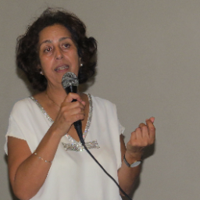
Dr MOUSSAYER KHADIJA الدكتورة خديجة موسيار Spécialiste en médecine interne et en Gériatrie en libéral à Casablanca. Présidente de l’Alliance Maladies Rares Maroc (AMRM) et de l’association marocaine des maladies auto-immunes et systémiques (AMMAIS), Vice-présidente du Groupe de l’Auto-Immunité Marocain (GEAIM)

5300

0

THE MEDITATIONS - Book I.[1/3] 5991

1. I learned from my grandfather, Verus, to use good manners, and to put restraint on anger. 2. In the famous memory of my father I had a pattern of modesty and manliness. 3. Of my mother I learned to be pious and generous; to keep myself not only from evil deeds, but even from evil thoughts; and to live with a simplicity which is far from customary among the rich. 4. I owe it to my great-grandfather that I did not attend public lectures and discussions, but had good and able teachers at home; and I owe him also the knowledge that for things of this nature a man should count no expense too great. 5. My tutor taught me not to favour either green or blue at the chariot races, nor, in the contests of gladiators, to be a supporter either of light or heavy armed. He taught me also to endure labour; not to need many things; to serve myself without troubling others; not to intermeddle in the affairs of others, and not easily to listen to slanders against them. 6. Of Diognetus I had the lesson not to busy myself about vain things; not to credit the great professions of such as pretend to work wonders, or of sorcerers about their charms, and their expelling of Demons and the like; not to keep quails (for fighting or divination), nor to run after such things; to suffer freedom of speech in others, and to apply myself heartily to philosophy. Him also I must thank for my hearing first Bacchius, then Tandasis and Marcianus; that I wrote dialogues in my youth, and took a liking to the philosopher’s pallet and skins, and to the other things which, by the Grecian discipline, belong to that profession. 7. To Rusticus I owe my first apprehensions that my nature needed reform and cure; and that I did not fall into the ambition of the common Sophists, either by composing speculative writings or by declaiming harangues of exhortation in public; further, that I never strove to be admired by ostentation of great patience in an ascetic life, or by display of activity and application; that I gave over the study of rhetoric, poetry, and the graces of language; and that I did not pace my house in my senatorial robes, or practise any similar affectation. I observed also the simplicity of style in his letters, particularly in that which he wrote to my mother from Sinuessa. I learned from him to be easily appeased, and to be readily reconciled with those who had displeased me or given cause of offence, so soon as they inclined to make their peace; to read with care; not to rest satisfied with a slight and superficial knowledge; nor quickly to assent to great talkers. I have him to thank that I met with the discourses of Epictetus, which he furnished me from his own library. 8. From Apollonius I learned true liberty, and tenacity of purpose; to regard nothing else, even in the smallest degree, but reason always; and always to remain unaltered in the agonies of pain, in the losses of children, or in long diseases. He afforded me a living example of how the same man can, upon occasion, be most yielding and most inflexible. He was patient in exposition; and, as might well be seen, esteemed his fine skill and ability in teaching others the principles of philosophy as the least of his endowments. It was from him that I learned how to receive from friends what are thought favours without seeming humbled by the giver or insensible to the gift. 9. Sextus was my pattern of a benign temper, and his family the model of a household governed by true paternal affection, and a steadfast purpose of living according to nature. Here I could learn to be grave without affectation, to observe sagaciously the several dispositions and inclinations of my friends, to tolerate the ignorant and those who follow current opinions without examination. His conversation showed how a man may accommodate himself to all men and to all companies; for though companionship with him was sweeter and more pleasing than any sort of flattery, yet he was at the same time highly respected and reverenced. No man was ever more happy than he in comprehending, finding out, and arranging in exact order the great maxims necessary for the conduct of life. His example taught me to suppress even the least appearance of anger or any other passion; but still, with all this perfect tranquillity, to possess the tenderest and most affectionate heart; to be apt to approve others yet without noise; to have much learning and little ostentation. 10. I learned from Alexander the Grammarian to avoid censuring others, to refrain from flouting them for a barbarism, solecism, or any false pronunciation. Rather was I dexterously to pronounce the words rightly in my answer, confining approval or objection to the matter itself, and avoiding discussion of the expression, or to use some other form of courteous suggestion. 11. Fronto made me sensible how much of envy, deceit and hypocrisy surrounds princes; and that generally those whom we account nobly born have somehow less natural affection. 12. I learned from Alexander the Platonist not often nor without great necessity to say, or write to any man in a letter, that I am not at leisure; nor thus, under pretext of urgent affairs, to make a practice of excusing myself from the duties which, according to our various ties, we owe to those with whom we live. 13. Of Catulus I learned not to condemn any friend’s expostulation even though it were unjust, but to try to recall him to his former disposition; to stint no praise in speaking of my masters, as is recounted of Domitius and Athenodorus; and to love my children with true affection. 14. Of Severus, my brother, I learned to love my kinsmen, to love truth, to love justice. Through him I came to know Thrasea, Helvidius, Cato, Dion, and Brutus. He gave me my first conception of a Commonwealth founded upon equitable laws and administered with equality of right; and of a Monarchy whose chief concern is the freedom of its subjects. Of him I learned likewise a constant and harmonious devotion to Philosophy; to be ready to do good, to be generous with all my heart. He taught me to be of good hope and trustful of the affection of my friends. I observed in him candour in declaring what he condemned in the conduct of others; and so frank and open was his behaviour, that his friends might easily see without the trouble of conjecture what he liked or disliked.