Think Forward.

L’Iran face à l’épreuve de la réalité : la fin d’un mythe régional ? 1184

Encore une séquence de tensions majeures au Moyen-Orient, mettant en lumière les fragilités profondes du régime iranien. Depuis son avènement en 1979, la République islamique s’est construite sur un récit politique d’une puissance révolutionnaire en opposition frontale au «Grand Satan» les USA, défenseur intransigeant de la cause palestinienne et de la libération de Jérusalem. Ce positionnement idéologique a permis à Téhéran de gagner des relais dans une partie du monde arabe, notamment au sein des mouvements hostiles à Israël. Elle a développé une stratégie d’influence fondée sur la création, le financement et l’armement de groupes affiliés: Hezbollah au Liban, milices chiites en Irak, soutien au régime syrien, Houthis au Yémen, formant ce qu’elle présente comme «l’axe de la résistance». Elle finance sûrement d’autres mouvements dans bien d’autres pays, avec une connivence contre nature avec les islamistes sunnites. Une stratégie d’expansion aux effets déstabilisateurs. Là où l’Iran a étendu son influence, son empreinte est indissociable d’une militarisation accrue et d’une fragmentation des États. La projection repose moins sur la construction étatique que sur l’essor de réseaux politico-militaires parallèles défiant les institutions nationales. Cela a certes permis à Téhéran de disposer de leviers de pression sur ses adversaires et de se poser en champion de la «résistance» à l’ordre régional dominé par les USA et leurs alliés. Mais cela a également contribué à prolonger des conflits, à affaiblir des institutions étatiques déjà fragiles et à exacerber des fractures confessionnelles. À long terme, le coût humain et économique de cette «stratégie» est considérable pour les pays concernés et pour l’Iran lui-même, soumis à des sanctions sévères et à un isolement international persistant. La cause palestinienne est en fait plus instrumentalisée que défendue, depuis près d’un demi-siècle, alors que le régime iranien affirme en faire un pilier central de sa diplomatie et de sa légitimité révolutionnaire. Téhéran a noué des liens avec des acteurs armés palestiniens, comme le Hamas ou le Jihad islamique, qu’il présente comme les prolongements de sa propre «résistance». Pourtant, force est de constater que la situation des Palestiniens ne s’est nullement améliorée: occupation galopante, colonisation et blocus se poursuivent, tandis que les cycles de violence se succèdent sans perspective politique crédible. La Palestine a énormément perdu en territoire, en vies humaines et en sympathie au sein même du monde arabe. Les divisions internes palestiniennes, enfermant la cause dans une logique essentiellement militarisée en l’absence d’horizon diplomatique, interrogent l’efficacité réelle de cette posture. Comme durant l’ère Gamal Abdel Nasser, marquée par un panarabisme imprudent, la période actuelle n’a pas apporté de progrès. L’Iran a, en partie, supplanté un certain leadership arabe sur le dossier, sans pour autant produire de résultats tangibles en faveur d’un règlement durable, ni d’amélioration concrète de la vie des Palestiniens, bien au contraire. Au-delà du registre géopolitique, le régime est confronté à une contestation interne profonde. Les mouvements de protestation récents, et ceux déclenchés après la mort de Jina Mahsa Amini en septembre 2022, ont révélé une fracture majeure entre une partie de la société iranienne et ses dirigeants. La répression, comme unique réponse, s’est traduite par des milliers de morts et d’arrestations, documentées par des organisations internationales et les mécanismes onusiens. La rigidité sécuritaire et idéologique contraste avec les aspirations d’une jeunesse connectée en quête de libertés civiques et individuelles. L’Iran d’aujourd’hui n’est plus celui de 1979: la société s’est transformée, le régime non. Le décalage entre le discours révolutionnaire, la promesse de justice sociale et la réalité socio-économique: inflation élevée, chômage, précarité, fuite des cerveaux, corruption et isolement diplomatique, nourrit un sentiment de désenchantement qui fragilise la légitimité de l’État. Le Maroc a officiellement rompu ses relations avec l’Iran en 2018, Téhéran soutenant le Front Polisario via le Hezbollah et son ambassade à Alger, avec l’appui de l’Algérie. Rabat détient des preuves de livraisons d’armes et de formation de cadres du Polisario. La rupture marocaine apparaît comme une décision stratégique visant à prévenir toute perception d’ingérence dans ses intérêts vitaux, en particulier au Sahara. Elle s’inscrit aussi dans une recomposition plus large des alliances régionales, marquée par le rapprochement de Rabat avec certains partenaires du Golfe et les USA, sur fond de rivalités croissantes avec l’axe irano-algérien. Les développements militaires et diplomatiques récents mettent en évidence une réalité inquiétante pour Téhéran: l’Iran semble souvent réagir dans l’urgence, davantage qu’il ne maîtrise le tempo stratégique. La multiplication des fronts périphériques, du Liban à Gaza, de l’Irak au Yémen, intervient alors même que ses relais régionaux subissent des pressions croissantes, des sanctions et des éliminations ciblées qui érodent la cohésion de «l’axe de la résistance». Cette situation peut apparaître autant comme un aveu de fragilité. La facilité avec laquelle les USA et Israël arrivent à neutraliser les dirigeants interroge jusqu’aux compétences de l’État. Pour autant, annoncer l’effondrement imminent du régime serait hasardeux. L’appareil sécuritaire se veut encore puissant, les réseaux d’influence régionaux restent actifs. Mais le régime va-t-il encore une fois faire preuve de résilience, y compris au prix d’une violence accrue à l’intérieur et d’une gestion dure de la contestation ? Il convient de distinguer clairement le régime du peuple iranien, pris en tenaille. Il est l’héritier d’une civilisation millénaire et d’une riche tradition intellectuelle, et ne doit pas être réduit aux choix de l’élite politico-religieuse. Les souffrances liées aux sanctions, à la répression et à l’isolement international pèsent d’abord sur les citoyens ordinaires, y compris ceux qui aspirent à un changement pacifique et à une réintégration du pays dans la communauté internationale. L’histoire enseigne bien des choses dans des situations identiques. Les transitions exigent lucidité, responsabilité et une vision inclusive de l’avenir. La stabilité régionale ne naîtra ni de la surenchère idéologique, ni de la destruction, mais d’un rééquilibrage fondé sur le droit, la souveraineté, la sécurité collective, la coopération et la confiance, aujourd’hui bien érodée. Dans cette séquence troublée, la solidarité va d’abord aux peuples de la région, pris dans des dynamiques qui les dépassent. Les mollahs devront tôt ou tard rendre des comptes à l'histoire, et répondre à une question simple, mais décisive: ont-ils servi le peuple, ou l’ont-ils sacrifié au nom d’un mythe politique devenu, avec le temps, de plus en plus difficile à soutenir ?

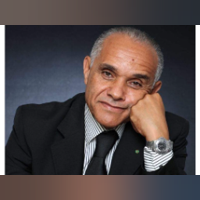
Aziz Daouda Aziz Daouda

Aziz Daouda

Directeur Technique et du Développement de la Confédération Africaine d'Athlétisme. Passionné du Maroc, passionné d'Afrique. Concerné par ce qui se passe, formulant mon point de vue quand j'en ai un. Humaniste, j'essaye de l'être, humain je veux l'être. Mon histoire est intimement liée à l'athlétisme marocain et mondial. J'ai eu le privilège de participer à la gloire de mon pays .


10200

33.0

THE ADVENTURES OF TOM SAWYER - PREFACE 5849

Most of the adventures recorded in this book really occurred; one or two were experiences of my own, the rest those of boys who were schoolmates of mine. Huck Finn is drawn from life; Tom Sawyer also, but not from an individual—he is a combination of the characteristics of three boys whom I knew, and therefore belongs to the composite order of architecture. The odd superstitions touched upon were all prevalent among children and slaves in the West at the period of this story—that is to say, thirty or forty years ago. Although my book is intended mainly for the entertainment of boys and girls, I hope it will not be shunned by men and women on that account, for part of my plan has been to try to pleasantly remind adults of what they once were themselves, and of how they felt and thought and talked, and what queer enterprises they sometimes engaged in. THE AUTHOR. HARTFORD, 1876.

THE MEDITATIONS - Book I.[1/3] 6006

1. I learned from my grandfather, Verus, to use good manners, and to put restraint on anger. 2. In the famous memory of my father I had a pattern of modesty and manliness. 3. Of my mother I learned to be pious and generous; to keep myself not only from evil deeds, but even from evil thoughts; and to live with a simplicity which is far from customary among the rich. 4. I owe it to my great-grandfather that I did not attend public lectures and discussions, but had good and able teachers at home; and I owe him also the knowledge that for things of this nature a man should count no expense too great. 5. My tutor taught me not to favour either green or blue at the chariot races, nor, in the contests of gladiators, to be a supporter either of light or heavy armed. He taught me also to endure labour; not to need many things; to serve myself without troubling others; not to intermeddle in the affairs of others, and not easily to listen to slanders against them. 6. Of Diognetus I had the lesson not to busy myself about vain things; not to credit the great professions of such as pretend to work wonders, or of sorcerers about their charms, and their expelling of Demons and the like; not to keep quails (for fighting or divination), nor to run after such things; to suffer freedom of speech in others, and to apply myself heartily to philosophy. Him also I must thank for my hearing first Bacchius, then Tandasis and Marcianus; that I wrote dialogues in my youth, and took a liking to the philosopher’s pallet and skins, and to the other things which, by the Grecian discipline, belong to that profession. 7. To Rusticus I owe my first apprehensions that my nature needed reform and cure; and that I did not fall into the ambition of the common Sophists, either by composing speculative writings or by declaiming harangues of exhortation in public; further, that I never strove to be admired by ostentation of great patience in an ascetic life, or by display of activity and application; that I gave over the study of rhetoric, poetry, and the graces of language; and that I did not pace my house in my senatorial robes, or practise any similar affectation. I observed also the simplicity of style in his letters, particularly in that which he wrote to my mother from Sinuessa. I learned from him to be easily appeased, and to be readily reconciled with those who had displeased me or given cause of offence, so soon as they inclined to make their peace; to read with care; not to rest satisfied with a slight and superficial knowledge; nor quickly to assent to great talkers. I have him to thank that I met with the discourses of Epictetus, which he furnished me from his own library. 8. From Apollonius I learned true liberty, and tenacity of purpose; to regard nothing else, even in the smallest degree, but reason always; and always to remain unaltered in the agonies of pain, in the losses of children, or in long diseases. He afforded me a living example of how the same man can, upon occasion, be most yielding and most inflexible. He was patient in exposition; and, as might well be seen, esteemed his fine skill and ability in teaching others the principles of philosophy as the least of his endowments. It was from him that I learned how to receive from friends what are thought favours without seeming humbled by the giver or insensible to the gift. 9. Sextus was my pattern of a benign temper, and his family the model of a household governed by true paternal affection, and a steadfast purpose of living according to nature. Here I could learn to be grave without affectation, to observe sagaciously the several dispositions and inclinations of my friends, to tolerate the ignorant and those who follow current opinions without examination. His conversation showed how a man may accommodate himself to all men and to all companies; for though companionship with him was sweeter and more pleasing than any sort of flattery, yet he was at the same time highly respected and reverenced. No man was ever more happy than he in comprehending, finding out, and arranging in exact order the great maxims necessary for the conduct of life. His example taught me to suppress even the least appearance of anger or any other passion; but still, with all this perfect tranquillity, to possess the tenderest and most affectionate heart; to be apt to approve others yet without noise; to have much learning and little ostentation. 10. I learned from Alexander the Grammarian to avoid censuring others, to refrain from flouting them for a barbarism, solecism, or any false pronunciation. Rather was I dexterously to pronounce the words rightly in my answer, confining approval or objection to the matter itself, and avoiding discussion of the expression, or to use some other form of courteous suggestion. 11. Fronto made me sensible how much of envy, deceit and hypocrisy surrounds princes; and that generally those whom we account nobly born have somehow less natural affection. 12. I learned from Alexander the Platonist not often nor without great necessity to say, or write to any man in a letter, that I am not at leisure; nor thus, under pretext of urgent affairs, to make a practice of excusing myself from the duties which, according to our various ties, we owe to those with whom we live. 13. Of Catulus I learned not to condemn any friend’s expostulation even though it were unjust, but to try to recall him to his former disposition; to stint no praise in speaking of my masters, as is recounted of Domitius and Athenodorus; and to love my children with true affection. 14. Of Severus, my brother, I learned to love my kinsmen, to love truth, to love justice. Through him I came to know Thrasea, Helvidius, Cato, Dion, and Brutus. He gave me my first conception of a Commonwealth founded upon equitable laws and administered with equality of right; and of a Monarchy whose chief concern is the freedom of its subjects. Of him I learned likewise a constant and harmonious devotion to Philosophy; to be ready to do good, to be generous with all my heart. He taught me to be of good hope and trustful of the affection of my friends. I observed in him candour in declaring what he condemned in the conduct of others; and so frank and open was his behaviour, that his friends might easily see without the trouble of conjecture what he liked or disliked.