Think Forward.

Christopher Ross ou la diplomatie à contre-courant 81

Il arrive que des diplomates, une fois leur mission terminée, choisissent la réserve que commande leur ancien statut. D’autres préfèrent continuer à intervenir dans des débats qu’ils ont pourtant contribué à complexifier. Christopher Ross appartient clairement à cette seconde catégorie. Dans un article récent, l’ancien émissaire pour le Sahara marocain a de nouveau pris position sur ce dossier sensible. Avec le recul du temps, son analyse n’a gagné ni en nuance ni en distance critique. À la lecture de son texte, c’est plutôt l’inverse qui se produit: même grille de lecture, mêmes postulats et, surtout, même indulgence à l’égard d’Alger. Cette persistance soulève une question fondamentale: que cherche Ross aujourd’hui en intervenant à nouveau dans un dossier dont il a été l’un des médiateurs les plus contestés? Nommé en 2009 par Ban Ki-moon, il succédait à une série d’émissaires confrontés à la même difficulté: sortir d’une impasse diplomatique héritée de la guerre froide. **Ce conflit trouve en effet ses racines dans les bouleversements géopolitiques des années 1970. Le Maroc a conforté sa souveraineté historique sur la région en 1975, provoquant le retrait de l’Espagne, tandis que le Polisario, soutenu politiquement, financièrement et militairement par l’Algérie et la Libye, revendiquait la création d’un État indépendant.** Le dossier prend une dimension internationale avec la création, en 1991, de la MINURSO qui devait superviser l'organisation d'un référendum; une idée proposé par feu Hassan II dans un discours prononcé à Nairobi lors d’un sommet de l’OUA. Très vite, les entraves créées par le Polisario, notamment sur l’identification du corps électoral, rendent ce projet quasi impossible et le processus s’enlise. **C’est alors que le Maroc propose en 2007 une initiative politique majeure: un plan d’autonomie élargie pour les provinces du Sud, sous souveraineté marocaine. Le projet est présenté au Conseil de sécurité comme une solution réaliste et pragmatique et reçoit un soutien international croissant, qualifié de «sérieux et crédible» par plusieurs résolutions. C’est un véritable tournant du réalisme diplomatique.** Depuis, le paysage diplomatique autour du Sahara a profondément évolué. De nombreux États considèrent désormais le plan d’autonomie marocain comme la base la plus crédible pour une solution politique durable. En 2020, l’administration Trump annonce officiellement la reconnaissance de la souveraineté du Maroc sur le Sahara. Un tournant majeur dans l’équilibre diplomatique du dossier. Dans la foulée, plusieurs puissances occidentales réaffirment leur soutien au plan d’autonomie, tandis que des pays arabes, européens et africains ouvrent des consulats à Laâyoune ou Dakhla, reconnaissant de facto l’administration marocaine du territoire. Au sein de l'ONU, la terminologie employée par les résolutions du CS a également évolué: la notion de «solution politique réaliste, pragmatique et durable» s’est imposée comme ligne directrice du processus. Ce glissement vers une approche pragmatique traduit une réalité simple: le référendum envisagé dans les années 1990 n’est plus considéré comme une option viable. C’est précisément ce tournant diplomatique que Ross, resté prisonnier d’une vision dépassée, semble refuser d’intégrer. Dans ses prises de position récentes, il continue de défendre une lecture du conflit renvoyant à une époque révolue, en s’accrochant à des schémas diplomatiques que la réalité géopolitique a largement dépassés. *Cette posture interroge jusque sur la droiture du personnage.* Dès son mandat, le Royaume avait exprimé de sérieuses réserves quant à son impartialité et en demanda officiellement le remplacement en 2012; la confiance ayant été gravement entamée. Un médiateur, par définition, doit maintenir une distance équitable entre les parties. Lorsque cette distance disparaît, la médiation perd sa crédibilité. De fait, Ross n’a jamais vraiment dissipé le soupçon d’une proximité avec la position algérienne. Le rôle de l’Algérie dans ce conflit est central. L’un des points les plus controversés de son discours concerne précisément la place d’Alger dans ce dossier. **Depuis cinquante ans, l’Algérie affirme officiellement qu’elle n’est qu’un «pays observateur» dans ce conflit. La réalité diplomatique et stratégique est tout autre. Alger héberge, arme, finance le Polisario, et accueille à Tindouf des milliers de réfugiés dont une partie importante n’est même pas originaire du territoire concerné.** Il ne fait guère de doute que le conflit est avant tout un différend opposant l’Algérie au Maroc; analyse désormais largement partagée par les principaux acteurs internationaux. Aucune solution durable ne pourra émerger sans l’implication directe d’Alger dans les négociations. Dans ce contexte, les prises de position répétées de Ross paraissent anachronisme et fragilisent sa crédibilité. En continuant de s’aligner, dans les faits, sur l'Algérie et le Polisario, il donne l’impression de prolonger un combat politique plutôt que d’éclairer le débat. La responsabilité des anciens médiateurs internationaux est posée. *Lorsqu’un ancien représentant de l’ONU s’exprime publiquement de manière aussi tranchée, il engage indirectement l’image de l’institution qu’il a servie. Or la crédibilité de la diplomatie internationale repose précisément sur la neutralité de ses intermédiaires.* L’histoire diplomatique du Sahara est jalonnée de tentatives de médiation, de plans successifs et d’initiatives avortées. Avant Ross, d’autres envoyés avaient tenté de débloquer la situation, notamment James Baker, qui proposa au début des années 2000 un plan de transition finalement rejeté. Chaque tentative a rappelé une vérité fondamentale: sans volonté politique régionale, aucun schéma ne peut aboutir. C’est précisément pourquoi la tendance actuelle de la diplomatie internationale privilégie une solution réaliste, fondée sur l’autonomie et la coopération régionale, plutôt que sur des constructions maximalistes héritées de la guerre froide. Au fond, la question n’est pas de savoir si Ross a le droit d’exprimer une opinion. Comme tout ancien diplomate, il peut, bien sûr, participer au débat. Mais lorsqu’il persiste à défendre une vision qui ignore les évolutions majeures du contexte géopolitique, son discours prend l’allure d’un combat d’arrière‑garde. Le monde a changé, les équilibres régionaux aussi. **Le Sahara sous souveraineté marocaine, n’est plus seulement une question héritée de la décolonisation: il est désormais au cœur d’une recomposition stratégique de l’Afrique atlantique et du Nord. Face à ces transformations, la diplomatie internationale semble avoir choisi le pragmatisme.** Christopher Ross, lui, paraît avoir choisi la nostalgie d’un paradigme révolu. En affaires internationales, l’histoire montre que ceux qui s’accrochent aux paradigmes du passé finissent presque toujours par se retrouver à contre‑courant des réalités du présent.

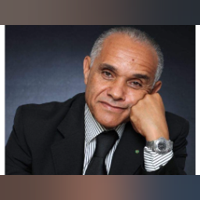
Aziz Daouda Aziz Daouda

Aziz Daouda

Directeur Technique et du Développement de la Confédération Africaine d'Athlétisme. Passionné du Maroc, passionné d'Afrique. Concerné par ce qui se passe, formulant mon point de vue quand j'en ai un. Humaniste, j'essaye de l'être, humain je veux l'être. Mon histoire est intimement liée à l'athlétisme marocain et mondial. J'ai eu le privilège de participer à la gloire de mon pays .


8900

33.0

THE ADVENTURES OF TOM SAWYER - PREFACE 5026

Most of the adventures recorded in this book really occurred; one or two were experiences of my own, the rest those of boys who were schoolmates of mine. Huck Finn is drawn from life; Tom Sawyer also, but not from an individual—he is a combination of the characteristics of three boys whom I knew, and therefore belongs to the composite order of architecture. The odd superstitions touched upon were all prevalent among children and slaves in the West at the period of this story—that is to say, thirty or forty years ago. Although my book is intended mainly for the entertainment of boys and girls, I hope it will not be shunned by men and women on that account, for part of my plan has been to try to pleasantly remind adults of what they once were themselves, and of how they felt and thought and talked, and what queer enterprises they sometimes engaged in. THE AUTHOR. HARTFORD, 1876.

THE MEDITATIONS - Book I.[1/3] 5170

1. I learned from my grandfather, Verus, to use good manners, and to put restraint on anger. 2. In the famous memory of my father I had a pattern of modesty and manliness. 3. Of my mother I learned to be pious and generous; to keep myself not only from evil deeds, but even from evil thoughts; and to live with a simplicity which is far from customary among the rich. 4. I owe it to my great-grandfather that I did not attend public lectures and discussions, but had good and able teachers at home; and I owe him also the knowledge that for things of this nature a man should count no expense too great. 5. My tutor taught me not to favour either green or blue at the chariot races, nor, in the contests of gladiators, to be a supporter either of light or heavy armed. He taught me also to endure labour; not to need many things; to serve myself without troubling others; not to intermeddle in the affairs of others, and not easily to listen to slanders against them. 6. Of Diognetus I had the lesson not to busy myself about vain things; not to credit the great professions of such as pretend to work wonders, or of sorcerers about their charms, and their expelling of Demons and the like; not to keep quails (for fighting or divination), nor to run after such things; to suffer freedom of speech in others, and to apply myself heartily to philosophy. Him also I must thank for my hearing first Bacchius, then Tandasis and Marcianus; that I wrote dialogues in my youth, and took a liking to the philosopher’s pallet and skins, and to the other things which, by the Grecian discipline, belong to that profession. 7. To Rusticus I owe my first apprehensions that my nature needed reform and cure; and that I did not fall into the ambition of the common Sophists, either by composing speculative writings or by declaiming harangues of exhortation in public; further, that I never strove to be admired by ostentation of great patience in an ascetic life, or by display of activity and application; that I gave over the study of rhetoric, poetry, and the graces of language; and that I did not pace my house in my senatorial robes, or practise any similar affectation. I observed also the simplicity of style in his letters, particularly in that which he wrote to my mother from Sinuessa. I learned from him to be easily appeased, and to be readily reconciled with those who had displeased me or given cause of offence, so soon as they inclined to make their peace; to read with care; not to rest satisfied with a slight and superficial knowledge; nor quickly to assent to great talkers. I have him to thank that I met with the discourses of Epictetus, which he furnished me from his own library. 8. From Apollonius I learned true liberty, and tenacity of purpose; to regard nothing else, even in the smallest degree, but reason always; and always to remain unaltered in the agonies of pain, in the losses of children, or in long diseases. He afforded me a living example of how the same man can, upon occasion, be most yielding and most inflexible. He was patient in exposition; and, as might well be seen, esteemed his fine skill and ability in teaching others the principles of philosophy as the least of his endowments. It was from him that I learned how to receive from friends what are thought favours without seeming humbled by the giver or insensible to the gift. 9. Sextus was my pattern of a benign temper, and his family the model of a household governed by true paternal affection, and a steadfast purpose of living according to nature. Here I could learn to be grave without affectation, to observe sagaciously the several dispositions and inclinations of my friends, to tolerate the ignorant and those who follow current opinions without examination. His conversation showed how a man may accommodate himself to all men and to all companies; for though companionship with him was sweeter and more pleasing than any sort of flattery, yet he was at the same time highly respected and reverenced. No man was ever more happy than he in comprehending, finding out, and arranging in exact order the great maxims necessary for the conduct of life. His example taught me to suppress even the least appearance of anger or any other passion; but still, with all this perfect tranquillity, to possess the tenderest and most affectionate heart; to be apt to approve others yet without noise; to have much learning and little ostentation. 10. I learned from Alexander the Grammarian to avoid censuring others, to refrain from flouting them for a barbarism, solecism, or any false pronunciation. Rather was I dexterously to pronounce the words rightly in my answer, confining approval or objection to the matter itself, and avoiding discussion of the expression, or to use some other form of courteous suggestion. 11. Fronto made me sensible how much of envy, deceit and hypocrisy surrounds princes; and that generally those whom we account nobly born have somehow less natural affection. 12. I learned from Alexander the Platonist not often nor without great necessity to say, or write to any man in a letter, that I am not at leisure; nor thus, under pretext of urgent affairs, to make a practice of excusing myself from the duties which, according to our various ties, we owe to those with whom we live. 13. Of Catulus I learned not to condemn any friend’s expostulation even though it were unjust, but to try to recall him to his former disposition; to stint no praise in speaking of my masters, as is recounted of Domitius and Athenodorus; and to love my children with true affection. 14. Of Severus, my brother, I learned to love my kinsmen, to love truth, to love justice. Through him I came to know Thrasea, Helvidius, Cato, Dion, and Brutus. He gave me my first conception of a Commonwealth founded upon equitable laws and administered with equality of right; and of a Monarchy whose chief concern is the freedom of its subjects. Of him I learned likewise a constant and harmonious devotion to Philosophy; to be ready to do good, to be generous with all my heart. He taught me to be of good hope and trustful of the affection of my friends. I observed in him candour in declaring what he condemned in the conduct of others; and so frank and open was his behaviour, that his friends might easily see without the trouble of conjecture what he liked or disliked.