Think Forward.

Oil Taxation, Aid Efficiency, and Social Justice: What Strategy for Morocco Facing Energy Shocks? 2305

When the Russia-Ukraine war broke out, global energy markets were brutally disrupted. The barrel price crossed historic thresholds, triggering an immediate surge in pump prices in net importer countries like Morocco. In response, the government opted for direct aid to transporters to contain inflation and prevent pass-through to goods and services prices. However, the experience revealed its limits. Despite the subsidies, transport prices did indeed rise, pulling up the cost of all products and services in their wake. This gap between intention and reality raises a central question: how to effectively cushion an energy shock in a liberalized economy without widening inequalities or fueling rents? The decision to specifically aid transporters rested on the implicit assumption that they would act as shock absorbers, absorbing part of the increase. Yet, in a market with tight margins and fierce competition, it is economically rational for operators to pass on costs to fares, despite public support. Several factors explain this relative failure: - Lack of binding mechanisms. No strict obligation prevented pass-through to final prices. - Windfall effect. Some companies received aid without altering their pricing policy. - Targeting difficulties. Aid benefited a specific segment without ensuring a broad, lasting impact on the economy. This observation is all the more troubling since Morocco remains heavily dependent on refined product imports following the closure of the Samir refinery. Today, tensions around the Strait of Hormuz are reigniting fears of a new oil shock. This maritime corridor, through which about 20% of global oil transits, is a critical chokepoint in worldwide energy supply. Any disruption sends prices soaring and, mechanically, pump prices in Morocco. States worldwide have adopted varied strategies, with mixed results: - Price caps. Effectiveness is immediate, with tariff shields on electricity and gas, sometimes paired with fuel caps. These measures contain short-term inflation at the cost of very high budgetary expense, disincentives to energy sobriety, and windfalls for the wealthiest consumers. - Direct transfers. A social but imperfect response. Some countries issued energy checks or lump-sum aid to households. Politically popular, these tools are often criticized for their inflationary nature, lack of precise targeting, and risk of fostering dependence on one-off aid. - Tax modulation, a structural lever. Several states, like Austria, Spain, Italy, or Japan, chose to temporarily cut fuel taxes to limit pump price hikes. This approach directly affects the final price paid by all consumers, without intermediaries. It relies on principles of readability and shared effort between the state and users. In Morocco's case, a significant portion of the pump price consists of taxes—such as TIC and VAT—which heavily influence the per-liter price and give the state major leverage in price formation. Temporarily reducing these taxes would establish an explicit shock-sharing mechanism between the state and citizens, rather than concentrating aid on one sector. This option offers several advantages: - Universality: it benefits everyone, from truck drivers to salaried workers using their car for commuting. - Transparency: the reduction is immediately visible at the pump, boosting trust and the readability of public action. - Economic efficiency: it directly lowers fuel costs. - Social justice: by forgoing part of the fiscal rent on a now-essential product, the state clearly shoulders its share of the effort. Targeted and temporary reduction of oil taxation thus emerges as the most effective and democratic solution to cushion an energy quake. This path is not new in Moroccan debate, as evidenced by the widespread support via the Compensation Fund, phased out from 2015 onward. Lightening fuel costs through subsidies has already been implemented without achieving the theoretically expected results. Need we remind? Any tax reduction, if enacted, cannot be unlimited or permanent but must be strictly time-bound, calibrated to budgetary capacity, and linked to broader hydrocarbon market reform (competition, margins, strategic storage, reopening or alternative to national refining capacity). In other words, tax modulation should not be a short-term reflex but the tool of a comprehensive energy security strategy. Morocco faces a strategic choice: persist with one-off aid to transporters or embrace shock-sharing via taxation. If it chooses the latter and loses short-term revenue, it will gain in social cohesion and economic predictability, with three key lessons: - Prioritize direct mechanisms via taxation, a key pump price component, as the most effective tool for rapid, universal, and democratic action. - Avoid market distortions. Targeted aid without strict controls produces opposite effects; it fuels rents without protecting the end consumer. - Think long-term. Energy issues cannot be divorced from industrial sovereignty (refining, storage) and state budgetary resilience. Beyond conjunctural management, it is a true social contract around energy that must be rethought. In a country where the car is both a work tool, a means of access to essential services, and a vector of mobility, fuel price is a deeply political issue at the intersection of social justice and budgetary sustainability. Rather than multiplying one-off devices for a single sector, Morocco would benefit from a more systemic approach based on fiscal transparency, equity, and economic efficiency. Fuel tax modulation, as a universal and immediate lever, better meets democratic demands. It is a more credible response to current shocks and those to come.

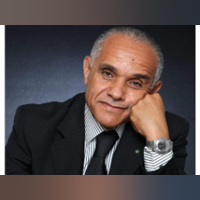
Aziz Daouda Aziz Daouda

Aziz Daouda

Directeur Technique et du Développement de la Confédération Africaine d'Athlétisme. Passionné du Maroc, passionné d'Afrique. Concerné par ce qui se passe, formulant mon point de vue quand j'en ai un. Humaniste, j'essaye de l'être, humain je veux l'être. Mon histoire est intimement liée à l'athlétisme marocain et mondial. J'ai eu le privilège de participer à la gloire de mon pays .


9300

33.0

THE ENCHIRIDION - I 5212

There are things which are within our power, and there are things which are beyond our power. Within our power are opinion, aim, desire, aversion, and, in one word, whatever affairs are our own. Beyond our power are body, property, reputation, office, and, in one word, whatever are not properly our own affairs. Now the things within our power are by nature free, unrestricted, unhindered; but those beyond our power are weak, dependent, restricted, alien. Remember, then, that if you attribute freedom to things by nature dependent and take what belongs to others for your own, you will be hindered, you will lament, you will be disturbed, you will find fault both with gods and men. But if you take for your own only that which is your own and view what belongs to others just as it really is, then no one will ever compel you, no one will restrict you; you will find fault with no one, you will accuse no one, you will do nothing against your will; no one will hurt you, you will not have an enemy, nor will you suffer any harm. Aiming, therefore, at such great things, remember that you must not allow yourself any inclination, however slight, toward the attainment of the others; but that you must entirely quit some of them, and for the present postpone the rest. But if you would have these, and possess power and wealth likewise, you may miss the latter in seeking the former; and you will certainly fail of that by which alone happiness and freedom are procured. Seek at once, therefore, to be able to say to every unpleasing semblance, “You are but a semblance and by no means the real thing.” And then examine it by those rules which you have; and first and chiefly by this: whether it concerns the things which are within our own power or those which are not; and if it concerns anything beyond our power, be prepared to say that it is nothing to you.

THE ADVENTURES OF TOM SAWYER - PREFACE 5406

Most of the adventures recorded in this book really occurred; one or two were experiences of my own, the rest those of boys who were schoolmates of mine. Huck Finn is drawn from life; Tom Sawyer also, but not from an individual—he is a combination of the characteristics of three boys whom I knew, and therefore belongs to the composite order of architecture. The odd superstitions touched upon were all prevalent among children and slaves in the West at the period of this story—that is to say, thirty or forty years ago. Although my book is intended mainly for the entertainment of boys and girls, I hope it will not be shunned by men and women on that account, for part of my plan has been to try to pleasantly remind adults of what they once were themselves, and of how they felt and thought and talked, and what queer enterprises they sometimes engaged in. THE AUTHOR. HARTFORD, 1876.

THE MEDITATIONS - Book I.[1/3] 5548

1. I learned from my grandfather, Verus, to use good manners, and to put restraint on anger. 2. In the famous memory of my father I had a pattern of modesty and manliness. 3. Of my mother I learned to be pious and generous; to keep myself not only from evil deeds, but even from evil thoughts; and to live with a simplicity which is far from customary among the rich. 4. I owe it to my great-grandfather that I did not attend public lectures and discussions, but had good and able teachers at home; and I owe him also the knowledge that for things of this nature a man should count no expense too great. 5. My tutor taught me not to favour either green or blue at the chariot races, nor, in the contests of gladiators, to be a supporter either of light or heavy armed. He taught me also to endure labour; not to need many things; to serve myself without troubling others; not to intermeddle in the affairs of others, and not easily to listen to slanders against them. 6. Of Diognetus I had the lesson not to busy myself about vain things; not to credit the great professions of such as pretend to work wonders, or of sorcerers about their charms, and their expelling of Demons and the like; not to keep quails (for fighting or divination), nor to run after such things; to suffer freedom of speech in others, and to apply myself heartily to philosophy. Him also I must thank for my hearing first Bacchius, then Tandasis and Marcianus; that I wrote dialogues in my youth, and took a liking to the philosopher’s pallet and skins, and to the other things which, by the Grecian discipline, belong to that profession. 7. To Rusticus I owe my first apprehensions that my nature needed reform and cure; and that I did not fall into the ambition of the common Sophists, either by composing speculative writings or by declaiming harangues of exhortation in public; further, that I never strove to be admired by ostentation of great patience in an ascetic life, or by display of activity and application; that I gave over the study of rhetoric, poetry, and the graces of language; and that I did not pace my house in my senatorial robes, or practise any similar affectation. I observed also the simplicity of style in his letters, particularly in that which he wrote to my mother from Sinuessa. I learned from him to be easily appeased, and to be readily reconciled with those who had displeased me or given cause of offence, so soon as they inclined to make their peace; to read with care; not to rest satisfied with a slight and superficial knowledge; nor quickly to assent to great talkers. I have him to thank that I met with the discourses of Epictetus, which he furnished me from his own library. 8. From Apollonius I learned true liberty, and tenacity of purpose; to regard nothing else, even in the smallest degree, but reason always; and always to remain unaltered in the agonies of pain, in the losses of children, or in long diseases. He afforded me a living example of how the same man can, upon occasion, be most yielding and most inflexible. He was patient in exposition; and, as might well be seen, esteemed his fine skill and ability in teaching others the principles of philosophy as the least of his endowments. It was from him that I learned how to receive from friends what are thought favours without seeming humbled by the giver or insensible to the gift. 9. Sextus was my pattern of a benign temper, and his family the model of a household governed by true paternal affection, and a steadfast purpose of living according to nature. Here I could learn to be grave without affectation, to observe sagaciously the several dispositions and inclinations of my friends, to tolerate the ignorant and those who follow current opinions without examination. His conversation showed how a man may accommodate himself to all men and to all companies; for though companionship with him was sweeter and more pleasing than any sort of flattery, yet he was at the same time highly respected and reverenced. No man was ever more happy than he in comprehending, finding out, and arranging in exact order the great maxims necessary for the conduct of life. His example taught me to suppress even the least appearance of anger or any other passion; but still, with all this perfect tranquillity, to possess the tenderest and most affectionate heart; to be apt to approve others yet without noise; to have much learning and little ostentation. 10. I learned from Alexander the Grammarian to avoid censuring others, to refrain from flouting them for a barbarism, solecism, or any false pronunciation. Rather was I dexterously to pronounce the words rightly in my answer, confining approval or objection to the matter itself, and avoiding discussion of the expression, or to use some other form of courteous suggestion. 11. Fronto made me sensible how much of envy, deceit and hypocrisy surrounds princes; and that generally those whom we account nobly born have somehow less natural affection. 12. I learned from Alexander the Platonist not often nor without great necessity to say, or write to any man in a letter, that I am not at leisure; nor thus, under pretext of urgent affairs, to make a practice of excusing myself from the duties which, according to our various ties, we owe to those with whom we live. 13. Of Catulus I learned not to condemn any friend’s expostulation even though it were unjust, but to try to recall him to his former disposition; to stint no praise in speaking of my masters, as is recounted of Domitius and Athenodorus; and to love my children with true affection. 14. Of Severus, my brother, I learned to love my kinsmen, to love truth, to love justice. Through him I came to know Thrasea, Helvidius, Cato, Dion, and Brutus. He gave me my first conception of a Commonwealth founded upon equitable laws and administered with equality of right; and of a Monarchy whose chief concern is the freedom of its subjects. Of him I learned likewise a constant and harmonious devotion to Philosophy; to be ready to do good, to be generous with all my heart. He taught me to be of good hope and trustful of the affection of my friends. I observed in him candour in declaring what he condemned in the conduct of others; and so frank and open was his behaviour, that his friends might easily see without the trouble of conjecture what he liked or disliked.