Think Forward.

Beatrice Chebet, Soufiane El Bekkali, Femke Bol, Masalela: inaugurate The Rabat Olympic Stadium: A showcase of excellence for high-level athletic performances 8067

The core of the profession in sports is undoubtedly the gesture, the exercise, or the action performed by an athlete or a group of athletes. This achievement is extremely complex due to the numerous factors involved and their relative importance. The gesture begins with an image the athlete forms of themselves performing it. For this, they need energy, meaning physiological stimulation. They execute a precise movement engaging part or all of their body, which constitutes mechanical solicitation. To perform this gesture, the athlete thinks and exerts mental effort: this is a psychological dimension and stimulation. Once this process is initiated, the athlete obtains a final image which they evaluate by comparing it to the initial image they had formed of their gesture. This feedback allows them to be satisfied, to question themselves, and to improve their performance. The gesture is never isolated: it takes place before an audience that appreciates the performance, the achievement, and the result. While sports regulations impose, besides ethical behavior, dimensions and specificities of playing areas, that is, rules common to all without discrimination. These rules and other standards condition the technical performances of athletes. However, the environment and context: stadium, hall, or competition venue bring other influencing factors on the performance and thus on the outcome. Among these factors are: • The type of surface; • The comfort, visibility, and proximity of spectators; • Aerodynamic conditions, such as wind exposure; • Lighting and illumination; • Acoustics, including sound treatment and crowd noise; • Visual and material markers on the field for athletes and the audience; • External climatic factors, depending on whether the infrastructure is enclosed or open; • Internal climate, depending on ventilation or air conditioning; and so on. All these elements impact the aforementioned psychological dimension, which in turn influences the physiological and mechanical dimensions, directly affecting the athlete’s performance. But that’s not all: the type and configuration of a sports facility also generate a particular sociological relationship. The atmospheres vary from one stadium to another. The layout, amenities, and comfort offered influence spectator behavior, and by extension, that of the entire audience. This behavior fosters a specific way of appreciating the athlete’s performance. For example, the proximity between the audience and players plays an important role: close supporters with unobstructed visibility are more empathetic than distant spectators. The nearby supporter better appreciates the effort and becomes more tolerant toward the athlete. Thus, the employment programs and architecture of a sports facility become an influencing factor on athletes’ performance. A well-studied final configuration is a factor that promotes performance, highlighting the importance of considering these data before any study or proposal for the construction of a sports facility. These facts were probably taken into account during the design and construction of the Athletics Stadium, known as the Olympic Stadium, built in only 8 months at the Prince Moulay Abdallah Sports Complex, replacing the National Institute of Athletics, erected in the early 1990s, where nearly all of Morocco’s great athletics talents emerged. This explains the exceptional results achieved during the latest edition of the Mohammed VI Diamond League Meeting in Rabat: three world-leading performances and five meeting records, a remarkable feat. The 8 minutes 11.49 seconds by Kenyan Beatrice Chebet, the second-best global performance ever in the 3000m, perfectly illustrate the symbiosis between the athlete’s potential and the conditions offered for her to express it. She made history in world athletics. The same applies to the performance of Moroccan champion Soufiane El Bekkali in the 3000m steeplechase, in front of his home crowd and on a track whose qualities he praised. He had never achieved such a performance so early in the season: 8 minutes 00.47 seconds, a very strong time for May, pulling along German Frederick Ruppert, who will never forget his race in Rabat, smashing his country’s record and posting the third-best European performance of all time. He is now a serious contender for a medal at the World Championships planned in Tokyo. The performance of Femke Bol in the women's 400m hurdles is also noteworthy: 52.46 seconds, a heavy-hitting time. Another notable performance was by Tshesipo Masalela from Botswana, who clocked 1 minute 42.70 seconds. These are just some examples among many outstanding performances achieved for the inauguration of this Moroccan Olympic stadium. In short, Morocco can be proud of such an accomplishment, which will surely enter the Guinness records, as never before has a sports facility of such scale been completed in so little time, while respecting the required standards and quality. The President of the African Athletics Confederation and CASOL, the very recent Association of African Olympic Sports Confederations, did not hide his pride, framing this achievement as part of Morocco’s support for the African sports movement in general, and athletics in particular. He recalled that the Kingdom is the only African country to host a Diamond League athletics stage. Naturally, he hopes to see the African Athletics Championships held there soon.

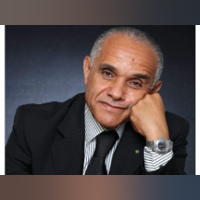
Aziz Daouda Aziz Daouda

Aziz Daouda

Directeur Technique et du Développement de la Confédération Africaine d'Athlétisme. Passionné du Maroc, passionné d'Afrique. Concerné par ce qui se passe, formulant mon point de vue quand j'en ai un. Humaniste, j'essaye de l'être, humain je veux l'être. Mon histoire est intimement liée à l'athlétisme marocain et mondial. J'ai eu le privilège de participer à la gloire de mon pays .


8100

33.0

THE ADVENTURES OF TOM SAWYER - PREFACE 3756

Most of the adventures recorded in this book really occurred; one or two were experiences of my own, the rest those of boys who were schoolmates of mine. Huck Finn is drawn from life; Tom Sawyer also, but not from an individual—he is a combination of the characteristics of three boys whom I knew, and therefore belongs to the composite order of architecture. The odd superstitions touched upon were all prevalent among children and slaves in the West at the period of this story—that is to say, thirty or forty years ago. Although my book is intended mainly for the entertainment of boys and girls, I hope it will not be shunned by men and women on that account, for part of my plan has been to try to pleasantly remind adults of what they once were themselves, and of how they felt and thought and talked, and what queer enterprises they sometimes engaged in. THE AUTHOR. HARTFORD, 1876.

THE MEDITATIONS - Book I.[1/3] 3876

1. I learned from my grandfather, Verus, to use good manners, and to put restraint on anger. 2. In the famous memory of my father I had a pattern of modesty and manliness. 3. Of my mother I learned to be pious and generous; to keep myself not only from evil deeds, but even from evil thoughts; and to live with a simplicity which is far from customary among the rich. 4. I owe it to my great-grandfather that I did not attend public lectures and discussions, but had good and able teachers at home; and I owe him also the knowledge that for things of this nature a man should count no expense too great. 5. My tutor taught me not to favour either green or blue at the chariot races, nor, in the contests of gladiators, to be a supporter either of light or heavy armed. He taught me also to endure labour; not to need many things; to serve myself without troubling others; not to intermeddle in the affairs of others, and not easily to listen to slanders against them. 6. Of Diognetus I had the lesson not to busy myself about vain things; not to credit the great professions of such as pretend to work wonders, or of sorcerers about their charms, and their expelling of Demons and the like; not to keep quails (for fighting or divination), nor to run after such things; to suffer freedom of speech in others, and to apply myself heartily to philosophy. Him also I must thank for my hearing first Bacchius, then Tandasis and Marcianus; that I wrote dialogues in my youth, and took a liking to the philosopher’s pallet and skins, and to the other things which, by the Grecian discipline, belong to that profession. 7. To Rusticus I owe my first apprehensions that my nature needed reform and cure; and that I did not fall into the ambition of the common Sophists, either by composing speculative writings or by declaiming harangues of exhortation in public; further, that I never strove to be admired by ostentation of great patience in an ascetic life, or by display of activity and application; that I gave over the study of rhetoric, poetry, and the graces of language; and that I did not pace my house in my senatorial robes, or practise any similar affectation. I observed also the simplicity of style in his letters, particularly in that which he wrote to my mother from Sinuessa. I learned from him to be easily appeased, and to be readily reconciled with those who had displeased me or given cause of offence, so soon as they inclined to make their peace; to read with care; not to rest satisfied with a slight and superficial knowledge; nor quickly to assent to great talkers. I have him to thank that I met with the discourses of Epictetus, which he furnished me from his own library. 8. From Apollonius I learned true liberty, and tenacity of purpose; to regard nothing else, even in the smallest degree, but reason always; and always to remain unaltered in the agonies of pain, in the losses of children, or in long diseases. He afforded me a living example of how the same man can, upon occasion, be most yielding and most inflexible. He was patient in exposition; and, as might well be seen, esteemed his fine skill and ability in teaching others the principles of philosophy as the least of his endowments. It was from him that I learned how to receive from friends what are thought favours without seeming humbled by the giver or insensible to the gift. 9. Sextus was my pattern of a benign temper, and his family the model of a household governed by true paternal affection, and a steadfast purpose of living according to nature. Here I could learn to be grave without affectation, to observe sagaciously the several dispositions and inclinations of my friends, to tolerate the ignorant and those who follow current opinions without examination. His conversation showed how a man may accommodate himself to all men and to all companies; for though companionship with him was sweeter and more pleasing than any sort of flattery, yet he was at the same time highly respected and reverenced. No man was ever more happy than he in comprehending, finding out, and arranging in exact order the great maxims necessary for the conduct of life. His example taught me to suppress even the least appearance of anger or any other passion; but still, with all this perfect tranquillity, to possess the tenderest and most affectionate heart; to be apt to approve others yet without noise; to have much learning and little ostentation. 10. I learned from Alexander the Grammarian to avoid censuring others, to refrain from flouting them for a barbarism, solecism, or any false pronunciation. Rather was I dexterously to pronounce the words rightly in my answer, confining approval or objection to the matter itself, and avoiding discussion of the expression, or to use some other form of courteous suggestion. 11. Fronto made me sensible how much of envy, deceit and hypocrisy surrounds princes; and that generally those whom we account nobly born have somehow less natural affection. 12. I learned from Alexander the Platonist not often nor without great necessity to say, or write to any man in a letter, that I am not at leisure; nor thus, under pretext of urgent affairs, to make a practice of excusing myself from the duties which, according to our various ties, we owe to those with whom we live. 13. Of Catulus I learned not to condemn any friend’s expostulation even though it were unjust, but to try to recall him to his former disposition; to stint no praise in speaking of my masters, as is recounted of Domitius and Athenodorus; and to love my children with true affection. 14. Of Severus, my brother, I learned to love my kinsmen, to love truth, to love justice. Through him I came to know Thrasea, Helvidius, Cato, Dion, and Brutus. He gave me my first conception of a Commonwealth founded upon equitable laws and administered with equality of right; and of a Monarchy whose chief concern is the freedom of its subjects. Of him I learned likewise a constant and harmonious devotion to Philosophy; to be ready to do good, to be generous with all my heart. He taught me to be of good hope and trustful of the affection of my friends. I observed in him candour in declaring what he condemned in the conduct of others; and so frank and open was his behaviour, that his friends might easily see without the trouble of conjecture what he liked or disliked.