Think Forward.

Morocco 2030: Football as a Geopolitical and Strategic Lever While Waiting for Other Sports Disciplines... 7721

The Kingdom of Morocco, through football, is today establishing itself as a major player in sports geopolitics. It clearly demonstrates its determination to carve out a prominent place on the international stage in this field. This vision comes from the highest levels of the State and is also shared by the Moroccan people, who have embraced this choice. This dynamic is notably illustrated by the co-hosting of the 2030 World Cup with Spain and Portugal, a historically significant event symbolizing a major political and diplomatic victory. This co-organization of the 2030 World Cup alongside two European states is the result of a long, patient, and determined strategy. It stems from an enduring conviction that has never wavered. After five unsuccessful bids, the Kingdom managed to convince FIFA and its member federations, becoming the second African country to host the tournament after South Africa in 2010. In fact, aside from the political contingencies of the time, the global sympathy for Nelson Mandela, and the questionable practices of FIFA decision-makers then, South Africa would never have been able to host the World Cup before Morocco for obvious footballing reasons. The Kingdom has nonetheless been rewarded for its patience, resilience, and conviction. It will host the centennial World Cup, an edition exceptional in every respect and designed under a cost-sharing logic. It will have a considerable economic and diplomatic impact, strengthening ties between Europe and Africa and highlighting football’s role in bringing peoples closer, as well as in the social and sporting development of the region. Never has Europe been so close and cooperative with the African continent—and vice versa. Morocco is organizing on behalf of an entire continent. Football is a true soft power tool that Morocco wields to strengthen its diplomatic relations in Africa. Did His Majesty the King not order the Local Organizing Committee to include expertise from across the continent? The Royal Moroccan Football Federation has long multiplied partnerships with African federations, providing financial and logistical support and inviting many countries to use the country’s numerous modern infrastructures for their training or competitions. This proactive and positive policy naturally consolidates Moroccan influence on the continent, in a context where the country seeks to counter the influence of other regional powers that do not look upon it favorably. From a purely footballing standpoint, Morocco is gradually asserting itself as an African powerhouse. It wins or participates in all major continental finals with a steady rise in the performance of its national teams. This success is supported by massive investments in player development, with the construction of high-performance training centers such as the Mohammed VI Academy in Salé. The Kingdom is also increasingly exporting players and coaches to leagues in Europe, the Middle East, and Africa. This contributes to strengthening its image and influence. For example, Jamal Selami recently qualified Jordan for the World Cup for the first time in its history, a team propelled by his compatriot Houcine Amouta. Moreover, the Moroccan diaspora plays a key role: many players born or trained abroad enthusiastically choose to wear the Moroccan colors, proud and unashamed to represent their country of origin. This mobilization of diaspora talent is a strategic asset that enriches the national teams and enhances their reach. Morocco therefore does not limit itself to mere sporting ambition in football. It conceives football as a vector of international influence, a territorial marketing lever, as evidenced by the strategic agreement “Morocco, Land of Football” signed between the FRMF and the Moroccan National Tourism Office. This alliance reflects the Kingdom’s desire to build a strong, inspiring image and attract enthusiasts and tourists from around the world. It is a continuation of the policy of building and strengthening the Morocco brand, which is increasingly asserting itself globally in the economic sphere. Morocco no longer hesitates to admit it is an industrial power asserting itself more and more every day. This approach fits into a global geostrategic perspective where football is called upon to reinforce Morocco’s position on the African and international stage, assert its continental leadership, and support its diplomatic advances, notably on the sensitive issue of the southern provinces. By using sport as a diplomatic and economic tool, Morocco aims to consolidate its alliances, extend its influence, and prepare a future where it occupies a central position in relations between Africa, Europe, and the world—and it makes no secret of this. Everyone today understands that to engage with Africa, especially on economic issues and certain political aspects, the Kingdom is indispensable. The question now arises for other sports disciplines. In fact, this football policy could only be implemented and succeed thanks to the royal vision in this domain, understood by a federation that, before all others, corrected its course following the royal letter addressed to the world of sport in 2008. The FRMF has smartly set itself in motion, now reaping the first results of its commitment. Unfortunately, other federations have remained in the shadows, mired in a certain mediocrity or even lethargy that makes them increasingly ineffective and criticized. Some, and not the least, are simply insignificant at the continental and global level, or have become so due to lack of foresight and competence, despite the available resources and the green light for sports in general. Developing other disciplines could diversify the country’s sports soft power, strengthen its diplomatic ties, and better distribute the economic and cultural benefits of sporting events across the national territory. Diversification is precisely at the heart of the royal vision. Meanwhile, Morocco is making football a major political asset, blending sport, diplomacy, and economic development to establish itself as an unavoidable player in sports geopolitics. The 2030 World Cup is both a symbol and a catalyst of this ambitious strategy, which promises to reshape regional and international balances around a ball rounder than ever—while awaiting the awakening of other sports disciplines.

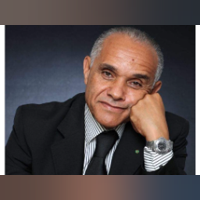
Aziz Daouda Aziz Daouda

Aziz Daouda

Directeur Technique et du Développement de la Confédération Africaine d'Athlétisme. Passionné du Maroc, passionné d'Afrique. Concerné par ce qui se passe, formulant mon point de vue quand j'en ai un. Humaniste, j'essaye de l'être, humain je veux l'être. Mon histoire est intimement liée à l'athlétisme marocain et mondial. J'ai eu le privilège de participer à la gloire de mon pays .


8100

33.0

THE MEDITATIONS - Book I.[1/3] 3937

1. I learned from my grandfather, Verus, to use good manners, and to put restraint on anger. 2. In the famous memory of my father I had a pattern of modesty and manliness. 3. Of my mother I learned to be pious and generous; to keep myself not only from evil deeds, but even from evil thoughts; and to live with a simplicity which is far from customary among the rich. 4. I owe it to my great-grandfather that I did not attend public lectures and discussions, but had good and able teachers at home; and I owe him also the knowledge that for things of this nature a man should count no expense too great. 5. My tutor taught me not to favour either green or blue at the chariot races, nor, in the contests of gladiators, to be a supporter either of light or heavy armed. He taught me also to endure labour; not to need many things; to serve myself without troubling others; not to intermeddle in the affairs of others, and not easily to listen to slanders against them. 6. Of Diognetus I had the lesson not to busy myself about vain things; not to credit the great professions of such as pretend to work wonders, or of sorcerers about their charms, and their expelling of Demons and the like; not to keep quails (for fighting or divination), nor to run after such things; to suffer freedom of speech in others, and to apply myself heartily to philosophy. Him also I must thank for my hearing first Bacchius, then Tandasis and Marcianus; that I wrote dialogues in my youth, and took a liking to the philosopher’s pallet and skins, and to the other things which, by the Grecian discipline, belong to that profession. 7. To Rusticus I owe my first apprehensions that my nature needed reform and cure; and that I did not fall into the ambition of the common Sophists, either by composing speculative writings or by declaiming harangues of exhortation in public; further, that I never strove to be admired by ostentation of great patience in an ascetic life, or by display of activity and application; that I gave over the study of rhetoric, poetry, and the graces of language; and that I did not pace my house in my senatorial robes, or practise any similar affectation. I observed also the simplicity of style in his letters, particularly in that which he wrote to my mother from Sinuessa. I learned from him to be easily appeased, and to be readily reconciled with those who had displeased me or given cause of offence, so soon as they inclined to make their peace; to read with care; not to rest satisfied with a slight and superficial knowledge; nor quickly to assent to great talkers. I have him to thank that I met with the discourses of Epictetus, which he furnished me from his own library. 8. From Apollonius I learned true liberty, and tenacity of purpose; to regard nothing else, even in the smallest degree, but reason always; and always to remain unaltered in the agonies of pain, in the losses of children, or in long diseases. He afforded me a living example of how the same man can, upon occasion, be most yielding and most inflexible. He was patient in exposition; and, as might well be seen, esteemed his fine skill and ability in teaching others the principles of philosophy as the least of his endowments. It was from him that I learned how to receive from friends what are thought favours without seeming humbled by the giver or insensible to the gift. 9. Sextus was my pattern of a benign temper, and his family the model of a household governed by true paternal affection, and a steadfast purpose of living according to nature. Here I could learn to be grave without affectation, to observe sagaciously the several dispositions and inclinations of my friends, to tolerate the ignorant and those who follow current opinions without examination. His conversation showed how a man may accommodate himself to all men and to all companies; for though companionship with him was sweeter and more pleasing than any sort of flattery, yet he was at the same time highly respected and reverenced. No man was ever more happy than he in comprehending, finding out, and arranging in exact order the great maxims necessary for the conduct of life. His example taught me to suppress even the least appearance of anger or any other passion; but still, with all this perfect tranquillity, to possess the tenderest and most affectionate heart; to be apt to approve others yet without noise; to have much learning and little ostentation. 10. I learned from Alexander the Grammarian to avoid censuring others, to refrain from flouting them for a barbarism, solecism, or any false pronunciation. Rather was I dexterously to pronounce the words rightly in my answer, confining approval or objection to the matter itself, and avoiding discussion of the expression, or to use some other form of courteous suggestion. 11. Fronto made me sensible how much of envy, deceit and hypocrisy surrounds princes; and that generally those whom we account nobly born have somehow less natural affection. 12. I learned from Alexander the Platonist not often nor without great necessity to say, or write to any man in a letter, that I am not at leisure; nor thus, under pretext of urgent affairs, to make a practice of excusing myself from the duties which, according to our various ties, we owe to those with whom we live. 13. Of Catulus I learned not to condemn any friend’s expostulation even though it were unjust, but to try to recall him to his former disposition; to stint no praise in speaking of my masters, as is recounted of Domitius and Athenodorus; and to love my children with true affection. 14. Of Severus, my brother, I learned to love my kinsmen, to love truth, to love justice. Through him I came to know Thrasea, Helvidius, Cato, Dion, and Brutus. He gave me my first conception of a Commonwealth founded upon equitable laws and administered with equality of right; and of a Monarchy whose chief concern is the freedom of its subjects. Of him I learned likewise a constant and harmonious devotion to Philosophy; to be ready to do good, to be generous with all my heart. He taught me to be of good hope and trustful of the affection of my friends. I observed in him candour in declaring what he condemned in the conduct of others; and so frank and open was his behaviour, that his friends might easily see without the trouble of conjecture what he liked or disliked.