Think Forward.

Multidimensional Poverty: Decoding the Oxford Index and the Situation in Morocco 18850

When poverty is mentioned, it is often thought of as insufficient income. However, poverty encompasses much broader and more complex dimensions such as access to education, health, decent housing, and other basic resources depending on societies and their cultures. It is on this or a very similar basis that the Multidimensional Poverty Index (MPI) was designed and unveiled in 2010 by the Oxford Poverty and Human Development Initiative (OPHI) at the University of Oxford. The index was adopted during the 20th anniversary of the United Nations Development Programme (UNDP). But what exactly is multidimensional poverty or the Oxford Index? *Multidimensional poverty is the simultaneous and synchronous deprivation experienced by individuals across different essential aspects of life. The Oxford Index, or MPI, aims to measure this aspect of poverty based on 10 indicators grouped into three main dimensions: health, in terms of nutrition and child mortality; education, concerning school attendance, years of schooling, and living conditions; namely access to drinking water, electricity, sanitation facilities, quality housing, and essential assets.* A household is considered poor according to the MPI if its members are deprived in at least 33% of these indicators. The index is calculated using a simple formula: **MPI = H × A** where **H** is the proportion of people who are poor and **A** is the average intensity of deprivation among these people. This approach provides a more nuanced diagnosis than a simple monetary measure of poverty. It allows identifying the exact origin and nature of the deprivations and thus more effectively guides public action. The introduction of the MPI in Morocco has profoundly renewed the understanding of poverty in the country. Ten years ago, this index stood at 11.9%. Thanks to significant mobilization and targeted policies, this rate has decreased to 6.8% according to the 2024 national census, representing a halving. Translated into numbers of affected people, the rate dropped from 4.5% to 2.5% of Morocco’s current 36 million population. Despite these notable advances, poverty remains marked by strong regional and social disparities. Deprivations mainly concern education and living conditions such as access to drinking water, decent housing, and medical care. Multidimensional poverty is more concentrated in rural areas, accounting for 72% of the poor, with an alarming rate among rural children estimated at nearly 69%. In his 26th Throne Speech, His Majesty the King acknowledged the progress made while expressing dissatisfaction and the determination to rapidly correct the situation. Indeed, Morocco is still behind many other countries that display lower multidimensional poverty rates and have recorded faster declines in the index; some countries have therefore succeeded better. For example, Croatia already had a rate below 0.5% in 2022. China, with 12.5% in 2002, and Turkey, with an index of 8.5% in 2007, have recorded faster decreases and are now among the best-ranked countries. Several countries in Asia and Latin America have also seen significant declines thanks to innovative strategies, ambitious social policies, and sustained international support. Morocco remains better ranked compared to many Sub-Saharan African countries. Mali had an MPI of 77.7% in 2012 and Burundi 80.8% in 2010. However, Morocco still maintains a significant gap with global leaders and even some developing countries in the Mediterranean and Asia. To enable the Kingdom to maintain and accelerate its progress, drastic and effective measures requiring genuine political courage and boldness are needed. Several avenues should be considered simultaneously, such as: - Optimizing investment in education by reducing school dropout, promoting equal access for girls and boys in rural areas, and improving teaching quality and attractiveness through teacher qualification and adapted curricula. - Seriously addressing the issue of the language of instruction. Moroccans speak a language that is not reflected in schools. Darija is the Moroccan language and should be valorized to create a continuum between everyday life and learning. All education specialists and dedicated international bodies insist on the use of the mother tongue for more efficient learning, at least in the early school years, as seen in all countries successful in education. - Redefining what illiteracy means in Morocco. Is it still appropriate to consider illiteracy as the inability to master languages that are not used in daily life? The working language and trades that sustain Moroccans and in which all exchange, communicate, and act are not taken into account. This question must be reconsidered in light of scientific evidence, without outdated or unproductive dogma or ideology. - Accelerating medical coverage and social protection through a faster and less restrictive generalization. - Encouraging health and education professionals to settle in remote and targeted areas through significant financial incentives and housing. - Expanding and strengthening basic infrastructure with particular focus on drinking water, electricity, sanitation, and social housing even in rural areas. The issue posed by scattered housing should no longer be a taboo. Some recurring problems simply cannot be solved in certain regions due to the type and location of housing. - Targeting public efforts territorially through fine planning and priority allocation of appropriate resources to the most vulnerable regions, taking into account the real needs of the populations concerned. - Developing and refining social safety nets and resilience mechanisms to better protect populations affected by climate change. By adopting an integrated, territorially targeted approach based on precise MPI data, Morocco can consolidate the gains already made and catch up with the best performers in the region and the world in the near future, given its stability, significant growth rate, diversified and increasingly efficient economy, and, of course, the ingenuity of its people.

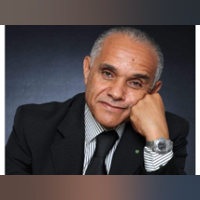
Aziz Daouda Aziz Daouda

Aziz Daouda

Directeur Technique et du Développement de la Confédération Africaine d'Athlétisme. Passionné du Maroc, passionné d'Afrique. Concerné par ce qui se passe, formulant mon point de vue quand j'en ai un. Humaniste, j'essaye de l'être, humain je veux l'être. Mon histoire est intimement liée à l'athlétisme marocain et mondial. J'ai eu le privilège de participer à la gloire de mon pays .


9300

33.0

THE MEDITATIONS - Book I.[1/3] 5559

1. I learned from my grandfather, Verus, to use good manners, and to put restraint on anger. 2. In the famous memory of my father I had a pattern of modesty and manliness. 3. Of my mother I learned to be pious and generous; to keep myself not only from evil deeds, but even from evil thoughts; and to live with a simplicity which is far from customary among the rich. 4. I owe it to my great-grandfather that I did not attend public lectures and discussions, but had good and able teachers at home; and I owe him also the knowledge that for things of this nature a man should count no expense too great. 5. My tutor taught me not to favour either green or blue at the chariot races, nor, in the contests of gladiators, to be a supporter either of light or heavy armed. He taught me also to endure labour; not to need many things; to serve myself without troubling others; not to intermeddle in the affairs of others, and not easily to listen to slanders against them. 6. Of Diognetus I had the lesson not to busy myself about vain things; not to credit the great professions of such as pretend to work wonders, or of sorcerers about their charms, and their expelling of Demons and the like; not to keep quails (for fighting or divination), nor to run after such things; to suffer freedom of speech in others, and to apply myself heartily to philosophy. Him also I must thank for my hearing first Bacchius, then Tandasis and Marcianus; that I wrote dialogues in my youth, and took a liking to the philosopher’s pallet and skins, and to the other things which, by the Grecian discipline, belong to that profession. 7. To Rusticus I owe my first apprehensions that my nature needed reform and cure; and that I did not fall into the ambition of the common Sophists, either by composing speculative writings or by declaiming harangues of exhortation in public; further, that I never strove to be admired by ostentation of great patience in an ascetic life, or by display of activity and application; that I gave over the study of rhetoric, poetry, and the graces of language; and that I did not pace my house in my senatorial robes, or practise any similar affectation. I observed also the simplicity of style in his letters, particularly in that which he wrote to my mother from Sinuessa. I learned from him to be easily appeased, and to be readily reconciled with those who had displeased me or given cause of offence, so soon as they inclined to make their peace; to read with care; not to rest satisfied with a slight and superficial knowledge; nor quickly to assent to great talkers. I have him to thank that I met with the discourses of Epictetus, which he furnished me from his own library. 8. From Apollonius I learned true liberty, and tenacity of purpose; to regard nothing else, even in the smallest degree, but reason always; and always to remain unaltered in the agonies of pain, in the losses of children, or in long diseases. He afforded me a living example of how the same man can, upon occasion, be most yielding and most inflexible. He was patient in exposition; and, as might well be seen, esteemed his fine skill and ability in teaching others the principles of philosophy as the least of his endowments. It was from him that I learned how to receive from friends what are thought favours without seeming humbled by the giver or insensible to the gift. 9. Sextus was my pattern of a benign temper, and his family the model of a household governed by true paternal affection, and a steadfast purpose of living according to nature. Here I could learn to be grave without affectation, to observe sagaciously the several dispositions and inclinations of my friends, to tolerate the ignorant and those who follow current opinions without examination. His conversation showed how a man may accommodate himself to all men and to all companies; for though companionship with him was sweeter and more pleasing than any sort of flattery, yet he was at the same time highly respected and reverenced. No man was ever more happy than he in comprehending, finding out, and arranging in exact order the great maxims necessary for the conduct of life. His example taught me to suppress even the least appearance of anger or any other passion; but still, with all this perfect tranquillity, to possess the tenderest and most affectionate heart; to be apt to approve others yet without noise; to have much learning and little ostentation. 10. I learned from Alexander the Grammarian to avoid censuring others, to refrain from flouting them for a barbarism, solecism, or any false pronunciation. Rather was I dexterously to pronounce the words rightly in my answer, confining approval or objection to the matter itself, and avoiding discussion of the expression, or to use some other form of courteous suggestion. 11. Fronto made me sensible how much of envy, deceit and hypocrisy surrounds princes; and that generally those whom we account nobly born have somehow less natural affection. 12. I learned from Alexander the Platonist not often nor without great necessity to say, or write to any man in a letter, that I am not at leisure; nor thus, under pretext of urgent affairs, to make a practice of excusing myself from the duties which, according to our various ties, we owe to those with whom we live. 13. Of Catulus I learned not to condemn any friend’s expostulation even though it were unjust, but to try to recall him to his former disposition; to stint no praise in speaking of my masters, as is recounted of Domitius and Athenodorus; and to love my children with true affection. 14. Of Severus, my brother, I learned to love my kinsmen, to love truth, to love justice. Through him I came to know Thrasea, Helvidius, Cato, Dion, and Brutus. He gave me my first conception of a Commonwealth founded upon equitable laws and administered with equality of right; and of a Monarchy whose chief concern is the freedom of its subjects. Of him I learned likewise a constant and harmonious devotion to Philosophy; to be ready to do good, to be generous with all my heart. He taught me to be of good hope and trustful of the affection of my friends. I observed in him candour in declaring what he condemned in the conduct of others; and so frank and open was his behaviour, that his friends might easily see without the trouble of conjecture what he liked or disliked.