Think Forward.

Genesis... 15861

I greatly enjoy looking out windows, any windows. Windows have always offered me a picture of life. A picture that constantly changes, a picture that I alone see before it disappears forever. Maybe that is where my taste for the ephemeral comes from. It is my only certainty. What I am also sure of is that it comes from the fact that as a baby and young child, my mother would place me by the window where I would hold onto a grille. An opportunity to be both inside and outside at the same time and to let her go about her many responsibilities as a housewife. It was a traditional Moroccan grille, typical of ours. Today, I have reused that same grille design on the windows and balconies of my house. I have in fact remained my mother’s eternal child, no doubt like we all remain so, but probably differently, otherwise, uniquely. The window is an escape from the cramped space of the house. In fact, all houses are cramped. The house, paradoxically despite its smallness, is a space of freedom, intimacy, and security. It is also a space that distances the horizon and makes it sublime. The window allowed me to raise my head and look far. As far as this window allowed me to see. The house cultivates the dream; the window waters it. On the evening my mother passed away, I stood by the window. It seemed to me I heard her voice again speaking from afar to reassure me. My mother loved me very much. She did not say it, but made me feel it through the tone of her voice, her gaze, and a slight smile at the corner of her lips. A smile she had a special secret to. My mother’s smile was genetic. I clearly saw she inherited it from my grandmother—Cherifa Lalla Zhour had the same smile. My mother was not expansive. She extended her love to my children later, and I felt it. I was her eldest, her first female experience, her first pains, her first childbirth, the first baby cry to her ears. I owe my mother much: the sensation of a pencil in hand, the touch of the softness of paper before writing on it, the taste for reading and the pleasure of manual work. My mother was among the first classes of the modern school in Fès. My maternal grandfather, Si Ahmed Ben Ali, had the wisdom to send her to school against the opinion of people at the time—family, neighbors, and onlookers. She traveled a long distance from Saqaet El Abbassyine to her school. It was in Fès j’did, a neighborhood of great nationalists, intellectuals, artists, and state clerks: Bahnini, Benbouchta, Moulay Ahmed El Alaoui, Ahmed Chajai, and many others. It is the stronghold of Wydad of Fès. I have many wonderful memories of Saqaet El Abbassyine. From time to time, I go for a walk there to recharge myself. The dilapidation of Bab Riafa, the sad passage by Lalla Ghriba to reach Saqaet El Abbassyine, the continuation by Sidi Hmama to arrive at Qobt Assouk, saddens me every time. So, to soothe my pain and sorrow, I go and sit at Bab Boujloud to enjoy a good glass of tea prepared in a traditional samovar, under the famous mulberry tree. The magic of Fès is unmatched. My father, on the other hand, was affection in the absolute. The exemplary man. The man who forged my pride and committed my life to serving the country. Moroccan at heart, attached to the land of his ancestors. Proud to have been an active nationalist against the protectorate. He spoke of his people’s struggle against French soldiers. He kept fresh memories of the fights of Bou Gafer and the brave battle of his people. He was happy to have served his country but also disappointed with the evolution of some things. He said that we were losing our soul with the decline of our attachment to ancestral values; remembered by all the families of old Rabat who still recall him for having treated their children and eased their pains. He passed away certain that Morocco could have done better. He remained attached to his parents and adored them, attached to his native land that he visited every year, attached to his people to whom he offered land to expand the Sidi Daoud cemetery, his forever village, today swallowed by a soulless Ouarzazate. I am not surprised. My father is a direct descendant of Sidi Daoud, a Sufi Sheikh and great scholar who left many works including the famous *Oumahat Al Wataeq, Al Mountafaa Bih Fi Anawazil*. My father loved Rabat and its beach. It was there he saw the sea for the first time in his life, coming from the other side of the Great Atlas, which climate change is now altering. It was at the Rabat beach that he learned to swim. Today, his grave overlooks that beautiful beach and ocean. His resting place is bathed in the sea air that blows continuously over the hilltop, the final abode of thousands of souls at rest, of lives both rich and less rich, and of memories forever lost. The cemetery tells a lot about the place we give to our dead, and it does not speak well of us. So, like my brothers and sisters—Jalil, Moughni, Rajae, Atika, Abdelmoutaleb, Elhoussein, Soumaya, I am a kind of accident of nature. A father from Ouarzazate marrying a girl from Fès; that was rare. It was 1950. The maternity hospital where my lungs filled for the first time with air and where I cried out announcing my coming to life is still there. It was Tuesday, 11:37 am, May 15, 1951. Each time I pass by, something brings me back to memories I have created from my mother's stories. I see again her pride and my father's joy at my birth. By chance, on the way to bury my mother, and years later my father, we passed along the Almohad wall. The historic maternity hospital of Rabat is just behind. The circle was thus completed. My mother's name was Lalla Amina Makhloufi and my father’s Ahmed Belhoucine El Ouarzazi. The civil registry attendant gave him the surname Daouda, probably because he was born in Sidi Daoud or simply because that person had been influenced by a stay in sub-Saharan Africa...

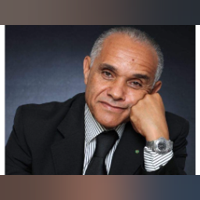
Aziz Daouda Aziz Daouda

Aziz Daouda

Directeur Technique et du Développement de la Confédération Africaine d'Athlétisme. Passionné du Maroc, passionné d'Afrique. Concerné par ce qui se passe, formulant mon point de vue quand j'en ai un. Humaniste, j'essaye de l'être, humain je veux l'être. Mon histoire est intimement liée à l'athlétisme marocain et mondial. J'ai eu le privilège de participer à la gloire de mon pays .


9300

33.0

THE ENCHIRIDION - I 5247

There are things which are within our power, and there are things which are beyond our power. Within our power are opinion, aim, desire, aversion, and, in one word, whatever affairs are our own. Beyond our power are body, property, reputation, office, and, in one word, whatever are not properly our own affairs. Now the things within our power are by nature free, unrestricted, unhindered; but those beyond our power are weak, dependent, restricted, alien. Remember, then, that if you attribute freedom to things by nature dependent and take what belongs to others for your own, you will be hindered, you will lament, you will be disturbed, you will find fault both with gods and men. But if you take for your own only that which is your own and view what belongs to others just as it really is, then no one will ever compel you, no one will restrict you; you will find fault with no one, you will accuse no one, you will do nothing against your will; no one will hurt you, you will not have an enemy, nor will you suffer any harm. Aiming, therefore, at such great things, remember that you must not allow yourself any inclination, however slight, toward the attainment of the others; but that you must entirely quit some of them, and for the present postpone the rest. But if you would have these, and possess power and wealth likewise, you may miss the latter in seeking the former; and you will certainly fail of that by which alone happiness and freedom are procured. Seek at once, therefore, to be able to say to every unpleasing semblance, “You are but a semblance and by no means the real thing.” And then examine it by those rules which you have; and first and chiefly by this: whether it concerns the things which are within our own power or those which are not; and if it concerns anything beyond our power, be prepared to say that it is nothing to you.

THE ADVENTURES OF TOM SAWYER - PREFACE 5439

Most of the adventures recorded in this book really occurred; one or two were experiences of my own, the rest those of boys who were schoolmates of mine. Huck Finn is drawn from life; Tom Sawyer also, but not from an individual—he is a combination of the characteristics of three boys whom I knew, and therefore belongs to the composite order of architecture. The odd superstitions touched upon were all prevalent among children and slaves in the West at the period of this story—that is to say, thirty or forty years ago. Although my book is intended mainly for the entertainment of boys and girls, I hope it will not be shunned by men and women on that account, for part of my plan has been to try to pleasantly remind adults of what they once were themselves, and of how they felt and thought and talked, and what queer enterprises they sometimes engaged in. THE AUTHOR. HARTFORD, 1876.

THE MEDITATIONS - Book I.[1/3] 5584

1. I learned from my grandfather, Verus, to use good manners, and to put restraint on anger. 2. In the famous memory of my father I had a pattern of modesty and manliness. 3. Of my mother I learned to be pious and generous; to keep myself not only from evil deeds, but even from evil thoughts; and to live with a simplicity which is far from customary among the rich. 4. I owe it to my great-grandfather that I did not attend public lectures and discussions, but had good and able teachers at home; and I owe him also the knowledge that for things of this nature a man should count no expense too great. 5. My tutor taught me not to favour either green or blue at the chariot races, nor, in the contests of gladiators, to be a supporter either of light or heavy armed. He taught me also to endure labour; not to need many things; to serve myself without troubling others; not to intermeddle in the affairs of others, and not easily to listen to slanders against them. 6. Of Diognetus I had the lesson not to busy myself about vain things; not to credit the great professions of such as pretend to work wonders, or of sorcerers about their charms, and their expelling of Demons and the like; not to keep quails (for fighting or divination), nor to run after such things; to suffer freedom of speech in others, and to apply myself heartily to philosophy. Him also I must thank for my hearing first Bacchius, then Tandasis and Marcianus; that I wrote dialogues in my youth, and took a liking to the philosopher’s pallet and skins, and to the other things which, by the Grecian discipline, belong to that profession. 7. To Rusticus I owe my first apprehensions that my nature needed reform and cure; and that I did not fall into the ambition of the common Sophists, either by composing speculative writings or by declaiming harangues of exhortation in public; further, that I never strove to be admired by ostentation of great patience in an ascetic life, or by display of activity and application; that I gave over the study of rhetoric, poetry, and the graces of language; and that I did not pace my house in my senatorial robes, or practise any similar affectation. I observed also the simplicity of style in his letters, particularly in that which he wrote to my mother from Sinuessa. I learned from him to be easily appeased, and to be readily reconciled with those who had displeased me or given cause of offence, so soon as they inclined to make their peace; to read with care; not to rest satisfied with a slight and superficial knowledge; nor quickly to assent to great talkers. I have him to thank that I met with the discourses of Epictetus, which he furnished me from his own library. 8. From Apollonius I learned true liberty, and tenacity of purpose; to regard nothing else, even in the smallest degree, but reason always; and always to remain unaltered in the agonies of pain, in the losses of children, or in long diseases. He afforded me a living example of how the same man can, upon occasion, be most yielding and most inflexible. He was patient in exposition; and, as might well be seen, esteemed his fine skill and ability in teaching others the principles of philosophy as the least of his endowments. It was from him that I learned how to receive from friends what are thought favours without seeming humbled by the giver or insensible to the gift. 9. Sextus was my pattern of a benign temper, and his family the model of a household governed by true paternal affection, and a steadfast purpose of living according to nature. Here I could learn to be grave without affectation, to observe sagaciously the several dispositions and inclinations of my friends, to tolerate the ignorant and those who follow current opinions without examination. His conversation showed how a man may accommodate himself to all men and to all companies; for though companionship with him was sweeter and more pleasing than any sort of flattery, yet he was at the same time highly respected and reverenced. No man was ever more happy than he in comprehending, finding out, and arranging in exact order the great maxims necessary for the conduct of life. His example taught me to suppress even the least appearance of anger or any other passion; but still, with all this perfect tranquillity, to possess the tenderest and most affectionate heart; to be apt to approve others yet without noise; to have much learning and little ostentation. 10. I learned from Alexander the Grammarian to avoid censuring others, to refrain from flouting them for a barbarism, solecism, or any false pronunciation. Rather was I dexterously to pronounce the words rightly in my answer, confining approval or objection to the matter itself, and avoiding discussion of the expression, or to use some other form of courteous suggestion. 11. Fronto made me sensible how much of envy, deceit and hypocrisy surrounds princes; and that generally those whom we account nobly born have somehow less natural affection. 12. I learned from Alexander the Platonist not often nor without great necessity to say, or write to any man in a letter, that I am not at leisure; nor thus, under pretext of urgent affairs, to make a practice of excusing myself from the duties which, according to our various ties, we owe to those with whom we live. 13. Of Catulus I learned not to condemn any friend’s expostulation even though it were unjust, but to try to recall him to his former disposition; to stint no praise in speaking of my masters, as is recounted of Domitius and Athenodorus; and to love my children with true affection. 14. Of Severus, my brother, I learned to love my kinsmen, to love truth, to love justice. Through him I came to know Thrasea, Helvidius, Cato, Dion, and Brutus. He gave me my first conception of a Commonwealth founded upon equitable laws and administered with equality of right; and of a Monarchy whose chief concern is the freedom of its subjects. Of him I learned likewise a constant and harmonious devotion to Philosophy; to be ready to do good, to be generous with all my heart. He taught me to be of good hope and trustful of the affection of my friends. I observed in him candour in declaring what he condemned in the conduct of others; and so frank and open was his behaviour, that his friends might easily see without the trouble of conjecture what he liked or disliked.