Think Forward.

Les Soupirs d'Azemmour: Réactions et commentaires... 3846

Mon article sur d'Azemmour, son passé glorieux et son présent ternis par le désintérêt des humains et leur insouciance ou inconscience, n'est pas passé inaperçu. Intitulé "Les soupirs d'Azemmour" l'article a suscité de nombreuses réactions dont celle de mon ami Zaki Semlali, maire de la ville. D'abord il y a eu la reprise qu'en a fait Lecollimateur.ma, un site d'information des plus avertis et des plus engagés. La rédaction du site a bien mentionné que l'article avait été publié sur Bluwr. Je les en remercie infiniment. Ils ont ainsi donné à l'article une autre dimension et un autre rayonnement. Il y eu également de nombreuses réactions sur Facebook et X ou encore linkdin, de personnes qui ont exprimé pour les uns de la compassion pour la ville, pour les autres de la colère ou leur rage. Il y eu par ailleurs des amis proches qui eux ont on réagit carrément avec de petits textes que j'ai trouvé intéressants au point ou, avec leur permission, je me permet ici de les partager avec vous. Ainsi mon ami Mustapha Guiliz, auteur du magnifique opus 'les hommes de la nuit' ou encore de 'Le Monde d'Ibrahim' et dont vous avez aimé des textes publiés ici même dans Bluwr, pense avec force qu'il y va de notre humanité que de s'occuper d'un tel patrimoine. Il dit en substance: "Il faut être un patient mystique pour accéder à cette zone lointaine en soi , pour pouvoir rendre compte de cette expérience des choses avec un lyrisme très heureux. L’âme réceptive des beautés du présent entretient l’aura du passé qui refuse d’être qualifié de passé. Une ville a l’âme cosmopolite est davantage une terre aux esprits; elle n’a cure de la petitesse des politicards. Elle se nourrit d’elle même. Et des hommes de ton envergure mon cher ami. Tu es le sel de la terre, le rayon de soleil qui en pénètre l’âme. tu revient de cette exploration attentive à nous révéler à nous mêmes et à nous dire que la vie est une merveille qu’il faut savoir entretenir. Il y va de notre humanité". Vite et sans hésitation, Mustapha se place et place le texte, humblement écrit, dans une dimension de débat philosophique. Oui mon ami, j'ai commencé à me rendre à Azemmour depuis une quarantaine d'années. Je suis témoin qu'elle est là à narguer ceux et celles qui ont eu ou ont le devoir et l'obligation de s'en occuper; comme pour leur dire: vous êtes de passage, je suis là éternelle. Ce patrimoine n'est pas que l'affaire d'une municipalité, d'une commune ou d'une province... S'en occuper et en prendre soin est l'affaire de l'Etat. Azemmour est une ancienne capitale et doit pour cela et pour sa richesse plusieurs fois millénaire bénéficier de tous les égards et d'un respect sans réserve... Ce matin je reçois un appel de mon ami Said Benmansour. Il me damande si j'avais lu le commentaire qu'il m'adressa sur watrsap. Je me suis garé pour le lire. Je l'ai relu à tête reposée une fois à la maison. Said défend au quotidien un autre patrimoine. Un patrimoine immatériel...Il défend les anciens sportifs et leur mémoire. Tous les jours que le bon Dieu fait dans le cadre de l'association" Sport et Amitié" qu'il a crée et qu'il préside inlassablement de main de maitre, il réunit les anciens sportifs, les encadre et prône auprès d'eux et d'un public plus large la nécessité de la solidarité et de l'amitié. Le texte de Said Benmansour est touchant. Il évoque Azemmour d'avant l'autoroute. Comme quoi le développement du réseau routier n'a pas que des avantages...au détour d'une colline ou d'une difficulté physique toute un pan de la société peut être laissé pour compte. C'est le cas d'Azemmour, ville de feu Abdellatif Semlali et de Bouchaib Lamaachi pour ne parler que des gens du sport. Said Benmansour l'a parfaitement bien pointé mais a aussi rappelé que le cas d'Azemmour n'est point une exception. Il faut plus de budget pour la recherche, les fouilles et à l'entretien du patrimoine, première richesse du pays. Le Maroc peine à entretenir l'ensemble de son patrimoine gigantesque. Le manque de moyens y est pour quelques chose probablement mais pas que. Said Benmansour sans doute pris par l'émotion à la lecture de mon texte, dit en substance: "Les nostalgiques, comme moi, se doivent de te remercier pour avoir éveillé en eux des souvenirs indélébiles de cette belle cité que fut Azemmour avant que l'autoroute ne vienne ,hélas, nous priver du plaisir de savourer un thé à la menthe à la terrasse d'un café en face des remparts de la vieille médina, avant de continuer notre chemin vers le sud du pays en longeant la côte Atlantique. Crois- moi ,cher Aziz, que je n'ai pu rester insensible au descriptif que tu as fais des belles traditions de la ville, avec quelques signes distinctifs dont notamment la célèbre alose, considérée, à juste titre, comme partie maîtresse d'une fresque artistique que constitue l'embouchure majestueuse de Oued Oum- Rebii. Tous mes compliments pour ta belle plume en attendant de recevoir d'autres "soupirs" concernant, peut-être Taza, Sefrou, Sijilmassa, Debdou. A très bientôt." Merci Si Mustapha et Si Said, merci à ceux nombreux ayant réagit et aussi à ceux n'ayant pas réagit mais qui ont consulté le texte. Les murailles, les Riads, les maisons et maisonnettes d'Azemmour vous en remercie certainement. Une remarque au passage, le texte a été publié en français et en anglais. Il est plus consulté en anglais...Je remercie ma fille Kawtar pour l'excellence de sa traduction. Ici bas vous avez le lien de Qasidat Azemmour du poète Driss Rahmoune interprétée par Abdelmajid Rahimi...Il y parle mieux que quiconque de ce bijou de l'humanité.
youtu.be/bRnvwiKA8tc?si=pmfMKgnp...
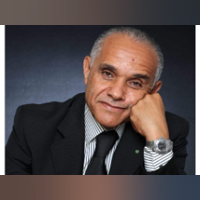
Aziz Daouda Aziz Daouda

Aziz Daouda

Directeur Technique et du Développement de la Confédération Africaine d'Athlétisme. Passionné du Maroc, passionné d'Afrique. Concerné par ce qui se passe, formulant mon point de vue quand j'en ai un. Humaniste, j'essaye de l'être, humain je veux l'être. Mon histoire est intimement liée à l'athlétisme marocain et mondial. J'ai eu le privilège de participer à la gloire de mon pays .


9300

33.0

THE ADVENTURES OF TOM SAWYER - PREFACE 5406

Most of the adventures recorded in this book really occurred; one or two were experiences of my own, the rest those of boys who were schoolmates of mine. Huck Finn is drawn from life; Tom Sawyer also, but not from an individual—he is a combination of the characteristics of three boys whom I knew, and therefore belongs to the composite order of architecture. The odd superstitions touched upon were all prevalent among children and slaves in the West at the period of this story—that is to say, thirty or forty years ago. Although my book is intended mainly for the entertainment of boys and girls, I hope it will not be shunned by men and women on that account, for part of my plan has been to try to pleasantly remind adults of what they once were themselves, and of how they felt and thought and talked, and what queer enterprises they sometimes engaged in. THE AUTHOR. HARTFORD, 1876.

THE MEDITATIONS - Book I.[1/3] 5548

1. I learned from my grandfather, Verus, to use good manners, and to put restraint on anger. 2. In the famous memory of my father I had a pattern of modesty and manliness. 3. Of my mother I learned to be pious and generous; to keep myself not only from evil deeds, but even from evil thoughts; and to live with a simplicity which is far from customary among the rich. 4. I owe it to my great-grandfather that I did not attend public lectures and discussions, but had good and able teachers at home; and I owe him also the knowledge that for things of this nature a man should count no expense too great. 5. My tutor taught me not to favour either green or blue at the chariot races, nor, in the contests of gladiators, to be a supporter either of light or heavy armed. He taught me also to endure labour; not to need many things; to serve myself without troubling others; not to intermeddle in the affairs of others, and not easily to listen to slanders against them. 6. Of Diognetus I had the lesson not to busy myself about vain things; not to credit the great professions of such as pretend to work wonders, or of sorcerers about their charms, and their expelling of Demons and the like; not to keep quails (for fighting or divination), nor to run after such things; to suffer freedom of speech in others, and to apply myself heartily to philosophy. Him also I must thank for my hearing first Bacchius, then Tandasis and Marcianus; that I wrote dialogues in my youth, and took a liking to the philosopher’s pallet and skins, and to the other things which, by the Grecian discipline, belong to that profession. 7. To Rusticus I owe my first apprehensions that my nature needed reform and cure; and that I did not fall into the ambition of the common Sophists, either by composing speculative writings or by declaiming harangues of exhortation in public; further, that I never strove to be admired by ostentation of great patience in an ascetic life, or by display of activity and application; that I gave over the study of rhetoric, poetry, and the graces of language; and that I did not pace my house in my senatorial robes, or practise any similar affectation. I observed also the simplicity of style in his letters, particularly in that which he wrote to my mother from Sinuessa. I learned from him to be easily appeased, and to be readily reconciled with those who had displeased me or given cause of offence, so soon as they inclined to make their peace; to read with care; not to rest satisfied with a slight and superficial knowledge; nor quickly to assent to great talkers. I have him to thank that I met with the discourses of Epictetus, which he furnished me from his own library. 8. From Apollonius I learned true liberty, and tenacity of purpose; to regard nothing else, even in the smallest degree, but reason always; and always to remain unaltered in the agonies of pain, in the losses of children, or in long diseases. He afforded me a living example of how the same man can, upon occasion, be most yielding and most inflexible. He was patient in exposition; and, as might well be seen, esteemed his fine skill and ability in teaching others the principles of philosophy as the least of his endowments. It was from him that I learned how to receive from friends what are thought favours without seeming humbled by the giver or insensible to the gift. 9. Sextus was my pattern of a benign temper, and his family the model of a household governed by true paternal affection, and a steadfast purpose of living according to nature. Here I could learn to be grave without affectation, to observe sagaciously the several dispositions and inclinations of my friends, to tolerate the ignorant and those who follow current opinions without examination. His conversation showed how a man may accommodate himself to all men and to all companies; for though companionship with him was sweeter and more pleasing than any sort of flattery, yet he was at the same time highly respected and reverenced. No man was ever more happy than he in comprehending, finding out, and arranging in exact order the great maxims necessary for the conduct of life. His example taught me to suppress even the least appearance of anger or any other passion; but still, with all this perfect tranquillity, to possess the tenderest and most affectionate heart; to be apt to approve others yet without noise; to have much learning and little ostentation. 10. I learned from Alexander the Grammarian to avoid censuring others, to refrain from flouting them for a barbarism, solecism, or any false pronunciation. Rather was I dexterously to pronounce the words rightly in my answer, confining approval or objection to the matter itself, and avoiding discussion of the expression, or to use some other form of courteous suggestion. 11. Fronto made me sensible how much of envy, deceit and hypocrisy surrounds princes; and that generally those whom we account nobly born have somehow less natural affection. 12. I learned from Alexander the Platonist not often nor without great necessity to say, or write to any man in a letter, that I am not at leisure; nor thus, under pretext of urgent affairs, to make a practice of excusing myself from the duties which, according to our various ties, we owe to those with whom we live. 13. Of Catulus I learned not to condemn any friend’s expostulation even though it were unjust, but to try to recall him to his former disposition; to stint no praise in speaking of my masters, as is recounted of Domitius and Athenodorus; and to love my children with true affection. 14. Of Severus, my brother, I learned to love my kinsmen, to love truth, to love justice. Through him I came to know Thrasea, Helvidius, Cato, Dion, and Brutus. He gave me my first conception of a Commonwealth founded upon equitable laws and administered with equality of right; and of a Monarchy whose chief concern is the freedom of its subjects. Of him I learned likewise a constant and harmonious devotion to Philosophy; to be ready to do good, to be generous with all my heart. He taught me to be of good hope and trustful of the affection of my friends. I observed in him candour in declaring what he condemned in the conduct of others; and so frank and open was his behaviour, that his friends might easily see without the trouble of conjecture what he liked or disliked.