Think Forward.

Legislative Elections 2026 in Morocco: A Democratic Challenge Driven by Royal Initiative 11658

His Majesty King Mohammed VI has officially tasked the Ministry of the Interior with preparing the 2026 legislative elections. This decision, announced in the 26th Throne Speech, represents both a solemn directive and a particular vote of confidence in the ministry. By the end of the year, the ministry is expected to have finalized the legal and organizational framework for the election. Following this, Mr. Abdelouafi Laftit convened the main political parties for inclusive consultations aiming to guarantee a "model," transparent, and credible election, in accordance with royal instructions. This approach reflects a clear desire to strengthen the organization of elections by removing them from the direct influence of the government, particularly its head, Mr. Aziz Akhannouch, who is also president of the RNI party. This party is seen as having significant influence over the electoral process. Entrusting this mission to the Ministry of the Interior, recognized for its role as an institutional arbiter, aims to limit direct political interference and prevent any attempt to capture the vote by certain actors in power. During the meeting, the minister emphasized the necessity for the elections to be "exemplary" and suggested that significant effort would be made to meet democratic and institutional expectations—implying that everything will be done to strictly implement the royal will, while distancing from all political factions. A new electoral code specific to the House of Representatives is therefore being prepared, with an adoption planned before the end of 2025. The ongoing reflections and discussions address several key areas: updating or simplifying voter lists, with reliance solely on identity cards to identify voters; the moralization and regulation of campaign financing through stronger control, possibly including caps on candidate and party spending. Better transparency and a review of electoral districts based on the latest census are also on the agenda. The issue of the number of polling stations—which exceeded 40,000 in the last election—should also be discussed, as well as the representation of approximately 6 million Moroccans living abroad. The current voting system, based on proportional representation by lists, could also be reconsidered to address shortcomings observed in 2021, particularly the tendency to favor "kingmakers" of deputies and local clientelism, often fueled by money. Within the political sphere, there is rather a radio silence. The impression is that political parties are either indifferent or strategically cautious. The debate and torrent of ideas are thus taking place among commentators and other writers. There is a shared feeling that things must change if political life is to regain meaning. This is what His Majesty desires. The introduction of a two-round single-member district voting system is one frequently cited idea as a possible way to reduce the influence of money and traditional networks of power. This voting method, never experimented with in Morocco, would favor a vote focused more on individuals than on party lists, thus strengthening democracy through better citizen mobilization and greater representativeness. So far, citizens have often been surprised by unnatural alliances formed after the vote, leaving voters without control over the final configuration. The two-round system has the advantage that any negotiation or alliance between parties occurs between the two rounds, at a time when citizens can still intervene by casting a second vote. This profound electoral reform could respond to a major challenge: citizens' disenchantment with politics, shown by high abstention rates, fueled by perceptions of insufficient renewal, party inefficiency, and therefore of elected bodies. To succeed, reform must go hand in hand with efforts by parties to renew their approaches, attract youth seeking alternatives, and rekindle popular interest in voting. Moroccan political parties have historically had an ambiguous relationship with voters beyond their traditional bases. They even seem to discourage mass participation in the electoral process, fearing that their often small membership, relative to the statutory electorate, would be diluted. The PJD came to power with only 1.3 million votes, about one-tenth of potential voters. Some parties hold parliamentary groups despite having obtained only around 200,000 votes or less. Parties are sometimes seen as unrepresentative and tainted by corruption accusations. However, they have a pragmatic interest in mobilizing their core voters to retain their political weight and public funding. The prospects for a dynamic electoral campaign today appear limited by a certain apathy among political actors, hindering the expected democratic momentum. Regarding the two-round single-member vote, although it might structure the political landscape around two major poles and encourage clearer alliances, it alone cannot neutralize the influence of money, networks tied to local leaders, or clientelism. This system could even exacerbate artificial polarization, marginalize smaller parties, and allow hidden alliances between major parties, harming transparency and democratic legitimacy. Risks also remain concerning lower participation between rounds and the complexity of changing voter opinions, potentially opening the door to strategic manipulations. Thus, complementary reforms are essential, notably in campaign finance transparency, the moralization of the electoral process, and control over local clientelism, to guarantee fairer and more credible political competition. The royal decision to entrust the Ministry of the Interior with election management, inclusive dialogue with parties, and the declared will to moralize the process demonstrate a strong ambition for profound reform toward a fairer, more equitable, and trustworthy election. The voting system remains central to the debate, but the success of the 2026 legislative elections will also depend on the ability to reinvent an electoral and political system capable of mobilizing citizens and establishing trust in Moroccan democracy. Citizens are also called upon to embrace greater honesty and responsibility.

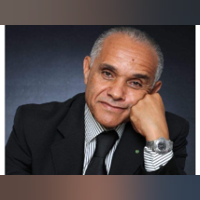
Aziz Daouda Aziz Daouda

Aziz Daouda

Directeur Technique et du Développement de la Confédération Africaine d'Athlétisme. Passionné du Maroc, passionné d'Afrique. Concerné par ce qui se passe, formulant mon point de vue quand j'en ai un. Humaniste, j'essaye de l'être, humain je veux l'être. Mon histoire est intimement liée à l'athlétisme marocain et mondial. J'ai eu le privilège de participer à la gloire de mon pays .


9300

33.0

THE ENCHIRIDION - I 5212

There are things which are within our power, and there are things which are beyond our power. Within our power are opinion, aim, desire, aversion, and, in one word, whatever affairs are our own. Beyond our power are body, property, reputation, office, and, in one word, whatever are not properly our own affairs. Now the things within our power are by nature free, unrestricted, unhindered; but those beyond our power are weak, dependent, restricted, alien. Remember, then, that if you attribute freedom to things by nature dependent and take what belongs to others for your own, you will be hindered, you will lament, you will be disturbed, you will find fault both with gods and men. But if you take for your own only that which is your own and view what belongs to others just as it really is, then no one will ever compel you, no one will restrict you; you will find fault with no one, you will accuse no one, you will do nothing against your will; no one will hurt you, you will not have an enemy, nor will you suffer any harm. Aiming, therefore, at such great things, remember that you must not allow yourself any inclination, however slight, toward the attainment of the others; but that you must entirely quit some of them, and for the present postpone the rest. But if you would have these, and possess power and wealth likewise, you may miss the latter in seeking the former; and you will certainly fail of that by which alone happiness and freedom are procured. Seek at once, therefore, to be able to say to every unpleasing semblance, “You are but a semblance and by no means the real thing.” And then examine it by those rules which you have; and first and chiefly by this: whether it concerns the things which are within our own power or those which are not; and if it concerns anything beyond our power, be prepared to say that it is nothing to you.

THE ADVENTURES OF TOM SAWYER - PREFACE 5406

Most of the adventures recorded in this book really occurred; one or two were experiences of my own, the rest those of boys who were schoolmates of mine. Huck Finn is drawn from life; Tom Sawyer also, but not from an individual—he is a combination of the characteristics of three boys whom I knew, and therefore belongs to the composite order of architecture. The odd superstitions touched upon were all prevalent among children and slaves in the West at the period of this story—that is to say, thirty or forty years ago. Although my book is intended mainly for the entertainment of boys and girls, I hope it will not be shunned by men and women on that account, for part of my plan has been to try to pleasantly remind adults of what they once were themselves, and of how they felt and thought and talked, and what queer enterprises they sometimes engaged in. THE AUTHOR. HARTFORD, 1876.

THE MEDITATIONS - Book I.[1/3] 5548

1. I learned from my grandfather, Verus, to use good manners, and to put restraint on anger. 2. In the famous memory of my father I had a pattern of modesty and manliness. 3. Of my mother I learned to be pious and generous; to keep myself not only from evil deeds, but even from evil thoughts; and to live with a simplicity which is far from customary among the rich. 4. I owe it to my great-grandfather that I did not attend public lectures and discussions, but had good and able teachers at home; and I owe him also the knowledge that for things of this nature a man should count no expense too great. 5. My tutor taught me not to favour either green or blue at the chariot races, nor, in the contests of gladiators, to be a supporter either of light or heavy armed. He taught me also to endure labour; not to need many things; to serve myself without troubling others; not to intermeddle in the affairs of others, and not easily to listen to slanders against them. 6. Of Diognetus I had the lesson not to busy myself about vain things; not to credit the great professions of such as pretend to work wonders, or of sorcerers about their charms, and their expelling of Demons and the like; not to keep quails (for fighting or divination), nor to run after such things; to suffer freedom of speech in others, and to apply myself heartily to philosophy. Him also I must thank for my hearing first Bacchius, then Tandasis and Marcianus; that I wrote dialogues in my youth, and took a liking to the philosopher’s pallet and skins, and to the other things which, by the Grecian discipline, belong to that profession. 7. To Rusticus I owe my first apprehensions that my nature needed reform and cure; and that I did not fall into the ambition of the common Sophists, either by composing speculative writings or by declaiming harangues of exhortation in public; further, that I never strove to be admired by ostentation of great patience in an ascetic life, or by display of activity and application; that I gave over the study of rhetoric, poetry, and the graces of language; and that I did not pace my house in my senatorial robes, or practise any similar affectation. I observed also the simplicity of style in his letters, particularly in that which he wrote to my mother from Sinuessa. I learned from him to be easily appeased, and to be readily reconciled with those who had displeased me or given cause of offence, so soon as they inclined to make their peace; to read with care; not to rest satisfied with a slight and superficial knowledge; nor quickly to assent to great talkers. I have him to thank that I met with the discourses of Epictetus, which he furnished me from his own library. 8. From Apollonius I learned true liberty, and tenacity of purpose; to regard nothing else, even in the smallest degree, but reason always; and always to remain unaltered in the agonies of pain, in the losses of children, or in long diseases. He afforded me a living example of how the same man can, upon occasion, be most yielding and most inflexible. He was patient in exposition; and, as might well be seen, esteemed his fine skill and ability in teaching others the principles of philosophy as the least of his endowments. It was from him that I learned how to receive from friends what are thought favours without seeming humbled by the giver or insensible to the gift. 9. Sextus was my pattern of a benign temper, and his family the model of a household governed by true paternal affection, and a steadfast purpose of living according to nature. Here I could learn to be grave without affectation, to observe sagaciously the several dispositions and inclinations of my friends, to tolerate the ignorant and those who follow current opinions without examination. His conversation showed how a man may accommodate himself to all men and to all companies; for though companionship with him was sweeter and more pleasing than any sort of flattery, yet he was at the same time highly respected and reverenced. No man was ever more happy than he in comprehending, finding out, and arranging in exact order the great maxims necessary for the conduct of life. His example taught me to suppress even the least appearance of anger or any other passion; but still, with all this perfect tranquillity, to possess the tenderest and most affectionate heart; to be apt to approve others yet without noise; to have much learning and little ostentation. 10. I learned from Alexander the Grammarian to avoid censuring others, to refrain from flouting them for a barbarism, solecism, or any false pronunciation. Rather was I dexterously to pronounce the words rightly in my answer, confining approval or objection to the matter itself, and avoiding discussion of the expression, or to use some other form of courteous suggestion. 11. Fronto made me sensible how much of envy, deceit and hypocrisy surrounds princes; and that generally those whom we account nobly born have somehow less natural affection. 12. I learned from Alexander the Platonist not often nor without great necessity to say, or write to any man in a letter, that I am not at leisure; nor thus, under pretext of urgent affairs, to make a practice of excusing myself from the duties which, according to our various ties, we owe to those with whom we live. 13. Of Catulus I learned not to condemn any friend’s expostulation even though it were unjust, but to try to recall him to his former disposition; to stint no praise in speaking of my masters, as is recounted of Domitius and Athenodorus; and to love my children with true affection. 14. Of Severus, my brother, I learned to love my kinsmen, to love truth, to love justice. Through him I came to know Thrasea, Helvidius, Cato, Dion, and Brutus. He gave me my first conception of a Commonwealth founded upon equitable laws and administered with equality of right; and of a Monarchy whose chief concern is the freedom of its subjects. Of him I learned likewise a constant and harmonious devotion to Philosophy; to be ready to do good, to be generous with all my heart. He taught me to be of good hope and trustful of the affection of my friends. I observed in him candour in declaring what he condemned in the conduct of others; and so frank and open was his behaviour, that his friends might easily see without the trouble of conjecture what he liked or disliked.