Think Forward.

La CAN, bouée de sauvetage pour un continent en crise : pourquoi quadriennale rime avec abandon... 2176

Passant d'un rendez-vous biennal à une compétition quadriennale dès 2026, la Coupe d'Afrique des Nations (CAN), joyau de la Confédération Africaine de Football (CAF), voit son calendrier dilué par les intérêts voraces des clubs européens et une FIFA complaisante. Ces acteurs, obsédés par la rentabilité immédiate, sacrifient la renaissance continentale, la réconciliation et l'unité panafricaine au profit d'un agenda mondialisé. Pendant un mois, la CAN offre un oubli bienvenu des fléaux qui minent l'Afrique : guerres civiles, famines, terrorisme et crises économiques et politiques récurrentes. Loin d'être un simple tournoi sportif, elle agit comme un catalyseur multidimensionnel, sportif évidemment, mais aussi économique, festif et thérapeutique pour un continent meurtri, en grande partie. C'est une véritable bouée de sauvetage pour des peuples en crise. Le football transcende le terrain pour devenir un exutoire vital et un liant social puissant. Il agit ici comme un antidote aux conflits et à la misère, au désarroi et à la perte d'espoir. Dans des pays en devenir, ravagées par la violence, les sélections nationales de football incarnent l'espoir et l'unité, transformant les stades en parenthèses de normalité. - Au **Soudan** : La guerre civile, éclipsée depuis avril 2023, a fait plus de 20 000 morts et 10 millions de déplacés, selon l'ONU. Et pourtant les Aiglons de la Mer Rouge, troisièmes du groupe E avec 3 points après deux matchs, portent fièrement les couleurs d'un championnat exilé, ravivant un sursaut collectif, allumant une lueur d'espoir. - Au **Burkina Faso** : Touché par une crise alimentaire aiguë affectant 3 millions de personnes et une insécurité jihadiste endémique, les Étalons, deuxièmes du groupe E avec 3 points, n'ont plié face à l'Algérie que sur un simple penalty. Leur qualification galvanise un peuple divisé, offrant un rare motif de fierté nationale et d'espérance. - Au **Mali** : 5 millions de citoyens sont impactés par la présence d'une mosaïque de groupes terroristes, par des insurrections et coups d'État à répétition, mais cela n'a pas empêché les Aiglons du Mali de tenir tête au Maroc hôte. Ils sont leaders ex aequo avec 4 points après deux journées. Le duel imposé au Maroc symbolise une résilience farouche et une fierté à toute épreuve. - En **République Démocratique du Congo (RDC)** : 8 millions de déplacés à l'est fuient les violences du M23 ; pourtant, les Léopards au groupe D, avec le Sénégal muent les stades en exutoires cathartiques, canalisant la colère en liesse collective. - Au **Zimbabwe** : 4,5 millions de personnes souffrent d'un recul sanitaire et économique chronique ; les Warriors, lanterne rouge du groupe B avec 1 point, ravivent néanmoins l'orgueil d'une jeunesse confrontée à un chômage massif. Plus de 80% chez les moins de 25 ans ne savent plus quoi faire de leurs vies. - Au **Mozambique** : 1,1 million de déplacés à Cabo Delgado fuient les jihadistes ; pourtant les Mambas célèbrent une victoire historique 3-2 sur le Gabon, puissance footballistique, défiant l'adversité. - Au **Nigeria** : au nord les États BAY : Borno, Adamawa, Yobe, ploie sous Boko Haram depuis 15 ans, avec des millions de déplacés. Les Super Eagles, en groupe C avec la Tunisie, arrivent pourtant à unir un pays fracturé par l'insécurité côtière et les divisions ethniques endémiques. Sur le terrain on oublie même que les USA viennent de bombarder les djihadistes accusés de malmener les chrétiens du pays. - Au **Cameroun** : La crise anglophone a déplacé 700 000 personnes ; les Lions Indomptables arrachent un nul 1-1 face au tenant du titre ivoirien en groupe F, offrant une parenthèse enchantée aux tensions persistantes. - En **Angola** : Héritage d'une guerre civile traumatique, le pays lutte pour sa stabilité ; les Palancas Negras se battent vaillamment en groupe B aux côtés de l'Égypte, symbolisant une reconstruction fragile et de l'optimisme. Ces exemples illustrent comment la CAN, par sa régularité biennale, agissait comme une soupape de sécurité sociale, interrompant les cycles de désespoir tous les deux ans. Au delà du jeu et du ballon qui glisse sur les pelouses, l'impact est également économique. La CAF a élargi les phases finales à 24 équipes sur 54 nations, tandis que les éliminatoires ont uni 30 autres pays autour de moments d'espoir partagé. La CAN 2025 au Maroc bat tous les records : 236 849 spectateurs en phase de groupes (contre 197 880 en 2023), avec plus d'1 million de billets déjà vendus. Les projections économiques explosent: 192,6 millions de dollars de revenus; en sponsoring quelques 126 M$ et en billetterie pas moins de 19 M$, tandis que 500 000 à 1 million de visiteurs étrangers devraient booster le PIB marocain de 12 milliards de dirhams via tourisme, hôtellerie et sponsoring local. Historiquement, la CAN 2023 en Côte d'Ivoire avait généré 2,2 milliards d'euros d'impact économique ; 2025 pourrait la surpasser, renforçant le soft power africain. La CAN est vue dans le monde entier. LA qualité à toute épreuve offerte par le Maroc y contribue pour beaucoup. Le monde entier découvre le continent sous un autre visage, celui du progrès et de la modernité. Hélas, ce ci est sans compter avec le diktat européen et une trahison de l'essence africaine. Les Africains, conscients de ces enjeux, ont toujours milité pour une CAN biennale, ancrée dans leur réalité, répondant à leurs besoins spécifiques. Comment justifier le passage quadriennal sinon comme un diktat européen ? Les clubs sont arrivés à imposer ce calendrier pour limiter les absences de leurs stars africaines à 28 jours par an, au lieu de 40 en année CAN, préservant leurs profits et intérêts mercantiles. La FIFA, sous le sourire d'Infantino, sacrifie ainsi l'urgence humanitaire africaine. Quatre ans d'attente, c'est une éternité pour des peuples en péril. Ce choix ignore les précédents et les véritables problèmes, comme la Champions League qui sature le calendrier sans égards pour les confédérations mineures. La CAF doit trancher : le football africain est un ciment social irremplaçable, une soupape vitale d'espoir en Afrique. Quadriennaliser la CAN, c'est diluer son âme panafricaine au profit d'intérêts étrangers. L'héritage d'une CAN tous les deux ans doit être préservé, pour que le ballon rond puisse continuer de guérir les blessures du continent. Le retour à un cycle de deux ans est un devoir humanitaire qu'on ne peut balayer aussi impunément. La CAN, espace éphémère de réconciliation africaine tous les deux ans, risque de s'effacer au prix de rêves brisés d'une jeunesse qui aspire à vivre comme les autres. La CAN n'est pas un tournoi comme les autres, loin de là.

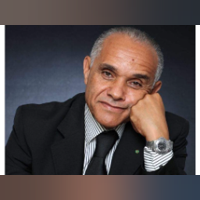
Aziz Daouda Aziz Daouda

Aziz Daouda

Directeur Technique et du Développement de la Confédération Africaine d'Athlétisme. Passionné du Maroc, passionné d'Afrique. Concerné par ce qui se passe, formulant mon point de vue quand j'en ai un. Humaniste, j'essaye de l'être, humain je veux l'être. Mon histoire est intimement liée à l'athlétisme marocain et mondial. J'ai eu le privilège de participer à la gloire de mon pays .


10200

33.0

THE ENCHIRIDION - I 5643

There are things which are within our power, and there are things which are beyond our power. Within our power are opinion, aim, desire, aversion, and, in one word, whatever affairs are our own. Beyond our power are body, property, reputation, office, and, in one word, whatever are not properly our own affairs. Now the things within our power are by nature free, unrestricted, unhindered; but those beyond our power are weak, dependent, restricted, alien. Remember, then, that if you attribute freedom to things by nature dependent and take what belongs to others for your own, you will be hindered, you will lament, you will be disturbed, you will find fault both with gods and men. But if you take for your own only that which is your own and view what belongs to others just as it really is, then no one will ever compel you, no one will restrict you; you will find fault with no one, you will accuse no one, you will do nothing against your will; no one will hurt you, you will not have an enemy, nor will you suffer any harm. Aiming, therefore, at such great things, remember that you must not allow yourself any inclination, however slight, toward the attainment of the others; but that you must entirely quit some of them, and for the present postpone the rest. But if you would have these, and possess power and wealth likewise, you may miss the latter in seeking the former; and you will certainly fail of that by which alone happiness and freedom are procured. Seek at once, therefore, to be able to say to every unpleasing semblance, “You are but a semblance and by no means the real thing.” And then examine it by those rules which you have; and first and chiefly by this: whether it concerns the things which are within our own power or those which are not; and if it concerns anything beyond our power, be prepared to say that it is nothing to you.

THE ADVENTURES OF TOM SAWYER - PREFACE 5849

Most of the adventures recorded in this book really occurred; one or two were experiences of my own, the rest those of boys who were schoolmates of mine. Huck Finn is drawn from life; Tom Sawyer also, but not from an individual—he is a combination of the characteristics of three boys whom I knew, and therefore belongs to the composite order of architecture. The odd superstitions touched upon were all prevalent among children and slaves in the West at the period of this story—that is to say, thirty or forty years ago. Although my book is intended mainly for the entertainment of boys and girls, I hope it will not be shunned by men and women on that account, for part of my plan has been to try to pleasantly remind adults of what they once were themselves, and of how they felt and thought and talked, and what queer enterprises they sometimes engaged in. THE AUTHOR. HARTFORD, 1876.

THE MEDITATIONS - Book I.[1/3] 6006

1. I learned from my grandfather, Verus, to use good manners, and to put restraint on anger. 2. In the famous memory of my father I had a pattern of modesty and manliness. 3. Of my mother I learned to be pious and generous; to keep myself not only from evil deeds, but even from evil thoughts; and to live with a simplicity which is far from customary among the rich. 4. I owe it to my great-grandfather that I did not attend public lectures and discussions, but had good and able teachers at home; and I owe him also the knowledge that for things of this nature a man should count no expense too great. 5. My tutor taught me not to favour either green or blue at the chariot races, nor, in the contests of gladiators, to be a supporter either of light or heavy armed. He taught me also to endure labour; not to need many things; to serve myself without troubling others; not to intermeddle in the affairs of others, and not easily to listen to slanders against them. 6. Of Diognetus I had the lesson not to busy myself about vain things; not to credit the great professions of such as pretend to work wonders, or of sorcerers about their charms, and their expelling of Demons and the like; not to keep quails (for fighting or divination), nor to run after such things; to suffer freedom of speech in others, and to apply myself heartily to philosophy. Him also I must thank for my hearing first Bacchius, then Tandasis and Marcianus; that I wrote dialogues in my youth, and took a liking to the philosopher’s pallet and skins, and to the other things which, by the Grecian discipline, belong to that profession. 7. To Rusticus I owe my first apprehensions that my nature needed reform and cure; and that I did not fall into the ambition of the common Sophists, either by composing speculative writings or by declaiming harangues of exhortation in public; further, that I never strove to be admired by ostentation of great patience in an ascetic life, or by display of activity and application; that I gave over the study of rhetoric, poetry, and the graces of language; and that I did not pace my house in my senatorial robes, or practise any similar affectation. I observed also the simplicity of style in his letters, particularly in that which he wrote to my mother from Sinuessa. I learned from him to be easily appeased, and to be readily reconciled with those who had displeased me or given cause of offence, so soon as they inclined to make their peace; to read with care; not to rest satisfied with a slight and superficial knowledge; nor quickly to assent to great talkers. I have him to thank that I met with the discourses of Epictetus, which he furnished me from his own library. 8. From Apollonius I learned true liberty, and tenacity of purpose; to regard nothing else, even in the smallest degree, but reason always; and always to remain unaltered in the agonies of pain, in the losses of children, or in long diseases. He afforded me a living example of how the same man can, upon occasion, be most yielding and most inflexible. He was patient in exposition; and, as might well be seen, esteemed his fine skill and ability in teaching others the principles of philosophy as the least of his endowments. It was from him that I learned how to receive from friends what are thought favours without seeming humbled by the giver or insensible to the gift. 9. Sextus was my pattern of a benign temper, and his family the model of a household governed by true paternal affection, and a steadfast purpose of living according to nature. Here I could learn to be grave without affectation, to observe sagaciously the several dispositions and inclinations of my friends, to tolerate the ignorant and those who follow current opinions without examination. His conversation showed how a man may accommodate himself to all men and to all companies; for though companionship with him was sweeter and more pleasing than any sort of flattery, yet he was at the same time highly respected and reverenced. No man was ever more happy than he in comprehending, finding out, and arranging in exact order the great maxims necessary for the conduct of life. His example taught me to suppress even the least appearance of anger or any other passion; but still, with all this perfect tranquillity, to possess the tenderest and most affectionate heart; to be apt to approve others yet without noise; to have much learning and little ostentation. 10. I learned from Alexander the Grammarian to avoid censuring others, to refrain from flouting them for a barbarism, solecism, or any false pronunciation. Rather was I dexterously to pronounce the words rightly in my answer, confining approval or objection to the matter itself, and avoiding discussion of the expression, or to use some other form of courteous suggestion. 11. Fronto made me sensible how much of envy, deceit and hypocrisy surrounds princes; and that generally those whom we account nobly born have somehow less natural affection. 12. I learned from Alexander the Platonist not often nor without great necessity to say, or write to any man in a letter, that I am not at leisure; nor thus, under pretext of urgent affairs, to make a practice of excusing myself from the duties which, according to our various ties, we owe to those with whom we live. 13. Of Catulus I learned not to condemn any friend’s expostulation even though it were unjust, but to try to recall him to his former disposition; to stint no praise in speaking of my masters, as is recounted of Domitius and Athenodorus; and to love my children with true affection. 14. Of Severus, my brother, I learned to love my kinsmen, to love truth, to love justice. Through him I came to know Thrasea, Helvidius, Cato, Dion, and Brutus. He gave me my first conception of a Commonwealth founded upon equitable laws and administered with equality of right; and of a Monarchy whose chief concern is the freedom of its subjects. Of him I learned likewise a constant and harmonious devotion to Philosophy; to be ready to do good, to be generous with all my heart. He taught me to be of good hope and trustful of the affection of my friends. I observed in him candour in declaring what he condemned in the conduct of others; and so frank and open was his behaviour, that his friends might easily see without the trouble of conjecture what he liked or disliked.