Think Forward.

Maroc éternel, Maroc incassable : l'identité qui triomphe de l'exil... 71

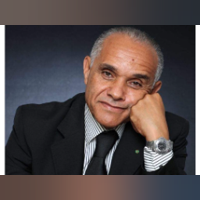
Il existe des appartenances que la géographie dissout avec le temps, et d’autres qu’elle renforce à mesure que la distance s’installe. L’expérience marocaine relève assurément de la seconde catégorie. À travers les générations, parfois jusqu’à la troisième ou quatrième, un phénomène intrigue. Des femmes et des hommes nés loin du Maroc continuent de s’y reconnaître, de s’y attacher, de s’y projeter. Ils ont quitté le pays ou n’y ont jamais vécu durablement, ils sont nés loin du pays mais le Maroc, lui, ne les a jamais quittés. Comment expliquer une telle persistance ? Pourquoi cette fidélité traverse-t-elle les classes sociales, les confessions, les degrés de religiosité et même les nationalités acquises ailleurs ? Comment une mémoire est si indélébile. Comment résiste-elle à l’épreuve du temps, de l’éloignement et des acquis culturels nouveaux, sinon par le poids profond de la conscience nationale ? Le Maroc n’est pas un simple État moderne issu des recompositions du XXe siècle. C’est une construction historique ancienne, façonnée par des siècles, des millénaires, de continuité politique et civilisationnelle. Des dynasties comme les Almoravides, les Almohades, les Mérinides, les Saadiens ou les Alaouites ont forgé un espace politique et symbolique stable, dont la permanence dépasse les ruptures apparentes. Cette profondeur historique irrigue l’imaginaire collectif. Elle donne aux Marocains, y compris ceux de la diaspora, le sentiment d’appartenir à une histoire qui les précède et les dépasse. Être marocain n’est pas seulement une nationalité. C’est une inscription dans une continuité, une identité composite forgée par l’inclusion. L’identité marocaine s’est bâtie par sédimentation. Elle est amazighe, africaine, arabe, andalouse, hébraïque. Autant de strates qui coexistent en équilibre singulier, se complètent, s'imbriquent sans s’exclure. Cette pluralité ancienne explique la capacité des Marocains à embrasser la diversité sans rupture identitaire. Ainsi, un Marocain juif en Europe ou un musulman naturalisé ailleurs partage souvent une référence affective commune au Maroc; non par ignorance des différences, mais parce qu’elles s’inscrivent dans un cadre historique et géographique partagé. Cette identité inclusive permet une rareté : rester profondément marocain sans renoncer à d’autres appartenances, la monarchie servant de fil symbolique. Dans cette architecture complexe, la monarchie joue un rôle structurant. Sous Mohammed VI, elle incarne continuité historique et stabilité contemporaine. Pour les Marocains de l’étranger, le lien au Trône dépasse la politique. Il touche au symbole et à l’affectif. Une dimension que seuls les Marocains saisissent pleinement. Elle agit comme un point fixe dans un monde mouvant, offrant une permanence face aux changements de langue, d’environnement ou de citoyenneté. Cette transmission s’opère invisiblement dans la famille, dans les rites. Ce n'est pas une mémoire mais des mémoires sensibles et vivantes. La diffusion et le transfert se manifestent aussi dans les cuisines aux recettes ancestrales, dans les musiques et les sons, dans les salons où résonne la darija, par les étés « au bled », les gestes, les intonations, les moussems ou les hiloulas. L’identité marocaine se transmet moins par discours que par expériences sensorielles : goûts, odeurs, rythmes, hospitalité. C’est ainsi que les générations nées à l’étranger ressentent une appartenance non apprise formellement, une fidélité active mêlant affect et volonté revendiquée. La diaspora ne se contente pas d’un attachement abstrait. Elle agit. Les transferts financiers, les investissements, les engagements publics, la défense des positions marocaines à l’international en témoignent. Ce patriotisme opérant prolonge l’affect en action, un devoir envers la nation, une fidélité marocaine. Les marocains peuvent être exilés, mais jamais déracinés. Pour la diaspora marocaine l'attachement transcende les océans. Même dans des fonctions politiques, économiques ou universitaires à l’étranger, les Marocains portent explicitement ou implicitement leur pays d’origine. L’altérité des sociétés d’accueil renforce cette identité. Le regard extérieur consolide ce sentiment d’appartenance à une culture si marquante qui se cristallise, se revendique, se magnifie. Ce phénomène, intense chez les Marocains, oblige à nommer ce qui allait de soi au pays : une continuité à distance. Ni nostalgie figée ni simple héritage, cette relation est une dynamique profonde. Le Maroc n’est pas seulement un lieu; c’est le lien qui traverse les générations, s’adapte sans se diluer, rappelant que l’exil ne défait pas toutes les appartenances. Le Maroc est au quotidien en nous dans une mémoire pérenne, solide et sans faille, qui défie les frontières et le temps.
Aziz Daouda Aziz Daouda

Aziz Daouda

Directeur Technique et du Développement de la Confédération Africaine d'Athlétisme. Passionné du Maroc, passionné d'Afrique. Concerné par ce qui se passe, formulant mon point de vue quand j'en ai un. Humaniste, j'essaye de l'être, humain je veux l'être. Mon histoire est intimement liée à l'athlétisme marocain et mondial. J'ai eu le privilège de participer à la gloire de mon pays .


9100

33.0

My Pain Qualifies Me 13

At an immersion meeting for psychoanalysts, I heard the phrase: “My pain qualifies me,” and immediately, like a lightning bolt, it struck deeply within me and, with the speed of a thought, made complete sense. I was able to perceive it with a clarity that, honestly, I don’t recall ever experiencing before in my entire life. It was so intense that I felt certain I was in the right place, investing in a career that, until not long ago, I couldn’t have imagined myself pursuing even in my dreams. Although this discovery is recent, given the fascination it caused me, perhaps it had been stored in my unconscious all along, likely as a repressed desire, even due to my own prejudice regarding matters of the human mind. Because of unsuccessful past experiences, I had come to doubt the effectiveness of psychotherapy, even considering it at times as a way of making easy money at the expense of others’ suffering. I believed that a person in distress could simply rely on friends and family to vent, share their problems, and relieve tension, while medications prescribed by doctors would do their part. However, upon hearing that my pain qualified me,now, of course, with a different mindset and studying psychoanalysi, I felt as though I was experiencing a kind of gnosis. I know my pain, or rather, my pains, and I fully understand this statement. When we set out to help someone who carries their own pain, we can even through a simple look, convey to the analysand that we understand what they are going through. This phenomenon is what we call countertransference: emotions, feelings, and thoughts that arise in our unconscious in relation to the analysand. These feelings and emotions are developed by the therapist during a therapy session. In that space, we become aware that there are two souls facing each other, one pouring out their thoughts, anxieties, and traumas, and the other offering attentive listening, care, and guidance, helping them find their path and providing tools to manage their struggles and move forward in life as best as possible. And for the therapist who has experienced, or still experiences pain, it also becomes an opportunity for self-analysis, which undoubtedly gives full meaning to the exchange that takes place between two souls standing face to face with their pains.

AFCON 2025: The Trophy that Sets the Savannah Ablaze.. 115

There are moments when football stops being a game and becomes a brutal revealer of a continent's institutional and political fragilities. The current crisis surrounding the Africa Cup of Nations (AFCON) is the perfect illustration. Between the rigorous application of regulations, the credibility of the Confederation of African Football (CAF), media pressure, and reactions from the Senegalese Football Federation, the affair now extends far beyond sports into a much broader realm, intertwining law, sovereignty, and diplomacy. At its origin, a disciplinary decision that, under normal circumstances, would have been a simple sporting dispute. But the context, symbolism, and players involved have turned this file into a full-blown crisis. The CAF, as the regulatory body, faces a fundamental demand: to enforce its own rules without yielding to pressure. Any weakness in applying the law would open the door to widespread challenges to its authority, including revisiting past decisions and verdicts. In this sense, the decision taken, however contested, fits into a logic of institutional preservation. However, law, as essential as it is, cannot be entirely divorced from its political and emotional environment. Today's events provide perfect proof. The Senegalese side's reaction, perceived as an offense or challenge to the decision, reveals a deeper malaise: a sense of injustice, real or supposed, amplified by a public opinion whipped into a frenzy by a flood of increasingly belligerent statements and remarks. Social media, TV panels, and certain official discourses have turned a legal matter into a symbolic clash between nations. In response, the Royal Moroccan Football Federation remains silent, stoic, calm, and discreet. This is where the main danger lies. Beyond texts and procedures, it is historical relations, built over decades of solidarity and brotherhood, that are now exposed to unnecessary tension. African football, long presented as a vector of unity, risks here becoming a factor of division. And this drift, if not contained, could leave lasting scars. That's precisely what the occult forces, or not so occult, stoking the fire are aiming for. In this climate of escalation, the temptation is great for each side to harden its position. Yet, the history of sports conflicts shows that escalation is rarely a solution. It weakens institutions, undermines competition credibility, and, above all, distances the public from the essentials: fair and credible play. The central question then becomes: how far will this showdown go? A peaceful outcome necessarily requires a return to calm and reason. This does not mean renouncing one's rights or silencing disagreements, but framing them in a controlled manner. Appeal mechanisms exist, whether through direct sports jurisdictions or, if necessary, the international body that is the Court of Arbitration for Sport (CAS). Its role is precisely to settle such disputes with impartiality and rigor. Awaiting the verdict from this body, even if it is slow, means accepting that law takes precedence over emotion. It also means recognizing that the credibility of African football's components depends on their ability to resolve disputes in line with the rules they have set for themselves. Any other path, pressure, excessive politicization, or media confrontation, would only entrench and worsen the crisis. At its core, this affair raises an essential question about the governance model for African football. A model subject to power plays and momentary emotions, or one based on solid, respected institutions capable of enforcing the law, even when it stings? Ultimately, African football bodies didn't fall from the sky. They are the emanation of a democratic process in which Africa's 54 countries participate in good conscience. The answer to this question will determine not only the outcome of this crisis but also the future of football on the continent. Beyond the present case, the credibility of an entire sports architecture is at stake. In the immediate term, one thing is clear: the time for appeasement must follow that of confrontation and escalation. Preserving the essentials and consolidating fraternity among African peoples is worth far more than a sports victory, even an Africa Cup of Nations trophy. Alas, this is beyond those whose vision doesn't extend past the end of their nose. The CAS will speak soon. Then we'll see who is right or wrong under strict application of the law, with no further recourse possible except a return to reason. Wouldn't it be better, in the meantime, to keep a cool head, maintain lucidity, and calm down? A trophy is only raised when it is deserved—truly deserved.

Faceless War, Disoriented World, Trapped Citizen... 120

There was a time when war made sense, or at least appeared to. It pitted identifiable camps against each other, produced winners and losers, and sometimes ended in peace, even imperfect peace, sometimes signed in a train car. Before that, it unfolded in battles for which appointments were even set, far from civilians. They observed each other, sized one another up, and collectively decided the start time of the clashes. A true war of the brave. There were always winners and losers. Thank cinema for reliving those scenes, more or less romanticized, but scenes nonetheless... From World War I to the Cold War, closer to us, conflicts, however tragic, followed a certain historical intelligibility. Since then, joysticks have crept in, and computers have taken over... Things changed; dare we say: they dehumanized. Contemporary war, as it emerges in the triangular confrontation between the United States, Israel, and Iran, seems to have broken with that old logic. It's no longer just complex: it's become ungraspable, unintelligible to ordinary mortals like us. It doesn't just oppose forces; it dissolves the very landmarks that once allowed us to understand what war is. Who is the victor? Who is the vanquished? The question feels almost out of place. For this modern war produces no clear verdict, but a succession of competing narratives saturated with propaganda, disinformation, and what we now call "fakes." Truth itself becomes a battlefield, fragmented, manipulated, inaccessible. Lies are baked into the system. Reality wavers and fades. Yet lives are lost in anonymity, buildings surely turned to mush, billions of dollars vanished, likely burned in milliseconds by traders, exploded without a trace except by making poor people everywhere. In this war, roles seem interchangeable. One of those who triggered the hostilities seeks to extricate itself, as if suddenly discovering the vertigo of what it initiated. The second? Who knows. Its war logic has long been impenetrable. It presents itself as the aggressed party, refuses all negotiation, or pretends to, while expanding the theater of operations. The one retaliating, the third protagonist, loses its leaders, gets hammered daily for over a month, yet seems driven by an endless escalation logic too. Toward what horizon? It strikes beyond its declared adversaries without provoking proportional reactions. Part of its war is waged against those who don't want it and resist with all their might, without retaliation. How long will this last? We must ask: what does "winning" mean in a war with no clear limits or identifiable final objective? We are thus confronted with a profound mutation of war: it is no longer a means in service of a political end, as once thought, but an autonomous, self-sustaining process, almost abstract. A war that no longer aims for peace, but for its own perpetuation. And yet, this distant war is not so distant. Beyond strategies and rhetoric, it's civil societies that pay the price. Here in Morocco, elsewhere in the world, the effects hit with silent brutality. Energy prices climb, threatening psychological thresholds unthinkable just forty days ago: 20 dirhams per liter of gasoline soon. Tomatoes, fish, chicken, lentils, and the rest will follow... Anxiety is very real. The economy becomes war prolonged by other means. The citizen becomes an adjustment variable. It's they who foot the bill. Even when they don't want war, they must still pay for it, wherever they are, even at the ends of the earth. Faced with this, governments seem powerless. They dust off old solutions, already tested and already ineffective, as if economic history itself were trapped in eternal recurrence. This political impotence amplifies the sense of injustice and abandonment. Thus arises the question, almost metaphysical: what have we done to deserve this? This so-human question may be ill-posed. For it assumes an immanent justice in the world's course, a moral logic linking our acts to our collective fate. Yet the tragedy of our era is precisely the absence of that coherence. The world is not just: it is unstable, chaotic, traversed by forces beyond us. Perhaps that's the price of calling ourselves democratic, living in or under democracies... or not. Perhaps we need to rephrase the question. Not: why is this happening to us? But: how to keep living in a world where meaning slips away beneath our staggering feet? That is probably the true philosophical challenge of our time. Not understanding war, for it now escapes classical understanding, but preserving, despite everything, a capacity to think, to resist confusion, to refuse letting lies become the norm. If modern war is faceless, endless, and truthless, then the only possible victory is internal to each of us: upholding, against all odds, a demand for lucidity, a touch of humanism, hope, a dream.