Think Forward.

Between Deals and Geopolitics: Trump Snubs Israel and Bets on the Gulf Monarchies 7773

On May 13, 2025, Donald Trump began the first major international tour of his second term. Instead of stopping in Jerusalem, a symbol of the strong alliance between the United States and Israel, the president chose to visit only the three Gulf countries: Saudi Arabia, Qatar, and the United Arab Emirates. Israel, a neighboring and long-standing partner, was not included. This decision represents a significant change in American diplomacy and could reshape regional dynamics. It raises the question: is this simply an economic strategy or a deeper geopolitical shift? In Riyadh, the focus was clearly on business. Saudi Arabia announced an unprecedented investment of $600 billion in the American economy, with plans to increase it to $1 trillion over four years. The sectors involved include defense, energy, technology, infrastructure, and especially weaponry, which may cause discomfort for Israel. The U.S. military orders amount to $142 billion, reflecting the priority to secure America’s economic future through strong partnerships with the Gulf monarchies, which aim to be seen as more than just oil producers. Saudi Arabia is a major global economic player and even influenced the lifting of U.S. sanctions on Syria. In Doha, Qatar signed historic agreements worth nearly $1.2 trillion, including the sale of Boeing planes and GE Aerospace engines to Qatar Airways. Qatar also gifted Trump a plane valued at nearly half a billion dollars. The United Arab Emirates committed to investing $1.4 trillion over ten years in the American economy, focusing on artificial intelligence and digital infrastructure. At each stop, investment forums brought together leading figures from Silicon Valley and Wall Street, demonstrating the intention to strengthen economic ties with the Gulf. Trump presented tangible results, reinforcing his image as a dealmaker and promising long-term prosperity for the United States. He secured jobs and prosperity by renegotiating tariffs and ensuring that capital would first benefit the U.S. economy. But why was Israel excluded from this tour? The regional situation offers some explanation: the war in Gaza continues, the humanitarian crisis worsens, and talks between Saudi Arabia and Israel are stalled. A visit to Jerusalem could have been seen as provocative and might have endangered the important economic agreements. Additionally, Trump’s proposal to transform Gaza into a "Riviera of the Middle East" was not well received by Arab-Muslim countries. The focus remained on regional stability and economic cooperation, avoiding symbolic issues. Trump’s approach is cautious and pragmatic, consistent with his "America First" policy. This decision does not reflect a punishment of Netanyahu, despite tensions between the two leaders, but signals a shift in the relationship between Washington and Jerusalem. Whereas Israel was a priority in Trump’s first term, the approach is now more nuanced and pragmatic. Israel is costly for the U.S., and Trump seeks financial support for a heavily indebted country. There are many strategic differences with Israel on issues such as Gaza, Iran’s nuclear program, and normalization with Riyadh. However, Trump still faces a firm Netanyahu, whose hardline stance complicates American goals. Supporting Israel without reservation risks losing economic opportunities with the Gulf monarchies. By focusing on these countries, Trump signals that American diplomacy now prioritizes economic interests and new regional balances, even if it means temporarily distancing from a historic ally. This message also reaches Israeli voters and the international community: automatic loyalties are replaced by realpolitik, where partnerships are judged by their concrete benefits. This change breaks with decades of American diplomacy, where Israel was always central during presidential visits. The White House now favors tangible outcomes and alliances that benefit the U.S. economy and the president’s international standing. The vice president also strengthens his position for the upcoming election. The Republican Party welcomes this. In summary, Israel’s absence from the Middle East tour can be explained by the priority given to economic matters, caution in a volatile context, and a desire to redefine strategic balances in favor of the U.S. This decision may redraw alliances in the Middle East, marking an era where American diplomacy is guided by economic returns and regional stability, even if it disrupts traditions and surprises allies. Israel remains an essential partner but cannot match the scale of opportunities offered by the Gulf. For Trump, the priority is clear: "America First," including in redefining Middle Eastern alliances. If this strategy succeeds economically, it could have lasting effects on regional dynamics and Israel’s role in American diplomacy. Israeli society must acknowledge this new reality, and opposition parties might use this moment to counter extremists dominating politics. Israel’s future depends on regional peace, which also requires the Palestinian people’s right to live in peace. This will be the next challenge. The Gulf monarchies invest to support the U.S. but also become more demanding on this issue. The Middle East, birthplace of religions and much of human civilization, long a stage for ideological rivalries, is becoming the ground for a new American realpolitik. Donald Trump, true to his style, favors deals and results, even if it means breaking conventions. Israel’s exclusion is not an oversight but a sign of strategic repositioning that could reshape the future of the region and the world.

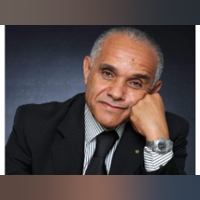
Aziz Daouda Aziz Daouda

Aziz Daouda

Directeur Technique et du Développement de la Confédération Africaine d'Athlétisme. Passionné du Maroc, passionné d'Afrique. Concerné par ce qui se passe, formulant mon point de vue quand j'en ai un. Humaniste, j'essaye de l'être, humain je veux l'être. Mon histoire est intimement liée à l'athlétisme marocain et mondial. J'ai eu le privilège de participer à la gloire de mon pays .


8100

33.0

THE ENCHIRIDION - I 3623

There are things which are within our power, and there are things which are beyond our power. Within our power are opinion, aim, desire, aversion, and, in one word, whatever affairs are our own. Beyond our power are body, property, reputation, office, and, in one word, whatever are not properly our own affairs. Now the things within our power are by nature free, unrestricted, unhindered; but those beyond our power are weak, dependent, restricted, alien. Remember, then, that if you attribute freedom to things by nature dependent and take what belongs to others for your own, you will be hindered, you will lament, you will be disturbed, you will find fault both with gods and men. But if you take for your own only that which is your own and view what belongs to others just as it really is, then no one will ever compel you, no one will restrict you; you will find fault with no one, you will accuse no one, you will do nothing against your will; no one will hurt you, you will not have an enemy, nor will you suffer any harm. Aiming, therefore, at such great things, remember that you must not allow yourself any inclination, however slight, toward the attainment of the others; but that you must entirely quit some of them, and for the present postpone the rest. But if you would have these, and possess power and wealth likewise, you may miss the latter in seeking the former; and you will certainly fail of that by which alone happiness and freedom are procured. Seek at once, therefore, to be able to say to every unpleasing semblance, “You are but a semblance and by no means the real thing.” And then examine it by those rules which you have; and first and chiefly by this: whether it concerns the things which are within our own power or those which are not; and if it concerns anything beyond our power, be prepared to say that it is nothing to you.

THE ADVENTURES OF TOM SAWYER - PREFACE 3783

Most of the adventures recorded in this book really occurred; one or two were experiences of my own, the rest those of boys who were schoolmates of mine. Huck Finn is drawn from life; Tom Sawyer also, but not from an individual—he is a combination of the characteristics of three boys whom I knew, and therefore belongs to the composite order of architecture. The odd superstitions touched upon were all prevalent among children and slaves in the West at the period of this story—that is to say, thirty or forty years ago. Although my book is intended mainly for the entertainment of boys and girls, I hope it will not be shunned by men and women on that account, for part of my plan has been to try to pleasantly remind adults of what they once were themselves, and of how they felt and thought and talked, and what queer enterprises they sometimes engaged in. THE AUTHOR. HARTFORD, 1876.

THE MEDITATIONS - Book I.[1/3] 3902

1. I learned from my grandfather, Verus, to use good manners, and to put restraint on anger. 2. In the famous memory of my father I had a pattern of modesty and manliness. 3. Of my mother I learned to be pious and generous; to keep myself not only from evil deeds, but even from evil thoughts; and to live with a simplicity which is far from customary among the rich. 4. I owe it to my great-grandfather that I did not attend public lectures and discussions, but had good and able teachers at home; and I owe him also the knowledge that for things of this nature a man should count no expense too great. 5. My tutor taught me not to favour either green or blue at the chariot races, nor, in the contests of gladiators, to be a supporter either of light or heavy armed. He taught me also to endure labour; not to need many things; to serve myself without troubling others; not to intermeddle in the affairs of others, and not easily to listen to slanders against them. 6. Of Diognetus I had the lesson not to busy myself about vain things; not to credit the great professions of such as pretend to work wonders, or of sorcerers about their charms, and their expelling of Demons and the like; not to keep quails (for fighting or divination), nor to run after such things; to suffer freedom of speech in others, and to apply myself heartily to philosophy. Him also I must thank for my hearing first Bacchius, then Tandasis and Marcianus; that I wrote dialogues in my youth, and took a liking to the philosopher’s pallet and skins, and to the other things which, by the Grecian discipline, belong to that profession. 7. To Rusticus I owe my first apprehensions that my nature needed reform and cure; and that I did not fall into the ambition of the common Sophists, either by composing speculative writings or by declaiming harangues of exhortation in public; further, that I never strove to be admired by ostentation of great patience in an ascetic life, or by display of activity and application; that I gave over the study of rhetoric, poetry, and the graces of language; and that I did not pace my house in my senatorial robes, or practise any similar affectation. I observed also the simplicity of style in his letters, particularly in that which he wrote to my mother from Sinuessa. I learned from him to be easily appeased, and to be readily reconciled with those who had displeased me or given cause of offence, so soon as they inclined to make their peace; to read with care; not to rest satisfied with a slight and superficial knowledge; nor quickly to assent to great talkers. I have him to thank that I met with the discourses of Epictetus, which he furnished me from his own library. 8. From Apollonius I learned true liberty, and tenacity of purpose; to regard nothing else, even in the smallest degree, but reason always; and always to remain unaltered in the agonies of pain, in the losses of children, or in long diseases. He afforded me a living example of how the same man can, upon occasion, be most yielding and most inflexible. He was patient in exposition; and, as might well be seen, esteemed his fine skill and ability in teaching others the principles of philosophy as the least of his endowments. It was from him that I learned how to receive from friends what are thought favours without seeming humbled by the giver or insensible to the gift. 9. Sextus was my pattern of a benign temper, and his family the model of a household governed by true paternal affection, and a steadfast purpose of living according to nature. Here I could learn to be grave without affectation, to observe sagaciously the several dispositions and inclinations of my friends, to tolerate the ignorant and those who follow current opinions without examination. His conversation showed how a man may accommodate himself to all men and to all companies; for though companionship with him was sweeter and more pleasing than any sort of flattery, yet he was at the same time highly respected and reverenced. No man was ever more happy than he in comprehending, finding out, and arranging in exact order the great maxims necessary for the conduct of life. His example taught me to suppress even the least appearance of anger or any other passion; but still, with all this perfect tranquillity, to possess the tenderest and most affectionate heart; to be apt to approve others yet without noise; to have much learning and little ostentation. 10. I learned from Alexander the Grammarian to avoid censuring others, to refrain from flouting them for a barbarism, solecism, or any false pronunciation. Rather was I dexterously to pronounce the words rightly in my answer, confining approval or objection to the matter itself, and avoiding discussion of the expression, or to use some other form of courteous suggestion. 11. Fronto made me sensible how much of envy, deceit and hypocrisy surrounds princes; and that generally those whom we account nobly born have somehow less natural affection. 12. I learned from Alexander the Platonist not often nor without great necessity to say, or write to any man in a letter, that I am not at leisure; nor thus, under pretext of urgent affairs, to make a practice of excusing myself from the duties which, according to our various ties, we owe to those with whom we live. 13. Of Catulus I learned not to condemn any friend’s expostulation even though it were unjust, but to try to recall him to his former disposition; to stint no praise in speaking of my masters, as is recounted of Domitius and Athenodorus; and to love my children with true affection. 14. Of Severus, my brother, I learned to love my kinsmen, to love truth, to love justice. Through him I came to know Thrasea, Helvidius, Cato, Dion, and Brutus. He gave me my first conception of a Commonwealth founded upon equitable laws and administered with equality of right; and of a Monarchy whose chief concern is the freedom of its subjects. Of him I learned likewise a constant and harmonious devotion to Philosophy; to be ready to do good, to be generous with all my heart. He taught me to be of good hope and trustful of the affection of my friends. I observed in him candour in declaring what he condemned in the conduct of others; and so frank and open was his behaviour, that his friends might easily see without the trouble of conjecture what he liked or disliked.