Think Forward.

Ahmed Faras: The Eternal Legend of Moroccan Football 21837

I have been fortunate enough to know Ahmed Faras. It is unbearable for me to speak of him in the past tense, someone who has been part of my life for so long. It had been ages since he last touched a ball. Few are still alive who saw him play, those who, match after match, would await his dribble, his runs down the wing, his shot, his goal. Faras was an outstanding man, with an incredible shyness and reserve. Even when present somewhere, he was always on the sidelines: discreet, courteous, kind, with deep sensitivity, affection, and great touchiness. But Faras will always be part of the present. He is a true legend of Moroccan and African football; legends never die. Fedala saw him born in the cold of December 1947. Mohammedia would be his city and Chabab his eternal club. At the time, there was no such thing as a transfer market, no migrations, no football mercenary spirit. You were born in a club, learned to play there, and you stayed. His temperament was not that of a typical striker: there was no aggressiveness, no cunning. He compensated with his genius and never needed to dive or roll on the ground to sway a referee or create confusion. His genius spared him all that. He was an exceptional striker who marked the history of Moroccan and continental football. The turf at El Bachir football stadium helped him, at that time, it was the best in Morocco. Ahmed Faras was the product of a generation shaped by the structured environment of the youth sports schools run by the Ministry of Youth and Sports, a system supposedly dismantled by so-called administrative and political reforms. Yet, it was there that Morocco's champions were formed, across all sports. His early path was marked by the guidance of renowned trainers such as Lakhmiri, who helped shape numerous Moroccan talents. This solid foundation allowed him to develop technical skills and a sense of teamwork very early on, which would become hallmarks of his play. Ahmed Faras spent his entire career at Chabab Mohammedia, from 1965 to 1982, never having a professional contract—such things didn’t exist in Morocco then. There’s no need to mention signing bonuses or performance awards, even with the national team. His loyalty to Chabab is remarkable. He would lead the club to a Moroccan championship and become its top scorer. He would bring along with him his playing friends—Acila, Glaoua, Haddadi, and many more. Faras was a pillar of the Moroccan national team. With 36 goals in 94 caps, what a historic scorer for the Atlas Lions! He captained the national team for eight years, playing in the 1970 World Cup in Mexico and the 1972 Munich Olympic Games. In 1975, Ahmed Faras entered the legend by becoming the first Moroccan to win the African Ballon d’Or, an award that underlined the quality and consistency of his play. This distinction placed him among the greatest players on the continent, competing with the top African stars of his era. There was talk of a transfer to Real Madrid...but at the time Moroccan league players were barred from moving abroad under penalty of losing their place in the national team. The idea was, thus, to strengthen the domestic league... The peak of his career was surely the 1976 Africa Cup of Nations (CAN), won by Morocco in Ethiopia. Faras was the leader on the pitch, the tournament’s top scorer, and his influence was decisive for this historic triumph—the only major African title that Morocco has ever won. He scored crucial goals against Nigeria and Egypt in that tournament, perfectly embodying the role of playmaker and team leader on the field. To this day, he remains the only Moroccan captain ever to lift the coveted African trophy. I have been a few times to that ground in Addis Ababa where he lifted the trophy, and every time, his image dominates my thoughts. An indelible black-and-white, forever etched in the history of the Kingdom and in the memory of Moroccans who followed the match at the time through the voice of one Ahmed Elgharbi...no live broadcasts back then. He was a respected and heeded captain, guided by great coaches: Abdelkader Lakhmiri, Blagoe Vidinic, Abdellah Settati, Jabrane, and especially Gheorghe Mardarescu during that epic campaign in the land of Emperor Haile Selassie. His charisma and vision of the game were crucial in unifying the team and leading them to the summit of African football. Faras embodied the spirit of conquest and national pride throughout the tournament. The squad was selected and led by an outstanding manager as well Colonel Mehdi Belmejdoub. His name is forever bound to that legendary achievement, a symbol of the potential of Moroccan football when guided by exemplary leadership, committed and knowledgeable managers, and players who were true warriors for their jersey’s colors. Ahmed Faras was not just a talented player. After his retirement, he continued to share his passion, getting involved in youth training, passing on his knowledge and love for the game to the new generation. He has been a source of inspiration for so many generations of players. Knowing Lhaj Ahmed Faras meant knowing a symbol of loyalty, talent, and unique leadership in Moroccan sports. His name will forever remain inscribed in collective memory as that of a football giant, whose legacy goes beyond sport to inspire entire generations. Rest in peace, my friend. One day, a great football stadium in this country will bear your name, and it will be fitting, if the players follow your example, honor your career, and if the public rises to your greatness, paying tribute to your distinguished name. So Lhaj Ahmed Faras, if you ever meet Acila up there, ask him to give you another nice pass, and tell Glaoua to defend well... Know that your star shines and will always shine above us in the sky of the beautiful country you cherished so much. ---

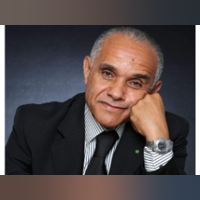
Aziz Daouda Aziz Daouda

Aziz Daouda

Directeur Technique et du Développement de la Confédération Africaine d'Athlétisme. Passionné du Maroc, passionné d'Afrique. Concerné par ce qui se passe, formulant mon point de vue quand j'en ai un. Humaniste, j'essaye de l'être, humain je veux l'être. Mon histoire est intimement liée à l'athlétisme marocain et mondial. J'ai eu le privilège de participer à la gloire de mon pays .


10200

33.0

Ouarzazate: From Logistical Isolation to a Systemic Development Emergency 249

Tourism and film professionals in Ouarzazate have once again expressed their anger with force and clarity. This isn't the first time they've risen up like this. In contrast, citizens murmur their frustrations quietly. Even when they shout their boiling rage, their voices seem blocked by the height of the Atlas peaks. They don't reach or don't clearly reach, where they need to. Since Ouarzazate has been under the Errachidia region, authorities and elected regional bodies have focused on their own city and its immediate surroundings, relegating Ouarzazate "on the other side" to oblivion. These cries are no longer mere sectoral demands. They reveal a long-standing multidimensional structural crisis. Beyond the glaring failure of air connectivity, the most visible symptom of deep isolation, lies a fragile and incoherent territorial development model. Professionals operating in Ouarzazate tell anyone who will listen that the city's tourist and cinematic appeal is in peril. In a globalized economy, the fluidity of flows determines competitiveness. The lack of direct flights from key European and North American source markets erodes Ouarzazate's attractiveness, a local economic pillar driven by its two flagship industries: tourism and cinema. Dependence on Casablanca or Marrakech hubs breaks the value chain, while logistical unpredictability deters tour operators and international productions. Add to that, it must be said, the surprisingly weak domestic air links. This domino effect hammers the local economy. Hotels see declining occupancy, margins shrink, and recent investments lack profitability. Indirect jobs in guiding, transport, crafts, and restaurants become increasingly precarious. If tour operators bypass the destination, film productions turn to more accessible rivals. Stays shorten dramatically. Ouarzazate isn't rejected: it's circumvented, which in tourism amounts to a gradual disappearance. ### The Mining Paradox: Wealth Without Local Benefits Morocco's Southeast is rich in strategic minerals: silver, manganese, cobalt. Yet the value generated escapes the territory: - Weak local redistribution: revenues are barely reinvested in infrastructure, skilled jobs, or public services. - Enclave effect: mining sites are isolated, without economic integration. - Negative externalities: intense pressure on water resources leads to environmental degradation without compensation. - Lack of processing: exporting raw materials deprives the region of industrial value chains. Thus, the territory generates wealth without building its future, deepening a profound sense of injustice. ### Governance Challenges and Systemic Risks His Majesty King Mohammed VI has repeatedly denounced the "two-speed Morocco," highlighting serious governance failures. Yet, despite unprecedented discursive promotion, cinematic hub, gateway to the desert, Ouarzazate remains poorly integrated into a genuine unclogging strategy. Where is the coordination between transport, tourism, and territorial development? Why do intangible infrastructures (connectivity, logistics) lag behind those in other regions? Does anyone have a clear vision of Ouarzazate's role in the national economy? This glaring deficit turns huge potential into fragility. The image suffers badly: complex access for travelers, uncertainties for productions. Perception being a key asset, a silent marginalization takes hold, threatening exit from international radars: fewer tourist nights, fewer films, fewer investments, fewer jobs. A vicious circle relegates this true center of excellence to forgotten peripheries. ### Rethinking the Model: Levers for Coherent Development The challenge goes beyond the unclogging some imagine. The entire model must be rethought: - By leveraging the mining sector to fund regional development, infrastructure, and training. - By creating synergies across all sectors (mining, tourism, energy). - By ensuring equitable wealth redistribution. - By encouraging executives, especially natives or those from the region, to settle there, return, and invest. - By integrating the region into a coherent national vision. Without this, Ouarzazate will keep accumulating paradoxes: Rich in resources, poor in benefits; World-famous, locally marginalized. In the end, it's no longer just an economic and social crisis penalizing Ouarzazate and its people, but a threat to territorial cohesion and justice itself. Ouarzazate's cries aim only to raise awareness of its ignored structural crisis... Until when?

Hassan II Trophy: Fifty Years of History, Memory, and Royal Vision... 445

There are anniversaries that are more than mere numbers. They are milestones in a life, landmarks in memory. This 50th edition of the Hassan II Golf Trophy is one of them. And for me, it holds a special flavor: that of half a century of history that I have had the modest privilege of living through. I can still picture myself, young and enthusiastic, assigned by my friend Najib Salmi to cover the very first edition for *L’Opinion*. We didn't yet know we were witnessing the birth of an event destined to span decades and place Morocco on the world map of golf. At the time, the gamble seemed bold. Golf was not a popular sport in Morocco, let alone a vector for international image. But that gamble bore the mark of a vision. That of Hassan II. To put it bluntly: the Hassan II Trophy is not just a sports competition. It is the expression of a strategy. A way, for a visionary sovereign, to anticipate what modern diplomacy would become: a diplomacy of influence, image, cultural and sporting outreach. Hassan II understood, well before many others, that sport could be a universal language. A space where nations meet without rigid protocol, where elites exchange in an informal setting, and where a country's image is built with subtlety. Golf, in particular, offered that prestigious yet discreet dimension, perfectly aligned with his idea of Morocco's positioning. Golf in Morocco had its own tradition and unique flavor, which a certain Winston Churchill regularly came to savor... Over the editions, I watched this trophy grow. From a still-confidential tournament, it became a recognized stop on the international circuit. I saw champions come and go, infrastructure evolve, and organization professionalize. But more than that, I saw a royal intuition proven right, year after year. What strikes me today, looking back, is not just the event's longevity. It is its coherence. Nothing was left to chance. The choice of courses, the quality of hospitality, the attention to detail... all of it meets one demand: to make Morocco a reference. And then there is that human dimension, often overlooked in official reports. The encounters, the chats by the green, the bonds forged over the years. Najib Salmi is no longer here to share this moment, but I know he would have savored it, like me, this continuity. We had begun this adventure almost as curious onlookers; today we see it consecrated. Fifty editions later, the Hassan II Trophy is far more than a tournament. It is a legacy. That of a king whom history will surely remember as one of the greatest of the Alaouite dynasty, not only for his political acumen, but for his ability to see far, very far ahead. Today, the vision is renewed. His Majesty King Mohammed VI has revitalized the approach with vigor, and His Royal Highness Prince Moulay Rachid ensures it translates into reality in the best possible way. And I, a mere chronicler of this long span of time, today measure the privilege of having been there at the beginning... and of still being here to recount its trajectory and savor the spectacle with the pride of a fulfilled citizen living his Moroccan identity.