Think Forward.

La politique marocaine en Afrique : une dynamique engagée et fédératrice... 2178

Le Maroc, sous le règne de Sa Majesté le Roi Mohammed VI, mène une politique africaine volontariste et inclusive, visant à renforcer ses liens économiques, politiques, sociaux et culturels avec le continent. Cette stratégie privilégie un bilatéralisme pragmatique, favorisant l’intégration économique africaine, la coopération sud-sud et des partenariats stratégiques. Des accords ont été signés avec plus de 40 pays africains. Le retour du Royaume à l’Union africaine en 2017 a quant à lui marqué un tournant majeur dans cette stratégie et devenu un véritable accélérateur. Le Maroc s’intéresse aussi à la Zone de libre-échange continentale africaine (ZLECAf) comme relais de croissance. Parmi les projets clés dans cette perspective, le gazoduc Nigeria-Maroc, long de 5 600 km. Il reliera l’Afrique de l’Ouest à celle du Nord, et transportera quelques 30 milliards de m³ de gaz naturel par an. Il améliorera l’accès à l’énergie pour pas moins de 400 millions de personnes dans 13 pays. Il s’inscrit dans la stratégie marocaine de transition énergétique. Estimé à plus de 25 milliards de dollars, ce projet apporte des retombées majeures pour la sécurité énergétique et le développement régional dans la complémentarité. Le Maroc s’engage aussi fortement dans l’éducation et la formation des compétences, offrant chaque année près de 15 000 bourses à des étudiants de 49 pays. Environ 20 000 étudiants africains sont accueillis annuellement, dans des domaines tels que ingénierie, médecine, finance ou sciences sociales, grâce à l’Agence Marocaine de Coopération Internationale (AMCI). Ce programme ambitieux se veut former une nouvelle génération de cadres et renforce les échanges scientifiques et culturels. L’économie marocaine est pour sa part bien implantée en Afrique avec plus de 1 000 entreprises actives dans les secteurs bancaire, immobilier, télécom, agriculture et infrastructures. Attijariwafa Bank et BMCE Bank of Africa ou encore le Groupe Banque Populaire, sont présents dans plus de 26 pays, générant des centaines de millions de dirhams en Afrique subsaharienne. Ces institutions, avec 45 filiales et 4 succursales, réalisent environ 23% de leur chiffre d’affaires sur le continent, facilitant le financement des projets et l’intégration financière régionale. Wafa Assurance et le groupe Saham renforcent également cette présence dans de nombreux pays. Le système de santé marocain, reconnu pour ses infrastructures modernes et son personnel compétent, attire chaque année des milliers d’Africains pour des soins divers, renforçant les liens humains. Le Maroc développe aussi des projets dans l’agriculture durable, les énergies renouvelables, la formation professionnelle et les infrastructures, soutenus par la Fondation Mohammed VI pour le Développement Durable. Plus de 60 % des IDE marocains sont dirigés vers l’Afrique. Les échanges commerciaux du Maroc avec l’Afrique restent encore modestes par rapport à ses échanges totaux : environ 7 à 8 % du commerce extérieur marocain. La marge de progression est très grande et prometteuse. Ces échanges ont fortement progressé. En 2023, le volume total des échanges commerciaux entre le Maroc et les pays africains s’est élevé à 52,7 milliards de dirhams. Cela représente une croissance de 45 % par rapport à 2013, où ce volume était de 36 milliards de dirhams avec une croissance annuelle moyenne d’environ 10%. Maroc Telecom, présent dans 10 pays, dessert environ 54 millions de clients et contribue à l’intégration numérique. Des groupes comme Ynna Holding, Alliances ou Addoha mènent des projets majeurs dans plusieurs pays, notamment la construction de logements et de centres hospitaliers. En agriculture, OCP Africa opère dans 18 pays, formant plus d’1,5 million d’agriculteurs et fournissant des engrais adaptés aux terres et types d'agricultures locales. Son programme Agribooster facilite l’accès aux intrants, financements et marchés, stimulant la productivité et la sécurité alimentaire. OCP investit aussi dans des unités de mélange et de stockage d’engrais dans plusieurs pays et collabore à des projets innovants avec USAID et la Banque mondiale, notamment dans la production d’ammoniac vert. SOMAGEC, acteur portuaire marocain majeur, réalise des projets en Guinée équatoriale, au Sénégal, en Mauritanie, au Bénin et à Djibouti, employant des milliers de personnes. Africa Motors, filiale d’Auto Hall, développe la production et la distribution automobile en partenariat avec Dongfeng pour plusieurs marchés africains. Le sport est également un levier de coopération: la Fédération Royale Marocaine de Football a signé plus de 43 partenariats avec des fédérations africaines. À travers ses entreprises et projets, le Maroc consolide son rôle clé dans le développement africain, fondé sur la solidarité, l’intégration économique et la prospérité partagée, suscitant jalousie et reconnaissance. La coopération marocaine en Afrique est un pilier stratégique fondé sur le partage d’expertise, le développement économique et le renforcement des liens culturels. Grâce à son positionnement géographique et historique, le Maroc joue un rôle majeur dans l’intégration régionale, en soutenant des projets d’infrastructures, de formation, et d’innovation. Cette coopération se caractérise par un engagement durable visant à promouvoir la paix, la sécurité et le développement durable sur le continent africain. Le désenclavement proposé pour les pays du Sahel, par le recours au futur port de Dakhla va sans doute aucun davantage accélérer l'intégration recherchée à l'avantage des centaines de millions de pays africains. L’idée de construire des ports comme celui de Dakhla s’appuie beaucoup sur la géographie stratégique du Maroc. C’est un atout qui saute aux yeux quand on regarde la carte. Le Maroc dispose d’un littoral de plus de 3 500 km, tourné à la fois vers l’Europe, l’Afrique de l’Ouest et l’Amérique. Dakhla, en particulier, se situe à mi-chemin entre l’Europe et l’Afrique subsaharienne, ce qui en fait un point d’escale maritime naturel. La côte atlantique marocaine se trouve sur la voie qui relie la Méditerranée (via Gibraltar) à l’Afrique de l’Ouest et à l’Amérique. Cela permet de capter une partie des flux logistiques mondiaux. Le Maroc est à moins de 15 km de l’Europe à Gibraltar et en même temps relié à l’Afrique de l’Ouest. Le port de Dakhla s’inscrit dans cette logique : servir de hub logistique et industriel entre les deux continents. La zone de Dakhla offre des conditions naturelles favorables: eaux profondes et faible houle permettant de construire un port capable d’accueillir de grands navires, ce qui est rare sur la côte ouest-africaine. Avec la Zone de libre-échange continentale africaine, un port comme Dakhla permettra donc au Maroc d’être une porte d’entrée des flux commerciaux vers l’Afrique de l’Ouest et au-delà vers le Mali, le Niger, le Sénégal, la Côte d’Ivoire et plus. Le Maroc a compris, les partenaires africains aussi. L'avenir sera radieux main dans la main.

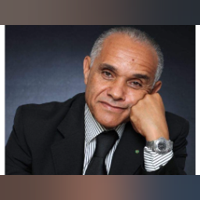
Aziz Daouda Aziz Daouda

Aziz Daouda

Directeur Technique et du Développement de la Confédération Africaine d'Athlétisme. Passionné du Maroc, passionné d'Afrique. Concerné par ce qui se passe, formulant mon point de vue quand j'en ai un. Humaniste, j'essaye de l'être, humain je veux l'être. Mon histoire est intimement liée à l'athlétisme marocain et mondial. J'ai eu le privilège de participer à la gloire de mon pays .


8900

33.0

THE ADVENTURES OF TOM SAWYER - PREFACE 5032

Most of the adventures recorded in this book really occurred; one or two were experiences of my own, the rest those of boys who were schoolmates of mine. Huck Finn is drawn from life; Tom Sawyer also, but not from an individual—he is a combination of the characteristics of three boys whom I knew, and therefore belongs to the composite order of architecture. The odd superstitions touched upon were all prevalent among children and slaves in the West at the period of this story—that is to say, thirty or forty years ago. Although my book is intended mainly for the entertainment of boys and girls, I hope it will not be shunned by men and women on that account, for part of my plan has been to try to pleasantly remind adults of what they once were themselves, and of how they felt and thought and talked, and what queer enterprises they sometimes engaged in. THE AUTHOR. HARTFORD, 1876.

THE MEDITATIONS - Book I.[1/3] 5179

1. I learned from my grandfather, Verus, to use good manners, and to put restraint on anger. 2. In the famous memory of my father I had a pattern of modesty and manliness. 3. Of my mother I learned to be pious and generous; to keep myself not only from evil deeds, but even from evil thoughts; and to live with a simplicity which is far from customary among the rich. 4. I owe it to my great-grandfather that I did not attend public lectures and discussions, but had good and able teachers at home; and I owe him also the knowledge that for things of this nature a man should count no expense too great. 5. My tutor taught me not to favour either green or blue at the chariot races, nor, in the contests of gladiators, to be a supporter either of light or heavy armed. He taught me also to endure labour; not to need many things; to serve myself without troubling others; not to intermeddle in the affairs of others, and not easily to listen to slanders against them. 6. Of Diognetus I had the lesson not to busy myself about vain things; not to credit the great professions of such as pretend to work wonders, or of sorcerers about their charms, and their expelling of Demons and the like; not to keep quails (for fighting or divination), nor to run after such things; to suffer freedom of speech in others, and to apply myself heartily to philosophy. Him also I must thank for my hearing first Bacchius, then Tandasis and Marcianus; that I wrote dialogues in my youth, and took a liking to the philosopher’s pallet and skins, and to the other things which, by the Grecian discipline, belong to that profession. 7. To Rusticus I owe my first apprehensions that my nature needed reform and cure; and that I did not fall into the ambition of the common Sophists, either by composing speculative writings or by declaiming harangues of exhortation in public; further, that I never strove to be admired by ostentation of great patience in an ascetic life, or by display of activity and application; that I gave over the study of rhetoric, poetry, and the graces of language; and that I did not pace my house in my senatorial robes, or practise any similar affectation. I observed also the simplicity of style in his letters, particularly in that which he wrote to my mother from Sinuessa. I learned from him to be easily appeased, and to be readily reconciled with those who had displeased me or given cause of offence, so soon as they inclined to make their peace; to read with care; not to rest satisfied with a slight and superficial knowledge; nor quickly to assent to great talkers. I have him to thank that I met with the discourses of Epictetus, which he furnished me from his own library. 8. From Apollonius I learned true liberty, and tenacity of purpose; to regard nothing else, even in the smallest degree, but reason always; and always to remain unaltered in the agonies of pain, in the losses of children, or in long diseases. He afforded me a living example of how the same man can, upon occasion, be most yielding and most inflexible. He was patient in exposition; and, as might well be seen, esteemed his fine skill and ability in teaching others the principles of philosophy as the least of his endowments. It was from him that I learned how to receive from friends what are thought favours without seeming humbled by the giver or insensible to the gift. 9. Sextus was my pattern of a benign temper, and his family the model of a household governed by true paternal affection, and a steadfast purpose of living according to nature. Here I could learn to be grave without affectation, to observe sagaciously the several dispositions and inclinations of my friends, to tolerate the ignorant and those who follow current opinions without examination. His conversation showed how a man may accommodate himself to all men and to all companies; for though companionship with him was sweeter and more pleasing than any sort of flattery, yet he was at the same time highly respected and reverenced. No man was ever more happy than he in comprehending, finding out, and arranging in exact order the great maxims necessary for the conduct of life. His example taught me to suppress even the least appearance of anger or any other passion; but still, with all this perfect tranquillity, to possess the tenderest and most affectionate heart; to be apt to approve others yet without noise; to have much learning and little ostentation. 10. I learned from Alexander the Grammarian to avoid censuring others, to refrain from flouting them for a barbarism, solecism, or any false pronunciation. Rather was I dexterously to pronounce the words rightly in my answer, confining approval or objection to the matter itself, and avoiding discussion of the expression, or to use some other form of courteous suggestion. 11. Fronto made me sensible how much of envy, deceit and hypocrisy surrounds princes; and that generally those whom we account nobly born have somehow less natural affection. 12. I learned from Alexander the Platonist not often nor without great necessity to say, or write to any man in a letter, that I am not at leisure; nor thus, under pretext of urgent affairs, to make a practice of excusing myself from the duties which, according to our various ties, we owe to those with whom we live. 13. Of Catulus I learned not to condemn any friend’s expostulation even though it were unjust, but to try to recall him to his former disposition; to stint no praise in speaking of my masters, as is recounted of Domitius and Athenodorus; and to love my children with true affection. 14. Of Severus, my brother, I learned to love my kinsmen, to love truth, to love justice. Through him I came to know Thrasea, Helvidius, Cato, Dion, and Brutus. He gave me my first conception of a Commonwealth founded upon equitable laws and administered with equality of right; and of a Monarchy whose chief concern is the freedom of its subjects. Of him I learned likewise a constant and harmonious devotion to Philosophy; to be ready to do good, to be generous with all my heart. He taught me to be of good hope and trustful of the affection of my friends. I observed in him candour in declaring what he condemned in the conduct of others; and so frank and open was his behaviour, that his friends might easily see without the trouble of conjecture what he liked or disliked.