Think Forward.

Le Maroc, cette conviction tranquille qui doit encore se partager... 2002

La maxime "One who believes in himself has no need to convince others" est communément traduite ainsi en français :«Celui qui croit en lui-même n’a pas besoin de convaincre les autres». Elle évoque *la confiance tranquille*, la force intérieure et la stabilité de celui qui avance sans démonstration ostentatoire. Cette idée trouve un écho particulier dans la réalité marocaine actuelle: un pays sûr du cap qu'il s'est fixé, fier de ses avancées multiples et diverses, convaincu de sa légitimité diplomatique, fort de ses alliances et de son enracinement international. Il est cependant confronté à un défi intérieur majeur, celui de persuader sa propre jeunesse, voire une bonne frange de sa population, du sens et de la portée de ses progrès et des avancées engrangées. Un véritable chantier que de gagner la confiance de la jeunesse et que celle ci, par ricochet gagne en confiance en elle même et en un avenir commun rayonnant et prospère. La diplomatie marocaine, un exemple de confiance affirmée, témoigne d’une résolution affichée sans complexe devant toute épreuve. Elle se caractérise par une détermination sans faille, à la fois décidée et pragmatique. A l'internationale, le Maroc affiche une sérénité stratégique reconnue. Sous l’impulsion Royale, sa diplomatie fondée sur le dialogue et la continuité, s’impose comme un modèle d’équilibre entre coopération, fermeté et confiance en soi. À l’ONU, par exemple, la proposition marocaine d’autonomie dans le dossier du Sahara est devenue une référence normative, acceptée par la quasi-totalité des partenaires internationaux. Ce succès diplomatique illustre parfaitement la maxime. Convaincu de sa justesse, le Maroc n’a pas eu besoin de recourir à des démonstrations excessives pour imposer sa position. Le pragmatisme, la patience, l'endurance et la détermination sont les maîtres mots dans ce dossier. Aujourd’hui, le ministre Bourita ou encore Omar Hilal, ambassadeur du Royaume auprès de l'ONU, sont même perçus comme des stars et sont sollicités en tant que tels à chaque apparition publique, tellement ils sont convaincants et crédibles. Mais est-ce le cas pour tous les domaines et secteurs ? Au-delà de la question du Sahara Marocain, le Royaume déploie une diplomatie économique et parlementaire active, tissant un réseau d’alliances solides en Afrique, en Europe, au Moyen-Orient, et progressivement en Amérique latine et en Asie. Cette stratégie fondée sur le partenariat illustre cette *conviction tranquille* qui cherche moins à convaincre qu’à consolider les acquis. Les accords renouvelés avec l’Union Européenne ou les coopérations renforcées avec la Chine, l'Inde, le Brésil, les pays africains et autres, démontrent la solidité de l'approche. Mais au-delà, le Maroc endure un paradoxe étonnant. Son défi intérieur le plus urgent est de reconquérir, peut-être même de construire, la confiance de sa jeunesse. Une confiance en elle même avant tout et celle en le pays aussi. Cette confiance affichée à l’extérieur et perçue positivement en interne, contraste avec l’impatience et le scepticisme d’une partie de la jeunesse marocaine vis-à-vis d'autres aspects de la vie. Face aux défis socio-économiques tels que le chômage, la précarité et la lenteur des réformes, telles qu’elles sont perçues, de nombreux jeunes expriment un profond doute quant à leur avenir. A côté de la faiblesse endémique de la communication, de la pauvreté de l'argumentaire, de l'apathie des médias officiels, du superflu de bons nombre parmi les autres, les jeunes subissent souvent aussi un discours nihiliste relayé par certaines voix médiatiques ou réseaux sociaux, qui mine leur confiance et alimente leur désengagement et leur fatalisme. Ce paradoxe d'un État sûr de lui-même sur la scène mondiale mais qui doit sans cesse convaincre en interne est au cœur de la situation. Malgré les efforts gouvernementaux pour améliorer l’emploi et les services publics, des manifestations individuelles ou collectives récurrentes reflètent ce malaise. le déficit en confiance civique et chronique. Comment le Maroc peut-il alors raviver la foi commune et faire évoluer ce paradigme? Il semble essentiel d’investir dans un dialogue authentique avec la jeunesse pour qu’elle ressente pleinement la portée et les bénéfices des progrès réalisés. Des initiatives comme les programmes d’éducation civique renouvelés, le soutien à l’entrepreneuriat jeune, notamment dans les zones rurales, la révision en profondeur du cursus scolaire et la participation accrue des jeunes aux instances décisionnelles sont autant d’exemples en cours ou à développer. L'allégement de certaines règlementations en matière de fiscalité, de change, de commerce électronique, de fonctionnement des entreprises et de monnaies numériques ouvriraient sans doute quelques horizons pour cette jeunesse connectée, avide de réussite. Cela augmenterait sans doute aucun ce capital confiance tant recherché, aujourd'hui crucial. Pourquoi ne pas prendre de suite les mesures que l'on va fatalement prendre dans dix ans? Alors, il sera trop tard. Les jeunes marocains veulent entreprendre et vivre au rythme du monde. La maxime *Celui qui croit en lui-même n’a pas besoin de convaincre les autres* deviendrait ainsi un appel à réinventer le lien entre l’État et la jeunesse: créer une énergie collective de confiance, non seulement manifestée à l’extérieur, mais aussi vécue et ressentie à l’intérieur, afin de bâtir un avenir partagé. C'est ce qui semble aujourd'hui entamé. Les décisions prises en conseil des ministres tout récemment pour inciter les jeunes à rejoindre les institutions, par la révision de la loi organique de la chambre des représentants en témoignent. Le rabaissement de l'âge plafond de la jeunesse de 40 à 35 ans est une grande avancée. La possibilité pour les jeunes de se présenter aux élections sans appartenance à un parti, ainsi que le soutien financier promis aux jeunes non partisans, sont autant de coups de fouet à la léthargie qui s'était durablement installée dans la vie politique marocaine. La messe est dite: ou les partis politiques s’ouvrent à la jeunesse, ou ils sont condamnés à n’occuper que des strapontins. Si les jeunes s'engagent, alors ils participeront aux changement dont ils rêvent et l'imposeront. Leur niveau de confiance ne s'en trouvera qu'augmenté. Maintenant, attendons les débats au parlement qui fixera tout cela. C’est un critère important: pour une fois, on aura une loi adoptée avec environ neuf mois d’avance avant les élections. Pourvu que personne ne mette de bâton dans la roue. Ce n’est qu’ainsi que la confiance sera construite, comme un socle transparent, inclusif, participatif, et pérenne. Une précision tout de même, la phrase "One who believes in himself has no need to convince others" est généralement attribuée à Lao Tzu (ou Laozi), le sage chinois fondateur du taoïsme. Cependant, elle n’est pas authentifiée comme un extrait du Tao Te Ching. Peu importe, la maxime prend de toute façon ici tout son sens.

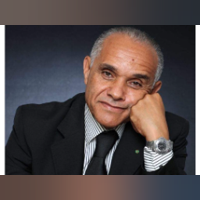
Aziz Daouda Aziz Daouda

Aziz Daouda

Directeur Technique et du Développement de la Confédération Africaine d'Athlétisme. Passionné du Maroc, passionné d'Afrique. Concerné par ce qui se passe, formulant mon point de vue quand j'en ai un. Humaniste, j'essaye de l'être, humain je veux l'être. Mon histoire est intimement liée à l'athlétisme marocain et mondial. J'ai eu le privilège de participer à la gloire de mon pays .


8900

33.0

THE ADVENTURES OF TOM SAWYER - PREFACE 5032

Most of the adventures recorded in this book really occurred; one or two were experiences of my own, the rest those of boys who were schoolmates of mine. Huck Finn is drawn from life; Tom Sawyer also, but not from an individual—he is a combination of the characteristics of three boys whom I knew, and therefore belongs to the composite order of architecture. The odd superstitions touched upon were all prevalent among children and slaves in the West at the period of this story—that is to say, thirty or forty years ago. Although my book is intended mainly for the entertainment of boys and girls, I hope it will not be shunned by men and women on that account, for part of my plan has been to try to pleasantly remind adults of what they once were themselves, and of how they felt and thought and talked, and what queer enterprises they sometimes engaged in. THE AUTHOR. HARTFORD, 1876.

THE MEDITATIONS - Book I.[1/3] 5179

1. I learned from my grandfather, Verus, to use good manners, and to put restraint on anger. 2. In the famous memory of my father I had a pattern of modesty and manliness. 3. Of my mother I learned to be pious and generous; to keep myself not only from evil deeds, but even from evil thoughts; and to live with a simplicity which is far from customary among the rich. 4. I owe it to my great-grandfather that I did not attend public lectures and discussions, but had good and able teachers at home; and I owe him also the knowledge that for things of this nature a man should count no expense too great. 5. My tutor taught me not to favour either green or blue at the chariot races, nor, in the contests of gladiators, to be a supporter either of light or heavy armed. He taught me also to endure labour; not to need many things; to serve myself without troubling others; not to intermeddle in the affairs of others, and not easily to listen to slanders against them. 6. Of Diognetus I had the lesson not to busy myself about vain things; not to credit the great professions of such as pretend to work wonders, or of sorcerers about their charms, and their expelling of Demons and the like; not to keep quails (for fighting or divination), nor to run after such things; to suffer freedom of speech in others, and to apply myself heartily to philosophy. Him also I must thank for my hearing first Bacchius, then Tandasis and Marcianus; that I wrote dialogues in my youth, and took a liking to the philosopher’s pallet and skins, and to the other things which, by the Grecian discipline, belong to that profession. 7. To Rusticus I owe my first apprehensions that my nature needed reform and cure; and that I did not fall into the ambition of the common Sophists, either by composing speculative writings or by declaiming harangues of exhortation in public; further, that I never strove to be admired by ostentation of great patience in an ascetic life, or by display of activity and application; that I gave over the study of rhetoric, poetry, and the graces of language; and that I did not pace my house in my senatorial robes, or practise any similar affectation. I observed also the simplicity of style in his letters, particularly in that which he wrote to my mother from Sinuessa. I learned from him to be easily appeased, and to be readily reconciled with those who had displeased me or given cause of offence, so soon as they inclined to make their peace; to read with care; not to rest satisfied with a slight and superficial knowledge; nor quickly to assent to great talkers. I have him to thank that I met with the discourses of Epictetus, which he furnished me from his own library. 8. From Apollonius I learned true liberty, and tenacity of purpose; to regard nothing else, even in the smallest degree, but reason always; and always to remain unaltered in the agonies of pain, in the losses of children, or in long diseases. He afforded me a living example of how the same man can, upon occasion, be most yielding and most inflexible. He was patient in exposition; and, as might well be seen, esteemed his fine skill and ability in teaching others the principles of philosophy as the least of his endowments. It was from him that I learned how to receive from friends what are thought favours without seeming humbled by the giver or insensible to the gift. 9. Sextus was my pattern of a benign temper, and his family the model of a household governed by true paternal affection, and a steadfast purpose of living according to nature. Here I could learn to be grave without affectation, to observe sagaciously the several dispositions and inclinations of my friends, to tolerate the ignorant and those who follow current opinions without examination. His conversation showed how a man may accommodate himself to all men and to all companies; for though companionship with him was sweeter and more pleasing than any sort of flattery, yet he was at the same time highly respected and reverenced. No man was ever more happy than he in comprehending, finding out, and arranging in exact order the great maxims necessary for the conduct of life. His example taught me to suppress even the least appearance of anger or any other passion; but still, with all this perfect tranquillity, to possess the tenderest and most affectionate heart; to be apt to approve others yet without noise; to have much learning and little ostentation. 10. I learned from Alexander the Grammarian to avoid censuring others, to refrain from flouting them for a barbarism, solecism, or any false pronunciation. Rather was I dexterously to pronounce the words rightly in my answer, confining approval or objection to the matter itself, and avoiding discussion of the expression, or to use some other form of courteous suggestion. 11. Fronto made me sensible how much of envy, deceit and hypocrisy surrounds princes; and that generally those whom we account nobly born have somehow less natural affection. 12. I learned from Alexander the Platonist not often nor without great necessity to say, or write to any man in a letter, that I am not at leisure; nor thus, under pretext of urgent affairs, to make a practice of excusing myself from the duties which, according to our various ties, we owe to those with whom we live. 13. Of Catulus I learned not to condemn any friend’s expostulation even though it were unjust, but to try to recall him to his former disposition; to stint no praise in speaking of my masters, as is recounted of Domitius and Athenodorus; and to love my children with true affection. 14. Of Severus, my brother, I learned to love my kinsmen, to love truth, to love justice. Through him I came to know Thrasea, Helvidius, Cato, Dion, and Brutus. He gave me my first conception of a Commonwealth founded upon equitable laws and administered with equality of right; and of a Monarchy whose chief concern is the freedom of its subjects. Of him I learned likewise a constant and harmonious devotion to Philosophy; to be ready to do good, to be generous with all my heart. He taught me to be of good hope and trustful of the affection of my friends. I observed in him candour in declaring what he condemned in the conduct of others; and so frank and open was his behaviour, that his friends might easily see without the trouble of conjecture what he liked or disliked.