Think Forward.

Le Maroc, uni et indivisible : le 31 octobre, mémoire et vision d’un Royaume rassemblé... 1723

Il est des dates qui cessent d’être de simples repères pour devenir des symboles forts. En instituant le **31 octobre “Fête de l’Unité”**, Sa Majesté le Roi Mohammed VI n’a pas seulement ajouté un jour au calendrier national des fêtes : il a inscrit dans la mémoire collective une certitude, celle d’un Maroc uni, fidèle à son histoire, confiant en son destin, certain de son avenir. Ce choix, placé à la veille de l’anniversaire de la Marche Verte, n’est pas une coïncidence, mais un message. Il relie deux moments : l’un de mémoire, l’autre d’espérance, pour rappeler qu’au Maroc, l’unité n’est pas une posture, mais une philosophie collective de vie, une continuité historique, une conviction chevillée à l’âme du pays et de chacun des citoyens. **L’unité séculaire du Royaume est le fil d’or de l’histoire marocaine.** Le 6 novembre 1975, trois cent cinquante mille Marocains, le Coran dans une main et le drapeau dans l’autre, faut il le rappeler, épaulé par de très nombreux ressortissants de pays amis, y compris d'un Prince et non des moindres, ont marché vers le Sud pour retrouver ce qui n’aurait jamais dû être perdu : le Sahara, matrice du Royaume. La **Marche Verte** n’était pas une conquête ; elle fut un retour, une affirmation pacifique d’une légitimité plus ancienne que les frontières tracées à la règle sur les cartes coloniales. Ce fut aussi un serment entre le Trône et le peuple, entre le passé et l’avenir. Un serment que rien, ni les manœuvres diplomatiques, ni les campagnes hostiles, ni la propagande à coup de milliards de dollars, n’ont pu ébranler. Le marocain ne plie pas. le marocain est fidèle à ses engagements. Le marocain tient parole, le marocain est conscient de la diversité de son pays mais ne le conçoit que dans l'unité et la cohésion. En décidant de faire du 31 octobre la **Fête de l’Unité**, Sa Majesté le Roi Mohammed VI réactive ce serment et le transpose dans le temps présent : l’unité du Maroc n’est pas un souvenir glorieux, mais un horizon qui se construit chaque jour, un avenir qui se forge sur le droit et la foi, la diplomatie et la constance, le développement et la prospérité partagée. Depuis un demi-siècle, la diplomatie marocaine déroule patiemment le fil d’une stratégie claire : défendre la marocanité du Sahara sans jamais céder à la provocation, faire triompher la légitimité par la raison et non par la force. Les récentes **résolutions du Conseil de sécurité** ont confirmé la justesse de cette ligne. Elles consacrent le sérieux et la crédibilité de la proposition marocaine d’autonomie, une voie réaliste, moderne, conforme aux aspirations des populations locales et de l’ensemble du peuple marocain qui y a adhéré mesurant parfaitement le sacrifice demandé. À l’inverse, l’Algérie persiste dans une posture anachronique, arc-boutée sur son soutien à un **Polisario** qui ne représente plus qu’une ombre de lui-même. Un mouvement construit sur le mensonge, l'infox et la propagande à coup de milliards de dollars. C'est sans doute la situation la plus couteuse du genre depuis que l'humain est humain. Jamais on n’a su combien de Sahraouis ont véritablement suivi le Polisario, ni combien, avec l’aide de ses parrains, il a fait venir de Mauritaniens, de Maliens, de Nigérians de Tchadiens et d’ailleurs pour renforcer ses rangs. La générosité de Kaddafi ayant beaucoup aidé, faut il l'oublier! Aujourd’hui, l’Algérie est acculée à permettre le **recensement des populations des camps** et qui dit recensement dit, en parallèle, identification. Le discours figé des séparatistes n’a plus de prise sur le réel : pendant que les camps de Tindouf s’enlisent dans l’attente, les provinces du Sud Marocain s’éveillent à la vie, au développement, à la dignité. Le contraste est saisissant : là-bas, l’immobilisme ; ici, la construction. Là-bas, l’idéologie ; ici, la réalité. La Marche Verte n’a jamais été un épisode clos, c'est un serment devenu doctrine nationale, un récit fondateur, un mythe vivant, la croyance d’une nation: **la plus ancienne nation au monde**. Elle a forgé une conscience nationale rare, faite de loyauté et de foi dans la continuité du Royaume. Dans un monde traversé par les fragmentations et les identités blessées, le Maroc a fait de son unité une boussole, non une nostalgie. À **Laâyoune**, **Dakhla**, **Smara**, **Boujdour** ou Bir Guendouz, la ferveur des célébrations du 31 octobre dit mieux que les discours la profondeur de ce lien. Ces villes, naguère marginalisées, incarnent aujourd’hui un Maroc en marche, sûr de lui, fidèle à ses racines et tourné vers son avenir. Le Sud n’est plus un bout du Royaume : il en est le cœur battant. **Le Sahara est une promesse d’avenir, un laboratoire de développement et un pôle stratégique du Royaume.** Les investissements dans les énergies renouvelables, la pêche, les infrastructures, le tourisme ou la logistique ont transformé la région en un carrefour incontournable entre l’Afrique, l’Atlantique et l'Europe. C’est là que s’expérimente, à ciel ouvert, la vision royale d’un Maroc moderne, équilibré et inclusif, un Maroc qui ne laisse aucune région à l’écart. La **Fête de l’Unité** n’est pas seulement un hommage au passé : elle est une projection vers l’avenir. La **Fête de l'Unité**dit à la jeunesse marocaine que l’unité n’est pas un héritage qu’on contemple, mais un édifice qu’on bâtit, qu’on construit jour après jour, par le travail, la fidélité et la foi en la nation, avec un inflexible respect de la mémoire des sacrifices et une croyance ferme en la promesse de continuité. Le 31 octobre, le Maroc fait la fête, mais se souvient :des soldats tombés sur les dunes, des diplomates qui ont défendu la cause nationale sur toutes les tribunes du monde, des pionniers qui ont bâti dans le sable les fondations d’un développement exemplaire. À travers eux, c’est tout un pays qui se regarde dans le miroir de son histoire, non pour s’y complaire, mais pour y puiser la force d’aller plus loin. Car au fond, **l’unité du Maroc n’est pas un acte politique ; c’est une vérité historique, un état d’esprit, une fidélité viscérale.**Le 31 octobre vient simplement lui donner un nom, une date, un souffle renouvelé. **Il n’y a pas d’unité sans mémoire, ni de mémoire sans avenir.**Le Maroc n'a jamais célébré le passé pour le passé mais toujours comme évocation pour se projeter dans l'avenir. Jamais il n'a cru en une rente mémorielle figée. Fort de son histoire et de sa souveraineté retrouvée, il avance désormais avec la sérénité de ceux qui n’ont rien à prouver, mais seulement à poursuivre. Son ADN est particulier mais jamais pour s'isoler. Au contraire, le Royaume se voit être une partie d'un monde, ouvert à la coopération, à la liberté, à la prospérité. Dans le vent du Sud, au loin, résonne toujours le même serment : **Un seul Royaume, une seule âme, un seul destin.**

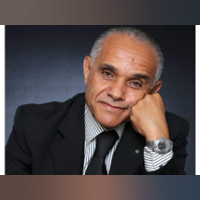
Aziz Daouda Aziz Daouda

Aziz Daouda

Directeur Technique et du Développement de la Confédération Africaine d'Athlétisme. Passionné du Maroc, passionné d'Afrique. Concerné par ce qui se passe, formulant mon point de vue quand j'en ai un. Humaniste, j'essaye de l'être, humain je veux l'être. Mon histoire est intimement liée à l'athlétisme marocain et mondial. J'ai eu le privilège de participer à la gloire de mon pays .


8900

33.0

THE ADVENTURES OF TOM SAWYER - PREFACE 5032

Most of the adventures recorded in this book really occurred; one or two were experiences of my own, the rest those of boys who were schoolmates of mine. Huck Finn is drawn from life; Tom Sawyer also, but not from an individual—he is a combination of the characteristics of three boys whom I knew, and therefore belongs to the composite order of architecture. The odd superstitions touched upon were all prevalent among children and slaves in the West at the period of this story—that is to say, thirty or forty years ago. Although my book is intended mainly for the entertainment of boys and girls, I hope it will not be shunned by men and women on that account, for part of my plan has been to try to pleasantly remind adults of what they once were themselves, and of how they felt and thought and talked, and what queer enterprises they sometimes engaged in. THE AUTHOR. HARTFORD, 1876.

THE MEDITATIONS - Book I.[1/3] 5179

1. I learned from my grandfather, Verus, to use good manners, and to put restraint on anger. 2. In the famous memory of my father I had a pattern of modesty and manliness. 3. Of my mother I learned to be pious and generous; to keep myself not only from evil deeds, but even from evil thoughts; and to live with a simplicity which is far from customary among the rich. 4. I owe it to my great-grandfather that I did not attend public lectures and discussions, but had good and able teachers at home; and I owe him also the knowledge that for things of this nature a man should count no expense too great. 5. My tutor taught me not to favour either green or blue at the chariot races, nor, in the contests of gladiators, to be a supporter either of light or heavy armed. He taught me also to endure labour; not to need many things; to serve myself without troubling others; not to intermeddle in the affairs of others, and not easily to listen to slanders against them. 6. Of Diognetus I had the lesson not to busy myself about vain things; not to credit the great professions of such as pretend to work wonders, or of sorcerers about their charms, and their expelling of Demons and the like; not to keep quails (for fighting or divination), nor to run after such things; to suffer freedom of speech in others, and to apply myself heartily to philosophy. Him also I must thank for my hearing first Bacchius, then Tandasis and Marcianus; that I wrote dialogues in my youth, and took a liking to the philosopher’s pallet and skins, and to the other things which, by the Grecian discipline, belong to that profession. 7. To Rusticus I owe my first apprehensions that my nature needed reform and cure; and that I did not fall into the ambition of the common Sophists, either by composing speculative writings or by declaiming harangues of exhortation in public; further, that I never strove to be admired by ostentation of great patience in an ascetic life, or by display of activity and application; that I gave over the study of rhetoric, poetry, and the graces of language; and that I did not pace my house in my senatorial robes, or practise any similar affectation. I observed also the simplicity of style in his letters, particularly in that which he wrote to my mother from Sinuessa. I learned from him to be easily appeased, and to be readily reconciled with those who had displeased me or given cause of offence, so soon as they inclined to make their peace; to read with care; not to rest satisfied with a slight and superficial knowledge; nor quickly to assent to great talkers. I have him to thank that I met with the discourses of Epictetus, which he furnished me from his own library. 8. From Apollonius I learned true liberty, and tenacity of purpose; to regard nothing else, even in the smallest degree, but reason always; and always to remain unaltered in the agonies of pain, in the losses of children, or in long diseases. He afforded me a living example of how the same man can, upon occasion, be most yielding and most inflexible. He was patient in exposition; and, as might well be seen, esteemed his fine skill and ability in teaching others the principles of philosophy as the least of his endowments. It was from him that I learned how to receive from friends what are thought favours without seeming humbled by the giver or insensible to the gift. 9. Sextus was my pattern of a benign temper, and his family the model of a household governed by true paternal affection, and a steadfast purpose of living according to nature. Here I could learn to be grave without affectation, to observe sagaciously the several dispositions and inclinations of my friends, to tolerate the ignorant and those who follow current opinions without examination. His conversation showed how a man may accommodate himself to all men and to all companies; for though companionship with him was sweeter and more pleasing than any sort of flattery, yet he was at the same time highly respected and reverenced. No man was ever more happy than he in comprehending, finding out, and arranging in exact order the great maxims necessary for the conduct of life. His example taught me to suppress even the least appearance of anger or any other passion; but still, with all this perfect tranquillity, to possess the tenderest and most affectionate heart; to be apt to approve others yet without noise; to have much learning and little ostentation. 10. I learned from Alexander the Grammarian to avoid censuring others, to refrain from flouting them for a barbarism, solecism, or any false pronunciation. Rather was I dexterously to pronounce the words rightly in my answer, confining approval or objection to the matter itself, and avoiding discussion of the expression, or to use some other form of courteous suggestion. 11. Fronto made me sensible how much of envy, deceit and hypocrisy surrounds princes; and that generally those whom we account nobly born have somehow less natural affection. 12. I learned from Alexander the Platonist not often nor without great necessity to say, or write to any man in a letter, that I am not at leisure; nor thus, under pretext of urgent affairs, to make a practice of excusing myself from the duties which, according to our various ties, we owe to those with whom we live. 13. Of Catulus I learned not to condemn any friend’s expostulation even though it were unjust, but to try to recall him to his former disposition; to stint no praise in speaking of my masters, as is recounted of Domitius and Athenodorus; and to love my children with true affection. 14. Of Severus, my brother, I learned to love my kinsmen, to love truth, to love justice. Through him I came to know Thrasea, Helvidius, Cato, Dion, and Brutus. He gave me my first conception of a Commonwealth founded upon equitable laws and administered with equality of right; and of a Monarchy whose chief concern is the freedom of its subjects. Of him I learned likewise a constant and harmonious devotion to Philosophy; to be ready to do good, to be generous with all my heart. He taught me to be of good hope and trustful of the affection of my friends. I observed in him candour in declaring what he condemned in the conduct of others; and so frank and open was his behaviour, that his friends might easily see without the trouble of conjecture what he liked or disliked.