Pensez le Futur.

FRANKENSTEIN - Letter 2[1/2] 5388

To Mrs. Saville, England. Archangel, 28th March, 17—. How slowly the time passes here, encompassed as I am by frost and snow! Yet a second step is taken towards my enterprise. I have hired a vessel and am occupied in collecting my sailors; those whom I have already engaged appear to be men on whom I can depend and are certainly possessed of dauntless courage. But I have one want which I have never yet been able to satisfy, and the absence of the object of which I now feel as a most severe evil, I have no friend, Margaret: when I am glowing with the enthusiasm of success, there will be none to participate my joy; if I am assailed by disappointment, no one will endeavour to sustain me in dejection. I shall commit my thoughts to paper, it is true; but that is a poor medium for the communication of feeling. I desire the company of a man who could sympathise with me, whose eyes would reply to mine. You may deem me romantic, my dear sister, but I bitterly feel the want of a friend. I have no one near me, gentle yet courageous, possessed of a cultivated as well as of a capacious mind, whose tastes are like my own, to approve or amend my plans. How would such a friend repair the faults of your poor brother! I am too ardent in execution and too impatient of difficulties. But it is a still greater evil to me that I am self-educated: for the first fourteen years of my life I ran wild on a common and read nothing but our Uncle Thomas’ books of voyages. At that age I became acquainted with the celebrated poets of our own country; but it was only when it had ceased to be in my power to derive its most important benefits from such a conviction that I perceived the necessity of becoming acquainted with more languages than that of my native country. Now I am twenty-eight and am in reality more illiterate than many schoolboys of fifteen. It is true that I have thought more and that my daydreams are more extended and magnificent, but they want (as the painters call it) keeping; and I greatly need a friend who would have sense enough not to despise me as romantic, and affection enough for me to endeavour to regulate my mind. Well, these are useless complaints; I shall certainly find no friend on the wide ocean, nor even here in Archangel, among merchants and seamen. Yet some feelings, unallied to the dross of human nature, beat even in these rugged bosoms. My lieutenant, for instance, is a man of wonderful courage and enterprise; he is madly desirous of glory, or rather, to word my phrase more characteristically, of advancement in his profession. He is an Englishman, and in the midst of national and professional prejudices, unsoftened by cultivation, retains some of the noblest endowments of humanity. I first became acquainted with him on board a whale vessel; finding that he was unemployed in this city, I easily engaged him to assist in my enterprise. The master is a person of an excellent disposition and is remarkable in the ship for his gentleness and the mildness of his discipline. This circumstance, added to his well-known integrity and dauntless courage, made me very desirous to engage him. A youth passed in solitude, my best years spent under your gentle and feminine fosterage, has so refined the groundwork of my character that I cannot overcome an intense distaste to the usual brutality exercised on board ship: I have never believed it to be necessary, and when I heard of a mariner equally noted for his kindliness of heart and the respect and obedience paid to him by his crew, I felt myself peculiarly fortunate in being able to secure his services. I heard of him first in rather a romantic manner, from a lady who owes to him the happiness of her life. This, briefly, is his story. Some years ago he loved a young Russian lady of moderate fortune, and having amassed a considerable sum in prize-money, the father of the girl consented to the match. He saw his mistress once before the destined ceremony; but she was bathed in tears, and throwing herself at his feet, entreated him to spare her, confessing at the same time that she loved another, but that he was poor, and that her father would never consent to the union. My generous friend reassured the suppliant, and on being informed of the name of her lover, instantly abandoned his pursuit. He had already bought a farm with his money, on which he had designed to pass the remainder of his life; but he bestowed the whole on his rival, together with the remains of his prize-money to purchase stock, and then himself solicited the young woman’s father to consent to her marriage with her lover. But the old man decidedly refused, thinking himself bound in honour to my friend, who, when he found the father inexorable, quitted his country, nor returned until he heard that his former mistress was married according to her inclinations. “What a noble fellow!” you will exclaim. He is so; but then he is wholly uneducated: he is as silent as a Turk, and a kind of ignorant carelessness attends him, which, while it renders his conduct the more astonishing, detracts from the interest and sympathy which otherwise he would command. Yet do not suppose, because I complain a little or because I can conceive a consolation for my toils which I may never know, that I am wavering in my resolutions. Those are as fixed as fate, and my voyage is only now delayed until the weather shall permit my embarkation. The winter has been dreadfully severe, but the spring promises well, and it is considered as a remarkably early season, so that perhaps I may sail sooner than I expected. I shall do nothing rashly: you know me sufficiently to confide in my prudence and considerateness whenever the safety of others is committed to my care. I cannot describe to you my sensations on the near prospect of my undertaking. It is impossible to communicate to you a conception of the trembling sensation, half pleasurable and half fearful, with which I am preparing to depart. I am going to unexplored regions, to “the land of mist and snow,” but I shall kill no albatross; therefore do not be alarmed for my safety or if I should come back to you as worn and woeful as the “Ancient Mariner.” You will smile at my allusion, but I will disclose a secret. I have often attributed my attachment to, my passionate enthusiasm for, the dangerous mysteries of ocean to that production of the most imaginative of modern poets. There is something at work in my soul which I do not understand. I am practically industrious—painstaking, a workman to execute with perseverance and labour—but besides this there is a love for the marvellous, a belief in the marvellous, intertwined in all my projects, which hurries me out of the common pathways of men, even to the wild sea and unvisited regions I am about to explore.

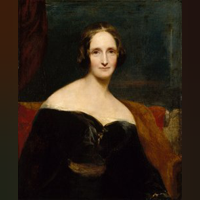
Bluwr X Commons: Mary Shelley Bluwr X Commons: Mary Shelley

Bluwr X Commons: Mary Shelley

Mary Shelley (30 August 1797 – 1 February 1851) was an English novelist best know for her novel "Frankenstein; or, The Modern Prometheus" published (1818). This early example of science fiction literature remains highly relevant today.


100

0

France-Maroc : le docu qui caricature pour condamner 62

Il y a des documentaires qui éclairent le réel. Et puis il y a ceux qui le déforment au nom d’une cause. Il m’a fallu trois visionnages attentifs pour venir à l’évidence qu' avec «France–Maroc : Je t’aime, moi non plus», diffusé sur France 5 le 5 avril, le téléspectateur n’assiste pas à une enquête, mais à un procès. Un procès à charge, méthodique, où l’accusé est connu d’avance: le Maroc, sa monarchie, et au-delà, son choix politique singulier. La double narration de la voix off et celle de celui dont les propos constituent le fil conducteur n’avait qu’une seule ligne directrice: insinuer, concocter un récit, le consolider et en faire une vérité à force de le répéter de mille manières. Derrière l’apparence du décryptage, c’est en réalité une démonstration idéologique qui se déploie, avec ses certitudes, ses angles morts et ses silences soigneusement entretenus. Le maître-mot: caricaturer pour disqualifier ; le procédé, plutôt transparent: réduire pour mieux condamner. Feu Hassan II est enfermé dans une lecture univoque, celle du «dictateur», sans contextualisation sérieuse des années de plomb, des tensions de la Guerre froide ou des tentatives répétées de coups d’État et d’assassinats qui ont visé le régime. Le seul extrait qu’on lui a trouvé, lui qui était plutôt loquace, est celui où Anne Sinclair lui pose une question sur Khalaat Mgouna.«La capitale des roses», lui avait-il rétorqué. Comme si un État soumis à des menaces existentielles devait réagir avec les standards d’une démocratie permissive. L’histoire nous a bien démontré sur quoi cela pouvait aboutir. Quant à Sa Majesté Mohammed VI, il est présenté comme une simple variation cosmétique du même système: une monarchie «adoucie», mais fondamentalement inchangée. Une lecture paresseuse qui évacue deux décennies de réformes, d’ajustements et d’évolutions réelles. Dans les deux cas, l’objectif n’est pas de comprendre, mais de figer. Le film devait parler de la relation entre les deux pays, mais la France y est absente donc innocente. La véritable clé du documentaire réside dans ce qu’il ne montre pas. La France, pourtant actrice centrale de cette relation, y apparaît comme en retrait, presque extérieure aux tensions. Une étrange disparition. Où sont les responsabilités historiques du protectorat dont souffre le pays à ce jour? Les imputations territoriales? Les ambiguïtés diplomatiques constantes pour soi-disant préserver un prétendu équilibre entre le Maroc et son voisin? Les intérêts économiques et stratégiques défendus avec constance? Les variations opportunistes du discours sur les droits de l’homme? En creux, le récit devient limpide: le Maroc serait dans l’affect, la pression, voire le chantage. La France, elle, incarnerait la rationalité, l’intelligence et la vérité. Ce déséquilibre n’est pas une maladresse. C’est une construction voulue et assumée dans les images choisies, les séquences et la narration. Comme quand il s’agit de Pegasus. Là, on a suggéré sans prouver, insinué sans conclure. Le traitement de l’affaire dans ce film illustre parfaitement cette mécanique. Le documentaire suggère. Il instille le doute. Il entretient le soupçon et s’arrête là. Jamais il ne rappelle un fait pourtant essentiel: aucune preuve formelle et irréfutable n’a établi la responsabilité du Maroc dans les accusations initiales. Mieux encore, plusieurs éléments sont venus fragiliser ces accusations, au point d’introduire un doute sérieux dans de nombreux cercles d’analyse, y compris au niveau des instances officielles. Ce point n’est pas discuté. Il est simplement évacué. Le spectateur est ainsi laissé dans une zone grise soigneusement entretenue: celle où l’accusation subsiste sans jamais être confrontée à l’exigence de preuve. Bien sûr, c’est volontairement fait ainsi, de façon à ce que la vérité soit masquée par le doute et les insinuations. Ce n’est plus de l’information. C’est de la suggestion. Au-delà, le réel est nié. Le Maroc en transformation est occulté, avec un angle mort majeur: les évolutions du Maroc contemporain. Car enfin, de quoi parle-t-on ? D’un pays qui a engagé une réconciliation institutionnelle avec son passé ? Non. D’un pays qui a réformé en profondeur son droit de la famille ? Non. D’un pays qui a ouvert, progressivement, des espaces de libertés publiques ou maintenu une stabilité politique rare dans une région tourmentée ? Non. D’un Royaume qui a généralisé la couverture sociale ? Bien sûr que non. Des retraités français qui préfèrent le Maroc? NON. Rien de cela n’est intégré dans la narration. Comme si reconnaître ces dynamiques affaiblissait la thèse initiale. Les réussites économiques et sociales intégrées auraient affaibli la thèse et rejeté les hypothèses. Toute analyse honnête devrait partir de cette tension: un système probablement imparfait, mais qui réussit tout de même mieux que son voisin, par exemple. Un système qui ne s’est jamais figé et qui a fait de la transformation progressive à son rythme une doctrine. Le biais fondamental dans ce film est une définition unique de la démocratie, celle voulue par le narrateur et les invités à qui il a donné le plus de temps de parole. Comme si, pour dire la vérité, il fallait absolument vivre à Paris et écrire en français. Au fond, ce documentaire révèle un biais plus profond: l’incapacité à penser la diversité des modèles politiques. Ici, la démocratie ne peut être que celle de la France socialiste. Tout ce qui s’en écarte devient suspect, illégitime ou transitoire. Le film a fondamentalement ignoré que le Maroc n’est pas la France. C’est une monarchie constitutionnelle, avec ses équilibres propres, ses contradictions, mais aussi sa légitimité historique et populaire. Les Marocains n’y sont pas soumis: ils y sont, dans leur immense majorité, attachés. Ignorer ce fait, c’est sortir du champ de l’analyse pour entrer dans celui du jugement. Quand l’idéologie remplace le journalisme, au final, «France–Maroc: Je t’aime, moi non plus» ne doute jamais. Et c’est précisément là son problème. Tout y est orienté: les choix d’intervenants, les séquences retenues, les silences assumés, les insinuations non corrigées. Ce n’est pas une enquête. C’est une démonstration. Et comme toute démonstration idéologique, elle simplifie le réel jusqu’à le déformer. C’est encore une fois une occasion manquée et un symptôme révélateur. La relation entre la France et le Maroc est trop dense, trop historique, trop humaine pour être réduite à un récit de domination ou de manipulation. Elle est faite de tensions, certes, mais aussi d’interdépendances, de liens humains profonds, d’intérêts croisés, d’attachements durables. Ce documentaire aurait pu en rendre compte. Il aurait pu éclairer les malentendus, interroger les non-dits, équilibrer les responsabilités. Il a préféré instruire un procès. Et ce faisant, il révèle moins le Maroc qu’un certain regard français sur le monde: sûr de lui, normatif, et parfois incapable de voir au-delà de ses propres catégories.