Pensez le Futur.

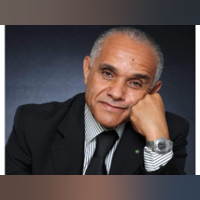
Abdou Cherif left, carried by his voice towards the heavens. 6528

I was driving back from Fez, when the radio channel which kept me company announced the sudden, dramatic, incomprehensible, unexpected, rapid, devastating and sad disappearance of Abdou Cherif. I adored, I adore and will adore until the end of my days this virtuoso whom I never had the chance to meet but whom television and YouTube subsequently made me discover and love. I, who adore Abdelhalim Hafed or Hafez and the beautiful Egyptian songs, find in him a certain continuity of the "belle époque"; that of the sublime musical drop; the one where lyricists like composers, conductors and performers surpassed themselves to offer the Arab public and not only the best of music. Inspired sometimes by deeply rooted popular arts, sometimes by musical tunes from elsewhere, even going so far as to explore Argentina Tango, they have bequeathed us a unique musical heritage whose richness we do not yet fully appreciate. Listening to Abdou Cherif performing Gabar or habibaha, we are caught in a whirlwind of magic by his captivating voice, strong, soft, expressive. The sound is crystal and the diction clear. Abdou sublimates this kind of song to make you forget the original… And then big surprise, one evening, at the Olympia in Cairo, he doubtfully gently announced that he was going to venture into singing "La Boheme". Charles Aznavour would have loved this moment so much. It was a triumph. And it's not over, Abdou will try the impossible and no one is bound to do the impossible, one evening in Casablanca he will amaze, surprise, by revisiting one of the standards of Moroccan Malhoum: Ghita. Who would have thought that one day this inveterate faithful of Abdelhalim would knock on the door of Lhaj Driss Benali Al malki and make him stand up in his two centuries old tomb. I am convinced that where he is, Driss Benali is smiling with satisfaction. No one has ever interpreted Ghita like Abdou Cherif, not even the great master Driss Toulali. This is the man who leaves us today forever, leaving us his voice, his smile, his elegance, his sensitivity and his audacity to stand up in large concert halls and take his fans on a journey beyond time. . When I arrived home, I stood in a corner, took my phone and started listening to endless extracts of his interpretations, spending more time on some where he had been at the height of his art, such as Rahila, composed by another of Moroccan music: Abdesalam Amer and performed by another beautiful voice that of the crooner Mohamed ElHayani. He also left early. A way of the deceased Abdou Cherif from a distance and to pray for the peace of his soul. I hesitated before offering you any of his interpretations: all of them are as perfect and beautiful as each other. Finally I said to myself why not Bohemia. You have a link down here. We belong to God and to him we return. Rest in peace Abdou.
youtu.be/hvM66SxNfJY?si=EAZNznev...
Aziz Daouda Aziz Daouda

Aziz Daouda

Directeur Technique et du Développement de la Confédération Africaine d'Athlétisme. Passionné du Maroc, passionné d'Afrique. Concerné par ce qui se passe, formulant mon point de vue quand j'en ai un. Humaniste, j'essaye de l'être, humain je veux l'être. Mon histoire est intimement liée à l'athlétisme marocain et mondial. J'ai eu le privilège de participer à la gloire de mon pays .


8100

33.0

Un Triptyque Historique : Comment le Maroc, l'Espagne et le Portugal Forgent le Succès de la Coupe du Monde 2030 40

L'attribution de l'organisation de la Coupe du Monde de la FIFA 2030 au trio inédit formé par le Maroc, le Portugal et l'Espagne marque l'ouverture d'un nouveau chapitre dans l'histoire des relations internationales et sportives. L'organisation conjointe de cet évènement consacre une dynamique sans pareil, engageant les trois nations dans une coopération triangulaire dont l'efficacité sera le marqueur décisif du succès de cet événement planétaire. Ce partenariat trilatéral transcende la simple collaboration logistique pour devenir un véritable levier de développement stratégique. La question n'est plus de savoir si les relations bilatérales sont prêtes, mais comment leur intégration en un cadre trilatéral renforcé garantira la réussite d'un méga-événement appelé à relier, pour la première fois, deux continents par le biais du sport. Les liens historiques et la proximité géographique confèrent aux relations entre ces trois partenaires un terreau propice à une intensification remarquable. L'annonce de leur candidature tripartite a, de fait, propulsé la nécessité d'une coordination harmonisée dans les domaines logistiques, économiques et sécuritaires au rang d'impératif stratégique I. Les Fondations Politiques et Économiques de la Coopération Renforcée L'alignement autour du projet 2030 n'est pas fortuit ; il s'ancre dans des considérations politiques et économiques profondes qui mutualisent les intérêts des trois pays. •⁠ ⁠L'Impératif de la Convergence ne souffre aucune ambivalence : l'Espagne et le Portugal, tout en s'inscrivant dans le cadre structurel de l'Union européenne, reconnaissent au Maroc le statut de partenaire stratégique incontournable, véritable porte d'entrée et pivot vers le continent africain. Cette dynamique n'est pas unilatérale ; le Royaume consolide, par cette même alliance, son ancrage eurafricain avec une netteté accrue. L'échéance du Mondial, loin d'être une simple contrainte calendaire, agit comme un puissant levier, forçant l'accélération — jugée souvent trop lente — des processus de convergence réglementaire, douanière et sécuritaire entre les trois capitales. Surtout, la volonté politique affichée au sommet — symbolisée par le suivi direct de Sa Majesté le Roi Mohammed VI des engagements marocains — s'érige en catalyseur décisif, garantissant l'établissement d'une ligne directrice unifiée et pérenne, même face aux contingences et aux fluctuations des majorités au sein des échiquiers politiques des États alliés. •⁠ ⁠La Mutualisation des Investissements et des Retombées : Sur le plan économique, le Mondial représente une opportunité sans précédent de dynamiser le commerce et l'investissement. Les accords trilatéraux influencent directement la planification des grands travaux : il ne s'agit plus de construire des infrastructures isolées, mais des réseaux intégrés (ports, liaisons aériennes, potentielles liaisons ferroviaires à grande vitesse) pensés pour l'interopérabilité. L'harmonisation des offres touristiques et des régimes fiscaux incitatifs pour les sponsors et les investisseurs est cruciale pour maximiser les retombées partagées. La réussite de la coordination dans les domaines logistiques, économiques et sécuritaires ne sera pas qu'un simple indicateur de performance ; elle sera le symbole d'une capacité collective à gérer un événement complexe à l'échelle transcontinentale. II. Gérer les Complexités : Les Défis du Codéveloppement Un événement de cette ampleur, opéré par trois États souverains, engendre naturellement des frictions et des défis de coordination qui nécessitent une gestion diplomatique et technique de premier ordre. •⁠ ⁠Le Défi de la Sécurité Globale et du Transport Intégré : Le premier obstacle est la création d'un espace sécuritaire unifié pour les millions de supporters en mouvement. Cela exige le partage d'informations en temps réel, la coordination des forces de l'ordre et l'harmonisation des protocoles d'urgence. Parallèlement, le système de transport doit être pensé comme un réseau unique. L'acheminement des équipes et des supporters entre l'Europe et l'Afrique doit être fluide, fiable et écologique, nécessitant des investissements ciblés dans les capacité d'accueil aéroportuaires et les dessertes maritimes. •⁠ ⁠Le Vecteur Culturel et Civilisationnel : Au-delà du sport, le Mondial est une plateforme diplomatique. Le défi secondaire, mais fondamental, est de dépasser la simple organisation technique pour présenter un modèle idéal de coexistence interculturelle. Le Maroc, l'Espagne et le Portugal doivent investir dans la promotion de leurs patrimoines croisés, consolidant les valeurs de paix et de respect mutuel. Cela implique la qualification des institutions nationales non seulement en logistique, mais aussi dans la gestion des publics et l'interaction médiatique mondiale, afin d'éviter les pièges d'une couverture fragmentée ou sensationnaliste. III. L'Influence Structurante des Accords Bilatéraux sur la Logistique L'influence des accords existants entre les trois pays est vitale pour le développement des infrastructures. L'étape actuelle est caractérisée par une forte attente des secteurs privés et des observateurs sportifs, qui guettent l'accélération concrète des chantiers. L'efficacité globale de l'opération, que l'on considère la phase pré-événementielle, l'exécution pendant le tournoi ou le legs post-réalisation, repose intégralement sur la solidité de l'engagement triangulaire. La transformation des infrastructures, des stades aux centres de formation et aux zones d'accueil, doit être menée dans un esprit d'alignement normatif. En conclusion, la Coupe du Monde 2030 n'est pas une simple somme de trois organisations nationales ; c'est un projet de co-développement stratégique. Les relations historiques et solides unissant le Royaume du Maroc, le Portugal et l'Espagne, amplifiées par une volonté politique constante et de haut niveau, constituent l'élément décisif pour transformer cette candidature en un succès retentissant, offrant au monde un précédent d'intégration réussie entre deux rives.

Law 30-09: A “Tree with Bitter Fruits” Hindering the Development of Moroccan Sports 90

While Morocco’s recent performances on the international stage—particularly in football—demonstrate its growing dynamism, the legal framework governing the sports sector seems unable to keep pace with this evolution. Conceived in the wake of the 2008 Royal Letter and enacted in 2010, Law No. 30-09, which was meant to modernize the national sports system, now reveals—fifteen years after its delayed implementation—serious limitations. Marked by internal inconsistencies, deficient enforcement, and pervasive state interference, the law ultimately undermines its original purpose: to professionalize Moroccan sport and align it with international standards. I. Excessive Requirements and Forgotten Sanctions Born from a clear political will to reform Moroccan sport and provide it with a modern legal framework, Law 30-09 has quickly become a rigid and impractical instrument. One of its most emblematic—and controversial—provisions is the obligation imposed on certain sports associations to establish sports corporations (Sociétés Anonymes). While the intent was to ensure sound governance, fiscal transparency, and executive accountability, practice has revealed the limits of this approach. •⁠ ⁠A disproportionate constraint. Most associations lack the financial and organizational capacity to comply with such structural obligations. •⁠ ⁠A flawed and inapplicable framework. The law establishes three non-cumulative conditions triggering the obligation to form a sports company. Only the first has been clarified by regulation, while the other two—relating to turnover and payroll—were never defined by governmental decree. As a result, the rule remains largely inoperative, especially since the penalties for non-compliance are systematically ignored. •⁠ ⁠An unfinished reform. Even among the few clubs that have complied, the parent association still holds the majority of the share capital. This structural lock prevents the opening of capital to private investors, thus maintaining dependency on the old associative model rather than promoting professionalization. II. The Persistent Shadow of the State: An Interference Contrary to Autonomy Principles By its very nature, sport is a sphere of autonomy, an ethos enshrined in the Moroccan Constitution and in the regulations of international organizations such as FIFA. Yet Law 30-09 establishes the supervising ministry as the true guardian of the sector, concentrating significant and often excessive powers: •⁠ ⁠An extensive right of scrutiny. The ministry approves statutes, grants accreditation, and confers authorization to national federations. •⁠ ⁠A pronounced power of interference. The administration may impose standard contracts and, more seriously, revoke authorization or dissolve a federation in the event of a “serious violation.” Such prerogatives contradict the spirit of the Constitution, which reserves this power to the judiciary. •⁠ ⁠Institutional omnipresence. A state representative must sit within the governing bodies of both the national federations and the Moroccan National Olympic Committee (CNOM), reinforcing state oversight at the expense of autonomy. This predominant executive control contradicts the principles of independence that underpin both national constitutional law and the global sports governance model. III. The Ambiguous Status of Athletes: The Law’s Major Omission Beyond institutional deficiencies, Law 30-09 exposes a serious legal vacuum regarding the status of athletes. The professional athlete’s contract is treated as an ordinary employment contract—an assimilation that raises significant difficulties. •⁠ ⁠The legislator had to create several exceptions to the Labour Code (five-year fixed-term contracts, exclusivity clauses, conditions for unilateral termination), resulting in an incoherent hybrid regime. •⁠ ⁠Although classified as “employees,” professional athletes do not enjoy the social protection and retirement benefits normally afforded to workers. •⁠ ⁠As for amateur athletes, their status remains completely unaddressed by the law. The provisions aimed at supporting athlete training and post-career reconversion are equally deficient. They are neither mandatory nor widely implemented, few training centers exist, and many athletes lack the educational background needed to benefit from such programs. IV. The Need for a Moroccan Sports Code Faced with these structural weaknesses, a piecemeal revision of the law is no longer adequate. The codification of sports law—through the adoption of a comprehensive Moroccan Sports Code—is now an imperative step toward supporting the country’s international ambition. Drawing inspiration from the French model, such a reform would serve several key purposes: 1.⁠ ⁠Clarifying and consolidating the dispersed legal texts, regulations, and case law to facilitate specialization among legal practitioners. 2.⁠ ⁠Correcting inconsistencies by redefining the jurisdictional competences of the State and creating a sui generis legal status for professional and amateur athletes. 3.⁠ ⁠Modernizing the legal framework by integrating fiscal and social regimes specific to sports entities and individuals. Despite its initial promise of modernization, Law 30-09 has become a “tree with bitter fruits.” Instead of fostering professionalism, it has constrained the sector and amplified its institutional fragility. Only a complete codification—reflecting Morocco’s socio-economic realities and the principles of good governance—can ensure a coherent, autonomous, and sustainable framework for the country’s sports development.