Think Forward.

Fiscalité pétrolière, efficacité des aides et justice sociale : quelle stratégie pour le Maroc face aux chocs énergétiques ? 264

Au déclenchement de la guerre russo-ukrainienne, les marchés énergétiques mondiaux ont été brutalement déséquilibrés. Le baril a franchi des seuils historiques, entraînant une hausse immédiate des prix à la pompe dans les pays importateurs nets comme le Maroc. Face à cette situation, le gouvernement a opté pour une aide directe aux transporteurs afin de contenir l’inflation et d’éviter la répercussion des hausses sur les prix des biens et services. L’expérience a néanmoins montré ses limites. Malgré les subventions, les prix du transport ont bel et bien augmenté, entraînant dans leur sillage le coût de tous les produits et services. Ce décalage entre l’intention et la réalité pose une question centrale: comment amortir efficacement un choc énergétique dans une économie libéralisée, sans creuser les inégalités ni alimenter les rentes ? Le choix d’aider spécifiquement les transporteurs reposait sur l’hypothèse implicite que ces derniers joueraient le rôle d’amortisseur, en absorbant une partie de la hausse. Or, dans un marché où les marges sont contraintes et la concurrence forte, il est économiquement rationnel pour les opérateurs de répercuter les coûts sur les tarifs, malgré le soutien public. Plusieurs facteurs expliquent cet échec relatif: - Absence de mécanismes contraignants. Aucune obligation stricte n’a empêché la répercussion des hausses sur les prix finaux. - Effet d’aubaine. Certaines entreprises ont perçu les aides sans modifier leur politique tarifaire. - Difficulté de ciblage. Les aides ont bénéficié à un segment spécifique sans garantir un impact global et durable sur l’économie. Ce constat est d’autant plus préoccupant que le Maroc reste fortement dépendant des importations de produits raffinés depuis la fermeture de la raffinerie Samir. Aujourd’hui, les tensions autour du détroit d’Ormuz ravivent les craintes d’un nouveau choc pétrolier. Ce corridor maritime, par lequel transite environ 20% du pétrole mondial, constitue un point névralgique de l’approvisionnement énergétique global. Sa perturbation fait bondir les cours et, mécaniquement, les prix à la pompe au Maroc. Les États à travers le monde ont adopté des stratégies variées, avec des résultats contrastés : 1. Le plafonnement des prix. L’efficacité est immédiate, avec des boucliers tarifaires sur l’électricité et le gaz, parfois accompagnés de plafonds sur les carburants. Ces mesures contiennent l’inflation à court terme, au prix d’un coût budgétaire très élevé, d’un effet de désincitation à la sobriété énergétique et d’une aubaine pour les consommateurs les plus aisés. 2. Les transferts directs. Une réponse sociale mais imparfaite. Certains pays ont octroyé aux ménages des chèques énergie ou des aides forfaitaires. Politiquement populaires, ces dispositifs sont souvent critiqués pour leur caractère inflationniste, leur manque de ciblage précis et le risque de nourrir une dépendance à des aides conjoncturelles. 3. La modulation fiscale, un levier structurel. Plusieurs États, comme l’Autriche, l’Espagne, l’Italie ou le Japon, ont choisi de réduire temporairement les taxes sur les carburants pour limiter la hausse du prix à la pompe. Cette approche agit directement sur le prix final payé par tous les consommateurs, sans passer par des intermédiaires. Elle repose sur un principe de lisibilité et de partage de l’effort entre l’État et les usagers. Dans le cas marocain, une part significative du prix à la pompe est constituée de taxes: TIC et TVA notamment, qui impactent fortement le prix au litre et confèrent à l’État un levier majeur dans la formation des prix. Réduire temporairement ces taxes reviendrait à instaurer un mécanisme explicite de partage du choc entre l’État et les citoyens, au lieu de concentrer l’aide sur un seul secteur. Une telle option présente plusieurs avantages: - Universalité : elle bénéficie à tous, du transporteur routier au salarié utilisant sa voiture pour se rendre au travail. - Transparence : la baisse est visible immédiatement à la pompe, ce qui renforce la confiance et la lisibilité de l’action publique. - Efficacité économique : elle réduit directement le coût du carburant. - Justice sociale : en renonçant à une partie de la rente fiscale sur un produit devenu vital, l’État assume clairement sa part de l’effort. La réduction ciblée et temporaire de la fiscalité pétrolière apparaît ainsi comme la solution la plus efficace et la plus démocratique pour amortir un séisme énergétique. Cette piste n’est pas nouvelle dans le débat marocain, comme en témoigne le soutien généralisé via la Caisse de compensation, abandonné à partir de 2015. L’allègement du coût du carburant par la subvention a déjà été mis en œuvre sans que les résultats espérés par la théorie ne soient atteints. Faut il le rappeler ? La réduction des taxes, si elle est décidée, ne peut être ni illimitée ni permanente, mais strictement encadrée dans le temps, calibrée en fonction des capacités budgétaires et articulée à une réforme plus large du marché des hydrocarbures (concurrence, marges, stockage stratégique, réouverture ou alternative à la capacité de raffinage nationale). Autrement dit, la modulation fiscale ne doit pas être un réflexe de court terme, mais l’outil d’une stratégie globale de sécurité énergétique. Le Maroc est devant un choix stratégique : persister dans la logique des aides ponctuelles aux transporteurs ou assumer un mécanisme de partage du choc via la fiscalité. S'il opte pour le second choix et s’il perd des recettes à court terme, il gagnera en cohésion sociale et en prévisibilité économique, avec trois enseignements majeurs: - Privilégier les mécanismes directs via la fiscalité, composante déterminante du prix à la pompe, qui reste l’outil le plus efficace pour agir rapidement, universellement et de manière démocratique. - Éviter les distorsions de marché. Des aides ciblées sans contrôle strict produisent des effets inverses à ceux recherchés ; elles alimentent des rentes sans garantir la protection du consommateur final. - Penser le long terme. La question énergétique ne peut être dissociée de la souveraineté industrielle (raffinage, stockage) et de la résilience budgétaire de l’État. Au-delà de la gestion conjoncturelle, c’est un véritable contrat social autour de l’énergie qu’il convient de repenser. Dans un pays où la voiture est à la fois un outil de travail, un moyen d’accès aux services essentiels et un vecteur de mobilité, le prix du carburant est un enjeu profondément politique, au croisement de la justice sociale et de la soutenabilité budgétaire. Plutôt que de multiplier les dispositifs ponctuels au profit d’un secteur particulier, le Maroc gagnerait à adopter une approche plus systémique, fondée sur la transparence fiscale, l’équité et l’efficacité économique. La modulation des taxes sur les carburants, en tant que levier universel et immédiat, est plus conforme aux exigences démocratiques. C’est une réponse plus crédible aux chocs présents et à ceux à venir.

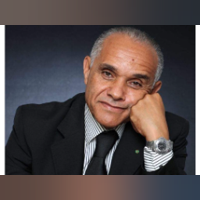
Aziz Daouda Aziz Daouda

Aziz Daouda

Directeur Technique et du Développement de la Confédération Africaine d'Athlétisme. Passionné du Maroc, passionné d'Afrique. Concerné par ce qui se passe, formulant mon point de vue quand j'en ai un. Humaniste, j'essaye de l'être, humain je veux l'être. Mon histoire est intimement liée à l'athlétisme marocain et mondial. J'ai eu le privilège de participer à la gloire de mon pays .


9100

33.0

GRIMMS’ FAIRY TALES - THE GOLDEN BIRD [1/2] 5370

A certain king had a beautiful garden, and in the garden stood a tree which bore golden apples. These apples were always counted, and about the time when they began to grow ripe it was found that every night one of them was gone. The king became very angry at this, and ordered the gardener to keep watch all night under the tree. The gardener set his eldest son to watch; but about twelve o’clock he fell asleep, and in the morning another of the apples was missing. Then the second son was ordered to watch; and at midnight he too fell asleep, and in the morning another apple was gone. Then the third son offered to keep watch; but the gardener at first would not let him, for fear some harm should come to him: however, at last he consented, and the young man laid himself under the tree to watch. As the clock struck twelve he heard a rustling noise in the air, and a bird came flying that was of pure gold; and as it was snapping at one of the apples with its beak, the gardener’s son jumped up and shot an arrow at it. But the arrow did the bird no harm; only it dropped a golden feather from its tail, and then flew away. The golden feather was brought to the king in the morning, and all the council was called together. Everyone agreed that it was worth more than all the wealth of the kingdom: but the king said, ‘One feather is of no use to me, I must have the whole bird.’ Then the gardener’s eldest son set out and thought to find the golden bird very easily; and when he had gone but a little way, he came to a wood, and by the side of the wood he saw a fox sitting; so he took his bow and made ready to shoot at it. Then the fox said, ‘Do not shoot me, for I will give you good counsel; I know what your business is, and that you want to find the golden bird. You will reach a village in the evening; and when you get there, you will see two inns opposite to each other, one of which is very pleasant and beautiful to look at: go not in there, but rest for the night in the other, though it may appear to you to be very poor and mean.’ But the son thought to himself, ‘What can such a beast as this know about the matter?’ So he shot his arrow at the fox; but he missed it, and it set up its tail above its back and ran into the wood. Then he went his way, and in the evening came to the village where the two inns were; and in one of these were people singing, and dancing, and feasting; but the other looked very dirty, and poor. ‘I should be very silly,’ said he, ‘if I went to that shabby house, and left this charming place’; so he went into the smart house, and ate and drank at his ease, and forgot the bird, and his country too. Time passed on; and as the eldest son did not come back, and no tidings were heard of him, the second son set out, and the same thing happened to him. He met the fox, who gave him the good advice: but when he came to the two inns, his eldest brother was standing at the window where the merrymaking was, and called to him to come in; and he could not withstand the temptation, but went in, and forgot the golden bird and his country in the same manner. Time passed on again, and the youngest son too wished to set out into the wide world to seek for the golden bird; but his father would not listen to it for a long while, for he was very fond of his son, and was afraid that some ill luck might happen to him also, and prevent his coming back. However, at last it was agreed he should go, for he would not rest at home; and as he came to the wood, he met the fox, and heard the same good counsel. But he was thankful to the fox, and did not attempt his life as his brothers had done; so the fox said, ‘Sit upon my tail, and you will travel faster.’ So he sat down, and the fox began to run, and away they went over stock and stone so quick that their hair whistled in the wind. When they came to the village, the son followed the fox’s counsel, and without looking about him went to the shabby inn and rested there all night at his ease. In the morning came the fox again and met him as he was beginning his journey, and said, ‘Go straight forward, till you come to a castle, before which lie a whole troop of soldiers fast asleep and snoring: take no notice of them, but go into the castle and pass on and on till you come to a room, where the golden bird sits in a wooden cage; close by it stands a beautiful golden cage; but do not try to take the bird out of the shabby cage and put it into the handsome one, otherwise you will repent it.’ Then the fox stretched out his tail again, and the young man sat himself down, and away they went over stock and stone till their hair whistled in the wind. Before the castle gate all was as the fox had said: so the son went in and found the chamber where the golden bird hung in a wooden cage, and below stood the golden cage, and the three golden apples that had been lost were lying close by it. Then thought he to himself, ‘It will be a very droll thing to bring away such a fine bird in this shabby cage’; so he opened the door and took hold of it and put it into the golden cage. But the bird set up such a loud scream that all the soldiers awoke, and they took him prisoner and carried him before the king. The next morning the court sat to judge him; and when all was heard, it sentenced him to die, unless he should bring the king the golden horse which could run as swiftly as the wind; and if he did this, he was to have the golden bird given him for his own. So he set out once more on his journey, sighing, and in great despair, when on a sudden his friend the fox met him, and said, ‘You see now what has happened on account of your not listening to my counsel. I will still, however, tell you how to find the golden horse, if you will do as I bid you. You must go straight on till you come to the castle where the horse stands in his stall: by his side will lie the groom fast asleep and snoring: take away the horse quietly, but be sure to put the old leathern saddle upon him, and not the golden one that is close by it.’ Then the son sat down on the fox’s tail, and away they went over stock and stone till their hair whistled in the wind. All went right, and the groom lay snoring with his hand upon the golden saddle. But when the son looked at the horse, he thought it a great pity to put the leathern saddle upon it. ‘I will give him the good one,’ said he; ‘I am sure he deserves it.’ As he took up the golden saddle the groom awoke and cried out so loud, that all the guards ran in and took him prisoner, and in the morning he was again brought before the court to be judged, and was sentenced to die. But it was agreed, that, if he could bring thither the beautiful princess, he should live, and have the bird and the horse given him for his own.

THE ENCHIRIDION - I 5055

There are things which are within our power, and there are things which are beyond our power. Within our power are opinion, aim, desire, aversion, and, in one word, whatever affairs are our own. Beyond our power are body, property, reputation, office, and, in one word, whatever are not properly our own affairs. Now the things within our power are by nature free, unrestricted, unhindered; but those beyond our power are weak, dependent, restricted, alien. Remember, then, that if you attribute freedom to things by nature dependent and take what belongs to others for your own, you will be hindered, you will lament, you will be disturbed, you will find fault both with gods and men. But if you take for your own only that which is your own and view what belongs to others just as it really is, then no one will ever compel you, no one will restrict you; you will find fault with no one, you will accuse no one, you will do nothing against your will; no one will hurt you, you will not have an enemy, nor will you suffer any harm. Aiming, therefore, at such great things, remember that you must not allow yourself any inclination, however slight, toward the attainment of the others; but that you must entirely quit some of them, and for the present postpone the rest. But if you would have these, and possess power and wealth likewise, you may miss the latter in seeking the former; and you will certainly fail of that by which alone happiness and freedom are procured. Seek at once, therefore, to be able to say to every unpleasing semblance, “You are but a semblance and by no means the real thing.” And then examine it by those rules which you have; and first and chiefly by this: whether it concerns the things which are within our own power or those which are not; and if it concerns anything beyond our power, be prepared to say that it is nothing to you.

THE ADVENTURES OF TOM SAWYER - PREFACE 5245

Most of the adventures recorded in this book really occurred; one or two were experiences of my own, the rest those of boys who were schoolmates of mine. Huck Finn is drawn from life; Tom Sawyer also, but not from an individual—he is a combination of the characteristics of three boys whom I knew, and therefore belongs to the composite order of architecture. The odd superstitions touched upon were all prevalent among children and slaves in the West at the period of this story—that is to say, thirty or forty years ago. Although my book is intended mainly for the entertainment of boys and girls, I hope it will not be shunned by men and women on that account, for part of my plan has been to try to pleasantly remind adults of what they once were themselves, and of how they felt and thought and talked, and what queer enterprises they sometimes engaged in. THE AUTHOR. HARTFORD, 1876.

THE MEDITATIONS - Book I.[1/3] 5388

1. I learned from my grandfather, Verus, to use good manners, and to put restraint on anger. 2. In the famous memory of my father I had a pattern of modesty and manliness. 3. Of my mother I learned to be pious and generous; to keep myself not only from evil deeds, but even from evil thoughts; and to live with a simplicity which is far from customary among the rich. 4. I owe it to my great-grandfather that I did not attend public lectures and discussions, but had good and able teachers at home; and I owe him also the knowledge that for things of this nature a man should count no expense too great. 5. My tutor taught me not to favour either green or blue at the chariot races, nor, in the contests of gladiators, to be a supporter either of light or heavy armed. He taught me also to endure labour; not to need many things; to serve myself without troubling others; not to intermeddle in the affairs of others, and not easily to listen to slanders against them. 6. Of Diognetus I had the lesson not to busy myself about vain things; not to credit the great professions of such as pretend to work wonders, or of sorcerers about their charms, and their expelling of Demons and the like; not to keep quails (for fighting or divination), nor to run after such things; to suffer freedom of speech in others, and to apply myself heartily to philosophy. Him also I must thank for my hearing first Bacchius, then Tandasis and Marcianus; that I wrote dialogues in my youth, and took a liking to the philosopher’s pallet and skins, and to the other things which, by the Grecian discipline, belong to that profession. 7. To Rusticus I owe my first apprehensions that my nature needed reform and cure; and that I did not fall into the ambition of the common Sophists, either by composing speculative writings or by declaiming harangues of exhortation in public; further, that I never strove to be admired by ostentation of great patience in an ascetic life, or by display of activity and application; that I gave over the study of rhetoric, poetry, and the graces of language; and that I did not pace my house in my senatorial robes, or practise any similar affectation. I observed also the simplicity of style in his letters, particularly in that which he wrote to my mother from Sinuessa. I learned from him to be easily appeased, and to be readily reconciled with those who had displeased me or given cause of offence, so soon as they inclined to make their peace; to read with care; not to rest satisfied with a slight and superficial knowledge; nor quickly to assent to great talkers. I have him to thank that I met with the discourses of Epictetus, which he furnished me from his own library. 8. From Apollonius I learned true liberty, and tenacity of purpose; to regard nothing else, even in the smallest degree, but reason always; and always to remain unaltered in the agonies of pain, in the losses of children, or in long diseases. He afforded me a living example of how the same man can, upon occasion, be most yielding and most inflexible. He was patient in exposition; and, as might well be seen, esteemed his fine skill and ability in teaching others the principles of philosophy as the least of his endowments. It was from him that I learned how to receive from friends what are thought favours without seeming humbled by the giver or insensible to the gift. 9. Sextus was my pattern of a benign temper, and his family the model of a household governed by true paternal affection, and a steadfast purpose of living according to nature. Here I could learn to be grave without affectation, to observe sagaciously the several dispositions and inclinations of my friends, to tolerate the ignorant and those who follow current opinions without examination. His conversation showed how a man may accommodate himself to all men and to all companies; for though companionship with him was sweeter and more pleasing than any sort of flattery, yet he was at the same time highly respected and reverenced. No man was ever more happy than he in comprehending, finding out, and arranging in exact order the great maxims necessary for the conduct of life. His example taught me to suppress even the least appearance of anger or any other passion; but still, with all this perfect tranquillity, to possess the tenderest and most affectionate heart; to be apt to approve others yet without noise; to have much learning and little ostentation. 10. I learned from Alexander the Grammarian to avoid censuring others, to refrain from flouting them for a barbarism, solecism, or any false pronunciation. Rather was I dexterously to pronounce the words rightly in my answer, confining approval or objection to the matter itself, and avoiding discussion of the expression, or to use some other form of courteous suggestion. 11. Fronto made me sensible how much of envy, deceit and hypocrisy surrounds princes; and that generally those whom we account nobly born have somehow less natural affection. 12. I learned from Alexander the Platonist not often nor without great necessity to say, or write to any man in a letter, that I am not at leisure; nor thus, under pretext of urgent affairs, to make a practice of excusing myself from the duties which, according to our various ties, we owe to those with whom we live. 13. Of Catulus I learned not to condemn any friend’s expostulation even though it were unjust, but to try to recall him to his former disposition; to stint no praise in speaking of my masters, as is recounted of Domitius and Athenodorus; and to love my children with true affection. 14. Of Severus, my brother, I learned to love my kinsmen, to love truth, to love justice. Through him I came to know Thrasea, Helvidius, Cato, Dion, and Brutus. He gave me my first conception of a Commonwealth founded upon equitable laws and administered with equality of right; and of a Monarchy whose chief concern is the freedom of its subjects. Of him I learned likewise a constant and harmonious devotion to Philosophy; to be ready to do good, to be generous with all my heart. He taught me to be of good hope and trustful of the affection of my friends. I observed in him candour in declaring what he condemned in the conduct of others; and so frank and open was his behaviour, that his friends might easily see without the trouble of conjecture what he liked or disliked.