Think Forward.

Le Maroc à l’heure du monde : entre soleil, économie et réalités biologiques 277

Depuis quelques jours, une pétition et un appel à manifestation relancent au Maroc un débat aussi ancien que sensible: faut-il maintenir le GMT+1 comme heure légale permanente ou revenir à l’heure "naturelle"du pays, le GMT (UTC+0) ? Derrière les arguments sanitaires avancés par les partisans du retour au GMT se dessine une interrogation plus profonde: quelle articulation entre le temps biologique des citoyens et le temps économique de la nation ? Car en matière d’horaire, il ne s’agit pas seulement de confort quotidien, mais d’un choix stratégique. Le mouvement agitant la manifestation en moyen de pression politique oppose finalement le temps du soleil au temps de l’État. Historiquement, le Maroc vivait au rythme du soleil. À l’époque des médinas, notamment à Fès sous les Mérinides et avant, le temps était structuré par les cycles naturels et les appels à la prière. Les instruments de mesure: cadrans solaires, sabliers, horloges à eau, traduisaient un rapport au temps souple, local et organique. Le basculement vers une heure standardisée intervient au début du XXe siècle. Le temps devient alors un outil d’organisation économique, au service de l’intégration dans les échanges internationaux. Il y a une réalité géographique incontournable et un impératif économique tout aussi inéluctable. S’étendant entre 1° et 13° ouest, il est en partie traversé par le méridien de Greenwich, à l'est du pays notamment. Cependant une bonne partie du royaume est largement en dehors du fuseau et se trouve bien dans le fuseau GMT+1. Cela concerne les provinces du sud. Le choix de GMT+1 constitue donc un décalage artificiel d’une heure par rapport au soleil pour une partie du pays mais pas dans sa totalité. Le décalage avec GMT produit effectivement des effets concrets: en hiver, le lever du soleil peut intervenir après 8h30 heure légale, créant une dissociation entre le début de la journée sociale et la lumière naturelle. Mais cette situation n’est pas isolée. L’exemple de l’Espagne, qui est entièrement dans le fuseau GMT, a opté pour GMT+1 sous Franco. C'est que le temps légal est un choix politique avant d’être une donnée géographique. GMT+1 s’impose ainsi en Espagne par une rationalité économique forte. Au Maroc, le maintien de GMT+1 répond à une logique stratégique claire: - Synchronisation avec les marchés européens. - Fluidité des échanges commerciaux. - Compétitivité accrue dans les services externalisés. Dans une économie mondialisée, le temps est un facteur de production. Une heure de décalage peut ralentir les flux, désynchroniser les marchés et réduire l’attractivité. À ce titre, GMT+1 est un outil silencieux de compétitivité. La question sanitaire est effectivement étudiée depuis longtemps. Les partisans du retour au GMT invoquent un argument central : la santé. Sur ce point, la littérature scientifique est claire, mais nuancée. On peut constater de manière scientifiquement documentée : 1. Une perturbation réelle du rythme biologique. Le corps humain fonctionne selon un rythme circadien de 24 heures, réglé principalement par la lumière naturelle. Toute désynchronisation entre l’heure sociale et ce rythme entraînerait des troubles du sommeil, de la fatigue, une baisse de concentration et de l’irritabilité. Même un décalage d’une heure peut perturber cette horloge interne. 2. Un impact physiologique est documenté avec perturbation de la production de mélatonine (hormone du sommeil), augmentation du stress physiologique, altération de la vigilance et des performances cognitives. Des analyses récentes ont aussi établi un lien entre changement d’heure et risque cardiovasculaire accru, notamment chez les populations fragiles. 3. Une adaptation incomplète de l’organisme, comme le montre une étude européenne sur plus de 50 000 individus. L’horloge biologique ne s’adapte pas totalement à l’heure avancée, créant un « jet lag social permanent ». 4. Une recommandation émergente de certaines institutions médicales est de retarder l’heure de début des cours et mieux aligner les activités sur les rythmes biologiques. L’argument nordique souvent avancé en référence à la Norvège ou la Suède, reste fragile. Dans ces pays, la contrainte lumineuse est naturelle et extrême ; les sociétés y ont développé des adaptations structurelles profondes, avec des rythmes sociaux ajustés en conséquence. Au Maroc, le décalage GMT+1 est ressenti comme artificiel et évitable, ce qui change totalement la perception des citoyens et donc des effets sur la société. Une piste réaliste consiste à conserver GMT+1 tout en ajustant les horaires : retarder l’entrée à l’école et flexibiliser les horaires de travail. Cette approche réduirait l’impact biologique, si impact il y a, sans sacrifier l’alignement économique, même si elle reste partielle. Le véritable arbitrage oppose en réalité économie et biologie. Le débat est clair : - GMT présente une cohérence avec le soleil et la biologie selon ses détracteurs. - GMT+1 favorise la performance économique et l’intégration mondiale selon les gouvernements depuis belle lurette déjà. Dans un pays en développement comme le nôtre, inséré dans des chaînes de valeur globales, l’économie reste le nerf de la guerre. Les effets sanitaires s'ils existent et s'ils sont documentés, restent modérés à l’échelle macro. Ils seraient variables selon les individus et atténuables par des politiques d’accompagnement. Il s’agit donc de gouverner le temps. Le Maroc ne fait pas face à un simple choix technique, mais à un arbitrage structurant : temps naturel ou temps stratégique ? La science confirme l’impact réel du décalage horaire sur l’organisme, mais montre aussi que ces effets peuvent être gérés, atténués et compensés. Ceci si on fait fi de la position géographique réelle du pays. Dès lors, la vraie question n’est pas de savoir si GMT+1 est « parfait », mais s’il est utile. Dans un monde où la compétitivité se joue à l’heure près, le Maroc a fait un choix clair: celui du temps économique, et il a bien raison de le faire. Il faut dire clairement que ce qui pose problème véritablement au plan biologique c'est ce changement incomprehensible opéré juste pour le mois de Ramadan et qui ne présente aucun avantage, le nombre d'heures de jeûne étant le même. Les pétitionnaires et ceux ayant l'intenetion de manifester, après une séquence démocratique garantie par la constitution, devront prendre leur mal en patience et accepter que les intérêts du pays et par conséquent les leurs aussi imposent de garder GMT+1. Ils devront par contre militer pour que le changement injustifié pendant ramadan soit à jamais oublié. Ils peuvent aussi militer, et auront beaucoup de soutiens, s'ils réclamaient un aménagement des horaires scolaires en fonction de GMT+1, ce que le gouvernement ayant décrété cet horaire avait simplement oublié de faire. Cela aurait du sens. l'Espagne passe à GMT+2 l'été pour les besoins de son économie par rapport à l'Europe et même les marocains en vacances là bas s'y accommodent.

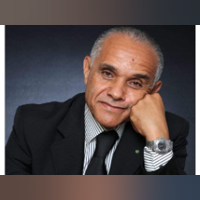
Aziz Daouda Aziz Daouda

Aziz Daouda

Directeur Technique et du Développement de la Confédération Africaine d'Athlétisme. Passionné du Maroc, passionné d'Afrique. Concerné par ce qui se passe, formulant mon point de vue quand j'en ai un. Humaniste, j'essaye de l'être, humain je veux l'être. Mon histoire est intimement liée à l'athlétisme marocain et mondial. J'ai eu le privilège de participer à la gloire de mon pays .


9300

33.0

THE ADVENTURES OF TOM SAWYER - PREFACE 5344

Most of the adventures recorded in this book really occurred; one or two were experiences of my own, the rest those of boys who were schoolmates of mine. Huck Finn is drawn from life; Tom Sawyer also, but not from an individual—he is a combination of the characteristics of three boys whom I knew, and therefore belongs to the composite order of architecture. The odd superstitions touched upon were all prevalent among children and slaves in the West at the period of this story—that is to say, thirty or forty years ago. Although my book is intended mainly for the entertainment of boys and girls, I hope it will not be shunned by men and women on that account, for part of my plan has been to try to pleasantly remind adults of what they once were themselves, and of how they felt and thought and talked, and what queer enterprises they sometimes engaged in. THE AUTHOR. HARTFORD, 1876.

THE MEDITATIONS - Book I.[1/3] 5489

1. I learned from my grandfather, Verus, to use good manners, and to put restraint on anger. 2. In the famous memory of my father I had a pattern of modesty and manliness. 3. Of my mother I learned to be pious and generous; to keep myself not only from evil deeds, but even from evil thoughts; and to live with a simplicity which is far from customary among the rich. 4. I owe it to my great-grandfather that I did not attend public lectures and discussions, but had good and able teachers at home; and I owe him also the knowledge that for things of this nature a man should count no expense too great. 5. My tutor taught me not to favour either green or blue at the chariot races, nor, in the contests of gladiators, to be a supporter either of light or heavy armed. He taught me also to endure labour; not to need many things; to serve myself without troubling others; not to intermeddle in the affairs of others, and not easily to listen to slanders against them. 6. Of Diognetus I had the lesson not to busy myself about vain things; not to credit the great professions of such as pretend to work wonders, or of sorcerers about their charms, and their expelling of Demons and the like; not to keep quails (for fighting or divination), nor to run after such things; to suffer freedom of speech in others, and to apply myself heartily to philosophy. Him also I must thank for my hearing first Bacchius, then Tandasis and Marcianus; that I wrote dialogues in my youth, and took a liking to the philosopher’s pallet and skins, and to the other things which, by the Grecian discipline, belong to that profession. 7. To Rusticus I owe my first apprehensions that my nature needed reform and cure; and that I did not fall into the ambition of the common Sophists, either by composing speculative writings or by declaiming harangues of exhortation in public; further, that I never strove to be admired by ostentation of great patience in an ascetic life, or by display of activity and application; that I gave over the study of rhetoric, poetry, and the graces of language; and that I did not pace my house in my senatorial robes, or practise any similar affectation. I observed also the simplicity of style in his letters, particularly in that which he wrote to my mother from Sinuessa. I learned from him to be easily appeased, and to be readily reconciled with those who had displeased me or given cause of offence, so soon as they inclined to make their peace; to read with care; not to rest satisfied with a slight and superficial knowledge; nor quickly to assent to great talkers. I have him to thank that I met with the discourses of Epictetus, which he furnished me from his own library. 8. From Apollonius I learned true liberty, and tenacity of purpose; to regard nothing else, even in the smallest degree, but reason always; and always to remain unaltered in the agonies of pain, in the losses of children, or in long diseases. He afforded me a living example of how the same man can, upon occasion, be most yielding and most inflexible. He was patient in exposition; and, as might well be seen, esteemed his fine skill and ability in teaching others the principles of philosophy as the least of his endowments. It was from him that I learned how to receive from friends what are thought favours without seeming humbled by the giver or insensible to the gift. 9. Sextus was my pattern of a benign temper, and his family the model of a household governed by true paternal affection, and a steadfast purpose of living according to nature. Here I could learn to be grave without affectation, to observe sagaciously the several dispositions and inclinations of my friends, to tolerate the ignorant and those who follow current opinions without examination. His conversation showed how a man may accommodate himself to all men and to all companies; for though companionship with him was sweeter and more pleasing than any sort of flattery, yet he was at the same time highly respected and reverenced. No man was ever more happy than he in comprehending, finding out, and arranging in exact order the great maxims necessary for the conduct of life. His example taught me to suppress even the least appearance of anger or any other passion; but still, with all this perfect tranquillity, to possess the tenderest and most affectionate heart; to be apt to approve others yet without noise; to have much learning and little ostentation. 10. I learned from Alexander the Grammarian to avoid censuring others, to refrain from flouting them for a barbarism, solecism, or any false pronunciation. Rather was I dexterously to pronounce the words rightly in my answer, confining approval or objection to the matter itself, and avoiding discussion of the expression, or to use some other form of courteous suggestion. 11. Fronto made me sensible how much of envy, deceit and hypocrisy surrounds princes; and that generally those whom we account nobly born have somehow less natural affection. 12. I learned from Alexander the Platonist not often nor without great necessity to say, or write to any man in a letter, that I am not at leisure; nor thus, under pretext of urgent affairs, to make a practice of excusing myself from the duties which, according to our various ties, we owe to those with whom we live. 13. Of Catulus I learned not to condemn any friend’s expostulation even though it were unjust, but to try to recall him to his former disposition; to stint no praise in speaking of my masters, as is recounted of Domitius and Athenodorus; and to love my children with true affection. 14. Of Severus, my brother, I learned to love my kinsmen, to love truth, to love justice. Through him I came to know Thrasea, Helvidius, Cato, Dion, and Brutus. He gave me my first conception of a Commonwealth founded upon equitable laws and administered with equality of right; and of a Monarchy whose chief concern is the freedom of its subjects. Of him I learned likewise a constant and harmonious devotion to Philosophy; to be ready to do good, to be generous with all my heart. He taught me to be of good hope and trustful of the affection of my friends. I observed in him candour in declaring what he condemned in the conduct of others; and so frank and open was his behaviour, that his friends might easily see without the trouble of conjecture what he liked or disliked.