Think Forward.

Ouarzazate : d’un enclavement logistique à une urgence systémique de développement 70

Les professionnels du tourisme et du cinéma à Ouarzazate ont une fois de plus exprimé leur colère avec force et clarté. Ce n’est pas la première fois qu’ils s’insurgent ainsi. À l’inverse, les citoyens murmurent leurs frustrations en sourdine. Même quand ils crient leur bouillonnement, leurs voix semblent bloquées par la hauteur des cimes de l’Atlas. Elles n’arrivent donc pas, ou pas clairement là où il faut. Depuis que Ouarzazate relève de la région d’Errachidia, les autorités et les instances élues régionales se focalisent sur leur ville et ses abords immédiats, reléguant Ouarzazate « de l’autre côté », à l’oubli. Ces cris ne sont donc plus de simples revendications sectorielles. Ils révèlent une crise structurelle multidimensionnelle qui dure depuis longtemps. Au-delà de la connectivité aérienne défaillante, symptôme le plus visible d’un isolement profond, se cache un modèle de développement territorial fragilisé et incohérent. Les professionnels opérant à Ouarzazate disent à qui veut l’entendre que l’attractivité touristique et cinématographique est en péril. Dans une économie mondialisée, la fluidité des flux détermine la compétitivité. L’absence de vols directs depuis les marchés émetteurs européens et nord-américains érode l’attractivité d’Ouarzazate, pilier économique local avec ses deux industries phares : tourisme et cinéma. La dépendance aux hubs de Casablanca ou Marrakech rompt la chaîne de valeur, tandis que l’imprévisibilité logistique rebute les tour-opérateurs et les productions internationales. À cela s’ajoute, faut-il le mentionner, la faiblesse étonnante des liaisons aériennes internes. Cet effet domino frappe l’économie locale. Les hôtels enregistrent une baisse de fréquentation, les marges se compriment, les investissements récents manquent de rentabilité. Les emplois indirects en guides, transporteurs, artisans, et restaurateurs s’en précarisent. Si les tour-opérateurs contournent la destination, les productions cinématographiques optent elles pour des rivaux plus accessibles. Les séjours raccourcissent de façon drastique. Ouarzazate n’est pas rejetée : elle est contournée, ce qui, dans le tourisme, équivaut à une disparition progressive. ### Le paradoxe minier : richesse sans retombées locales Le Sud-Est marocain regorge de ressources minières stratégiques : argent, manganèse, cobalt. Pourtant, la valeur générée échappe au territoire : - Faible redistribution locale : les revenus sont peu réinvestis en infrastructures, emplois qualifiés ou services publics. - Effet d’enclave : les sites miniers sont isolés, sans intégration économique. - Externalités négatives : la pression sur l’eau est très forte, entraînant une dégradation environnementale sans compensation. - Absence de transformation : l’exportation de matières brutes prive la région de chaînes de valeur industrielles. Ainsi, le territoire produit de la richesse sans bâtir son avenir, accentuant un sentiment d’injustice profonde. ### Défis de gouvernance et risques systémiques Sa Majesté le Roi Mohammed VI a maintes fois dénoncé le « Maroc à deux vitesses », pointant des défaillances graves en gouvernance. Pourtant, malgré une valorisation discursive sans précédent: hub cinématographique, porte du désert, Ouarzazate reste mal intégrée dans une stratégie de désenclavement véritable. Où est la coordination entre transports, tourisme et développement territorial ? Pourquoi les infrastructures immatérielles (connectivité, logistique) traînent-elles en comparaison avec d’autres régions du pays ? A-t-on une vision claire du rôle que Ouarzazate peut jouer dans l’économie nationale ? Le déficit criant transforme un potentiel énorme en fragilité. L’image pâtit gravement: accès complexe pour les voyageurs, incertitudes pour les productions. La perception étant un actif clé, une marginalisation silencieuse s’installe ansi, menaçant une sortie des radars internationaux : moins de nuitées touristiques, moins de films, moins d’investissements, moins d’emplois. Un cercle vicieux relègue ce véritable pôle d’excellence en périphérie oubliée. ### Repenser le modèle : leviers pour un développement cohérent L’enjeu dépasse le désenclavement tel que se l’imaginent certains. Il y a lieu de repenser le modèle dans son intégralité : - En faisant participer le secteur minier en levier à des fonds régionaux de développement, aux infrastructures et à la formation. - En créant des synergies entre l’ensemble des secteurs (mines, tourisme, énergie). - En garantissant une redistribution équitable des richesses. - En encourageant les cadres, notamment natifs ou originaires de la région, à s’y installer, à y retourner et à y investir. - En intégrant la région dans une vision nationale cohérente. Sans cela, Ouarzazate continuera à cumuler les paradoxes : - Riche en ressources, pauvre en retombées ; - Visible mondialement, marginalisée localement. À terme, ce n’est plus une crise économique et sociale qui pénalise Ouarzazate et ses habitants, mais une menace pour la cohésion territoriale et la justice tout court. Les cris d’Ouarzazate n’ont d’autre but que de faire prendre conscience de sa crise structurelle ignorée… Jusqu’à quand ?

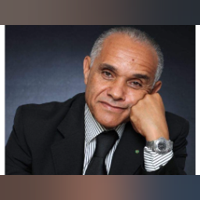
Aziz Daouda Aziz Daouda

Aziz Daouda

Directeur Technique et du Développement de la Confédération Africaine d'Athlétisme. Passionné du Maroc, passionné d'Afrique. Concerné par ce qui se passe, formulant mon point de vue quand j'en ai un. Humaniste, j'essaye de l'être, humain je veux l'être. Mon histoire est intimement liée à l'athlétisme marocain et mondial. J'ai eu le privilège de participer à la gloire de mon pays .


10200

33.0

THE ADVENTURES OF TOM SAWYER - PREFACE 5965

Most of the adventures recorded in this book really occurred; one or two were experiences of my own, the rest those of boys who were schoolmates of mine. Huck Finn is drawn from life; Tom Sawyer also, but not from an individual—he is a combination of the characteristics of three boys whom I knew, and therefore belongs to the composite order of architecture. The odd superstitions touched upon were all prevalent among children and slaves in the West at the period of this story—that is to say, thirty or forty years ago. Although my book is intended mainly for the entertainment of boys and girls, I hope it will not be shunned by men and women on that account, for part of my plan has been to try to pleasantly remind adults of what they once were themselves, and of how they felt and thought and talked, and what queer enterprises they sometimes engaged in. THE AUTHOR. HARTFORD, 1876.

THE MEDITATIONS - Book I.[1/3] 6126

1. I learned from my grandfather, Verus, to use good manners, and to put restraint on anger. 2. In the famous memory of my father I had a pattern of modesty and manliness. 3. Of my mother I learned to be pious and generous; to keep myself not only from evil deeds, but even from evil thoughts; and to live with a simplicity which is far from customary among the rich. 4. I owe it to my great-grandfather that I did not attend public lectures and discussions, but had good and able teachers at home; and I owe him also the knowledge that for things of this nature a man should count no expense too great. 5. My tutor taught me not to favour either green or blue at the chariot races, nor, in the contests of gladiators, to be a supporter either of light or heavy armed. He taught me also to endure labour; not to need many things; to serve myself without troubling others; not to intermeddle in the affairs of others, and not easily to listen to slanders against them. 6. Of Diognetus I had the lesson not to busy myself about vain things; not to credit the great professions of such as pretend to work wonders, or of sorcerers about their charms, and their expelling of Demons and the like; not to keep quails (for fighting or divination), nor to run after such things; to suffer freedom of speech in others, and to apply myself heartily to philosophy. Him also I must thank for my hearing first Bacchius, then Tandasis and Marcianus; that I wrote dialogues in my youth, and took a liking to the philosopher’s pallet and skins, and to the other things which, by the Grecian discipline, belong to that profession. 7. To Rusticus I owe my first apprehensions that my nature needed reform and cure; and that I did not fall into the ambition of the common Sophists, either by composing speculative writings or by declaiming harangues of exhortation in public; further, that I never strove to be admired by ostentation of great patience in an ascetic life, or by display of activity and application; that I gave over the study of rhetoric, poetry, and the graces of language; and that I did not pace my house in my senatorial robes, or practise any similar affectation. I observed also the simplicity of style in his letters, particularly in that which he wrote to my mother from Sinuessa. I learned from him to be easily appeased, and to be readily reconciled with those who had displeased me or given cause of offence, so soon as they inclined to make their peace; to read with care; not to rest satisfied with a slight and superficial knowledge; nor quickly to assent to great talkers. I have him to thank that I met with the discourses of Epictetus, which he furnished me from his own library. 8. From Apollonius I learned true liberty, and tenacity of purpose; to regard nothing else, even in the smallest degree, but reason always; and always to remain unaltered in the agonies of pain, in the losses of children, or in long diseases. He afforded me a living example of how the same man can, upon occasion, be most yielding and most inflexible. He was patient in exposition; and, as might well be seen, esteemed his fine skill and ability in teaching others the principles of philosophy as the least of his endowments. It was from him that I learned how to receive from friends what are thought favours without seeming humbled by the giver or insensible to the gift. 9. Sextus was my pattern of a benign temper, and his family the model of a household governed by true paternal affection, and a steadfast purpose of living according to nature. Here I could learn to be grave without affectation, to observe sagaciously the several dispositions and inclinations of my friends, to tolerate the ignorant and those who follow current opinions without examination. His conversation showed how a man may accommodate himself to all men and to all companies; for though companionship with him was sweeter and more pleasing than any sort of flattery, yet he was at the same time highly respected and reverenced. No man was ever more happy than he in comprehending, finding out, and arranging in exact order the great maxims necessary for the conduct of life. His example taught me to suppress even the least appearance of anger or any other passion; but still, with all this perfect tranquillity, to possess the tenderest and most affectionate heart; to be apt to approve others yet without noise; to have much learning and little ostentation. 10. I learned from Alexander the Grammarian to avoid censuring others, to refrain from flouting them for a barbarism, solecism, or any false pronunciation. Rather was I dexterously to pronounce the words rightly in my answer, confining approval or objection to the matter itself, and avoiding discussion of the expression, or to use some other form of courteous suggestion. 11. Fronto made me sensible how much of envy, deceit and hypocrisy surrounds princes; and that generally those whom we account nobly born have somehow less natural affection. 12. I learned from Alexander the Platonist not often nor without great necessity to say, or write to any man in a letter, that I am not at leisure; nor thus, under pretext of urgent affairs, to make a practice of excusing myself from the duties which, according to our various ties, we owe to those with whom we live. 13. Of Catulus I learned not to condemn any friend’s expostulation even though it were unjust, but to try to recall him to his former disposition; to stint no praise in speaking of my masters, as is recounted of Domitius and Athenodorus; and to love my children with true affection. 14. Of Severus, my brother, I learned to love my kinsmen, to love truth, to love justice. Through him I came to know Thrasea, Helvidius, Cato, Dion, and Brutus. He gave me my first conception of a Commonwealth founded upon equitable laws and administered with equality of right; and of a Monarchy whose chief concern is the freedom of its subjects. Of him I learned likewise a constant and harmonious devotion to Philosophy; to be ready to do good, to be generous with all my heart. He taught me to be of good hope and trustful of the affection of my friends. I observed in him candour in declaring what he condemned in the conduct of others; and so frank and open was his behaviour, that his friends might easily see without the trouble of conjecture what he liked or disliked.