Think Forward.

Morocco's immeasurable archaeological wealth and the rewriting of history... 10071

Morocco has just decided to equip itself with a new archaeological museum, and it's thinking big. It will be the largest of its kind in Africa, covering an area of 25,000m2. It's both enormous and flattering. Some people will talk of excess, or simply fail to see the point. To this we must quickly retort: think again. If Morocco has always been considered to be of great archaeological interest, this interest has never been greater, except since the latest finds: the oldest homo sapiens fossil at Jbel Ighoud, not far from Safi; the oldest surgical procedures and treatments at Tafoghalt, near Berkane; the Bronze Age remains recently discovered near Wad Laou, on the prehistoric site known as KachKouch, not far from Tétouan; and the necropolis south of Tagounite near Zagora; those of the ornaments dated between 142 and 150 thousand years ago, uncovered in the Bizmoune cave near Essaouira; those of the 12-hectare farm near Oued Beht, a size never before known in North Africa, dating from the end of the Neolithic period, bearing witness to great wealth and highly evolved know-how. The list is extremely long. The clumsy notion that archaeological research and excavations are a luxury or the preserve of a few experts for their own pleasure is absolutely wrong. The importance of archaeological research to the writing of history is not debatable. It is fundamental. The remains and traces of the past help to complete, correct or confirm historical accounts. Fossils, structures and artefacts discovered on archaeological sites are all tangible evidence, providing an objective and nuanced view of vanished civilisations, particularly when they have left no written trace. Archaeology provides information about ways of life, culture, beliefs and human interaction, as well as the techniques used and the degree of evolution of vanished civilisations. It is essential for preserving and appropriating the national heritage, and hence that of humanity. It provides a milestone in human evolution and helps to explain what we are today. As the transmission of knowledge is crucial, archaeological research provides us and future generations with indisputable evidence of pride and identity. It is therefore essential for writing and rewriting history, which it cleans of the biases that some historians may have inserted here and there through ignorance or lack of evidence, and those that ideologists, for more or less laudable reasons, may have deliberately introduced as misleading orientations or aspects. The findings in Morocco call into question what successive generations have learned about their history and origins. Although it has been proven that the role of local populations in exchanges and in the construction of Mediterranean civilisation was extremely important, unfortunately we continue to peddle a biased history that ignores these contributions and archaeological evidence, which have now been proven beyond doubt. Since 1985, Morocco has had a National Institute of Archaeological and Heritage Sciences (INSAP). And it's not for nothing or by chance that archaeological research here is closely linked to heritage. Heritage means tangible evidence in the case of tangible heritage, and transmissible evidence in the case of intangible heritage. As it happens, Morocco is immensely rich in both. The researchers at INSAP are not going to contradict what has been said here, nor Ibn Khaldun, whom we venerate without respecting his doctrine. Today, it is essential to revisit the narrative that links the origins of Moroccan populations to any migration from elsewhere, and even less so from the east of the country; just as it is time to emphasise the evolution of these populations and their undeniable contributions to Mediterranean civilisation and therefore to the world. The people of this region have not been subjected to the civilisations of the region, they have made a great and important contribution, and this must be taught in our schools. Ignoring this truth creates deficiencies, particularly in the perception of identity. Nations need a historical frame of reference if they are to flourish. Some build it up out of nothing, whereas in Morocco it is there and self-evident. These truths could not be clearer. They must form the basis of our identity. The problems from which a certain fringe of the population suffers, particularly young people in search of an identity, and who unfortunately today are caught up in imported ideologies that can embrace dangerous extremism, can only be solved by rewriting history objectively, based on facts and historical evidence, from the most distant to the closest. Young people, particularly during adolescence and early adulthood, ask themselves profound questions about who they are, what they want to become and what place they occupy in the world. These questions are influenced by many factors, including of course family, culture, friends, personal experience and social environment, but they are also inevitably influenced by the history of the country in question. The further back in time this history goes, the more it is a source of pride and serenity. In this constantly changing world, where social networks and pressures of all kinds play a significant role, this quest for identity can be complex and sometimes a source of anxiety. Dismay can lead people to seek comfort elsewhere. Some may go so far as to think they are stepping back into an imaginary time and constructing a fictional world for themselves, watered down by ideologues serving obviously implausible causes. The investment in such a major archaeological museum has therefore come at just the right time to fill an extremely serious cultural gap, bringing together in a welcoming venue of respectable size a wealth of evidence of Morocco's rich history. Historians, for their part, should take up the question of identity in order to make up for the shortcomings and eliminate the biases. However, it is imperative that institutions take up the issue vigorously. First and foremost, the Ministry of Education must take the measure of the importance of revising the curricula and content of the history courses taught in our schools, without forgetting to train a significant number of specialists to improve research in such a cardinal field.

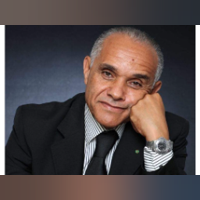
Aziz Daouda Aziz Daouda

Aziz Daouda

Directeur Technique et du Développement de la Confédération Africaine d'Athlétisme. Passionné du Maroc, passionné d'Afrique. Concerné par ce qui se passe, formulant mon point de vue quand j'en ai un. Humaniste, j'essaye de l'être, humain je veux l'être. Mon histoire est intimement liée à l'athlétisme marocain et mondial. J'ai eu le privilège de participer à la gloire de mon pays .


8100

33.0

THE ENCHIRIDION - I 3622

There are things which are within our power, and there are things which are beyond our power. Within our power are opinion, aim, desire, aversion, and, in one word, whatever affairs are our own. Beyond our power are body, property, reputation, office, and, in one word, whatever are not properly our own affairs. Now the things within our power are by nature free, unrestricted, unhindered; but those beyond our power are weak, dependent, restricted, alien. Remember, then, that if you attribute freedom to things by nature dependent and take what belongs to others for your own, you will be hindered, you will lament, you will be disturbed, you will find fault both with gods and men. But if you take for your own only that which is your own and view what belongs to others just as it really is, then no one will ever compel you, no one will restrict you; you will find fault with no one, you will accuse no one, you will do nothing against your will; no one will hurt you, you will not have an enemy, nor will you suffer any harm. Aiming, therefore, at such great things, remember that you must not allow yourself any inclination, however slight, toward the attainment of the others; but that you must entirely quit some of them, and for the present postpone the rest. But if you would have these, and possess power and wealth likewise, you may miss the latter in seeking the former; and you will certainly fail of that by which alone happiness and freedom are procured. Seek at once, therefore, to be able to say to every unpleasing semblance, “You are but a semblance and by no means the real thing.” And then examine it by those rules which you have; and first and chiefly by this: whether it concerns the things which are within our own power or those which are not; and if it concerns anything beyond our power, be prepared to say that it is nothing to you.

THE ADVENTURES OF TOM SAWYER - PREFACE 3782

Most of the adventures recorded in this book really occurred; one or two were experiences of my own, the rest those of boys who were schoolmates of mine. Huck Finn is drawn from life; Tom Sawyer also, but not from an individual—he is a combination of the characteristics of three boys whom I knew, and therefore belongs to the composite order of architecture. The odd superstitions touched upon were all prevalent among children and slaves in the West at the period of this story—that is to say, thirty or forty years ago. Although my book is intended mainly for the entertainment of boys and girls, I hope it will not be shunned by men and women on that account, for part of my plan has been to try to pleasantly remind adults of what they once were themselves, and of how they felt and thought and talked, and what queer enterprises they sometimes engaged in. THE AUTHOR. HARTFORD, 1876.

THE MEDITATIONS - Book I.[1/3] 3901

1. I learned from my grandfather, Verus, to use good manners, and to put restraint on anger. 2. In the famous memory of my father I had a pattern of modesty and manliness. 3. Of my mother I learned to be pious and generous; to keep myself not only from evil deeds, but even from evil thoughts; and to live with a simplicity which is far from customary among the rich. 4. I owe it to my great-grandfather that I did not attend public lectures and discussions, but had good and able teachers at home; and I owe him also the knowledge that for things of this nature a man should count no expense too great. 5. My tutor taught me not to favour either green or blue at the chariot races, nor, in the contests of gladiators, to be a supporter either of light or heavy armed. He taught me also to endure labour; not to need many things; to serve myself without troubling others; not to intermeddle in the affairs of others, and not easily to listen to slanders against them. 6. Of Diognetus I had the lesson not to busy myself about vain things; not to credit the great professions of such as pretend to work wonders, or of sorcerers about their charms, and their expelling of Demons and the like; not to keep quails (for fighting or divination), nor to run after such things; to suffer freedom of speech in others, and to apply myself heartily to philosophy. Him also I must thank for my hearing first Bacchius, then Tandasis and Marcianus; that I wrote dialogues in my youth, and took a liking to the philosopher’s pallet and skins, and to the other things which, by the Grecian discipline, belong to that profession. 7. To Rusticus I owe my first apprehensions that my nature needed reform and cure; and that I did not fall into the ambition of the common Sophists, either by composing speculative writings or by declaiming harangues of exhortation in public; further, that I never strove to be admired by ostentation of great patience in an ascetic life, or by display of activity and application; that I gave over the study of rhetoric, poetry, and the graces of language; and that I did not pace my house in my senatorial robes, or practise any similar affectation. I observed also the simplicity of style in his letters, particularly in that which he wrote to my mother from Sinuessa. I learned from him to be easily appeased, and to be readily reconciled with those who had displeased me or given cause of offence, so soon as they inclined to make their peace; to read with care; not to rest satisfied with a slight and superficial knowledge; nor quickly to assent to great talkers. I have him to thank that I met with the discourses of Epictetus, which he furnished me from his own library. 8. From Apollonius I learned true liberty, and tenacity of purpose; to regard nothing else, even in the smallest degree, but reason always; and always to remain unaltered in the agonies of pain, in the losses of children, or in long diseases. He afforded me a living example of how the same man can, upon occasion, be most yielding and most inflexible. He was patient in exposition; and, as might well be seen, esteemed his fine skill and ability in teaching others the principles of philosophy as the least of his endowments. It was from him that I learned how to receive from friends what are thought favours without seeming humbled by the giver or insensible to the gift. 9. Sextus was my pattern of a benign temper, and his family the model of a household governed by true paternal affection, and a steadfast purpose of living according to nature. Here I could learn to be grave without affectation, to observe sagaciously the several dispositions and inclinations of my friends, to tolerate the ignorant and those who follow current opinions without examination. His conversation showed how a man may accommodate himself to all men and to all companies; for though companionship with him was sweeter and more pleasing than any sort of flattery, yet he was at the same time highly respected and reverenced. No man was ever more happy than he in comprehending, finding out, and arranging in exact order the great maxims necessary for the conduct of life. His example taught me to suppress even the least appearance of anger or any other passion; but still, with all this perfect tranquillity, to possess the tenderest and most affectionate heart; to be apt to approve others yet without noise; to have much learning and little ostentation. 10. I learned from Alexander the Grammarian to avoid censuring others, to refrain from flouting them for a barbarism, solecism, or any false pronunciation. Rather was I dexterously to pronounce the words rightly in my answer, confining approval or objection to the matter itself, and avoiding discussion of the expression, or to use some other form of courteous suggestion. 11. Fronto made me sensible how much of envy, deceit and hypocrisy surrounds princes; and that generally those whom we account nobly born have somehow less natural affection. 12. I learned from Alexander the Platonist not often nor without great necessity to say, or write to any man in a letter, that I am not at leisure; nor thus, under pretext of urgent affairs, to make a practice of excusing myself from the duties which, according to our various ties, we owe to those with whom we live. 13. Of Catulus I learned not to condemn any friend’s expostulation even though it were unjust, but to try to recall him to his former disposition; to stint no praise in speaking of my masters, as is recounted of Domitius and Athenodorus; and to love my children with true affection. 14. Of Severus, my brother, I learned to love my kinsmen, to love truth, to love justice. Through him I came to know Thrasea, Helvidius, Cato, Dion, and Brutus. He gave me my first conception of a Commonwealth founded upon equitable laws and administered with equality of right; and of a Monarchy whose chief concern is the freedom of its subjects. Of him I learned likewise a constant and harmonious devotion to Philosophy; to be ready to do good, to be generous with all my heart. He taught me to be of good hope and trustful of the affection of my friends. I observed in him candour in declaring what he condemned in the conduct of others; and so frank and open was his behaviour, that his friends might easily see without the trouble of conjecture what he liked or disliked.