Think Forward.

La Mauritanie face aux défis sécuritaires, diplomatiques et à la recomposition géopolitique au Sahel... 1611

Après quatre années d’intervention, le groupe paramilitaire russe Wagner a officiellement annoncé son retrait du Mali en juin 2025. Il était actif dans la région depuis 2021. Ce départ intervient dans un contexte marqué par une recrudescence des attaques jihadistes fragilisant la stabilité malienne et régionale. Le départ de Wagner ne signifie pas un désengagement russe, puisque ses missions sont reprises par une nouvelle organisation paramilitaire, l’Africa Corps, directement contrôlée par le ministère russe de la Défense. Ce groupe, né après la tentative de coup d’État ratée de ses anciens dirigeants Wagner en 2023, poursuit la stratégie russe d’influence en Afrique, notamment dans ce qui est déclaré être la formation des forces maliennes pour faire face à la montée des menaces terroristes. Cette transition illustre la complexité du contexte sécuritaire au Sahel, où l’échec relatif de Wagner à stabiliser le Mali et à contenir les groupes armés Touaregs et jihadistes oblige Moscou à réadapter ses méthodes tout en conservant son influence stratégique. Cette nouvelle donne induit un véritable questionnement quand à la capacité véritable de contenir le terrorisme dans la région et notamment à la frontière du Mali avec la Mauritanie. Parallèlement, le Front Polisario, mouvement séparatiste, est de plus en plus associé à des activités terroristes. En Espagne, une militante affiliée au Polisario a été arrêtée pour préparation d’actes terroristes contre le Maroc, avec des preuves d’incitation au jihadisme et d’acquisition de matériel explosif. Cette radicalisation s’inscrit dans une dynamique où le Polisario coopère de plus en plus étroitement avec des groupes islamistes, bénéficiant notamment du soutien de l’Iran et ses proxys dont le Hezbollah. Des liens anciens documentés, existent bien entre le Polisario et des groupes terroristes du Sahel, comme l’État islamique dans le Grand Sahara, dont les fondateurs étaient d’anciens combattants du Polisario. Cette connivence se manifeste par un soutien logistique, des transferts d’armes et une militarisation accrue, y compris l’usage de drones kamikazes fournis par l'Iran. Ces faits renforcent la perception du Polisario non seulement comme un acteur séparatiste uniquement mais aussi comme un vecteur d’instabilité et de terrorisme dans la région. En parallèle, sont enregistrés de nombreuses percées diplomatiques du Maroc et une montée des pressions internationales pour entériner la marocanité des provinces occidentales du Sahara. le Maroc a engrangé en 2024 plusieurs victoires majeures dans la reconnaissance internationale de sa souveraineté sur ses provinces du sud. Plus de 116 pays, dont des puissances comme la France, soutiennent désormais le plan d’autonomie marocain comme unique solution viable au conflit Cette position, récemment, a été partagée par le Royaume uni dans les pas des USA. Des pays influents sur le continent africain comme la Côte d'Ivoire ou tout récemment le Ghana, ont fait de même. La position toute fraiche du parti de Zuma en Afrique du Sud conforte l'évolution. L'avancée diplomatique marocaine s’appuie sur une gestion habile des relations internationales et sur un engagement actif dans la sécurité régionale, notamment au Sahel. L'habilité du Royaume Chérifien est manifeste quand celui ci évite d'embarrasser son voisin du sud la Mauritanie qui reconnait depuis fort longtemps l'entité fantoche dite RASD. Ici il faut aussi rappeler la volonté des USA de classer le Front Polisario comme organisation terroriste, mesure soutenue par des analyses documentant ses liens avec le Hezbollah, le PKK, le Corps des Gardiens de la Révolution islamique d’Iran , Cuba, le Venezuela et autres états qui n'aiment pas trop les américains. Cette classification vise à montrer ce qu'est véritablement le Polisario. Dans ce contexte la Mauritanie se retrouve dans la tourmente. Les choses sont allés trop vite. Le confort dans lequel elle se plaisait jusqu’ici, n’est plus. La conjonction de ces évolutions contraint donc les autorités du pays à repenser leur positionnement politique. Confrontée à la fragilité récurrente que lui cause le Polisario, freinant son développement, menaçant sa stabilité, et constatant l’incapacité de l’Algérie à dépasser l’héritage de Boumedienne pour assurer une sécurité effective, la Mauritanie se trouve inéluctablement poussée vers un rapprochement avec le Maroc. Ce dernier est perçu comme le seul acteur capable de garantir une sécurité durable dans la région, notamment face à la montée des menaces terroristes et aux enjeux géopolitiques actuels. Certaines publications en Mauritanie même, posent déjà la question de manière on ne peut plus directe. C’est dire que le décideur mauritanien est bien dans cette logique de changement de paradigme. Les mouvements de l’armée mauritanienne ces derniers temps vont dans le même sens, d’autant plus que certains cadres du Polisario n’hésitent plus à proférer des menaces contre la Mauritanie qu’ils qualifient de traitre. Cette tension rajoute donc de la difficulté en matière de capacité de sécurisation des frontières du jeune pays qu’est la Mauritanie dont les moyens restent tout de même très limités au regard de l’étendue de ses frontières notamment avec le Mali et l'Algérie. Dans cet environnement, l’Algérie, soutien acharné, aveuglé, du Polisario, semble aujourd’hui davantage enfermée dans des discours sans capacité réelle d’action, ce qui atrophie sa position régionale. La Mauritanie semble l'avoir intégré depuis un bout de temps déjà sans peut être le manifester ouvertement. En revanche, le Maroc, fort de ses succès diplomatiques et de son engagement prouvé dans la lutte contre le terrorisme, apparaît comme un partenaire incontournable pour la Mauritanie dans sa quête de stabilité et de prospérité. Il ne serait donc pas étonnant de voir la Mauritanie dans un futur plus que proche, retirer sa reconnaissance de l’entité fantoche dite RASD ou tout au moins sortir de ce qu’elle appelait jusqu’ici une neutralité positive. Dans les faits la Mauritanie a déjà pris quelques distances avec les séparatistes ce qui n’est pas pour plaire à l’Algérie, en perte de vitesse. Le retrait de Wagner du Mali, la radicalisation du Polisario qui ne sait plus où donner de la tête, les succès diplomatiques marocains et la probable désignation très proche du Polisario comme organisation terroriste par les USA redessinent clairement la carte géopolitique du Sahel et du Maghreb. La Mauritanie est probablement en train de s’y préparer et semble même prendre les devants. Dans ce contexte mouvant, elle est poussée à un réalignement stratégique naturel vers le Maroc, seul acteur capable de lui offrir une alternative de sécurité crédible face aux menaces terroristes et aux défis de développement. Ce repositionnement marque une étape majeure dans la recomposition des alliances régionales, avec des implications profondes pour la stabilité future du Sahel et la reconfiguration de l'Afrique du Nord.

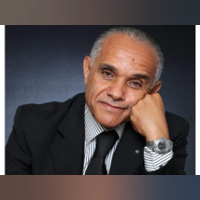
Aziz Daouda Aziz Daouda

Aziz Daouda

Directeur Technique et du Développement de la Confédération Africaine d'Athlétisme. Passionné du Maroc, passionné d'Afrique. Concerné par ce qui se passe, formulant mon point de vue quand j'en ai un. Humaniste, j'essaye de l'être, humain je veux l'être. Mon histoire est intimement liée à l'athlétisme marocain et mondial. J'ai eu le privilège de participer à la gloire de mon pays .


8100

33.0

THE ENCHIRIDION - I 3591

There are things which are within our power, and there are things which are beyond our power. Within our power are opinion, aim, desire, aversion, and, in one word, whatever affairs are our own. Beyond our power are body, property, reputation, office, and, in one word, whatever are not properly our own affairs. Now the things within our power are by nature free, unrestricted, unhindered; but those beyond our power are weak, dependent, restricted, alien. Remember, then, that if you attribute freedom to things by nature dependent and take what belongs to others for your own, you will be hindered, you will lament, you will be disturbed, you will find fault both with gods and men. But if you take for your own only that which is your own and view what belongs to others just as it really is, then no one will ever compel you, no one will restrict you; you will find fault with no one, you will accuse no one, you will do nothing against your will; no one will hurt you, you will not have an enemy, nor will you suffer any harm. Aiming, therefore, at such great things, remember that you must not allow yourself any inclination, however slight, toward the attainment of the others; but that you must entirely quit some of them, and for the present postpone the rest. But if you would have these, and possess power and wealth likewise, you may miss the latter in seeking the former; and you will certainly fail of that by which alone happiness and freedom are procured. Seek at once, therefore, to be able to say to every unpleasing semblance, “You are but a semblance and by no means the real thing.” And then examine it by those rules which you have; and first and chiefly by this: whether it concerns the things which are within our own power or those which are not; and if it concerns anything beyond our power, be prepared to say that it is nothing to you.

THE ADVENTURES OF TOM SAWYER - PREFACE 3749

Most of the adventures recorded in this book really occurred; one or two were experiences of my own, the rest those of boys who were schoolmates of mine. Huck Finn is drawn from life; Tom Sawyer also, but not from an individual—he is a combination of the characteristics of three boys whom I knew, and therefore belongs to the composite order of architecture. The odd superstitions touched upon were all prevalent among children and slaves in the West at the period of this story—that is to say, thirty or forty years ago. Although my book is intended mainly for the entertainment of boys and girls, I hope it will not be shunned by men and women on that account, for part of my plan has been to try to pleasantly remind adults of what they once were themselves, and of how they felt and thought and talked, and what queer enterprises they sometimes engaged in. THE AUTHOR. HARTFORD, 1876.

THE MEDITATIONS - Book I.[1/3] 3868

1. I learned from my grandfather, Verus, to use good manners, and to put restraint on anger. 2. In the famous memory of my father I had a pattern of modesty and manliness. 3. Of my mother I learned to be pious and generous; to keep myself not only from evil deeds, but even from evil thoughts; and to live with a simplicity which is far from customary among the rich. 4. I owe it to my great-grandfather that I did not attend public lectures and discussions, but had good and able teachers at home; and I owe him also the knowledge that for things of this nature a man should count no expense too great. 5. My tutor taught me not to favour either green or blue at the chariot races, nor, in the contests of gladiators, to be a supporter either of light or heavy armed. He taught me also to endure labour; not to need many things; to serve myself without troubling others; not to intermeddle in the affairs of others, and not easily to listen to slanders against them. 6. Of Diognetus I had the lesson not to busy myself about vain things; not to credit the great professions of such as pretend to work wonders, or of sorcerers about their charms, and their expelling of Demons and the like; not to keep quails (for fighting or divination), nor to run after such things; to suffer freedom of speech in others, and to apply myself heartily to philosophy. Him also I must thank for my hearing first Bacchius, then Tandasis and Marcianus; that I wrote dialogues in my youth, and took a liking to the philosopher’s pallet and skins, and to the other things which, by the Grecian discipline, belong to that profession. 7. To Rusticus I owe my first apprehensions that my nature needed reform and cure; and that I did not fall into the ambition of the common Sophists, either by composing speculative writings or by declaiming harangues of exhortation in public; further, that I never strove to be admired by ostentation of great patience in an ascetic life, or by display of activity and application; that I gave over the study of rhetoric, poetry, and the graces of language; and that I did not pace my house in my senatorial robes, or practise any similar affectation. I observed also the simplicity of style in his letters, particularly in that which he wrote to my mother from Sinuessa. I learned from him to be easily appeased, and to be readily reconciled with those who had displeased me or given cause of offence, so soon as they inclined to make their peace; to read with care; not to rest satisfied with a slight and superficial knowledge; nor quickly to assent to great talkers. I have him to thank that I met with the discourses of Epictetus, which he furnished me from his own library. 8. From Apollonius I learned true liberty, and tenacity of purpose; to regard nothing else, even in the smallest degree, but reason always; and always to remain unaltered in the agonies of pain, in the losses of children, or in long diseases. He afforded me a living example of how the same man can, upon occasion, be most yielding and most inflexible. He was patient in exposition; and, as might well be seen, esteemed his fine skill and ability in teaching others the principles of philosophy as the least of his endowments. It was from him that I learned how to receive from friends what are thought favours without seeming humbled by the giver or insensible to the gift. 9. Sextus was my pattern of a benign temper, and his family the model of a household governed by true paternal affection, and a steadfast purpose of living according to nature. Here I could learn to be grave without affectation, to observe sagaciously the several dispositions and inclinations of my friends, to tolerate the ignorant and those who follow current opinions without examination. His conversation showed how a man may accommodate himself to all men and to all companies; for though companionship with him was sweeter and more pleasing than any sort of flattery, yet he was at the same time highly respected and reverenced. No man was ever more happy than he in comprehending, finding out, and arranging in exact order the great maxims necessary for the conduct of life. His example taught me to suppress even the least appearance of anger or any other passion; but still, with all this perfect tranquillity, to possess the tenderest and most affectionate heart; to be apt to approve others yet without noise; to have much learning and little ostentation. 10. I learned from Alexander the Grammarian to avoid censuring others, to refrain from flouting them for a barbarism, solecism, or any false pronunciation. Rather was I dexterously to pronounce the words rightly in my answer, confining approval or objection to the matter itself, and avoiding discussion of the expression, or to use some other form of courteous suggestion. 11. Fronto made me sensible how much of envy, deceit and hypocrisy surrounds princes; and that generally those whom we account nobly born have somehow less natural affection. 12. I learned from Alexander the Platonist not often nor without great necessity to say, or write to any man in a letter, that I am not at leisure; nor thus, under pretext of urgent affairs, to make a practice of excusing myself from the duties which, according to our various ties, we owe to those with whom we live. 13. Of Catulus I learned not to condemn any friend’s expostulation even though it were unjust, but to try to recall him to his former disposition; to stint no praise in speaking of my masters, as is recounted of Domitius and Athenodorus; and to love my children with true affection. 14. Of Severus, my brother, I learned to love my kinsmen, to love truth, to love justice. Through him I came to know Thrasea, Helvidius, Cato, Dion, and Brutus. He gave me my first conception of a Commonwealth founded upon equitable laws and administered with equality of right; and of a Monarchy whose chief concern is the freedom of its subjects. Of him I learned likewise a constant and harmonious devotion to Philosophy; to be ready to do good, to be generous with all my heart. He taught me to be of good hope and trustful of the affection of my friends. I observed in him candour in declaring what he condemned in the conduct of others; and so frank and open was his behaviour, that his friends might easily see without the trouble of conjecture what he liked or disliked.