Think Forward.

Algeria Faces Strategic Imperative to Disarm Polisario Amid Geopolitical Shifts 18058

*The disarmament of the Polisario now appears as the *ultimate option* Algeria might face in light of recent geopolitical and diplomatic developments. Several factors converge toward this perspective, which is no longer merely hypothetical but a strategic and political necessity. For several years, the international community, notably driven by the United States, has clearly positioned Morocco’s autonomy proposal as the only credible basis for resolving the so-called Western Sahara conflict. This shift has fundamentally changed the dynamics, marginalizing the Polisario and weakening its traditional support, especially from Algeria. Algeria, which has long provided military and political backing to the Polisario, now finds itself in a delicate position, under international pressure and confronted with realities on the ground. The movement of Polisario militias out of Algerian territory perfectly reflects Algeria’s impotence, even debacle, as separatists openly use it as a logistical rear base. Separatist incursions into the buffer zone—part of Moroccan territory, a restricted area under tight Moroccan military surveillance—significantly weaken the Polisario, which emerges defeated each time. **In an already tense regional context, the recent terrorist attack in Mali illustrates the worsening security threats. Several Malian cities have been seized by a genuine terrorist army, an unprecedented coalition of all extremist factions in the region, including about 300 fighters armed and coming from the Polisario. This alliance complicates the security landscape in West and North Africa, blurring lines between armed groups and political movements, increasing pressure on neighboring states, particularly Algeria with its porous borders. For the first time, terrorists approached the Senegalese border, a significant development. Are we on the verge of the birth of another Islamic state?** In the United States, bipartisan calls to designate the Polisario as a terrorist organization implicitly target Algeria, which could be labeled a “state sponsor of terrorism.” Facing these pressures, the Algerian military junta has few options. The most likely is a calibrated backtrack: accepting Morocco’s autonomy proposal as a negotiation basis. Reluctantly, it is forced to reduce its military support for the Polisario, which will also lose backing from Iran and its proxies. In this context, disarming the Polisario is not only a military option but a political and security imperative. Maintaining armed militias, fed illusions and weapons for decades, has become a burden for Algeria, which must now consider their dissolution, halt their funding, and isolate the most belligerent elements. This implicit approach aligns with the political settlement logic based on Morocco’s autonomy proposal. It would pave the way for the return of Sahrawis held in camps to their Moroccan homeland. The political end of the Polisario renders its armed existence obsolete. Disarmament thus appears as Algeria’s last card to exit the Western Sahara conflict deadlock without losing face or risking international sanctions. This choice, imposed by circumstances, could mark the end of an armed confrontation era and open the path to a painful but peaceful resolution for separatists and Algerian military leaders, who would suffer yet another defeat against Morocco. On the other hand, Algeria must finally allow a precise census of the Tindouf camp inhabitants and clearly determine their origins. It is known that Sahrawis from Moroccan Sahara are a minority, about one-third of the population. This census, repeatedly requested by the United Nations and the UNHCR, is essential to ensure transparency and the future of all. Morocco would likely not allow non-Moroccans to settle on its territory. Algeria’s persistent refusal to permit this census raises serious questions about its motives, given contradictions over the real number and origins of the camp populations, who are not only displaced from Western Sahara but also include Sahrawis from Algeria, Mauritania, and elsewhere. This opacity contributes to militarization and a situation contrary to the 1951 Refugee Convention principles, as populations are effectively detained and armed, incompatible with refugee status. Moreover, a refugee cannot be armed. Disarming the Polisario is thus a major strategic and political necessity for Algeria, facing increased international, especially American, pressure demanding not only militia disarmament but also dismantling of the Tindouf camps. Maintaining armed militias in these camps is a real burden for Algiers and an obstacle to peaceful regional relations. Population census is therefore an essential step to clearly distinguish civilian refugees from armed fighters, a prerequisite for disarmament and militia dissolution. Without this clarification, the international community cannot control the situation, prevent fraud, or guarantee regional security. In sum, Algeria must stop evading its responsibilities by finally allowing an internationally supervised census, which would open the way to more transparent and humane conflict management while facilitating Polisario disarmament, indispensable for a lasting political solution based on Morocco’s autonomy proposal. This difficult but unavoidable choice is crucial to avoid diplomatic isolation, sanctions risk, and regional security deterioration. However, this option remains delicate and fraught with consequences for Algiers, which must first convince its population of the paradigm shift and find solutions for separatists whose hands are stained with blood. Disarming the Polisario, far from a mere military operation, will be a major turning point in regional dynamics and a decisive test for Algerian diplomacy. This will require great courage and perhaps new leadership.*

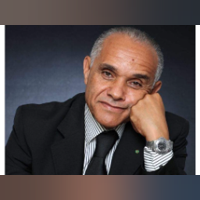
Aziz Daouda Aziz Daouda

Aziz Daouda

Directeur Technique et du Développement de la Confédération Africaine d'Athlétisme. Passionné du Maroc, passionné d'Afrique. Concerné par ce qui se passe, formulant mon point de vue quand j'en ai un. Humaniste, j'essaye de l'être, humain je veux l'être. Mon histoire est intimement liée à l'athlétisme marocain et mondial. J'ai eu le privilège de participer à la gloire de mon pays .


9300

33.0

THE ADVENTURES OF TOM SAWYER - PREFACE 5397

Most of the adventures recorded in this book really occurred; one or two were experiences of my own, the rest those of boys who were schoolmates of mine. Huck Finn is drawn from life; Tom Sawyer also, but not from an individual—he is a combination of the characteristics of three boys whom I knew, and therefore belongs to the composite order of architecture. The odd superstitions touched upon were all prevalent among children and slaves in the West at the period of this story—that is to say, thirty or forty years ago. Although my book is intended mainly for the entertainment of boys and girls, I hope it will not be shunned by men and women on that account, for part of my plan has been to try to pleasantly remind adults of what they once were themselves, and of how they felt and thought and talked, and what queer enterprises they sometimes engaged in. THE AUTHOR. HARTFORD, 1876.

THE MEDITATIONS - Book I.[1/3] 5539

1. I learned from my grandfather, Verus, to use good manners, and to put restraint on anger. 2. In the famous memory of my father I had a pattern of modesty and manliness. 3. Of my mother I learned to be pious and generous; to keep myself not only from evil deeds, but even from evil thoughts; and to live with a simplicity which is far from customary among the rich. 4. I owe it to my great-grandfather that I did not attend public lectures and discussions, but had good and able teachers at home; and I owe him also the knowledge that for things of this nature a man should count no expense too great. 5. My tutor taught me not to favour either green or blue at the chariot races, nor, in the contests of gladiators, to be a supporter either of light or heavy armed. He taught me also to endure labour; not to need many things; to serve myself without troubling others; not to intermeddle in the affairs of others, and not easily to listen to slanders against them. 6. Of Diognetus I had the lesson not to busy myself about vain things; not to credit the great professions of such as pretend to work wonders, or of sorcerers about their charms, and their expelling of Demons and the like; not to keep quails (for fighting or divination), nor to run after such things; to suffer freedom of speech in others, and to apply myself heartily to philosophy. Him also I must thank for my hearing first Bacchius, then Tandasis and Marcianus; that I wrote dialogues in my youth, and took a liking to the philosopher’s pallet and skins, and to the other things which, by the Grecian discipline, belong to that profession. 7. To Rusticus I owe my first apprehensions that my nature needed reform and cure; and that I did not fall into the ambition of the common Sophists, either by composing speculative writings or by declaiming harangues of exhortation in public; further, that I never strove to be admired by ostentation of great patience in an ascetic life, or by display of activity and application; that I gave over the study of rhetoric, poetry, and the graces of language; and that I did not pace my house in my senatorial robes, or practise any similar affectation. I observed also the simplicity of style in his letters, particularly in that which he wrote to my mother from Sinuessa. I learned from him to be easily appeased, and to be readily reconciled with those who had displeased me or given cause of offence, so soon as they inclined to make their peace; to read with care; not to rest satisfied with a slight and superficial knowledge; nor quickly to assent to great talkers. I have him to thank that I met with the discourses of Epictetus, which he furnished me from his own library. 8. From Apollonius I learned true liberty, and tenacity of purpose; to regard nothing else, even in the smallest degree, but reason always; and always to remain unaltered in the agonies of pain, in the losses of children, or in long diseases. He afforded me a living example of how the same man can, upon occasion, be most yielding and most inflexible. He was patient in exposition; and, as might well be seen, esteemed his fine skill and ability in teaching others the principles of philosophy as the least of his endowments. It was from him that I learned how to receive from friends what are thought favours without seeming humbled by the giver or insensible to the gift. 9. Sextus was my pattern of a benign temper, and his family the model of a household governed by true paternal affection, and a steadfast purpose of living according to nature. Here I could learn to be grave without affectation, to observe sagaciously the several dispositions and inclinations of my friends, to tolerate the ignorant and those who follow current opinions without examination. His conversation showed how a man may accommodate himself to all men and to all companies; for though companionship with him was sweeter and more pleasing than any sort of flattery, yet he was at the same time highly respected and reverenced. No man was ever more happy than he in comprehending, finding out, and arranging in exact order the great maxims necessary for the conduct of life. His example taught me to suppress even the least appearance of anger or any other passion; but still, with all this perfect tranquillity, to possess the tenderest and most affectionate heart; to be apt to approve others yet without noise; to have much learning and little ostentation. 10. I learned from Alexander the Grammarian to avoid censuring others, to refrain from flouting them for a barbarism, solecism, or any false pronunciation. Rather was I dexterously to pronounce the words rightly in my answer, confining approval or objection to the matter itself, and avoiding discussion of the expression, or to use some other form of courteous suggestion. 11. Fronto made me sensible how much of envy, deceit and hypocrisy surrounds princes; and that generally those whom we account nobly born have somehow less natural affection. 12. I learned from Alexander the Platonist not often nor without great necessity to say, or write to any man in a letter, that I am not at leisure; nor thus, under pretext of urgent affairs, to make a practice of excusing myself from the duties which, according to our various ties, we owe to those with whom we live. 13. Of Catulus I learned not to condemn any friend’s expostulation even though it were unjust, but to try to recall him to his former disposition; to stint no praise in speaking of my masters, as is recounted of Domitius and Athenodorus; and to love my children with true affection. 14. Of Severus, my brother, I learned to love my kinsmen, to love truth, to love justice. Through him I came to know Thrasea, Helvidius, Cato, Dion, and Brutus. He gave me my first conception of a Commonwealth founded upon equitable laws and administered with equality of right; and of a Monarchy whose chief concern is the freedom of its subjects. Of him I learned likewise a constant and harmonious devotion to Philosophy; to be ready to do good, to be generous with all my heart. He taught me to be of good hope and trustful of the affection of my friends. I observed in him candour in declaring what he condemned in the conduct of others; and so frank and open was his behaviour, that his friends might easily see without the trouble of conjecture what he liked or disliked.