Think Forward.

Maroc-Nigeria : De la froideur à un partenariat stratégique continental... 2696

Je me trouve à Abeokuta au Nigéria pour l’organisation des Championnats d’Afrique d’Athlétisme des U18 et des U20. Quoi de plus normal que de penser aux relations entre le Maroc et le Nigeria qui ont connu une évolution notable passant d’une période de distance et de prudence à un partenariat stratégique majeur pour l’Afrique. Un indice éloquent: la compagnie aérienne nationale assure aujourd’hui deux vols quotidiens sur Lagos. Dans les années 1960 à 1980, les relations entre le Maroc et le Nigeria sont restées formelles mais distantes, en raison de divergences idéologiques profondes. Le Nigeria, poids lourd anglophone et proche du bloc non-aligné ; un non alignement qui signifiait plutôt un alignement sur les modèles de l'Europe de l’Est de l'époque. Le Maroc, quant à lui, plus proche de l’Occident, adoptait une diplomatie prudente en respect de son positionnement séculaire et de ses fondamentaux de non ingérence et de respect des peuples et de leurs choix. La distanciation entre les deux pays a été plus actée notamment après le retrait du Royaume de l’Organisation de l’Unité Africaine (OUA) en 1984, en réaction à l’adhésion de la République fantoche arabe sahraouie démocratique à cette organisation. La question du Sahara dit occidental constituait un point de friction majeur, le Nigeria soutenant la RASD, ce qui freinait tout rapprochement significatif. Ainsi, les relations durant la décennie 1980–1990 sont restées tièdes, limitées à des échanges diplomatiques de base. Le retour de la démocratie au Nigeria en 1999, avec l’élection d’Olusegun Obasanjo, et la montée en puissance du Maroc sur la scène africaine ont marqué un tournant. Les deux pays ont entamé un rapprochement diplomatique discret mais concret. Plusieurs domaines ont été explorés pour renforcer la coopération : l’énergie avec des discussions sur une coopération gazière, le commerce avec des échanges modestes mais en croissance, l'agriculture dans l'objectif de satisfaire aux besoins croissants de la population nigériane, ainsi que la dimension religieuse, notamment à travers le soufisme et l’enseignement religieux modéré promu par le Maroc. Le véritable tournant s’est produit en décembre 2016, lors de la visite historique du roi Mohammed VI à Abuja. Cette visite a marqué une rupture dans les relations bilatérales, avec la signature de nombreux accords de coopération dans les secteurs agricole, bancaire, industriel, religieux et énergétique. L'on rappellera ici les accolades fraternelles et les propos chaleureux ayant marqués les rencontres de Sa Majesté le Roi Mohammed VI avec le Président Buhari. Le projet phare dans cette dynamique est le gazoduc Nigeria-Maroc (NMGP), annoncé en 2016. Ce projet ambitieux, long de plus de 5600 km et traversant 13 pays d’Afrique de l’Ouest, vise à acheminer le gaz nigérian jusqu’au Maroc, puis potentiellement vers l’Europe. Ses objectifs sont multiples : assurer la sécurité énergétique, favoriser l’intégration régionale et renforcer la stabilité géopolitique. Entre 2022 et 2023, plusieurs accords de financement et d’études techniques ont été signés avec la CEDEAO, l’OPEP et des partenaires européens. Parallèlement, la coopération s’est diversifiée : des banques marocaines ont investi au Nigeria, tandis que le partenariat entre l’Office chérifien des phosphates (OCP) et le Dangote Group a renforcé la production d’engrais au Nigeria. Sur le plan religieux, le Maroc accueille des imams nigérians dans ses centres de formation, consolidant ainsi les liens culturels et religieux. Depuis l’élection du président Bola Tinubu en 2023, la coopération active avec le Maroc semble se poursuivre. Le projet du gazoduc NMGP avance avec le soutien d’acteurs importants tels que l’Union européenne et la Banque Islamique de Développement, malgré un contexte mondial compliqué marqué par la guerre en Ukraine et des instabilités régionales. La question du Sahara occidental demeure une ligne de fracture modérée : le Nigeria n’a pas retiré sa reconnaissance de la RASD, mais n’émet plus de déclarations hostiles envers Rabat depuis plusieurs années, témoignant d’un apaisement diplomatique certain. Le partenariat Maroc-Nigeria s’inscrit dans une dynamique géostratégique complexe, notamment en compétition et complémentarité avec l’Algérie. Le projet Maroc-Nigeria est parfois perçu comme un contrepoids au gazoduc transsaharien Algérie-Nigeria, qui reste à l’état de projet contrairement au projet marocain qui avance à grande vitesse et selon le timing arrêté. Sur le plan régional, cette alliance pourrait redessiner les axes Nord-Sud de coopération africaine, reliant l’Afrique de l’Ouest au Maghreb, et dépasser ainsi la traditionnelle division francophone/anglophone. L’adhésion du Maroc à la CEDEAO, bien que suspendue, illustre cette volonté d’intégration économique poussée avec Abuja comme partenaire-clé. Les relations entre le Maroc et le Nigeria ont évolué d’une froideur diplomatique à une alliance stratégique structurante pour le continent africain. Le projet de gazoduc, l’implantation bancaire, la coopération agricole et religieuse, ainsi que les convergences géoéconomiques font de ce partenariat un pilier majeur du Sud global africain. La prochaine décennie sera déterminante pour mesurer la capacité de ces deux pays à transformer leur coopération en un moteur d’intégration continentale. Le panorama clair et la chronologique de l’évolution des relations bilatérales Maroc-Nigeria, souligne les enjeux politiques, économiques et géostratégiques qui les sous-tendent. Peut on conclure sans rendre un hommage appuyé et prier pour l’âme du Président Muhammadu Buhari décédé le dimanche 13 juillet à Londres à l'âge de 82 ans des suites d'une longue maladie. C’est durant sa présidence que les relations entre les deux pays se sont développées et sont sorties de la routine conflictuelle larvée vers une coopération Win Win. Paix à son âme.
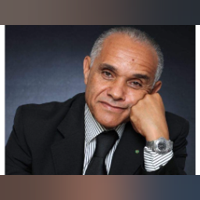
Aziz Daouda Aziz Daouda

Aziz Daouda

Directeur Technique et du Développement de la Confédération Africaine d'Athlétisme. Passionné du Maroc, passionné d'Afrique. Concerné par ce qui se passe, formulant mon point de vue quand j'en ai un. Humaniste, j'essaye de l'être, humain je veux l'être. Mon histoire est intimement liée à l'athlétisme marocain et mondial. J'ai eu le privilège de participer à la gloire de mon pays .


9100

33.0

African Football: Between Emotional Populism and Institutional Order.. 178

The CAF dealt the Senegal national football team an implacable administrative defeat, awarding a default victory to the Moroccan national team in the 2025 AFCON final. This sanction, rooted in the CAF's disciplinary regulations, punishes any abandonment of the pitch, even if temporary. At one point in the match, the Senegalese coach consciously decided to have his players leave the field. Only one remained on the pitch. Under football rules, a match requires at least seven players on the field to continue to its conclusion. Despite winning after a rollercoaster extra time, the team paid the price for blatant indiscipline: unleashed supporters, partial pitch invasion, assaults and injuries, prolonged interruption during which the players returned to the locker rooms on their coach's dramatic order. Forget the simplistic narrative of a "Morocco vs. Senegal" clash that some, particularly on the Senegalese side, push to imply political motives. Nothing could be further from the truth. The affair stems from an initial clash between the Royal Moroccan Football Federation (FRMF) and the CAF. The FRMF asked the CAF to apply its own rules and those of FIFA, questioning their non-enforcement. Recall that the Moroccan national team strictly followed the referee's directives, even resuming play alone on the pitch for 14 minutes while the Senegalese headed to the locker rooms. The question, then, is: why did the referee refrain from applying the rules? The answer lies in the CAF's backrooms. A "CAF official" allegedly ordered the referee to flout the rules and not sanction the team that left the pitch. The FRMF took the matter to the CAF's bodies, which referred it to its Disciplinary Committee, normally chaired by a Senegalese. For convenience's sake, this committee rejected the FRMF's request. Far from giving up, surprised by the decision, the FRMF appealed. In appeal, it is not members who decide, but independent judges selected across the continent. The ruling was unequivocal: applying the rules, the Moroccan national team is declared the 2025 AFCON winner. The dispute between the FRMF and the CAF thus ended. Up to this point, the matter is purely sporting. The Senegalese Football Federation (FSF), unhappy with the Appeal Jury's ruling and defending the on-pitch result, refers the case to the Court of Arbitration for Sport (CAS). Senegal does not merely contest the decision: it launches a frontal assault on regulatory sovereignty, legally demanding an international corruption probe into the bodies. It is the Senegalese government that responds to the CAF and escalates the case. To prove corruption, it will need to identify the corrupted party and the corrupter... Through its decision, the CAF prioritized law over on-pitch emotion—an emotion unfortunately fueled off-pitch by the stupidity of those who, for a few more followers or AdSense dollars, spread indescribable hatred between two brotherly peoples. This is not a Senegal-Morocco issue, but a sporting one between the FRMF and the CAF, and between the FSF and the CAF. Some reminders are in order for the instigators on both sides, without defending the CAF and its bodies, which will answer the corruption accusations. The CAF's regulatory fortress rests on three impregnable pillars, bolstered by these regulation excerpts: **WITHDRAWALS** **ARTICLE 82** If, for any reason, a team withdraws from the competition or fails to appear for a match, or refuses to play or leaves the pitch before the regulatory end of the match without the referee's authorization, it will be deemed to have lost and will be definitively eliminated from the ongoing competition. The same applies to teams previously disqualified by CAF decision. **ARTICLE 84** The team that breaches the provisions of Articles 82 and 83 will be definitively excluded from the competition. It loses the match 3-0. If the opposing team was leading by a more favorable score at the time of the match stoppage, that score will be maintained. Additional measures may be taken by the Organizing Committee. The three pillars underpinning the decision are thus: **Absolute compliance**: Article 82 defines any team withdrawal as abandonment, triggering automatic forfeit. The 14 Senegalese minutes fall squarely under it, without ambiguity. **Mechanical proportionality**: The sanction is not discretionary; it flows verbatim from the texts and is validated by CAS jurisprudence. **Institutional primacy**: The referee tolerated a de facto resumption under pressure, but the CAF holds the power to rule on discipline. What will the CAS say if it is indeed seized by the Senegalese side? Conservative by nature, the CAS never positions itself as a sports judge; it upholds bodies when rules are clear. As an inflexible guardian of stability, it will reject any Senegalese "symbolic legitimacy." To prevail, Senegal must outmaneuver: invoke a resumption invalidating the abandonment, a "disproportionate" sanction, or the "spirit of the game." Fragile ploy: the CAS has systematically dismissed such escapes when texts are explicit. Several African federations, including the FRMF in the 2015 AFCON affair, as well as various clubs and CAF-affiliated associations, have appealed to the CAS against sanctions for forfeits, withdrawals, or regulatory breaches. In these cases, the CAS has consistently favored a strict reading of applicable regulations, dismissing arguments based on force majeure or mitigating circumstances when texts provided for automatic sanctions. The affair's outcome will inevitably be the CAF's victory, confirming the Appeal Jury's judgment. The Senegalese forfeit will be upheld, the title confirmed for Morocco. Jurisprudence will emerge strengthened by the triumph of law, shielding future competitions from chaos. One slim surprise remains possible: a replay or revision if the CAS rules the abandonment was not definitive. But will it risk unprecedented instability by overriding such clear rules? This is not a matter of interpretation, but of pure rule application. The CAS will crown the CAF, exposing Senegal's precarious position. Far from a bilateral duel, this crisis pits rule respect against populist temptation. Law will prevail: the CAF will reaffirm its sovereignty, for an African football governed by legislation, not emotional riots. The 2025 AFCON, not confiscated, will mark the consolidation of a continental legal order.

Oil Taxation, Aid Efficiency, and Social Justice: What Strategy for Morocco Facing Energy Shocks? 745

When the Russia-Ukraine war broke out, global energy markets were brutally disrupted. The barrel price crossed historic thresholds, triggering an immediate surge in pump prices in net importer countries like Morocco. In response, the government opted for direct aid to transporters to contain inflation and prevent pass-through to goods and services prices. However, the experience revealed its limits. Despite the subsidies, transport prices did indeed rise, pulling up the cost of all products and services in their wake. This gap between intention and reality raises a central question: how to effectively cushion an energy shock in a liberalized economy without widening inequalities or fueling rents? The decision to specifically aid transporters rested on the implicit assumption that they would act as shock absorbers, absorbing part of the increase. Yet, in a market with tight margins and fierce competition, it is economically rational for operators to pass on costs to fares, despite public support. Several factors explain this relative failure: - Lack of binding mechanisms. No strict obligation prevented pass-through to final prices. - Windfall effect. Some companies received aid without altering their pricing policy. - Targeting difficulties. Aid benefited a specific segment without ensuring a broad, lasting impact on the economy. This observation is all the more troubling since Morocco remains heavily dependent on refined product imports following the closure of the Samir refinery. Today, tensions around the Strait of Hormuz are reigniting fears of a new oil shock. This maritime corridor, through which about 20% of global oil transits, is a critical chokepoint in worldwide energy supply. Any disruption sends prices soaring and, mechanically, pump prices in Morocco. States worldwide have adopted varied strategies, with mixed results: - Price caps. Effectiveness is immediate, with tariff shields on electricity and gas, sometimes paired with fuel caps. These measures contain short-term inflation at the cost of very high budgetary expense, disincentives to energy sobriety, and windfalls for the wealthiest consumers. - Direct transfers. A social but imperfect response. Some countries issued energy checks or lump-sum aid to households. Politically popular, these tools are often criticized for their inflationary nature, lack of precise targeting, and risk of fostering dependence on one-off aid. - Tax modulation, a structural lever. Several states, like Austria, Spain, Italy, or Japan, chose to temporarily cut fuel taxes to limit pump price hikes. This approach directly affects the final price paid by all consumers, without intermediaries. It relies on principles of readability and shared effort between the state and users. In Morocco's case, a significant portion of the pump price consists of taxes—such as TIC and VAT—which heavily influence the per-liter price and give the state major leverage in price formation. Temporarily reducing these taxes would establish an explicit shock-sharing mechanism between the state and citizens, rather than concentrating aid on one sector. This option offers several advantages: - Universality: it benefits everyone, from truck drivers to salaried workers using their car for commuting. - Transparency: the reduction is immediately visible at the pump, boosting trust and the readability of public action. - Economic efficiency: it directly lowers fuel costs. - Social justice: by forgoing part of the fiscal rent on a now-essential product, the state clearly shoulders its share of the effort. Targeted and temporary reduction of oil taxation thus emerges as the most effective and democratic solution to cushion an energy quake. This path is not new in Moroccan debate, as evidenced by the widespread support via the Compensation Fund, phased out from 2015 onward. Lightening fuel costs through subsidies has already been implemented without achieving the theoretically expected results. Need we remind? Any tax reduction, if enacted, cannot be unlimited or permanent but must be strictly time-bound, calibrated to budgetary capacity, and linked to broader hydrocarbon market reform (competition, margins, strategic storage, reopening or alternative to national refining capacity). In other words, tax modulation should not be a short-term reflex but the tool of a comprehensive energy security strategy. Morocco faces a strategic choice: persist with one-off aid to transporters or embrace shock-sharing via taxation. If it chooses the latter and loses short-term revenue, it will gain in social cohesion and economic predictability, with three key lessons: - Prioritize direct mechanisms via taxation, a key pump price component, as the most effective tool for rapid, universal, and democratic action. - Avoid market distortions. Targeted aid without strict controls produces opposite effects; it fuels rents without protecting the end consumer. - Think long-term. Energy issues cannot be divorced from industrial sovereignty (refining, storage) and state budgetary resilience. Beyond conjunctural management, it is a true social contract around energy that must be rethought. In a country where the car is both a work tool, a means of access to essential services, and a vector of mobility, fuel price is a deeply political issue at the intersection of social justice and budgetary sustainability. Rather than multiplying one-off devices for a single sector, Morocco would benefit from a more systemic approach based on fiscal transparency, equity, and economic efficiency. Fuel tax modulation, as a universal and immediate lever, better meets democratic demands. It is a more credible response to current shocks and those to come.

The Strategic Prudence of Gulf Monarchies: A Vital Calculus in the Face of Iran and American Uncertainties... 748

The Gulf monarchies: Saudi Arabia, United Arab Emirates, Qatar, or Kuwait, embody a glaring strategic vulnerability. Their shallow territorial depth and narrow demographics expose vital infrastructure: airports, ports, refineries, gas terminals, headquarters of major companies, to rapid strikes by potential enemies from the region and beyond. Iran, for instance, with its arsenal of ballistic missiles, drones, and asymmetric naval forces, coupled with the belligerent philosophy of its regime, could paralyze them in the blink of an eye. The 2019 attack on Aramco's oil facilities at Abqaiq and Khurais provides irrefutable proof: Saudi production had then plummeted by half. To the Saudis' surprise, the Americans remained evasive and barely retaliated, at least not in a clear and direct manner. For Riyadh, this silence was a telling signal: allies are no longer infallible. Signed agreements can remain dead letters at the whim of one party, depending of course on the interests of the moment and changing circumstances. A growing, though undeclared, distrust of Washington had then taken hold. Commitments, agreements, and promises only bind those who believe in them. Over the past two decades, trust in the United States among Gulf capitals has eroded a little more each day. The 2011 withdrawal from Iraq, the lack of a strong response after the 2019 attacks, and the Afghan chaos of 2021 have ingrained a lesson that those concerned have fully internalized: Washington disengages when the cost rises. This uncertainty thus encourages prudence in the face of open war with Tehran. It will likely be the case again today, as the specter of a long and destructive war occupies all minds. The risks of a prolonged conflict are more than probable. A direct confrontation would quickly degenerate into a prolonged regional conflict, akin to the Iran-Iraq War (1980-1988), which killed over a million people and ruined both belligerents. Today, the stakes would be worse: destruction of energy infrastructure, closure of the Strait of Hormuz, collapse of foreign investments, and capital flight from the area. Gulf leaders, haunted by these scenarios, prioritize stability and intelligently bow their heads. For a long time, they have chosen to prioritize economic development, a choice now put to a severe test. The monarchies have pivoted toward transforming their respective economies: Saudi Arabia's Vision 2030, diversification in the UAE, Qatari global investments, and other manifestations of universal scope. This requires confidence, for it must not be forgotten that these economies fundamentally rest on trust. A prolonged war would threaten tourism, megaprojects like NEOM or smart cities. For the Gulf monarchies, the doctrine is clear: regional stability trumps ideological confrontations. This shift is embodied in the China-mediated reconciliation of 2023 between Riyadh and Tehran, aimed at reducing tensions and sparing Gulf territories, which refuse to become indirect battlefields. Today, though threatened, bombed, and provoked, the Gulf monarchies intelligently demonstrate their refusal to be dragged into a conflict they did not choose. At least for now, as everything could tip at any moment. Despite discreet security cooperations, Gulf countries refuse to be drawn into a conflict for Israel's benefit. The latter enjoys military and nuclear superiority, but Iranian retaliations strike primarily, and above all, Arab bases, economic, and civilian infrastructure. The costs fall on the Arabs, not Tel Aviv. The leaders of the countries concerned have learned the lesson. They have seen what became of Iraq, Syria, Libya, and Yemen, where proxy wars between powers left states bloodless, highlighting the fatal traps that ignition inevitably brings. In these dynamics, Morocco, a strategic ally and highly regarded voice among Gulf countries, emerges as a de-escalation actor. Under King Mohammed VI's impetus, Morocco's moderating voice advocates regional stability, diplomatic solutions, and South-South cooperation to foster political reconstruction and economic exchanges. It is in this context that one must appreciate His Majesty's permanent contacts with the sultans and emirs of the region. This is indeed a lucid calculus, as Morocco is one of the rare countries in the region to have voluntarily severed all ties with the Mullahs long ago. The prudence of Gulf states transcends mere distrust of the United States. It stems from a perspicacious calculus that factors in vulnerability to Iran, uncertain American reliability, the risk of a ruinous war, and the primacy of development. Their mantra? Avoid at all costs becoming the theater of confrontations between regional powers and distant others. This is how their reserve and refusal to retaliate impulsively must be understood. Having nerves on edge is not what's needed. However, things could change if Iran does not come to its senses and leaves a region that, even ideologically hostile, will never go so far as to attack it alone. It lacks the means without potential allies and has no interest in doing so with others' help. Such a situation would be ruinous for the entire region, including Iran, an outcome no one should wish for, apparently.