Think Forward.

Maroc-Nigeria : De la froideur à un partenariat stratégique continental... 2690

Je me trouve à Abeokuta au Nigéria pour l’organisation des Championnats d’Afrique d’Athlétisme des U18 et des U20. Quoi de plus normal que de penser aux relations entre le Maroc et le Nigeria qui ont connu une évolution notable passant d’une période de distance et de prudence à un partenariat stratégique majeur pour l’Afrique. Un indice éloquent: la compagnie aérienne nationale assure aujourd’hui deux vols quotidiens sur Lagos. Dans les années 1960 à 1980, les relations entre le Maroc et le Nigeria sont restées formelles mais distantes, en raison de divergences idéologiques profondes. Le Nigeria, poids lourd anglophone et proche du bloc non-aligné ; un non alignement qui signifiait plutôt un alignement sur les modèles de l'Europe de l’Est de l'époque. Le Maroc, quant à lui, plus proche de l’Occident, adoptait une diplomatie prudente en respect de son positionnement séculaire et de ses fondamentaux de non ingérence et de respect des peuples et de leurs choix. La distanciation entre les deux pays a été plus actée notamment après le retrait du Royaume de l’Organisation de l’Unité Africaine (OUA) en 1984, en réaction à l’adhésion de la République fantoche arabe sahraouie démocratique à cette organisation. La question du Sahara dit occidental constituait un point de friction majeur, le Nigeria soutenant la RASD, ce qui freinait tout rapprochement significatif. Ainsi, les relations durant la décennie 1980–1990 sont restées tièdes, limitées à des échanges diplomatiques de base. Le retour de la démocratie au Nigeria en 1999, avec l’élection d’Olusegun Obasanjo, et la montée en puissance du Maroc sur la scène africaine ont marqué un tournant. Les deux pays ont entamé un rapprochement diplomatique discret mais concret. Plusieurs domaines ont été explorés pour renforcer la coopération : l’énergie avec des discussions sur une coopération gazière, le commerce avec des échanges modestes mais en croissance, l'agriculture dans l'objectif de satisfaire aux besoins croissants de la population nigériane, ainsi que la dimension religieuse, notamment à travers le soufisme et l’enseignement religieux modéré promu par le Maroc. Le véritable tournant s’est produit en décembre 2016, lors de la visite historique du roi Mohammed VI à Abuja. Cette visite a marqué une rupture dans les relations bilatérales, avec la signature de nombreux accords de coopération dans les secteurs agricole, bancaire, industriel, religieux et énergétique. L'on rappellera ici les accolades fraternelles et les propos chaleureux ayant marqués les rencontres de Sa Majesté le Roi Mohammed VI avec le Président Buhari. Le projet phare dans cette dynamique est le gazoduc Nigeria-Maroc (NMGP), annoncé en 2016. Ce projet ambitieux, long de plus de 5600 km et traversant 13 pays d’Afrique de l’Ouest, vise à acheminer le gaz nigérian jusqu’au Maroc, puis potentiellement vers l’Europe. Ses objectifs sont multiples : assurer la sécurité énergétique, favoriser l’intégration régionale et renforcer la stabilité géopolitique. Entre 2022 et 2023, plusieurs accords de financement et d’études techniques ont été signés avec la CEDEAO, l’OPEP et des partenaires européens. Parallèlement, la coopération s’est diversifiée : des banques marocaines ont investi au Nigeria, tandis que le partenariat entre l’Office chérifien des phosphates (OCP) et le Dangote Group a renforcé la production d’engrais au Nigeria. Sur le plan religieux, le Maroc accueille des imams nigérians dans ses centres de formation, consolidant ainsi les liens culturels et religieux. Depuis l’élection du président Bola Tinubu en 2023, la coopération active avec le Maroc semble se poursuivre. Le projet du gazoduc NMGP avance avec le soutien d’acteurs importants tels que l’Union européenne et la Banque Islamique de Développement, malgré un contexte mondial compliqué marqué par la guerre en Ukraine et des instabilités régionales. La question du Sahara occidental demeure une ligne de fracture modérée : le Nigeria n’a pas retiré sa reconnaissance de la RASD, mais n’émet plus de déclarations hostiles envers Rabat depuis plusieurs années, témoignant d’un apaisement diplomatique certain. Le partenariat Maroc-Nigeria s’inscrit dans une dynamique géostratégique complexe, notamment en compétition et complémentarité avec l’Algérie. Le projet Maroc-Nigeria est parfois perçu comme un contrepoids au gazoduc transsaharien Algérie-Nigeria, qui reste à l’état de projet contrairement au projet marocain qui avance à grande vitesse et selon le timing arrêté. Sur le plan régional, cette alliance pourrait redessiner les axes Nord-Sud de coopération africaine, reliant l’Afrique de l’Ouest au Maghreb, et dépasser ainsi la traditionnelle division francophone/anglophone. L’adhésion du Maroc à la CEDEAO, bien que suspendue, illustre cette volonté d’intégration économique poussée avec Abuja comme partenaire-clé. Les relations entre le Maroc et le Nigeria ont évolué d’une froideur diplomatique à une alliance stratégique structurante pour le continent africain. Le projet de gazoduc, l’implantation bancaire, la coopération agricole et religieuse, ainsi que les convergences géoéconomiques font de ce partenariat un pilier majeur du Sud global africain. La prochaine décennie sera déterminante pour mesurer la capacité de ces deux pays à transformer leur coopération en un moteur d’intégration continentale. Le panorama clair et la chronologique de l’évolution des relations bilatérales Maroc-Nigeria, souligne les enjeux politiques, économiques et géostratégiques qui les sous-tendent. Peut on conclure sans rendre un hommage appuyé et prier pour l’âme du Président Muhammadu Buhari décédé le dimanche 13 juillet à Londres à l'âge de 82 ans des suites d'une longue maladie. C’est durant sa présidence que les relations entre les deux pays se sont développées et sont sorties de la routine conflictuelle larvée vers une coopération Win Win. Paix à son âme.

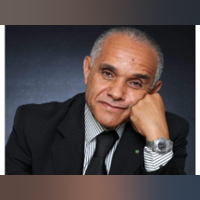
Aziz Daouda Aziz Daouda

Aziz Daouda

Directeur Technique et du Développement de la Confédération Africaine d'Athlétisme. Passionné du Maroc, passionné d'Afrique. Concerné par ce qui se passe, formulant mon point de vue quand j'en ai un. Humaniste, j'essaye de l'être, humain je veux l'être. Mon histoire est intimement liée à l'athlétisme marocain et mondial. J'ai eu le privilège de participer à la gloire de mon pays .


9100

33.0

THE ENCHIRIDION - I 5052

There are things which are within our power, and there are things which are beyond our power. Within our power are opinion, aim, desire, aversion, and, in one word, whatever affairs are our own. Beyond our power are body, property, reputation, office, and, in one word, whatever are not properly our own affairs. Now the things within our power are by nature free, unrestricted, unhindered; but those beyond our power are weak, dependent, restricted, alien. Remember, then, that if you attribute freedom to things by nature dependent and take what belongs to others for your own, you will be hindered, you will lament, you will be disturbed, you will find fault both with gods and men. But if you take for your own only that which is your own and view what belongs to others just as it really is, then no one will ever compel you, no one will restrict you; you will find fault with no one, you will accuse no one, you will do nothing against your will; no one will hurt you, you will not have an enemy, nor will you suffer any harm. Aiming, therefore, at such great things, remember that you must not allow yourself any inclination, however slight, toward the attainment of the others; but that you must entirely quit some of them, and for the present postpone the rest. But if you would have these, and possess power and wealth likewise, you may miss the latter in seeking the former; and you will certainly fail of that by which alone happiness and freedom are procured. Seek at once, therefore, to be able to say to every unpleasing semblance, “You are but a semblance and by no means the real thing.” And then examine it by those rules which you have; and first and chiefly by this: whether it concerns the things which are within our own power or those which are not; and if it concerns anything beyond our power, be prepared to say that it is nothing to you.

THE ADVENTURES OF TOM SAWYER - PREFACE 5243

Most of the adventures recorded in this book really occurred; one or two were experiences of my own, the rest those of boys who were schoolmates of mine. Huck Finn is drawn from life; Tom Sawyer also, but not from an individual—he is a combination of the characteristics of three boys whom I knew, and therefore belongs to the composite order of architecture. The odd superstitions touched upon were all prevalent among children and slaves in the West at the period of this story—that is to say, thirty or forty years ago. Although my book is intended mainly for the entertainment of boys and girls, I hope it will not be shunned by men and women on that account, for part of my plan has been to try to pleasantly remind adults of what they once were themselves, and of how they felt and thought and talked, and what queer enterprises they sometimes engaged in. THE AUTHOR. HARTFORD, 1876.

THE MEDITATIONS - Book I.[1/3] 5384

1. I learned from my grandfather, Verus, to use good manners, and to put restraint on anger. 2. In the famous memory of my father I had a pattern of modesty and manliness. 3. Of my mother I learned to be pious and generous; to keep myself not only from evil deeds, but even from evil thoughts; and to live with a simplicity which is far from customary among the rich. 4. I owe it to my great-grandfather that I did not attend public lectures and discussions, but had good and able teachers at home; and I owe him also the knowledge that for things of this nature a man should count no expense too great. 5. My tutor taught me not to favour either green or blue at the chariot races, nor, in the contests of gladiators, to be a supporter either of light or heavy armed. He taught me also to endure labour; not to need many things; to serve myself without troubling others; not to intermeddle in the affairs of others, and not easily to listen to slanders against them. 6. Of Diognetus I had the lesson not to busy myself about vain things; not to credit the great professions of such as pretend to work wonders, or of sorcerers about their charms, and their expelling of Demons and the like; not to keep quails (for fighting or divination), nor to run after such things; to suffer freedom of speech in others, and to apply myself heartily to philosophy. Him also I must thank for my hearing first Bacchius, then Tandasis and Marcianus; that I wrote dialogues in my youth, and took a liking to the philosopher’s pallet and skins, and to the other things which, by the Grecian discipline, belong to that profession. 7. To Rusticus I owe my first apprehensions that my nature needed reform and cure; and that I did not fall into the ambition of the common Sophists, either by composing speculative writings or by declaiming harangues of exhortation in public; further, that I never strove to be admired by ostentation of great patience in an ascetic life, or by display of activity and application; that I gave over the study of rhetoric, poetry, and the graces of language; and that I did not pace my house in my senatorial robes, or practise any similar affectation. I observed also the simplicity of style in his letters, particularly in that which he wrote to my mother from Sinuessa. I learned from him to be easily appeased, and to be readily reconciled with those who had displeased me or given cause of offence, so soon as they inclined to make their peace; to read with care; not to rest satisfied with a slight and superficial knowledge; nor quickly to assent to great talkers. I have him to thank that I met with the discourses of Epictetus, which he furnished me from his own library. 8. From Apollonius I learned true liberty, and tenacity of purpose; to regard nothing else, even in the smallest degree, but reason always; and always to remain unaltered in the agonies of pain, in the losses of children, or in long diseases. He afforded me a living example of how the same man can, upon occasion, be most yielding and most inflexible. He was patient in exposition; and, as might well be seen, esteemed his fine skill and ability in teaching others the principles of philosophy as the least of his endowments. It was from him that I learned how to receive from friends what are thought favours without seeming humbled by the giver or insensible to the gift. 9. Sextus was my pattern of a benign temper, and his family the model of a household governed by true paternal affection, and a steadfast purpose of living according to nature. Here I could learn to be grave without affectation, to observe sagaciously the several dispositions and inclinations of my friends, to tolerate the ignorant and those who follow current opinions without examination. His conversation showed how a man may accommodate himself to all men and to all companies; for though companionship with him was sweeter and more pleasing than any sort of flattery, yet he was at the same time highly respected and reverenced. No man was ever more happy than he in comprehending, finding out, and arranging in exact order the great maxims necessary for the conduct of life. His example taught me to suppress even the least appearance of anger or any other passion; but still, with all this perfect tranquillity, to possess the tenderest and most affectionate heart; to be apt to approve others yet without noise; to have much learning and little ostentation. 10. I learned from Alexander the Grammarian to avoid censuring others, to refrain from flouting them for a barbarism, solecism, or any false pronunciation. Rather was I dexterously to pronounce the words rightly in my answer, confining approval or objection to the matter itself, and avoiding discussion of the expression, or to use some other form of courteous suggestion. 11. Fronto made me sensible how much of envy, deceit and hypocrisy surrounds princes; and that generally those whom we account nobly born have somehow less natural affection. 12. I learned from Alexander the Platonist not often nor without great necessity to say, or write to any man in a letter, that I am not at leisure; nor thus, under pretext of urgent affairs, to make a practice of excusing myself from the duties which, according to our various ties, we owe to those with whom we live. 13. Of Catulus I learned not to condemn any friend’s expostulation even though it were unjust, but to try to recall him to his former disposition; to stint no praise in speaking of my masters, as is recounted of Domitius and Athenodorus; and to love my children with true affection. 14. Of Severus, my brother, I learned to love my kinsmen, to love truth, to love justice. Through him I came to know Thrasea, Helvidius, Cato, Dion, and Brutus. He gave me my first conception of a Commonwealth founded upon equitable laws and administered with equality of right; and of a Monarchy whose chief concern is the freedom of its subjects. Of him I learned likewise a constant and harmonious devotion to Philosophy; to be ready to do good, to be generous with all my heart. He taught me to be of good hope and trustful of the affection of my friends. I observed in him candour in declaring what he condemned in the conduct of others; and so frank and open was his behaviour, that his friends might easily see without the trouble of conjecture what he liked or disliked.