Think Forward.

Ibtissam, please : Allah is Allah... 11795

Recently, Ibtissam Lachgar, who calls herself an activist, wore a T-shirt of no value, except that she deliberately intended to insult millions of Moroccans and undoubtedly many believers, Muslim or not. God is the omniscient Creator, regardless of religion or rituals. Madam found it clever to display a T-shirt with a strange inscription, not at all amusing: an offense to the divinity. No, madam, Allah is Eternal without beginning or end, beyond time. He is Almighty, and His power is infinite and absolute. He is Merciful, full of compassion and kindness towards human beings, including you. What did you have for breakfast that morning, madam? By this useless act, you seem to have forgotten that faith is also a fundamental right. Americans, whose modernity cannot be denied, claim it to the point of engraving it on their dollar bill. Belief in God, in Allah, is a fundamental, universal, immutable pillar. To say or imply mocking or even simply disrespectful words towards what is sacred in the collective consciousness is to hurt deep sensitivities. It is an affront to the spirituality of billions of people. Yes, it is important to remind that everyone is free to live their life and love whom they want. However, there is one condition: not to unnecessarily offend others. Inventing an impromptu epithet for Allah goes far beyond personal debates linked to sexual orientation: it harms the deep faith of billions of people, including the 36 million Moroccans. This provocation cannot be considered a mere wit or a brave claim: it is a misstep that threatens harmony and social cohesion. Indeed, God does not need anyone to defend Him, much less my humble self, but admit that God is everywhere, simply present in every believer outraged by your lowly stylized statement, which is not freedom of expression but a qualified insult. It is billions of believers you insult with your superfluous act. Moroccans who strive to make their country a state of law also want social peace and cohesion to be fully preserved, within necessary limits to freedom of expression. This freedom can be neither absolute nor without red lines, and this is a genuine protection. Elsewhere, where the state is less protective, a provocation like yours would have caused far worse consequences for you. My generation, and those that followed, have fought extensively for freedom, notably the freedom to express oneself, develop ideas, and help society evolve and emancipate within a civic framework. But madam, yes to freedom, but within respect for laws freely chosen by the majority. This is the foundation of democracy: adopting the will of the majority, even if very narrow. In 2011, it was broad enough to set supreme rules and strives to respect them at all costs. You must understand that freedom does not mean unlimited license. Democracy is based on a constitution and laws adopted by the people themselves. These laws define what is acceptable in public space. Your supporters, Mrs. Lachgar, often foreigners or fringe elements, must understand that it is Moroccans who decide on their laws, according to their history, culture, and values. It is not up to minorities, even vocal ones, or foreigners to this secular context, to redefine the rules of coexistence in a sovereign country. Yes, activism is vital and contributes to progress and the pushing of boundaries, but not sterile and counterproductive provocation such as you have just committed. It is also fair to acknowledge that Morocco has tolerated peaceful advances in favor of sexual minorities. Some of your acquaintances know this well. Debates, demands, and defense of individual rights are permitted, within legal and social frameworks. But when a public figure—as you are with your MALI—takes a "step too far" with a shocking gesture against the very essence of religion, this constitutes an unnecessary provocation, all the more serious when occurring in a sensitive period. You are a declared repeat offender who has so far gotten away with it. This shows a tolerance, albeit relative, but tolerance nonetheless, towards movements as marginal as yours. Minorities have always existed and always will, but you should understand that cohesion is a heavy responsibility of the state, and it is unacceptable to play with such a sovereign prerogative with multiple facets. Your arrest or administrative detention should not be seen solely as a sanction but rather as a protective measure. Would you have taken a few steps in public space with your T-shirt without becoming a target for a probable violent extremist, ready to resort to illegality? On the very day of your counterproductive gesture, police services uncovered yet another vehement extremist, ready according to his ideology to restore a "perfect world" where people like you have no place. It escapes you that Morocco firmly fights all forms of extremism, religious or ideological, and is an ideal target precisely because it accepts differences and diverse orientations, because it does its best to leave room and space for everyone. Freedom to think and live is precisely the opposite of extremism, whatever form it takes. Protecting social peace also means protecting those who sometimes unconsciously or knowingly contribute to destabilizing it, as you do. You may not know, but in France, a mayor had to suspend the screening of the film "Barbie," which promotes homosexuality, under pressure from some inhabitants of his municipality. This shows that even further north, there are still hostile reactions to your orientations. Morocco is a nation rooted in strong historical, cultural, and religious values, with certainly some hypocrisy. This is not a flaw but possibly a true asset. Individual freedom must be exercised within the framework of respect for democratically defined values and laws. Your mistake was to cross these boundaries, thus shaking one of the indisputable foundations of Moroccan identity. It is up to everyone, Moroccans and residents, to respect the country's tranquility and allow everyone the freedom to live in peace, without provoking or dividing.

Aziz Daouda Aziz Daouda

Aziz Daouda

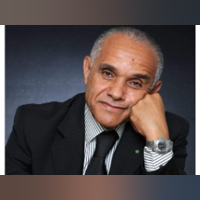
Directeur Technique et du Développement de la Confédération Africaine d'Athlétisme. Passionné du Maroc, passionné d'Afrique. Concerné par ce qui se passe, formulant mon point de vue quand j'en ai un. Humaniste, j'essaye de l'être, humain je veux l'être. Mon histoire est intimement liée à l'athlétisme marocain et mondial. J'ai eu le privilège de participer à la gloire de mon pays .


9300

33.0

THE ENCHIRIDION - I 5197

There are things which are within our power, and there are things which are beyond our power. Within our power are opinion, aim, desire, aversion, and, in one word, whatever affairs are our own. Beyond our power are body, property, reputation, office, and, in one word, whatever are not properly our own affairs. Now the things within our power are by nature free, unrestricted, unhindered; but those beyond our power are weak, dependent, restricted, alien. Remember, then, that if you attribute freedom to things by nature dependent and take what belongs to others for your own, you will be hindered, you will lament, you will be disturbed, you will find fault both with gods and men. But if you take for your own only that which is your own and view what belongs to others just as it really is, then no one will ever compel you, no one will restrict you; you will find fault with no one, you will accuse no one, you will do nothing against your will; no one will hurt you, you will not have an enemy, nor will you suffer any harm. Aiming, therefore, at such great things, remember that you must not allow yourself any inclination, however slight, toward the attainment of the others; but that you must entirely quit some of them, and for the present postpone the rest. But if you would have these, and possess power and wealth likewise, you may miss the latter in seeking the former; and you will certainly fail of that by which alone happiness and freedom are procured. Seek at once, therefore, to be able to say to every unpleasing semblance, “You are but a semblance and by no means the real thing.” And then examine it by those rules which you have; and first and chiefly by this: whether it concerns the things which are within our own power or those which are not; and if it concerns anything beyond our power, be prepared to say that it is nothing to you.

THE ADVENTURES OF TOM SAWYER - PREFACE 5392

Most of the adventures recorded in this book really occurred; one or two were experiences of my own, the rest those of boys who were schoolmates of mine. Huck Finn is drawn from life; Tom Sawyer also, but not from an individual—he is a combination of the characteristics of three boys whom I knew, and therefore belongs to the composite order of architecture. The odd superstitions touched upon were all prevalent among children and slaves in the West at the period of this story—that is to say, thirty or forty years ago. Although my book is intended mainly for the entertainment of boys and girls, I hope it will not be shunned by men and women on that account, for part of my plan has been to try to pleasantly remind adults of what they once were themselves, and of how they felt and thought and talked, and what queer enterprises they sometimes engaged in. THE AUTHOR. HARTFORD, 1876.

THE MEDITATIONS - Book I.[1/3] 5534

1. I learned from my grandfather, Verus, to use good manners, and to put restraint on anger. 2. In the famous memory of my father I had a pattern of modesty and manliness. 3. Of my mother I learned to be pious and generous; to keep myself not only from evil deeds, but even from evil thoughts; and to live with a simplicity which is far from customary among the rich. 4. I owe it to my great-grandfather that I did not attend public lectures and discussions, but had good and able teachers at home; and I owe him also the knowledge that for things of this nature a man should count no expense too great. 5. My tutor taught me not to favour either green or blue at the chariot races, nor, in the contests of gladiators, to be a supporter either of light or heavy armed. He taught me also to endure labour; not to need many things; to serve myself without troubling others; not to intermeddle in the affairs of others, and not easily to listen to slanders against them. 6. Of Diognetus I had the lesson not to busy myself about vain things; not to credit the great professions of such as pretend to work wonders, or of sorcerers about their charms, and their expelling of Demons and the like; not to keep quails (for fighting or divination), nor to run after such things; to suffer freedom of speech in others, and to apply myself heartily to philosophy. Him also I must thank for my hearing first Bacchius, then Tandasis and Marcianus; that I wrote dialogues in my youth, and took a liking to the philosopher’s pallet and skins, and to the other things which, by the Grecian discipline, belong to that profession. 7. To Rusticus I owe my first apprehensions that my nature needed reform and cure; and that I did not fall into the ambition of the common Sophists, either by composing speculative writings or by declaiming harangues of exhortation in public; further, that I never strove to be admired by ostentation of great patience in an ascetic life, or by display of activity and application; that I gave over the study of rhetoric, poetry, and the graces of language; and that I did not pace my house in my senatorial robes, or practise any similar affectation. I observed also the simplicity of style in his letters, particularly in that which he wrote to my mother from Sinuessa. I learned from him to be easily appeased, and to be readily reconciled with those who had displeased me or given cause of offence, so soon as they inclined to make their peace; to read with care; not to rest satisfied with a slight and superficial knowledge; nor quickly to assent to great talkers. I have him to thank that I met with the discourses of Epictetus, which he furnished me from his own library. 8. From Apollonius I learned true liberty, and tenacity of purpose; to regard nothing else, even in the smallest degree, but reason always; and always to remain unaltered in the agonies of pain, in the losses of children, or in long diseases. He afforded me a living example of how the same man can, upon occasion, be most yielding and most inflexible. He was patient in exposition; and, as might well be seen, esteemed his fine skill and ability in teaching others the principles of philosophy as the least of his endowments. It was from him that I learned how to receive from friends what are thought favours without seeming humbled by the giver or insensible to the gift. 9. Sextus was my pattern of a benign temper, and his family the model of a household governed by true paternal affection, and a steadfast purpose of living according to nature. Here I could learn to be grave without affectation, to observe sagaciously the several dispositions and inclinations of my friends, to tolerate the ignorant and those who follow current opinions without examination. His conversation showed how a man may accommodate himself to all men and to all companies; for though companionship with him was sweeter and more pleasing than any sort of flattery, yet he was at the same time highly respected and reverenced. No man was ever more happy than he in comprehending, finding out, and arranging in exact order the great maxims necessary for the conduct of life. His example taught me to suppress even the least appearance of anger or any other passion; but still, with all this perfect tranquillity, to possess the tenderest and most affectionate heart; to be apt to approve others yet without noise; to have much learning and little ostentation. 10. I learned from Alexander the Grammarian to avoid censuring others, to refrain from flouting them for a barbarism, solecism, or any false pronunciation. Rather was I dexterously to pronounce the words rightly in my answer, confining approval or objection to the matter itself, and avoiding discussion of the expression, or to use some other form of courteous suggestion. 11. Fronto made me sensible how much of envy, deceit and hypocrisy surrounds princes; and that generally those whom we account nobly born have somehow less natural affection. 12. I learned from Alexander the Platonist not often nor without great necessity to say, or write to any man in a letter, that I am not at leisure; nor thus, under pretext of urgent affairs, to make a practice of excusing myself from the duties which, according to our various ties, we owe to those with whom we live. 13. Of Catulus I learned not to condemn any friend’s expostulation even though it were unjust, but to try to recall him to his former disposition; to stint no praise in speaking of my masters, as is recounted of Domitius and Athenodorus; and to love my children with true affection. 14. Of Severus, my brother, I learned to love my kinsmen, to love truth, to love justice. Through him I came to know Thrasea, Helvidius, Cato, Dion, and Brutus. He gave me my first conception of a Commonwealth founded upon equitable laws and administered with equality of right; and of a Monarchy whose chief concern is the freedom of its subjects. Of him I learned likewise a constant and harmonious devotion to Philosophy; to be ready to do good, to be generous with all my heart. He taught me to be of good hope and trustful of the affection of my friends. I observed in him candour in declaring what he condemned in the conduct of others; and so frank and open was his behaviour, that his friends might easily see without the trouble of conjecture what he liked or disliked.