Think Forward.

Ukraine et Soudan : deux conflits, deux regards différents... 1443

L’ensemble du monde occidental s’est retrouvé à Washington il y a quelques jours. Le président Trump cherche depuis son retour à sauver ce qui reste de l’Ukraine, et les Européens ne veulent véritablement pas que cela se fasse dans leur dos. Faute de jouer un rôle déterminant ils veulent au moins être là. I y va de leur crédibilité et surtout de leur image vis à vis du reste du monde. Surchauffée par une Europe à la langue plus longue que le bras, une Europe de plus en plus impuissante, l’Ukraine a subi, puis mené, une guerre qu’elle pensait remporter avec l’appui de l’Occident. A aujourd'hui elle a perdu 20% de son territoire et ce n'est pas fini. Au lieu que Volodymyr (Zelensky) aille traiter directement avec Vladimir (Poutine), il a cru plus malin d’aller chercher appui chez ceux qui, en fait, étaient déjà dans l’insuffisance depuis qu’ils ont délégué leur défense à l’OTAN, donc aux États-Unis. Les Européens vont l’apprendre à leurs dépens : on ne fait pas la guerre quand on n’en a pas les moyens. Ce même monde ne pipe mot sur ce qui se passe au Soudan. C’est moins «intéressant». Deux généraux, n’en portant que le nom, se sont lancés dans une compétition militarisée pour prendre le pouvoir, quelques jours seulement après avoir signé un accord pour se le partager. Depuis, la situation a évolué. Chaque jour, des vies sont perdues, des femmes violées, et des millions de personnes n’ont plus que l’errance dans le désert comme refuge... Pour le monde occidental, peut-être — je précise bien, peut-être — il ne s’agit que d’Africains qui, pour la plupart, se croient Arabes, et qui s’entretuent. La guerre au Soudan, particulièrement dans la région du Darfour, reste l’un des conflits les plus dramatiques et meurtriers depuis son déclenchement en avril 2023. Cette guerre oppose principalement deux forces rivales : les Forces armées soudanaises (SAF), dirigées par Abdel Fattah al-Burhan, et les Forces de soutien rapide (FSR), menées par Mohamed Hamdan Dagalo, dit « Hemedti », ancien chef des milices Janjaweed. Ces dernières, avec leurs milices arabes alliées, sont responsables de massacres massifs, notamment à l’encontre des populations massalit et d’autres groupes non arabes du Darfour. En fait, ceux qui se considèrent comme arabes tuent et chassent de leurs terres ceux qu’ils ne reconnaissent pas comme leurs semblables. La BBC vient de consacrer une enquête à ce sujet et a produit un documentaire qui interpelle la conscience collective, si, bien sûr, ce qui reste de conscience humaine prenait le temps de le voir. Le conflit est essentiellement une lutte de pouvoir entre les deux chefs militaires, qui avaient signé faut il le rappeler un pacte pour gouverner ensemble le pays. Le basculement dans les affrontements armés a été brutal et s’est étendu à plusieurs régions, notamment au Darfour, où les FSR et leurs alliés sont accusés de graves exactions. Les Janjaweed, milices se disant arabes auparavant soutenues par Omar El-Béchir, ancien président du Soudan, sont à nouveau actives sous la bannière des FSR, perpétrant des violences à caractère ethnique dont ils ne se cachent même pas. Sont également concernés dans l'affaire, le Mouvement de libération du Soudan (ALS/SLM), rebelles historiques du Darfour, fragmentée entre Minni Minnawi et Abdelwahid Mohamed al-Nur. Les massacres sont d’une ampleur terrifiante. Selon l’ONU, à Al-Geneina, capitale du Darfour occidental, entre 10 000 et 15 000 civils massalit ont été tués entre juin et novembre 2023 par les FSR et les milices arabes alliées. Plus largement, on compte plus de 150 000 morts en deux ans dans tout le Darfour, avec 13 millions de déplacés, soit la moitié de la population soudanaise, poussés au bord de la famine. Des ONG comme Médecins Sans Frontières alertent sur le risque imminent de massacres dans des villes comme El-Fasher, lourdement assiégée. Les violences comprennent également des destructions d’infrastructures civiles, écoles, mosquées. Les exactions sexuelles systématiques sont un autre aspect du massacre. Suite à une attaque meurtrière il y a quelques jours, Médecins Sans Frontières vient d’ailleurs de fermer le seul hôpital encore en fonction à Zalengei, chef-lieu de la région, rendant impossible toute activité médicale. Ce n’est pas le premier hôpital à fermer ainsi. Malgré les preuves abondantes de crimes de guerre et de crimes contre l’humanité, la réaction internationale reste largement inefficace. Si les États-Unis et l’ONU reconnaissent officiellement la gravité du génocide, leurs interventions directes et sanctions restent timides. L’Union africaine et l’ONU peinent à déployer des forces capables d’imposer la paix et de faire respecter le droit international. Les pays arabes, quant à eux, n’exercent aucune pression notable sur Hemedti ou Burhan, ce dernier jouant un rôle de poids au Soudan depuis longtemps. Ce silence est dénoncé comme une complicité par de nombreux observateurs, qui y voient une forme de racisme institutionnel dévalorisant les vies africaines, en particulier celles des populations massalit victimes des FSR. Le fait que Hemedti et ses alliés se réclament «arabes» en s’attaquant aux groupes dits «africains» contribue, selon certains, à l’indifférence des pays arabes, plus préoccupés par leurs dynamiques régionales que par les droits humains. Les organisations musulmanes internationales aussi n’ont pas non plus pris position avec force, malgré l’instrumentalisation fréquente des arguments religieux par les belligérants. Le conflit est également marqué par une contradiction religieuse profonde: le meurtre, l’injustice et la guerre entre musulmans sont formellement condamnés par l’islam, sauf en cas de légitime défense ou de lutte contre l’oppression. Or, les massacres perpétrés au Darfour sont régulièrement dénoncés comme contraires à ces principes par des intellectuels et leaders religieux musulmans, sans que ces condamnations aient un impact concret sur la violence. Le conflit a provoqué la plus grande crise humanitaire mondiale actuelle, avec les 13 millions de déplacées. L’accès aux soins, à la nourriture et aux abris, reste plus que limité. Les populations civiles vivent dans une insécurité extrême, prises dans des luttes ethniques et politiques instrumentalisées par des chefs de guerre assoiffés de pouvoir. La communauté internationale, les pays arabes et les acteurs musulmans semblent manquer à leurs responsabilités, laissant se perpétuer cette tragédie sous un silence inquiétant. Cet état de fait interroge non seulement la conscience collective mondiale, mais aussi la capacité réelle des institutions internationales à protéger les populations les plus vulnérables face à des violences d’une telle ampleur. La situation au Darfour et dans le reste du Soudan reste un cri d’alarme urgent à ne pas ignorer. L'espoir est que soit arrêtée au plus vite la guerre en Ukraine mais également au Soudan car là aussi se sont des générations innocentes qui paient le prix de la violence guerrière.

Aziz Daouda Aziz Daouda

Aziz Daouda

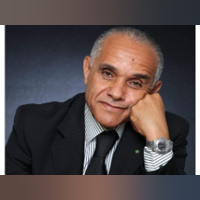
Directeur Technique et du Développement de la Confédération Africaine d'Athlétisme. Passionné du Maroc, passionné d'Afrique. Concerné par ce qui se passe, formulant mon point de vue quand j'en ai un. Humaniste, j'essaye de l'être, humain je veux l'être. Mon histoire est intimement liée à l'athlétisme marocain et mondial. J'ai eu le privilège de participer à la gloire de mon pays .


8000

33.0

THE ENCHIRIDION - I 3430

There are things which are within our power, and there are things which are beyond our power. Within our power are opinion, aim, desire, aversion, and, in one word, whatever affairs are our own. Beyond our power are body, property, reputation, office, and, in one word, whatever are not properly our own affairs. Now the things within our power are by nature free, unrestricted, unhindered; but those beyond our power are weak, dependent, restricted, alien. Remember, then, that if you attribute freedom to things by nature dependent and take what belongs to others for your own, you will be hindered, you will lament, you will be disturbed, you will find fault both with gods and men. But if you take for your own only that which is your own and view what belongs to others just as it really is, then no one will ever compel you, no one will restrict you; you will find fault with no one, you will accuse no one, you will do nothing against your will; no one will hurt you, you will not have an enemy, nor will you suffer any harm. Aiming, therefore, at such great things, remember that you must not allow yourself any inclination, however slight, toward the attainment of the others; but that you must entirely quit some of them, and for the present postpone the rest. But if you would have these, and possess power and wealth likewise, you may miss the latter in seeking the former; and you will certainly fail of that by which alone happiness and freedom are procured. Seek at once, therefore, to be able to say to every unpleasing semblance, “You are but a semblance and by no means the real thing.” And then examine it by those rules which you have; and first and chiefly by this: whether it concerns the things which are within our own power or those which are not; and if it concerns anything beyond our power, be prepared to say that it is nothing to you.

THE ADVENTURES OF TOM SAWYER - PREFACE 3584

Most of the adventures recorded in this book really occurred; one or two were experiences of my own, the rest those of boys who were schoolmates of mine. Huck Finn is drawn from life; Tom Sawyer also, but not from an individual—he is a combination of the characteristics of three boys whom I knew, and therefore belongs to the composite order of architecture. The odd superstitions touched upon were all prevalent among children and slaves in the West at the period of this story—that is to say, thirty or forty years ago. Although my book is intended mainly for the entertainment of boys and girls, I hope it will not be shunned by men and women on that account, for part of my plan has been to try to pleasantly remind adults of what they once were themselves, and of how they felt and thought and talked, and what queer enterprises they sometimes engaged in. THE AUTHOR. HARTFORD, 1876.

THE MEDITATIONS - Book I.[1/3] 3698

1. I learned from my grandfather, Verus, to use good manners, and to put restraint on anger. 2. In the famous memory of my father I had a pattern of modesty and manliness. 3. Of my mother I learned to be pious and generous; to keep myself not only from evil deeds, but even from evil thoughts; and to live with a simplicity which is far from customary among the rich. 4. I owe it to my great-grandfather that I did not attend public lectures and discussions, but had good and able teachers at home; and I owe him also the knowledge that for things of this nature a man should count no expense too great. 5. My tutor taught me not to favour either green or blue at the chariot races, nor, in the contests of gladiators, to be a supporter either of light or heavy armed. He taught me also to endure labour; not to need many things; to serve myself without troubling others; not to intermeddle in the affairs of others, and not easily to listen to slanders against them. 6. Of Diognetus I had the lesson not to busy myself about vain things; not to credit the great professions of such as pretend to work wonders, or of sorcerers about their charms, and their expelling of Demons and the like; not to keep quails (for fighting or divination), nor to run after such things; to suffer freedom of speech in others, and to apply myself heartily to philosophy. Him also I must thank for my hearing first Bacchius, then Tandasis and Marcianus; that I wrote dialogues in my youth, and took a liking to the philosopher’s pallet and skins, and to the other things which, by the Grecian discipline, belong to that profession. 7. To Rusticus I owe my first apprehensions that my nature needed reform and cure; and that I did not fall into the ambition of the common Sophists, either by composing speculative writings or by declaiming harangues of exhortation in public; further, that I never strove to be admired by ostentation of great patience in an ascetic life, or by display of activity and application; that I gave over the study of rhetoric, poetry, and the graces of language; and that I did not pace my house in my senatorial robes, or practise any similar affectation. I observed also the simplicity of style in his letters, particularly in that which he wrote to my mother from Sinuessa. I learned from him to be easily appeased, and to be readily reconciled with those who had displeased me or given cause of offence, so soon as they inclined to make their peace; to read with care; not to rest satisfied with a slight and superficial knowledge; nor quickly to assent to great talkers. I have him to thank that I met with the discourses of Epictetus, which he furnished me from his own library. 8. From Apollonius I learned true liberty, and tenacity of purpose; to regard nothing else, even in the smallest degree, but reason always; and always to remain unaltered in the agonies of pain, in the losses of children, or in long diseases. He afforded me a living example of how the same man can, upon occasion, be most yielding and most inflexible. He was patient in exposition; and, as might well be seen, esteemed his fine skill and ability in teaching others the principles of philosophy as the least of his endowments. It was from him that I learned how to receive from friends what are thought favours without seeming humbled by the giver or insensible to the gift. 9. Sextus was my pattern of a benign temper, and his family the model of a household governed by true paternal affection, and a steadfast purpose of living according to nature. Here I could learn to be grave without affectation, to observe sagaciously the several dispositions and inclinations of my friends, to tolerate the ignorant and those who follow current opinions without examination. His conversation showed how a man may accommodate himself to all men and to all companies; for though companionship with him was sweeter and more pleasing than any sort of flattery, yet he was at the same time highly respected and reverenced. No man was ever more happy than he in comprehending, finding out, and arranging in exact order the great maxims necessary for the conduct of life. His example taught me to suppress even the least appearance of anger or any other passion; but still, with all this perfect tranquillity, to possess the tenderest and most affectionate heart; to be apt to approve others yet without noise; to have much learning and little ostentation. 10. I learned from Alexander the Grammarian to avoid censuring others, to refrain from flouting them for a barbarism, solecism, or any false pronunciation. Rather was I dexterously to pronounce the words rightly in my answer, confining approval or objection to the matter itself, and avoiding discussion of the expression, or to use some other form of courteous suggestion. 11. Fronto made me sensible how much of envy, deceit and hypocrisy surrounds princes; and that generally those whom we account nobly born have somehow less natural affection. 12. I learned from Alexander the Platonist not often nor without great necessity to say, or write to any man in a letter, that I am not at leisure; nor thus, under pretext of urgent affairs, to make a practice of excusing myself from the duties which, according to our various ties, we owe to those with whom we live. 13. Of Catulus I learned not to condemn any friend’s expostulation even though it were unjust, but to try to recall him to his former disposition; to stint no praise in speaking of my masters, as is recounted of Domitius and Athenodorus; and to love my children with true affection. 14. Of Severus, my brother, I learned to love my kinsmen, to love truth, to love justice. Through him I came to know Thrasea, Helvidius, Cato, Dion, and Brutus. He gave me my first conception of a Commonwealth founded upon equitable laws and administered with equality of right; and of a Monarchy whose chief concern is the freedom of its subjects. Of him I learned likewise a constant and harmonious devotion to Philosophy; to be ready to do good, to be generous with all my heart. He taught me to be of good hope and trustful of the affection of my friends. I observed in him candour in declaring what he condemned in the conduct of others; and so frank and open was his behaviour, that his friends might easily see without the trouble of conjecture what he liked or disliked.