Think Forward.

Citoyens exigeants, citoyens oublieux : l’autre crise de notre société... 1072

Le citoyen face à lui-même : entre exigences et oublis Dans beaucoup de sociétés contemporaines et sans doute aucun dans la notre aussi, une étrange tendance se renforce : celle du citoyen qui exige tout de l’État, mais oublie de se demander ce qu’il lui donne en retour. Cette posture de dédouanement collectif, où les responsabilités se dissolvent dans la critique, nourrit une citoyenneté passive, souvent indignée mais rarement engagée. On reproche beaucoup de choses aux gouvernants en oubliant que c'est nous même qui avons voté pour eux et que ne pas voter est en fait un vote pour les majorités qui se forgent. Quand quelque chose ne va pas: chômage, insécurité, éducation, santé, la première réaction est souvent d’accuser l’État. On réclame davantage de prestations, plus de justice, plus de transparence. C’est légitime. Mais dans cette revendication, il est rare que chacun s’interroge sur son propre rôle : payons-nous nos impôts correctement ? Respectons-nous les lois ? Participons-nous réellement à la vie civique ou préférons-nous laisser les « autres » faire ? Un pays ne se construit pas seulement par les décisions de ceux qui gouvernent, mais par la participation consciente de ses citoyens. Le discours public met souvent l’accent sur les droits : droit à la santé, à l’éducation, au travail, à la liberté d’expression. Mais les devoirs: civils, moraux et économiques sont fréquemment oubliés. Or, revendiquer un droit sans remplir un devoir, c’est fragiliser le contrat social. L’incivisme du quotidien par exemple jeter ses déchets n’importe où, tricher sur ses impôts, contourner les règles, mine autant une société que les grandes défaillances politiques qu’on dénonce. Les droits ne se gagnent pas sans accomplissement des devoirs. Beaucoup dénoncent la corruption comme si elle venait d’en haut, comme une pluie sale tombée sur des citoyens innocents. Mais la vérité est plus dérangeante : le corrupteur et le corrompu se confondent souvent dans la même personne. Le commerçant qui fraude, l’automobiliste qui glisse un billet pour éviter une amende, le parent qui cherche un passe-droit pour son enfant: tous participent à ce même mal. Accuser le « système » sans se reconnaître comme maillon de ce système, c’est refuser de grandir. La corruption est intériorisée et ne dérange que quand on en est la victime ou quand il faut manifester se délectant du goût du populisme et du nihilisme . On se laisse paisiblement, passivement séduire par les discours simplistes des populistes. Ces derniers jouent sur la colère, la frustration et la peur. Ils fournissent des coupables tout faits : les élites, les étrangers, les institutions. Mais très peu d’auditeurs prennent le temps d’analyser, de vérifier, de raisonner. Le populisme plaît parce qu’il soulage : il transforme la réflexion en émotion. Le nihilisme, quant à lui, propose un plaisir encore plus dangereux : celui de la désespérance. Croire que tout est perdu, que tout est mensonge, que rien n’a de sens, c’est refuser l’effort de penser le réel et de participer au changement. Beaucoup ont la mémoire courte et ne voient pas les progrès réalisés, souvent parce qu’ils ne prennent pas la peine de comparer. Les générations précédentes ont connu la misère, l’absence d’école, les soins rudimentaires, la précarité permanente. Aujourd’hui, malgré les difficultés, le confort matériel, les infrastructures et les libertés sont sans commune mesure. Regarder en arrière n’est pas de la complaisance : c’est un devoir de lucidité pour mesurer le chemin parcouru. L’ère est à la contestation sans information. Notre époque est marquée par une hyper-réactivité. On conteste avant de comprendre, on commente avant de savoir. Les réseaux sociaux amplifient cette impulsion : on s’indigne plus vite qu’on ne s’informe. Mais une opinion qui ne se fonde pas sur la connaissance devient un bruit, Une nuisance et non une contribution. La critique, pour être légitime, doit être éclairée, étayée, vérifiée. Un citoyen responsable ne se contente pas de réclamer. Il agit, s’informe, s’engage et reconnaît les progrès comme les erreurs. C’est seulement à cette condition qu’une nation peut évoluer sans sombrer dans la plainte stérile. John F. Kennedy n'avait il pas dit dans son discours d'investiture le 20 janvier 1961 sa phrase célèbre, devenue une signature autant personnelles que politique: « Ne demandez pas ce que votre pays peut faire pour vous, demandez ce que vous pouvez faire pour votre pays. » Cette citation avait pour but d'inciter l'Américain à se demander avant tout ce qu'il peut apporter à son pays, et non l'inverse. La phrase souligne le devoir civique et la responsabilité personnelle dans le cadre de la nation et est parfaitement transposable chez nous par les temps qui courent. Il parait que John Kennedy c'était en fait inspiré d'une phrase plus ancienne exprimée par un principal d'école, dans son enfance, et qui aurait dit à propos d'une école qui s'appelait alma mater: « The youth who loves his alma mater will always ask not 'What can she do for me?' but 'What can I do for her?' » Kennedy aurait remplacé « alma mater » par « pays » pour en faire cette maxime patriotique. A ce demander combien de directeur d'école sont capables d'un tel niveau de réflexion et d'engagement pour inspirer notre jeunesse et lui faire prendre conscience de ses devoirs avant de leur parler de leur droits. Aujourd'hui si le besoin est de formuler un pacte social nouveau pour nous retrouver tous autour du même objectif d'aller de l'avant et de rendre encore plus fort notre pays, il convient aussi de nous atteler à reformuler un pacte patriotique comme cela avait été le cas à notre indépendance ou après la glorieuse marche verte, en nous remémorant à chaque instant, à chacun de souffles, notre devise Dieu, la Patrie, Le Roi. C'est ainsi que toutes nos revendications seront entendues, que nos droits vont se réaliser, que le corruption va disparaitre et que la paix sociale sera à jamais installée.

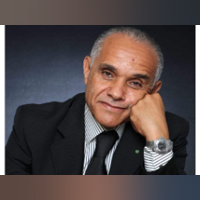
Aziz Daouda Aziz Daouda

Aziz Daouda

Directeur Technique et du Développement de la Confédération Africaine d'Athlétisme. Passionné du Maroc, passionné d'Afrique. Concerné par ce qui se passe, formulant mon point de vue quand j'en ai un. Humaniste, j'essaye de l'être, humain je veux l'être. Mon histoire est intimement liée à l'athlétisme marocain et mondial. J'ai eu le privilège de participer à la gloire de mon pays .


8100

33.0

THE ADVENTURES OF TOM SAWYER - PREFACE 3820

Most of the adventures recorded in this book really occurred; one or two were experiences of my own, the rest those of boys who were schoolmates of mine. Huck Finn is drawn from life; Tom Sawyer also, but not from an individual—he is a combination of the characteristics of three boys whom I knew, and therefore belongs to the composite order of architecture. The odd superstitions touched upon were all prevalent among children and slaves in the West at the period of this story—that is to say, thirty or forty years ago. Although my book is intended mainly for the entertainment of boys and girls, I hope it will not be shunned by men and women on that account, for part of my plan has been to try to pleasantly remind adults of what they once were themselves, and of how they felt and thought and talked, and what queer enterprises they sometimes engaged in. THE AUTHOR. HARTFORD, 1876.

THE MEDITATIONS - Book I.[1/3] 3933

1. I learned from my grandfather, Verus, to use good manners, and to put restraint on anger. 2. In the famous memory of my father I had a pattern of modesty and manliness. 3. Of my mother I learned to be pious and generous; to keep myself not only from evil deeds, but even from evil thoughts; and to live with a simplicity which is far from customary among the rich. 4. I owe it to my great-grandfather that I did not attend public lectures and discussions, but had good and able teachers at home; and I owe him also the knowledge that for things of this nature a man should count no expense too great. 5. My tutor taught me not to favour either green or blue at the chariot races, nor, in the contests of gladiators, to be a supporter either of light or heavy armed. He taught me also to endure labour; not to need many things; to serve myself without troubling others; not to intermeddle in the affairs of others, and not easily to listen to slanders against them. 6. Of Diognetus I had the lesson not to busy myself about vain things; not to credit the great professions of such as pretend to work wonders, or of sorcerers about their charms, and their expelling of Demons and the like; not to keep quails (for fighting or divination), nor to run after such things; to suffer freedom of speech in others, and to apply myself heartily to philosophy. Him also I must thank for my hearing first Bacchius, then Tandasis and Marcianus; that I wrote dialogues in my youth, and took a liking to the philosopher’s pallet and skins, and to the other things which, by the Grecian discipline, belong to that profession. 7. To Rusticus I owe my first apprehensions that my nature needed reform and cure; and that I did not fall into the ambition of the common Sophists, either by composing speculative writings or by declaiming harangues of exhortation in public; further, that I never strove to be admired by ostentation of great patience in an ascetic life, or by display of activity and application; that I gave over the study of rhetoric, poetry, and the graces of language; and that I did not pace my house in my senatorial robes, or practise any similar affectation. I observed also the simplicity of style in his letters, particularly in that which he wrote to my mother from Sinuessa. I learned from him to be easily appeased, and to be readily reconciled with those who had displeased me or given cause of offence, so soon as they inclined to make their peace; to read with care; not to rest satisfied with a slight and superficial knowledge; nor quickly to assent to great talkers. I have him to thank that I met with the discourses of Epictetus, which he furnished me from his own library. 8. From Apollonius I learned true liberty, and tenacity of purpose; to regard nothing else, even in the smallest degree, but reason always; and always to remain unaltered in the agonies of pain, in the losses of children, or in long diseases. He afforded me a living example of how the same man can, upon occasion, be most yielding and most inflexible. He was patient in exposition; and, as might well be seen, esteemed his fine skill and ability in teaching others the principles of philosophy as the least of his endowments. It was from him that I learned how to receive from friends what are thought favours without seeming humbled by the giver or insensible to the gift. 9. Sextus was my pattern of a benign temper, and his family the model of a household governed by true paternal affection, and a steadfast purpose of living according to nature. Here I could learn to be grave without affectation, to observe sagaciously the several dispositions and inclinations of my friends, to tolerate the ignorant and those who follow current opinions without examination. His conversation showed how a man may accommodate himself to all men and to all companies; for though companionship with him was sweeter and more pleasing than any sort of flattery, yet he was at the same time highly respected and reverenced. No man was ever more happy than he in comprehending, finding out, and arranging in exact order the great maxims necessary for the conduct of life. His example taught me to suppress even the least appearance of anger or any other passion; but still, with all this perfect tranquillity, to possess the tenderest and most affectionate heart; to be apt to approve others yet without noise; to have much learning and little ostentation. 10. I learned from Alexander the Grammarian to avoid censuring others, to refrain from flouting them for a barbarism, solecism, or any false pronunciation. Rather was I dexterously to pronounce the words rightly in my answer, confining approval or objection to the matter itself, and avoiding discussion of the expression, or to use some other form of courteous suggestion. 11. Fronto made me sensible how much of envy, deceit and hypocrisy surrounds princes; and that generally those whom we account nobly born have somehow less natural affection. 12. I learned from Alexander the Platonist not often nor without great necessity to say, or write to any man in a letter, that I am not at leisure; nor thus, under pretext of urgent affairs, to make a practice of excusing myself from the duties which, according to our various ties, we owe to those with whom we live. 13. Of Catulus I learned not to condemn any friend’s expostulation even though it were unjust, but to try to recall him to his former disposition; to stint no praise in speaking of my masters, as is recounted of Domitius and Athenodorus; and to love my children with true affection. 14. Of Severus, my brother, I learned to love my kinsmen, to love truth, to love justice. Through him I came to know Thrasea, Helvidius, Cato, Dion, and Brutus. He gave me my first conception of a Commonwealth founded upon equitable laws and administered with equality of right; and of a Monarchy whose chief concern is the freedom of its subjects. Of him I learned likewise a constant and harmonious devotion to Philosophy; to be ready to do good, to be generous with all my heart. He taught me to be of good hope and trustful of the affection of my friends. I observed in him candour in declaring what he condemned in the conduct of others; and so frank and open was his behaviour, that his friends might easily see without the trouble of conjecture what he liked or disliked.