Think Forward.

Le Maroc triomphe à l’ONU mais reste humble et ouvert... l’Algérie répond par le déni... 791

Le vote du Conseil de Sécurité des Nations Unies, faut-il encore le rappeler, a marqué un tournant décisif pour la diplomatie marocaine et pour l'avenir de la région. « Il y a un avant et un après 31 octobre » a dit Sa Majesté le Roi. Par un soutien large et sans ambiguïté à la position du Royaume, la communauté internationale confirme, une fois de plus, la crédibilité de la démarche marocaine à travers le plan d’autonomie proposé depuis 2007 déjà. En fait, la communauté internationale salue ainsi la stabilité du Maroc en tant qu’acteur régional crédible et met en avant ses efforts incommensurables de mise en valeur des territoires du sud et leur développement spectaculaire au profit de ses citoyens et des populations de la région. Ce succès ne doit rien au hasard: il résulte d’une vision royale pertinente, constante, patiente, ferme et humble, privilégiant le dialogue et la coopération plutôt que la surenchère et la provocation. **Sa Majesté le Roi Mohammed VI n’a jamais cessé ses appels à la raison et à la coopération et ce depuis 26 ans.** Immédiatement après l’annonce des résultats du vote, Sa Majesté a appelé encore une fois au dialogue direct et sincère avec l’Algérie, s’adressant expressément au président Teboune. Le message s’inscrit dans une logique de paix et de responsabilité historique. Le souverain, loin d’être triomphaliste, tend une nouvelle fois la main à un voisin qui persiste à se dérober derrière des slogans dépassés et des postures archaïques. Cette main tendue contraste cruellement avec le discours de rejet, voire de haine, qui domine de l’autre côté de la frontière. Tandis que Rabat multiplie les gestes d’ouverture, Alger reste obstinément fermée à tout dialogue, préférant une posture hautaine, la confrontation stérile et contreproductive à la raison. **Un dépit chronique qui étonnement devient doctrine.** La réaction des médias algériens après le vote du Conseil de Sécurité témoigne d’un état d’esprit marqué par l'infox, la propagande, l’exécration et une animosité méchante et agressive. Certains propos tenus dans une télévision d’État ont même été jusqu’à douter de l’intégrité des États membres ayant soutenu la position du Maroc; d’autres ont évoqué, à peine quelques heures après le scrutin, la possibilité d’un *retour aux armes*, comme si la guerre pouvait pallier un échec diplomatique cuisant. Plus inquiétant encore, des insultes à l'encontre du Maroc, notamment le qualificatif de pays «à la botte des sionistes», révèlent un niveau de nervosité extrême, frisant la perte de contrôle. Le mot «makhzen», sciemment galvaudé, est jeté en pâture entre des débatteurs rivalisant dans le burlesque et la surenchère comique. Se rendent-ils compte que ce langage haineux ne fait que renforcer l’isolement d’Alger? En accusant le monde entier de complotisme, les militaires d'Alger ne savent peut être pas que la diplomatie doit être un espace de crédibilité et de confiance, et non de rancune aveugle. En même temps, le monde observe, et comprend enfin. L’Algérie ne cherche ni ne veut être un partenaire de paix et de construction. Aujourd’hui, la communauté internationale est témoin: le Maroc propose, l’Algérie bloque. Le Maroc construit, l’Algérie détruit. Le Maroc prône la coopération, l’Algérie la confrontation. De Washington à Paris, de Madrid à Dakar, de Séoul à Brasilia, De Riad à Freetown, les capitales ont saisit la différence entre une politique tournée vers l’avenir et une posture figée dans une nostalgie idéologique dépassée, risible. Le Sahara n’est plus une question de propagande régionale, mais un enjeu de stabilité globale: il touche à la sécurité du Sahel, à la lutte contre le terrorisme, et à l’équilibre de tout l’espace nord-africain. **L’obstination de l’Algérie est coûteuse**, et le monde en est lassée. En s’accrochant à un dossier dont elle se dit pourtant «non concernée», l’Algérie s’enferme dans une contradiction insoutenable, dans une attitude accablante. Jusqu’à quand cette situation insoutenable pourra-t-elle perdurer sans que la communauté internationale n'intervienne pour mettre fin à ce soutien évident à un groupe aux activités troubles? Le jour où la lassitude gagnerait un cran de plus, notamment aux États-Unis, ce qui pourrait venir rapidement, alors la tentation de qualifier le Polisario en organisation terroriste deviendrait possible et crédible. C'est tout à fait plausible compte tenu des activités militaires des séparatistes, de leurs liens régionaux avec des groupes reconnus terroriste et de leur implantation dans une zone traversée par tous les trafics aux quels ils participent copieusement. Rien ne l’empêcherait puisque déjà dans le pipe aux Congrès Américain, introduit par Joe Wilson qui cristallise énormément de soutiens. Alger se retrouverait alors dans une posture intenable, responsable d’héberger, financer et armer un groupe terroriste. Une telle dérive exposerait le régime algérien à ses propres contradictions et risques. Les insultes algériennes, responsables et presse confondus, des fois directs, des fois à peine voilées de la France, de l'Espagne, même des USA et maintenant du Conseil de Sécurité aussi et de tous ceux qui soutiennent le Royaume vont finir par faire leur effet. Pousser le Polisario à déclarer ne pas participer aux négociations est juste suicidaire pour Alger. Il ne faut jamais oublier que l’avenir appartient à ceux qui construisent, et celui qui construit, c’est le Maroc, qui a choisi la voie de l’édification d’un avenir meilleur pour lui et pour la région. Le Royaume a opté pour le partenariat et la paix. Il consolide son leadership africain, renforce ses alliances et modernise ses institutions en interne. Sa diplomatie repose sur la confiance, la cohérence et le respect mutuel, des valeurs qui, de plus en plus, distinguent Rabat sur la scène internationale. Pendant que les gouvernants algériens ressassent leurs rancunes, le Royaume trace sa route, fort de ses succès, fidèle à ses principes, ouvert au dialogue mais ferme dans la défense de ses intérêts vitaux. Le message royal est clair. le Maroc ne craint ni la confrontation, ni la désinformation, ni l'infox et préférera toujours la paix fondée sur la responsabilité plutôt que le tumulte de l’orgueil mal placé. Les manifestations joyeuses et hautement significatives des citoyens marocains, immédiatement après l’allocution royale, ont montré au monde que l’affaire du Sahara, pour les Marocains, n’est pas qu’une posture ou un jeu de puissance. Conscients de l’enjeu mondial de l’affaire, les manifestants notamment à Laayoune, Boujdour ou Dakhla comme à Tanger ou Agadir, n’ont pas omis de saluer les puissances qui ont favorisé le vote de la résolution 27-97, ce 31 octobre 2025. Loin de moquer les algériens, ils ont fêté pour eux mêmes et pour le monde libre. Ici l'affaire n'est pas passionnelle mais génétique. L'Algérie et les algériens doivent l'intégrer et sont appelés à y réfléchir. Le vent a tourné pour de bon et à jamais, ce 31 octobre.

Aziz Daouda Aziz Daouda

Aziz Daouda

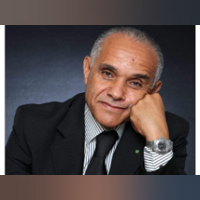
Directeur Technique et du Développement de la Confédération Africaine d'Athlétisme. Passionné du Maroc, passionné d'Afrique. Concerné par ce qui se passe, formulant mon point de vue quand j'en ai un. Humaniste, j'essaye de l'être, humain je veux l'être. Mon histoire est intimement liée à l'athlétisme marocain et mondial. J'ai eu le privilège de participer à la gloire de mon pays .


8100

33.0

THE ADVENTURES OF TOM SAWYER - PREFACE 3804

Most of the adventures recorded in this book really occurred; one or two were experiences of my own, the rest those of boys who were schoolmates of mine. Huck Finn is drawn from life; Tom Sawyer also, but not from an individual—he is a combination of the characteristics of three boys whom I knew, and therefore belongs to the composite order of architecture. The odd superstitions touched upon were all prevalent among children and slaves in the West at the period of this story—that is to say, thirty or forty years ago. Although my book is intended mainly for the entertainment of boys and girls, I hope it will not be shunned by men and women on that account, for part of my plan has been to try to pleasantly remind adults of what they once were themselves, and of how they felt and thought and talked, and what queer enterprises they sometimes engaged in. THE AUTHOR. HARTFORD, 1876.

THE MEDITATIONS - Book I.[1/3] 3918

1. I learned from my grandfather, Verus, to use good manners, and to put restraint on anger. 2. In the famous memory of my father I had a pattern of modesty and manliness. 3. Of my mother I learned to be pious and generous; to keep myself not only from evil deeds, but even from evil thoughts; and to live with a simplicity which is far from customary among the rich. 4. I owe it to my great-grandfather that I did not attend public lectures and discussions, but had good and able teachers at home; and I owe him also the knowledge that for things of this nature a man should count no expense too great. 5. My tutor taught me not to favour either green or blue at the chariot races, nor, in the contests of gladiators, to be a supporter either of light or heavy armed. He taught me also to endure labour; not to need many things; to serve myself without troubling others; not to intermeddle in the affairs of others, and not easily to listen to slanders against them. 6. Of Diognetus I had the lesson not to busy myself about vain things; not to credit the great professions of such as pretend to work wonders, or of sorcerers about their charms, and their expelling of Demons and the like; not to keep quails (for fighting or divination), nor to run after such things; to suffer freedom of speech in others, and to apply myself heartily to philosophy. Him also I must thank for my hearing first Bacchius, then Tandasis and Marcianus; that I wrote dialogues in my youth, and took a liking to the philosopher’s pallet and skins, and to the other things which, by the Grecian discipline, belong to that profession. 7. To Rusticus I owe my first apprehensions that my nature needed reform and cure; and that I did not fall into the ambition of the common Sophists, either by composing speculative writings or by declaiming harangues of exhortation in public; further, that I never strove to be admired by ostentation of great patience in an ascetic life, or by display of activity and application; that I gave over the study of rhetoric, poetry, and the graces of language; and that I did not pace my house in my senatorial robes, or practise any similar affectation. I observed also the simplicity of style in his letters, particularly in that which he wrote to my mother from Sinuessa. I learned from him to be easily appeased, and to be readily reconciled with those who had displeased me or given cause of offence, so soon as they inclined to make their peace; to read with care; not to rest satisfied with a slight and superficial knowledge; nor quickly to assent to great talkers. I have him to thank that I met with the discourses of Epictetus, which he furnished me from his own library. 8. From Apollonius I learned true liberty, and tenacity of purpose; to regard nothing else, even in the smallest degree, but reason always; and always to remain unaltered in the agonies of pain, in the losses of children, or in long diseases. He afforded me a living example of how the same man can, upon occasion, be most yielding and most inflexible. He was patient in exposition; and, as might well be seen, esteemed his fine skill and ability in teaching others the principles of philosophy as the least of his endowments. It was from him that I learned how to receive from friends what are thought favours without seeming humbled by the giver or insensible to the gift. 9. Sextus was my pattern of a benign temper, and his family the model of a household governed by true paternal affection, and a steadfast purpose of living according to nature. Here I could learn to be grave without affectation, to observe sagaciously the several dispositions and inclinations of my friends, to tolerate the ignorant and those who follow current opinions without examination. His conversation showed how a man may accommodate himself to all men and to all companies; for though companionship with him was sweeter and more pleasing than any sort of flattery, yet he was at the same time highly respected and reverenced. No man was ever more happy than he in comprehending, finding out, and arranging in exact order the great maxims necessary for the conduct of life. His example taught me to suppress even the least appearance of anger or any other passion; but still, with all this perfect tranquillity, to possess the tenderest and most affectionate heart; to be apt to approve others yet without noise; to have much learning and little ostentation. 10. I learned from Alexander the Grammarian to avoid censuring others, to refrain from flouting them for a barbarism, solecism, or any false pronunciation. Rather was I dexterously to pronounce the words rightly in my answer, confining approval or objection to the matter itself, and avoiding discussion of the expression, or to use some other form of courteous suggestion. 11. Fronto made me sensible how much of envy, deceit and hypocrisy surrounds princes; and that generally those whom we account nobly born have somehow less natural affection. 12. I learned from Alexander the Platonist not often nor without great necessity to say, or write to any man in a letter, that I am not at leisure; nor thus, under pretext of urgent affairs, to make a practice of excusing myself from the duties which, according to our various ties, we owe to those with whom we live. 13. Of Catulus I learned not to condemn any friend’s expostulation even though it were unjust, but to try to recall him to his former disposition; to stint no praise in speaking of my masters, as is recounted of Domitius and Athenodorus; and to love my children with true affection. 14. Of Severus, my brother, I learned to love my kinsmen, to love truth, to love justice. Through him I came to know Thrasea, Helvidius, Cato, Dion, and Brutus. He gave me my first conception of a Commonwealth founded upon equitable laws and administered with equality of right; and of a Monarchy whose chief concern is the freedom of its subjects. Of him I learned likewise a constant and harmonious devotion to Philosophy; to be ready to do good, to be generous with all my heart. He taught me to be of good hope and trustful of the affection of my friends. I observed in him candour in declaring what he condemned in the conduct of others; and so frank and open was his behaviour, that his friends might easily see without the trouble of conjecture what he liked or disliked.