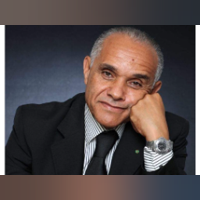
Si Ahmed Attaf et la valse à mille temps... 538
La dernière sortie du vaillant Ahmed Attaf est étonnamment différente de celles à quoi il nous avait habituée. Toujours derrière son flegme machinal, cette fois-ci il laisse néanmoins transpirer un certain désarroi. L'homme est embarrassé. Il est à la fois jongleur, équilibriste, acrobate, valseur et pompier de service. Il cherche ses mots, et ses phrases lui coupent la respiration. Il étouffe des fois. Ses propos sont bourrés de contradictions et truffés de contorsions difficiles; l'archétype du diplomate à bout de souffle mais habile tout de même.
Dans sa quête de soldat du feu, il cherche à rassurer en interne, voire à crier timidement, mais à crier tout de même, à la grande victoire. L'Algérie aurait fait plier le monde entier, USA en tête. En jongleur, il a avec une modestie trompeuse, voulu rassurer les grandes puissances que son pays ne leur en voulait pas, évitant ainsi de heurter leur sensibilité. Un exercice ô combien périlleux, puisque bientôt il sera convoqué à la table des négociations en tant que partie prenante. Là, il devra faire preuve de beaucoup d'ingéniosité pour échapper au diktat de la paix voulu par la communauté internationale et qu'il devra construire avec le Maroc. L'homme a parfaitement bien compris qu'aujourd'hui il ne peut plus naviguer qu'à visage découvert. Son pays est bien l’autre partie directement concernée.
Derrière son ton mesuré et son vocabulaire feutré, sa sortie médiatique répond à une logique précise, articulée autour de trois objectifs : apaiser le front intérieur, préparer l’opinion à un retour aux négociations sur le Sahara, et préserver la ligne rouge d’Alger: pas de normalisation avec Rabat. Tel un équilibriste, il fanfaronne subtilement que la divergence avec Washington et Bruxelles est maîtrisée.
Effectivement, les USA peuvent très bien comprendre la logique des deux premiers volets : apaisement interne et préparation des négociations, mais ils divergent fondamentalement d’Alger sur la question du rapprochement avec le Maroc. Pour Washington, cette normalisation est une pièce maîtresse de sa stratégie atlantique-africaine autour des métaux critiques, un enjeu clé face à la Chine.
L’Union européenne partage cette vision: elle voit dans la réconciliation maroco-algérienne un préalable au redémarrage du projet euro-méditerranéen, paralysé depuis des années par la rivalité entre les deux voisins.
Bruxelles comme Washington peuvent bien penser que ce désaccord stratégique reste gérable à court terme, car l’urgence commune demeure la relance des négociations sur le Sahara, perçue comme une priorité stabilisatrice pour la région. Mais tout le monde comprend que le régime militaire algérien a dépêché Attaf pour absorber le choc du *séisme de New York*.
Sa première mission consistait donc à calmer les esprits après le coup dur infligé par la dernière résolution du Conseil de sécurité, qui réaffirme le plan d’autonomie marocain comme base sérieuse et crédible, et qui en fait l'aboutissement des négociations.
Le succès diplomatique de Rabat a provoqué un véritable électrochoc à Alger, où le pouvoir redouterait que la défaite diplomatique ne se transforme en crise interne entre les différents cercles du régime, en particulier entre la hiérarchie militaire et la façade politique.
Pour éviter une telle implosion, Attaf a tenté de réécrire la narration officielle: la résolution, a-t-il affirmé, ne serait pas un triomphe marocain mais une victoire algérienne, Alger aurait «empêché l’imposition de l’agenda marocain».
Une interprétation en totale contradiction avec les déclarations du représentant algérien à l’ONU, qui avait justifié le non vote de son pays par la place centrale accordée au plan d’autonomie.
Mais sur le plan médiatique, la manœuvre a porté ses fruits. Le discours d’Attaf a trouvé un écho favorable jusque dans certains cercles critiques du pouvoir.
En réalité, cette opération d’apaisement arrange aussi Washington et Rabat: elle garantit la stabilité du régime algérien et maintient le calme intérieur, conditions nécessaires pour ouvrir la voie à de futures discussions sans interférences internes. Tous sont attelés à préparer le terrain des négociations.
Le deuxième objectif d’Attaf était de préparer l’opinion publique, nationale et internationale, à l’idée d’un retour à la table des négociations, conformément à la pression exercée par les USA pour relancer un processus politique concret.
Le ministre s’est ainsi efforcé de présenter la résolution onusienne sous un jour positif, allant jusqu’à la qualifier de «victoire pour les principes de la cause sahraouie», tout en expliquant que l’Algérie aurait voté pour, si une phrase n’avait pas mentionné «la souveraineté marocaine».
Un jeu d’équilibriste ingénieux, destiné à réduire l’écart entre le discours officiel et la réalité diplomatique, et à justifier une éventuelle participation d’Alger à de nouveaux pourparlers sans apparaître en position de faiblesse.
Ce repositionnement tactique reste fragile. Si la pression américaine venait à diminuer, Alger pourrait de nouveau recourir à des manœuvres dilatoires pour ralentir ou vider le processus de son contenu. Mais les américains ne sont pas dupes et ils sont pressés.
Du point de vue marocain, cette évolution est loin d’être défavorable: Rabat privilégie un règlement négocié, sans vainqueur ni vaincu, tant que le principe de l’autonomie reste la finalité des discussions. Alger elle, cherche à préserver sa ligne rouge: pas de normalisation avec Rabat.
Le troisième axe de la communication est qu'Attaf a cherché à éviter un danger existentiel pour le régime en place: être perçu comme cédant à une normalisation avec Rabat sous la pression de Washington. Dans un scénario de contrainte accrue, l’Algérie pourrait accepter une solution politique sur le dossier du Sahara, mais sans franchir le pas d’un rapprochement diplomatique.
Pour consolider cette position, Attaf a volontairement réécrit le lexique du texte onusien. Là où la résolution parle de *parties*, de *règlement politique* et *d’autonomie*, il a préféré employer les termes de *décolonisation*, de *référendum* et de *peuple sahraoui*. Ce glissement sémantique délibéré vise à entretenir l’idée que l’Algérie reste fidèle à la logique doctrinaire, alors même que le scénario du référendum a été abandonné par les Nations unies depuis près de deux décennies.
La sortie médiatique n’était donc pas une simple réaction diplomatique à une résolution onusienne, mais une opération de communication orchestrée avec soin.
Elle poursuivait trois objectifs : apaiser le front intérieur, préparer l’opinion à de futures discussions et réaffirmer le refus de toute normalisation avec Rabat.
Ironie du sort, ces trois axes, en cherchant à défendre la position algérienne, finissent par consolider le cadre onusien du règlement, celui-là même qui consacre le plan d’autonomie marocain comme référence principale et redessine les équilibres régionaux au bénéfice du Maroc et de ses alliés occidentaux.