Think Forward.

Les régimes militaires : promesses révolutionnaires, désillusions nationales certaines... 1341

Depuis les indépendances du milieu du XXᵉ siècle, une large partie du monde en développement a été traversée par la tentation militaire. En Afrique, en Amérique latine ou en Asie, les armées, souvent les seules institutions *organisées, hiérarchisées et disciplinées*, à la suite du départ des colonisateurs, ont pris le pouvoir au nom de la stabilité, de la justice sociale ou de la révolution. Pourtant, l’histoire révèle que, derrière les slogans pompeux de « démocratique », «populaire » ou « révolutionnaire », ces régimes ont rarement laissé place à autre chose que la répression, la corruption, la stagnation et bien plus encore. Les lendemains d’indépendance ont vu certaines armées se positionner en sauveuses autoproclamées. Toutes n'ont laissé derrière elles que le KO, le sous-développement et la misère. Dans les années 1960 et 1970, l’Afrique nouvellement indépendante connaît une flambée de coups d’État militaires. Entre 1958 et 1980, plus de 60 putschs militaires sont recensés sur le continent. Certains leaders charismatiques des indépendances se sont vus dépossédés du pouvoir de la pire des façons. Au Ghana, Kwame Nkrumah, pionnier du panafricanisme, est renversé en 1966 par un coup d’État militaire. En 1968, Moussa Traoré dépose Modibo Keïta au Mali, mettant fin à un projet socialiste naissant. Ould Dadda de Mauritanie ne connaitra pas un meilleur sort. Plus tôt, c'était Patrice Lumumba qui subissait les pires atrocités. Le roi Farouk est poussé à la porte de l'Égypte. Kaddafi dépose le vieux Senoussi. Benbella subissait le dictat de Boumedienne. En Amérique latine, la même mécanique se répète : l’armée prétend « sauver la nation » du chaos. Au Brésil, le coup d’État de 1964 installe une dictature pour 21 ans sous le prétexte de combattre le communisme. Au Chili, le général Augusto Pinochet renverse en 1973 le président démocratiquement élu Salvador Allende, inaugurant un régime de terreur responsable de plusieurs milliers de morts et disparus. En Asie, la Birmanie illustre une domination militaire persistante. Depuis le coup d’État de 1962 du général Ne Win jusqu’à la junte née du putsch de février 2021, l’armée contrôle le pays, étouffant toute opposition et maintenant une pauvreté structurelle. Nombre de ces régimes militaires se sont enveloppés dans un vernis idéologique. Ils se sont dits « révolutionnaires », comme le régime de Thomas Sankara au Burkina Faso (1983-1987), ou « démocratiques et populaires », à l’image des régimes du Congo-Brazzaville ou de l’Éthiopie de Mengistu Haile Mariam (1974-1991). Mais cette promesse de transformation sociale a presque toujours débouché sur la confiscation du pouvoir. Les libertés civiles furent suspendues, les opposants emprisonnés ou éliminés, tandis que les économies nationales sombrèrent dans la gabegie et la prédation. La rhétorique des régimes « populaires, démocratiques et révolutionnaires » s'avère tout aussi mensongère qu'improductive, pour ne pas dire plus. Le Nigeria, avec ses six coups d’État entre 1966 et 1999, est emblématique de cette spirale. Les régimes successifs de Yakubu Gowon, Murtala Mohammed et Sani Abacha ont dilapidé les revenus pétroliers d’un des pays les plus riches d’Afrique. À la mort d’Abacha en 1998, le pays était exsangue : corruption généralisée, dette abyssale, répression politique. Malgré l'évidence, certains pays continuent à endurer ce genre de régime, avec une recrudescence ces derniers temps en Afrique occidentale et au Sahel. Il est difficile de porter un jugement sur ces régimes naissants. Attendons. Le temps nous dira. Ils promettent tous de remettre le pouvoir aux civiles après une période de transition. Souvent ils y gouttent au plaisir de la vie et s'y plaisent... Aujourd’hui, les États encore dominés par une junte militaire sont moins nombreux qu'avant en Afrique. L’Algérie demeure tout de même un exemple notable, vestige des régimes installés dans les années soixante. L’armée reste ici le véritable centre de pouvoir depuis l’indépendance en 1962. Officiellement dirigée par des civils, la réalité est différente, notamment depuis le coup de force de janvier 1992, qui interrompit un processus électoral et plongea le pays dans une guerre civile meurtrière. Près de 200 000 personnes y perdirent la vie, selon Amnesty International. Trente ans plus tard, malgré les apparences institutionnelles, la présidence d’Abdelmadjid Tebboune (depuis 2019) reste sous étroite influence militaire. Il est toujours flanqué du général chef des armées. Le mouvement du Hirak, né en 2019, avait dénoncé ce système opaque décrit comme un « pouvoir militaire sans uniforme ». Aujourd'hui, la situation ayant conduit au Hirak ne s'est pas améliorée : l’économie, dépendante du pétrole, s’enlise, tandis que la jeunesse s'exile massivement. Les illusions sont encore une fois perdues. Le dinar dégringole alors que le pays dépend de l'importation pour ses besoins primaires. Les régimes se prétendant « du peuple » ont souvent retourné leurs armes contre ce même peuple. Des pays riches en ressources comme le Nigeria, le Congo, le Soudan, la Libye, l'Algérie ou la Birmanie, pour ne citer que quelques exemples, sont devenus des laboratoires de la désillusion. Les massacres, abus et dilapidation des richesses laissent toujours des cicatrices profondes. La tendance mondiale, marquée par la disparition des régimes militaires, n'est pas pour plaire à tout le monde, notamment aux armées dans certaines régions, quitte à plonger le pays dans le KO. Le cas du Soudan donne des signaux très alarmants. C'est alors qu'une leçon s’impose : aucune dictature en uniforme n’a réussi à bâtir durablement la prospérité ou la paix, nul part. L’histoire des régimes militaires est celle d’une promesse trahie. Derrière le discours du redressement national, de la défense des intérêts du pays, ces pouvoirs ont produit la peur, l’appauvrissement et le désenchantement. L’armée, censée protéger la nation, l’a souvent tenue en otage. Là où elle persiste encore à s'accaparer le pouvoir, elle incarne surtout les dernières résistances d’un modèle condamné par l’histoire. À bon entendeur, salut !

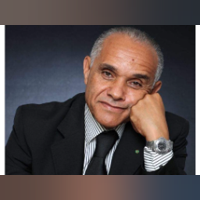
Aziz Daouda Aziz Daouda

Aziz Daouda

Directeur Technique et du Développement de la Confédération Africaine d'Athlétisme. Passionné du Maroc, passionné d'Afrique. Concerné par ce qui se passe, formulant mon point de vue quand j'en ai un. Humaniste, j'essaye de l'être, humain je veux l'être. Mon histoire est intimement liée à l'athlétisme marocain et mondial. J'ai eu le privilège de participer à la gloire de mon pays .


8100

33.0

THE ENCHIRIDION - I 4260

There are things which are within our power, and there are things which are beyond our power. Within our power are opinion, aim, desire, aversion, and, in one word, whatever affairs are our own. Beyond our power are body, property, reputation, office, and, in one word, whatever are not properly our own affairs. Now the things within our power are by nature free, unrestricted, unhindered; but those beyond our power are weak, dependent, restricted, alien. Remember, then, that if you attribute freedom to things by nature dependent and take what belongs to others for your own, you will be hindered, you will lament, you will be disturbed, you will find fault both with gods and men. But if you take for your own only that which is your own and view what belongs to others just as it really is, then no one will ever compel you, no one will restrict you; you will find fault with no one, you will accuse no one, you will do nothing against your will; no one will hurt you, you will not have an enemy, nor will you suffer any harm. Aiming, therefore, at such great things, remember that you must not allow yourself any inclination, however slight, toward the attainment of the others; but that you must entirely quit some of them, and for the present postpone the rest. But if you would have these, and possess power and wealth likewise, you may miss the latter in seeking the former; and you will certainly fail of that by which alone happiness and freedom are procured. Seek at once, therefore, to be able to say to every unpleasing semblance, “You are but a semblance and by no means the real thing.” And then examine it by those rules which you have; and first and chiefly by this: whether it concerns the things which are within our own power or those which are not; and if it concerns anything beyond our power, be prepared to say that it is nothing to you.

THE ADVENTURES OF TOM SAWYER - PREFACE 4443

Most of the adventures recorded in this book really occurred; one or two were experiences of my own, the rest those of boys who were schoolmates of mine. Huck Finn is drawn from life; Tom Sawyer also, but not from an individual—he is a combination of the characteristics of three boys whom I knew, and therefore belongs to the composite order of architecture. The odd superstitions touched upon were all prevalent among children and slaves in the West at the period of this story—that is to say, thirty or forty years ago. Although my book is intended mainly for the entertainment of boys and girls, I hope it will not be shunned by men and women on that account, for part of my plan has been to try to pleasantly remind adults of what they once were themselves, and of how they felt and thought and talked, and what queer enterprises they sometimes engaged in. THE AUTHOR. HARTFORD, 1876.

THE MEDITATIONS - Book I.[1/3] 4577

1. I learned from my grandfather, Verus, to use good manners, and to put restraint on anger. 2. In the famous memory of my father I had a pattern of modesty and manliness. 3. Of my mother I learned to be pious and generous; to keep myself not only from evil deeds, but even from evil thoughts; and to live with a simplicity which is far from customary among the rich. 4. I owe it to my great-grandfather that I did not attend public lectures and discussions, but had good and able teachers at home; and I owe him also the knowledge that for things of this nature a man should count no expense too great. 5. My tutor taught me not to favour either green or blue at the chariot races, nor, in the contests of gladiators, to be a supporter either of light or heavy armed. He taught me also to endure labour; not to need many things; to serve myself without troubling others; not to intermeddle in the affairs of others, and not easily to listen to slanders against them. 6. Of Diognetus I had the lesson not to busy myself about vain things; not to credit the great professions of such as pretend to work wonders, or of sorcerers about their charms, and their expelling of Demons and the like; not to keep quails (for fighting or divination), nor to run after such things; to suffer freedom of speech in others, and to apply myself heartily to philosophy. Him also I must thank for my hearing first Bacchius, then Tandasis and Marcianus; that I wrote dialogues in my youth, and took a liking to the philosopher’s pallet and skins, and to the other things which, by the Grecian discipline, belong to that profession. 7. To Rusticus I owe my first apprehensions that my nature needed reform and cure; and that I did not fall into the ambition of the common Sophists, either by composing speculative writings or by declaiming harangues of exhortation in public; further, that I never strove to be admired by ostentation of great patience in an ascetic life, or by display of activity and application; that I gave over the study of rhetoric, poetry, and the graces of language; and that I did not pace my house in my senatorial robes, or practise any similar affectation. I observed also the simplicity of style in his letters, particularly in that which he wrote to my mother from Sinuessa. I learned from him to be easily appeased, and to be readily reconciled with those who had displeased me or given cause of offence, so soon as they inclined to make their peace; to read with care; not to rest satisfied with a slight and superficial knowledge; nor quickly to assent to great talkers. I have him to thank that I met with the discourses of Epictetus, which he furnished me from his own library. 8. From Apollonius I learned true liberty, and tenacity of purpose; to regard nothing else, even in the smallest degree, but reason always; and always to remain unaltered in the agonies of pain, in the losses of children, or in long diseases. He afforded me a living example of how the same man can, upon occasion, be most yielding and most inflexible. He was patient in exposition; and, as might well be seen, esteemed his fine skill and ability in teaching others the principles of philosophy as the least of his endowments. It was from him that I learned how to receive from friends what are thought favours without seeming humbled by the giver or insensible to the gift. 9. Sextus was my pattern of a benign temper, and his family the model of a household governed by true paternal affection, and a steadfast purpose of living according to nature. Here I could learn to be grave without affectation, to observe sagaciously the several dispositions and inclinations of my friends, to tolerate the ignorant and those who follow current opinions without examination. His conversation showed how a man may accommodate himself to all men and to all companies; for though companionship with him was sweeter and more pleasing than any sort of flattery, yet he was at the same time highly respected and reverenced. No man was ever more happy than he in comprehending, finding out, and arranging in exact order the great maxims necessary for the conduct of life. His example taught me to suppress even the least appearance of anger or any other passion; but still, with all this perfect tranquillity, to possess the tenderest and most affectionate heart; to be apt to approve others yet without noise; to have much learning and little ostentation. 10. I learned from Alexander the Grammarian to avoid censuring others, to refrain from flouting them for a barbarism, solecism, or any false pronunciation. Rather was I dexterously to pronounce the words rightly in my answer, confining approval or objection to the matter itself, and avoiding discussion of the expression, or to use some other form of courteous suggestion. 11. Fronto made me sensible how much of envy, deceit and hypocrisy surrounds princes; and that generally those whom we account nobly born have somehow less natural affection. 12. I learned from Alexander the Platonist not often nor without great necessity to say, or write to any man in a letter, that I am not at leisure; nor thus, under pretext of urgent affairs, to make a practice of excusing myself from the duties which, according to our various ties, we owe to those with whom we live. 13. Of Catulus I learned not to condemn any friend’s expostulation even though it were unjust, but to try to recall him to his former disposition; to stint no praise in speaking of my masters, as is recounted of Domitius and Athenodorus; and to love my children with true affection. 14. Of Severus, my brother, I learned to love my kinsmen, to love truth, to love justice. Through him I came to know Thrasea, Helvidius, Cato, Dion, and Brutus. He gave me my first conception of a Commonwealth founded upon equitable laws and administered with equality of right; and of a Monarchy whose chief concern is the freedom of its subjects. Of him I learned likewise a constant and harmonious devotion to Philosophy; to be ready to do good, to be generous with all my heart. He taught me to be of good hope and trustful of the affection of my friends. I observed in him candour in declaring what he condemned in the conduct of others; and so frank and open was his behaviour, that his friends might easily see without the trouble of conjecture what he liked or disliked.