Think Forward.

Un visa « talents d’avenir » pour accélérer la transformation industrielle du Maroc? 2188

Alors que le président Donald Trump a récemment instauré une taxe de 100 000 dollars sur les nouvelles demandes de visa H-1B pour travailleurs qualifiés aux États-Unis, la Chine, confrontée à une pénurie importante de main-d’œuvre spécialisée dans ses secteurs stratégiques, a fait le choix inverse en créant un visa dédié aux talents étrangers dans les domaines des sciences, technologies, ingénierie et mathématiques (STEM). Ce mécanisme, conçu pour être simple et flexible, vise à combler un déficit de près de 30 millions de personnes qualifiées, en facilitant l’arrivée rapide des experts étrangers par une simplification des procédures. C'est donc une approche toute nouvelle qui s'amorce en Chine et qui pourrait rapidement faire tache d'huile. On peut imaginer que demain les véritables ressources convoitées ne vont plus être ni les sources d'Energie ni les terres rares. Tous le monde va se mettre à la chasse des têtes pleines et novatrices. Face à ces dynamiques mondiales qui s'amorcent, le Maroc pourrait envisager une démarche similaire au plus vite, afin de soutenir ses filières industrielles clés telles que l’automobile, l’aéronautique, le spatial ou encore les semiconducteurs. Imaginons un dispositif de visa ciblé permettant d’attirer des profils d’excellence issus des institutions universitaires et centres de recherche internationaux reconnus. Ce visa innovant pourrait s’appuyer sur plusieurs piliers essentiels : - **Allégement des formalités administratives** : Un tel visa marocain offrirait la possibilité d’entrer sur le territoire sans contrat de travail préalable, à l’image du modèle chinois, apportant ainsi une souplesse précieuse tant pour les candidats que pour les incubateurs d’innovation locaux. - **Conditions de séjour assouplies** : Il offrirait aussi des séjours prolongés, des entrées multiples et une procédure accélérée, pour faciliter l’intégration dans les pôles industriels et technologiques marocains. - **Mise en valeur des compétences pointues** : En ciblant les diplômés des meilleures écoles et instituts de recherche, le royaume pourrait renforcer ses partenariats académiques et maximiser les retombées en matière de recherche appliquée. - **Soutien aux secteurs stratégiques** : L’expansion de l’automobile bénéficierait d’ingénieurs spécialisés en robotique et intelligence artificielle, l’aéronautique d’experts en conception de matériaux avancés, le spatial d’ingénieurs en systèmes satellitaires, et les semiconducteurs d’ingénieurs en nanotechnologie. - ** Soutenir le recrutement pas nos universités de doctorants dans les domaines pointus et les inciter à s'installer au Maroc par des aides au logements, des abattements fiscaux etc. Au-delà de l’attractivité, ce programme aurait le potentiel de créer un cercle vertueux d’innovation, où talents étrangers et nationaux contribueraient ensemble au développement d’un écosystème industriel de pointe, porteur de valeur ajoutée pour l’économie marocaine. Si un tel modèle est encore inédit dans les pays en développement, il soulève des questions légitimes, notamment en matière d’intégration culturelle, de compétitivité locale ou d’impacts sociaux. Cependant, face à la nécessité urgente de combler les lacunes techniques pour préserver la compétitivité internationale, cette solution pourrait représenter une occasion majeure d’accélérer la transformation industrielle du Maroc. La Maroc est confronté à un défi démographique de taille comme chacun le sait. Sa population, traditionnellement jeune, s’oriente progressivement vers un vieillissement structurel qui risque d’affecter à moyen et long terme la disponibilité de la main-d’œuvre qualifiée. Anticiper cette évolution en accueillant des jeunes talents étrangers permettrait de maintenir la vitalité économique et sociale du pays. Les bénéfices d’une telle orientation seraient multiples : - **Compensation du recul de la main-d’œuvre locale** : Le recrutement ciblé d’experts étrangers contribuerait à compenser la baisse attendue de la population active jeune, évitant ainsi une pénurie critique de compétences dans les secteurs industriels majeurs. - **Immigration sélective orientée vers l’efficacité économique** : Cette stratégie viserait à enrichir directement le tissu industriel en favorisant l’innovation, la productivité, ainsi que la création d’emplois qualifiés, plutôt qu’une ouverture large à des profils moins spécialisés. - **Construction d’un environnement attractif et durable** : Attirer ces profils d’excellence dès aujourd’hui offrirait au Maroc le temps de développer un écosystème favorable, incluant formation, recherche, infrastructures et intégration sociale, pour encourager une installation durable et la transmission de savoir-faire. - **Stratégie proactive face aux enjeux démographiques** : Plutôt que de subir passivement le vieillissement, le pays se positionnerait comme un acteur anticipatif en s’appuyant sur une politique migratoire ciblée comme levier de son développement. Inspiré par l’approche chinoise, mais adapté aux spécificités marocaines, un visa « talents d’avenir » pourrait ainsi devenir un levier clé pour attirer les jeunes diplômés étrangers et renforcer durablement les filières industrielles stratégiques du royaume. Ce positionnement permettrait de préparer l’économie nationale aux défis d’une économie mondialisée où l’accès à une main-d’œuvre hautement qualifiée devient un enjeu central. Pour que cette stratégie soit pleinement efficace, elle devra être accompagnée de politiques d’accueil intégrées, combinant formation adaptée, coexistence culturelle et inclusion sociale, afin de créer des synergies entre talents étrangers et forces vives nationales. Un tel pari sur l’humain traduirait une volonté ferme de faire du Maroc un hub régional de haute technologie et d’innovation. Cette stratégie ici proposée est structurée pour renforcer la fluidité de l'arrivée d'immigrés de grandes qualifications et permettre une certaine cohérence avec la politique démographique du pays, en dynamisant l'approche d'intégration et de production du savoir, tout en mettant en avant des arguments adaptés au contexte marocain. Elle propose une réflexion stratégique visant à positionner le Maroc dans la compétition globale des talents et des industries innovantes, un enjeu majeur à l’aube des défis démographiques et économiques du pays.

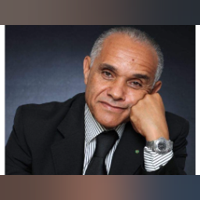
Aziz Daouda Aziz Daouda

Aziz Daouda

Directeur Technique et du Développement de la Confédération Africaine d'Athlétisme. Passionné du Maroc, passionné d'Afrique. Concerné par ce qui se passe, formulant mon point de vue quand j'en ai un. Humaniste, j'essaye de l'être, humain je veux l'être. Mon histoire est intimement liée à l'athlétisme marocain et mondial. J'ai eu le privilège de participer à la gloire de mon pays .


9400

33.0

THE MEDITATIONS - Book I.[1/3] 5597

1. I learned from my grandfather, Verus, to use good manners, and to put restraint on anger. 2. In the famous memory of my father I had a pattern of modesty and manliness. 3. Of my mother I learned to be pious and generous; to keep myself not only from evil deeds, but even from evil thoughts; and to live with a simplicity which is far from customary among the rich. 4. I owe it to my great-grandfather that I did not attend public lectures and discussions, but had good and able teachers at home; and I owe him also the knowledge that for things of this nature a man should count no expense too great. 5. My tutor taught me not to favour either green or blue at the chariot races, nor, in the contests of gladiators, to be a supporter either of light or heavy armed. He taught me also to endure labour; not to need many things; to serve myself without troubling others; not to intermeddle in the affairs of others, and not easily to listen to slanders against them. 6. Of Diognetus I had the lesson not to busy myself about vain things; not to credit the great professions of such as pretend to work wonders, or of sorcerers about their charms, and their expelling of Demons and the like; not to keep quails (for fighting or divination), nor to run after such things; to suffer freedom of speech in others, and to apply myself heartily to philosophy. Him also I must thank for my hearing first Bacchius, then Tandasis and Marcianus; that I wrote dialogues in my youth, and took a liking to the philosopher’s pallet and skins, and to the other things which, by the Grecian discipline, belong to that profession. 7. To Rusticus I owe my first apprehensions that my nature needed reform and cure; and that I did not fall into the ambition of the common Sophists, either by composing speculative writings or by declaiming harangues of exhortation in public; further, that I never strove to be admired by ostentation of great patience in an ascetic life, or by display of activity and application; that I gave over the study of rhetoric, poetry, and the graces of language; and that I did not pace my house in my senatorial robes, or practise any similar affectation. I observed also the simplicity of style in his letters, particularly in that which he wrote to my mother from Sinuessa. I learned from him to be easily appeased, and to be readily reconciled with those who had displeased me or given cause of offence, so soon as they inclined to make their peace; to read with care; not to rest satisfied with a slight and superficial knowledge; nor quickly to assent to great talkers. I have him to thank that I met with the discourses of Epictetus, which he furnished me from his own library. 8. From Apollonius I learned true liberty, and tenacity of purpose; to regard nothing else, even in the smallest degree, but reason always; and always to remain unaltered in the agonies of pain, in the losses of children, or in long diseases. He afforded me a living example of how the same man can, upon occasion, be most yielding and most inflexible. He was patient in exposition; and, as might well be seen, esteemed his fine skill and ability in teaching others the principles of philosophy as the least of his endowments. It was from him that I learned how to receive from friends what are thought favours without seeming humbled by the giver or insensible to the gift. 9. Sextus was my pattern of a benign temper, and his family the model of a household governed by true paternal affection, and a steadfast purpose of living according to nature. Here I could learn to be grave without affectation, to observe sagaciously the several dispositions and inclinations of my friends, to tolerate the ignorant and those who follow current opinions without examination. His conversation showed how a man may accommodate himself to all men and to all companies; for though companionship with him was sweeter and more pleasing than any sort of flattery, yet he was at the same time highly respected and reverenced. No man was ever more happy than he in comprehending, finding out, and arranging in exact order the great maxims necessary for the conduct of life. His example taught me to suppress even the least appearance of anger or any other passion; but still, with all this perfect tranquillity, to possess the tenderest and most affectionate heart; to be apt to approve others yet without noise; to have much learning and little ostentation. 10. I learned from Alexander the Grammarian to avoid censuring others, to refrain from flouting them for a barbarism, solecism, or any false pronunciation. Rather was I dexterously to pronounce the words rightly in my answer, confining approval or objection to the matter itself, and avoiding discussion of the expression, or to use some other form of courteous suggestion. 11. Fronto made me sensible how much of envy, deceit and hypocrisy surrounds princes; and that generally those whom we account nobly born have somehow less natural affection. 12. I learned from Alexander the Platonist not often nor without great necessity to say, or write to any man in a letter, that I am not at leisure; nor thus, under pretext of urgent affairs, to make a practice of excusing myself from the duties which, according to our various ties, we owe to those with whom we live. 13. Of Catulus I learned not to condemn any friend’s expostulation even though it were unjust, but to try to recall him to his former disposition; to stint no praise in speaking of my masters, as is recounted of Domitius and Athenodorus; and to love my children with true affection. 14. Of Severus, my brother, I learned to love my kinsmen, to love truth, to love justice. Through him I came to know Thrasea, Helvidius, Cato, Dion, and Brutus. He gave me my first conception of a Commonwealth founded upon equitable laws and administered with equality of right; and of a Monarchy whose chief concern is the freedom of its subjects. Of him I learned likewise a constant and harmonious devotion to Philosophy; to be ready to do good, to be generous with all my heart. He taught me to be of good hope and trustful of the affection of my friends. I observed in him candour in declaring what he condemned in the conduct of others; and so frank and open was his behaviour, that his friends might easily see without the trouble of conjecture what he liked or disliked.