Think Forward.

The Moroccan Paradox: Between Tangible Progress and Social Disenchantment... 8824

Macroeconomic and social indicators paint the picture of a Morocco in profound transformation. Today's Morocco bears little resemblance to that of the early post-independence decades. Life expectancy, which stagnated around half a century in the 1960s, now exceeds three-quarters of a century. Policies on electrification, drinking water access, schooling, and healthcare coverage have yielded visible results, even if pockets of fragility persist. The country has gained nearly thirty years of life expectancy and significantly reduced poverty. Consumption patterns have diversified, domestic tourism has grown, and leisure practices have spread. Social behaviors are gradually aligning with those seen in upper-middle-income countries, if not beyond. Yet, this overall positive situation coexists with a diffuse sense of malaise. Pessimism persists, coupled with growing distrust of political institutions, manifesting as civic disenchantment. How to explain this gap between measurable, tangible progress and a collective sentiment sometimes marked by self-deprecation? Economically, despite exogenous shocks, pandemic, repeated droughts, geopolitical tensions, imported inflation, the trajectory remains broadly upward. The boom in infrastructure, development of export industries (automotive, aeronautics, phosphate and derivatives), the rise of services, and progressive integration into global value chains are regularly praised by international institutions, which are unanimous on the country's resilience and advances in human development. Urban planning and beautification are simply stunning. By the data alone, life is indisputably "better" in Morocco today than twenty, thirty, or fifty years ago. Yet, this objective improvement does not mechanically translate into a sense of well-being. Well-being is never measured in absolute terms. It is built through comparison: with yesterday, with others, with what one perceives as possible or legitimate. As society progresses, expectations rise, diversify, and become more demanding. Citizens no longer settle for access to basic services; they aspire to quality, recognition, and dignity. The widespread access to information and social networks has amplified this hall of mirrors. Western living standards, globalized consumption patterns, and lifestyles of local or international elites are constantly on display. The frame of reference no longer stops at the neighboring village or previous generation but extends to far wealthier societies or privileged minorities. This imagined gap between what is and what is seen, sometimes fantasized, fuels frustration that can coexist with real improvements in material conditions. Thus, the sense of downward mobility reflects less an objective regression than a mismatch between rapidly expanding aspirations and economic, social, and institutional responses progressing at a pace deemed insufficient. Progress does not mask persistent fractures. Gaps between urban and rural worlds, coastal regions and hinterlands, socioeconomic categories are narrowing but remain stark in perception and feeling. The middle class feels it is navigating a zone of uncertainty. It enjoys a higher standard of living than the previous generation but feels vulnerable. Even with positive macroeconomic indicators, many households' difficulty in projecting serenely into the medium term—planning projects, anticipating social mobility, securing retirement—feeds a diffuse anxiety. Uncertainty, more than poverty in the strict sense, becomes a central factor in the malaise. This unease extends beyond the economic or social sphere. It finds a powerful amplifier in the crisis of trust toward political actors. Opinion polls show growing distrust of parties, elected officials, and mediating institutions. Achievements are not sufficiently explained or embodied by credible leaders, and many citizens feel inequity, pinning their sentiment on politics. Politics is often seen as a closed space, dominated by careerism and clientelism. Expectations in electoral alternations are regularly disappointed, leading to frustration spilling over the entire political field. Politicians become symbolic receptacles for a malaise that far exceeds their actual actions. This phenomenon is reinforced by the temporality of public policies. Many reforms, educational, social, territorial, produce long-term effects, while citizens demand quick, tangible results in daily life. Lacking pedagogy, transparency, and collective narrative, public policies remain abstract, their benefits invisible or attributed to other factors. Moroccan pessimism does not necessarily take the form of radical contestation. It often manifests as "gentle nihilism": electoral abstention, associational disengagement, retreat into the private sphere, rise of irony and cynicism in public debate, self-deprecating discourse about the country itself. This climate erodes confidence in the collective capacity to transform reality. This nihilism is ambivalent. It coexists with strong aspirations for individual success and international recognition of the country. It does not signal rejection of progress but doubt about the system's ability to offer prospects to all, not just the usual beneficiaries. The challenge for Morocco thus goes beyond the economic or social dimension. It is also symbolic and political. How to ensure tangible progress translates into a shared sense of collective advancement? How to reconnect individual trajectories with a clear, credible vision of the future? Without a shared narrative, even positive figures struggle to convince. The Moroccan paradox is not that of a stagnant country but of a society in motion, traversed by constant tension between real progress and hopes. It is in the ability to transform this tension into reform energy that the future largely lies. The CAN, with circulating videos conveying foreign satisfaction and astonishment at Morocco's progress, could be the hoped-for turning point. Life is good in Morocco.

Aziz Daouda Aziz Daouda

Aziz Daouda

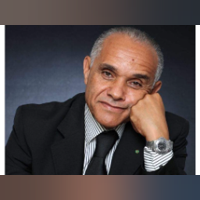
Directeur Technique et du Développement de la Confédération Africaine d'Athlétisme. Passionné du Maroc, passionné d'Afrique. Concerné par ce qui se passe, formulant mon point de vue quand j'en ai un. Humaniste, j'essaye de l'être, humain je veux l'être. Mon histoire est intimement liée à l'athlétisme marocain et mondial. J'ai eu le privilège de participer à la gloire de mon pays .


9500

33.0

THE ENCHIRIDION - I 5288

There are things which are within our power, and there are things which are beyond our power. Within our power are opinion, aim, desire, aversion, and, in one word, whatever affairs are our own. Beyond our power are body, property, reputation, office, and, in one word, whatever are not properly our own affairs. Now the things within our power are by nature free, unrestricted, unhindered; but those beyond our power are weak, dependent, restricted, alien. Remember, then, that if you attribute freedom to things by nature dependent and take what belongs to others for your own, you will be hindered, you will lament, you will be disturbed, you will find fault both with gods and men. But if you take for your own only that which is your own and view what belongs to others just as it really is, then no one will ever compel you, no one will restrict you; you will find fault with no one, you will accuse no one, you will do nothing against your will; no one will hurt you, you will not have an enemy, nor will you suffer any harm. Aiming, therefore, at such great things, remember that you must not allow yourself any inclination, however slight, toward the attainment of the others; but that you must entirely quit some of them, and for the present postpone the rest. But if you would have these, and possess power and wealth likewise, you may miss the latter in seeking the former; and you will certainly fail of that by which alone happiness and freedom are procured. Seek at once, therefore, to be able to say to every unpleasing semblance, “You are but a semblance and by no means the real thing.” And then examine it by those rules which you have; and first and chiefly by this: whether it concerns the things which are within our own power or those which are not; and if it concerns anything beyond our power, be prepared to say that it is nothing to you.

THE ADVENTURES OF TOM SAWYER - PREFACE 5487

Most of the adventures recorded in this book really occurred; one or two were experiences of my own, the rest those of boys who were schoolmates of mine. Huck Finn is drawn from life; Tom Sawyer also, but not from an individual—he is a combination of the characteristics of three boys whom I knew, and therefore belongs to the composite order of architecture. The odd superstitions touched upon were all prevalent among children and slaves in the West at the period of this story—that is to say, thirty or forty years ago. Although my book is intended mainly for the entertainment of boys and girls, I hope it will not be shunned by men and women on that account, for part of my plan has been to try to pleasantly remind adults of what they once were themselves, and of how they felt and thought and talked, and what queer enterprises they sometimes engaged in. THE AUTHOR. HARTFORD, 1876.

THE MEDITATIONS - Book I.[1/3] 5629

1. I learned from my grandfather, Verus, to use good manners, and to put restraint on anger. 2. In the famous memory of my father I had a pattern of modesty and manliness. 3. Of my mother I learned to be pious and generous; to keep myself not only from evil deeds, but even from evil thoughts; and to live with a simplicity which is far from customary among the rich. 4. I owe it to my great-grandfather that I did not attend public lectures and discussions, but had good and able teachers at home; and I owe him also the knowledge that for things of this nature a man should count no expense too great. 5. My tutor taught me not to favour either green or blue at the chariot races, nor, in the contests of gladiators, to be a supporter either of light or heavy armed. He taught me also to endure labour; not to need many things; to serve myself without troubling others; not to intermeddle in the affairs of others, and not easily to listen to slanders against them. 6. Of Diognetus I had the lesson not to busy myself about vain things; not to credit the great professions of such as pretend to work wonders, or of sorcerers about their charms, and their expelling of Demons and the like; not to keep quails (for fighting or divination), nor to run after such things; to suffer freedom of speech in others, and to apply myself heartily to philosophy. Him also I must thank for my hearing first Bacchius, then Tandasis and Marcianus; that I wrote dialogues in my youth, and took a liking to the philosopher’s pallet and skins, and to the other things which, by the Grecian discipline, belong to that profession. 7. To Rusticus I owe my first apprehensions that my nature needed reform and cure; and that I did not fall into the ambition of the common Sophists, either by composing speculative writings or by declaiming harangues of exhortation in public; further, that I never strove to be admired by ostentation of great patience in an ascetic life, or by display of activity and application; that I gave over the study of rhetoric, poetry, and the graces of language; and that I did not pace my house in my senatorial robes, or practise any similar affectation. I observed also the simplicity of style in his letters, particularly in that which he wrote to my mother from Sinuessa. I learned from him to be easily appeased, and to be readily reconciled with those who had displeased me or given cause of offence, so soon as they inclined to make their peace; to read with care; not to rest satisfied with a slight and superficial knowledge; nor quickly to assent to great talkers. I have him to thank that I met with the discourses of Epictetus, which he furnished me from his own library. 8. From Apollonius I learned true liberty, and tenacity of purpose; to regard nothing else, even in the smallest degree, but reason always; and always to remain unaltered in the agonies of pain, in the losses of children, or in long diseases. He afforded me a living example of how the same man can, upon occasion, be most yielding and most inflexible. He was patient in exposition; and, as might well be seen, esteemed his fine skill and ability in teaching others the principles of philosophy as the least of his endowments. It was from him that I learned how to receive from friends what are thought favours without seeming humbled by the giver or insensible to the gift. 9. Sextus was my pattern of a benign temper, and his family the model of a household governed by true paternal affection, and a steadfast purpose of living according to nature. Here I could learn to be grave without affectation, to observe sagaciously the several dispositions and inclinations of my friends, to tolerate the ignorant and those who follow current opinions without examination. His conversation showed how a man may accommodate himself to all men and to all companies; for though companionship with him was sweeter and more pleasing than any sort of flattery, yet he was at the same time highly respected and reverenced. No man was ever more happy than he in comprehending, finding out, and arranging in exact order the great maxims necessary for the conduct of life. His example taught me to suppress even the least appearance of anger or any other passion; but still, with all this perfect tranquillity, to possess the tenderest and most affectionate heart; to be apt to approve others yet without noise; to have much learning and little ostentation. 10. I learned from Alexander the Grammarian to avoid censuring others, to refrain from flouting them for a barbarism, solecism, or any false pronunciation. Rather was I dexterously to pronounce the words rightly in my answer, confining approval or objection to the matter itself, and avoiding discussion of the expression, or to use some other form of courteous suggestion. 11. Fronto made me sensible how much of envy, deceit and hypocrisy surrounds princes; and that generally those whom we account nobly born have somehow less natural affection. 12. I learned from Alexander the Platonist not often nor without great necessity to say, or write to any man in a letter, that I am not at leisure; nor thus, under pretext of urgent affairs, to make a practice of excusing myself from the duties which, according to our various ties, we owe to those with whom we live. 13. Of Catulus I learned not to condemn any friend’s expostulation even though it were unjust, but to try to recall him to his former disposition; to stint no praise in speaking of my masters, as is recounted of Domitius and Athenodorus; and to love my children with true affection. 14. Of Severus, my brother, I learned to love my kinsmen, to love truth, to love justice. Through him I came to know Thrasea, Helvidius, Cato, Dion, and Brutus. He gave me my first conception of a Commonwealth founded upon equitable laws and administered with equality of right; and of a Monarchy whose chief concern is the freedom of its subjects. Of him I learned likewise a constant and harmonious devotion to Philosophy; to be ready to do good, to be generous with all my heart. He taught me to be of good hope and trustful of the affection of my friends. I observed in him candour in declaring what he condemned in the conduct of others; and so frank and open was his behaviour, that his friends might easily see without the trouble of conjecture what he liked or disliked.