Think Forward.

CAN : l’urgence d’un code éthique pour restaurer l’esprit du football africain 297

La très récente Coupe d’Afrique des Nations au Maroc, pourtant voulue comme une célébration du football africain dans toute sa diversité et sa ferveur, a laissé un goût amer, une grosse amertume, une déception incommensurable, une douleur immense et des blessés. Quel dommage que de récompenser ainsi un pays qui a tout donné pour que soit célébré l'Afrique. Quelle honte que de haranguer les foules jusqu'à leur faire commettre des agressions physiques et de peut être laisser orpheline une famille. Au-delà des performances sportives, plusieurs comportements observés tout au long de la compétition ont suscité l’incompréhension, l’indignation et parfois la honte. Des débordements verbaux, des attitudes provocatrices, des mises en cause répétées de l’arbitrage et des déclarations irresponsables de personnes sensées incarner les valeurs mêmes du sport ont terni l’image de la CAN. En conférence de presse, pourtant organisée par la CAF à la gloire du sport et en dehors, certains ont commis des propos invraisemblables, fruits de leurs imaginations débordantes et de petits calculs imbéciles. Le paroxysme de ces dérives a été atteint lors de la finale, avec le comportement indigne d'un entraîneur, aujourd'hui largement relayé et commentés par les médias et les réseaux sociaux. Quelles que soient les tensions inhérentes à un match de ce niveau, rien ne saurait justifier des attitudes contraires aux valeurs du sport, de respect et de fair-play. Ce n’est pas seulement une question d’émotion ou de rivalité, mais une question de responsabilité vis à vis d'une jeunesse et d'un continent en devenir. La CAN au Maroc n’a pas été une compétition comme les autres. Elle fut une vitrine du football africain, observée par le monde entier, suivie par des millions de jeunes qui y cherchent des modèles. Les entraîneurs, joueurs, dirigeants et officiels ne sont pas de simples acteurs : ils sont des référents, des symboles et des ambassadeurs. Face à cette réalité dommageable, il devient impératif que la Confédération Africaine de Football (CAF) franchisse un cap. Les sanctions ponctuelles, souvent perçues comme tardives ou incohérentes, ne suffisent plus. Il est temps d’instaurer un code éthique contraignant, clair et universel, que tout participant à la CAN serait tenu de signer avant le début de la compétition, dès les phases éliminatoires. Un engagement moral et juridique, condition sine qua non de participation. Un tel code n’aurait pas pour vocation de brider la passion ou la liberté d’expression, mais de fixer des limites claires entre la compétition et la dérive, entre la contestation légitime et l’irresponsabilité publique. Le dit Code Éthique de la CAN reposerait sur huit piliers clairs, précis et contraignants. **1. Les principes fondamentaux du code seraient:** * Le respect des valeurs du football : fair-play, intégrité, dignité et respect mutuel * Le respect de l’image et de la réputation du football africain * La responsabilité individuelle et collective de tout participant **2. Le comportement sur le terrain et en zone technique serait bien encadré:** * L'interdiction de tout comportement agressif, provocateur ou insultant * Le respect absolu des arbitres et officiels, quelles que soient les décisions * L'interdiction de gestes, propos ou attitudes incitant à la violence ou à la haine **3. Le comportement hors du terrain fait partie du tout:** * Le respect des adversaires, supporters, médias et institutions * L'interdiction de toute forme de discrimination: raciale, nationale, religieuse ou autres. * Le comportement doit être exemplaire dans les lieux publics, hôtels, stades et zones mixtes **4. La communication et déclarations publiques doivent respecter les règles avant tout:** * l'obligation de retenue et de responsabilité dans les déclarations médiatiques * L'interdiction de mettre en cause l’intégrité de l’arbitrage sans preuves établies sino devant les instances et non par toute autres voix. * L'interdiction d’incitation à la violence ou à la contestation hostile par le geste ou le verbe **5. La responsabilité des entraîneurs et dirigeants est fondamentales:** * L'obligation d’exemplarité renforcée en raison de leur rôle d’autorité * La responsabilité directe du comportement du staff technique * L'engagement à calmer les tensions et non à les attiser **6. Les réseaux sociaux et communication numérique fait partie du jeu et de la compétition:** * L'application du code éthique aux publications sur les réseaux sociaux * La responsabilité personnelle des messages publiés ou relayés * L'interdiction de propos diffamatoires, haineux ou provocateurs **7. Les sanctions doivent être exemplaires et sans complaisance:** * Des sanctions progressives et clairement définies : avertissement, amende, suspension, exclusion définitive * L'application immédiate et transparente des sanctions * La possibilité de sanctions aggravées en cas de récidive ou de faits graves **8. L'engagement formel est un préalable à la participation à toute compétition:** * La signature obligatoire du code par tous les joueurs, entraîneurs, dirigeants et officiels dans un document individuel accompagnant les listes de joueurs et officiels engagés dans une compétition africaines. * La signature du code est une condition préalable à toute accréditation pour la CAN * La reconnaissance écrite des sanctions en cas de violation est obligatoire Le but du code est bien évidemment d'instaurer l’exemplarité pour protéger l’avenir du football africain et ses compétitions. L'introduction d'un code éthique dans les procédures de participation aux CAN, n’est pas un aveu de faiblesse, mais un signe de maturité. Le football africain a atteint un niveau de visibilité et de compétitivité grâce à cette CAN au Maroc. Le niveau ainsi atteint impose des standards élevés et des garanties. On ne peut tolérer que par la faute d'un individu surchauffé tout un édifice s'écroule et que des vies soient menacées, voire perdues. La passion ne peut plus servir d’alibi à l’excès, la victoire ne justifiera jamais la perte de valeurs, la ferveur ne peut disculper un comportement excessif. La CAN doit rester une fête, pas un théâtre de dérives. En posant un cadre éthique clair, la CAF enverrait un message fort : le football africain se doit d'avancer, de se structurer et de se respecter. Le football doit rassembler et non provoquer la haine, l'hostilité, la répugnance, les crises entre nations ou encore servir de terreau à des froids diplomatiques...Pour ne pas dire plus.

Aziz Daouda Aziz Daouda

Aziz Daouda

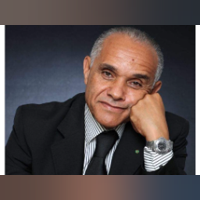
Directeur Technique et du Développement de la Confédération Africaine d'Athlétisme. Passionné du Maroc, passionné d'Afrique. Concerné par ce qui se passe, formulant mon point de vue quand j'en ai un. Humaniste, j'essaye de l'être, humain je veux l'être. Mon histoire est intimement liée à l'athlétisme marocain et mondial. J'ai eu le privilège de participer à la gloire de mon pays .


8100

33.0

THE ADVENTURES OF TOM SAWYER - PREFACE 4441

Most of the adventures recorded in this book really occurred; one or two were experiences of my own, the rest those of boys who were schoolmates of mine. Huck Finn is drawn from life; Tom Sawyer also, but not from an individual—he is a combination of the characteristics of three boys whom I knew, and therefore belongs to the composite order of architecture. The odd superstitions touched upon were all prevalent among children and slaves in the West at the period of this story—that is to say, thirty or forty years ago. Although my book is intended mainly for the entertainment of boys and girls, I hope it will not be shunned by men and women on that account, for part of my plan has been to try to pleasantly remind adults of what they once were themselves, and of how they felt and thought and talked, and what queer enterprises they sometimes engaged in. THE AUTHOR. HARTFORD, 1876.

THE MEDITATIONS - Book I.[1/3] 4575

1. I learned from my grandfather, Verus, to use good manners, and to put restraint on anger. 2. In the famous memory of my father I had a pattern of modesty and manliness. 3. Of my mother I learned to be pious and generous; to keep myself not only from evil deeds, but even from evil thoughts; and to live with a simplicity which is far from customary among the rich. 4. I owe it to my great-grandfather that I did not attend public lectures and discussions, but had good and able teachers at home; and I owe him also the knowledge that for things of this nature a man should count no expense too great. 5. My tutor taught me not to favour either green or blue at the chariot races, nor, in the contests of gladiators, to be a supporter either of light or heavy armed. He taught me also to endure labour; not to need many things; to serve myself without troubling others; not to intermeddle in the affairs of others, and not easily to listen to slanders against them. 6. Of Diognetus I had the lesson not to busy myself about vain things; not to credit the great professions of such as pretend to work wonders, or of sorcerers about their charms, and their expelling of Demons and the like; not to keep quails (for fighting or divination), nor to run after such things; to suffer freedom of speech in others, and to apply myself heartily to philosophy. Him also I must thank for my hearing first Bacchius, then Tandasis and Marcianus; that I wrote dialogues in my youth, and took a liking to the philosopher’s pallet and skins, and to the other things which, by the Grecian discipline, belong to that profession. 7. To Rusticus I owe my first apprehensions that my nature needed reform and cure; and that I did not fall into the ambition of the common Sophists, either by composing speculative writings or by declaiming harangues of exhortation in public; further, that I never strove to be admired by ostentation of great patience in an ascetic life, or by display of activity and application; that I gave over the study of rhetoric, poetry, and the graces of language; and that I did not pace my house in my senatorial robes, or practise any similar affectation. I observed also the simplicity of style in his letters, particularly in that which he wrote to my mother from Sinuessa. I learned from him to be easily appeased, and to be readily reconciled with those who had displeased me or given cause of offence, so soon as they inclined to make their peace; to read with care; not to rest satisfied with a slight and superficial knowledge; nor quickly to assent to great talkers. I have him to thank that I met with the discourses of Epictetus, which he furnished me from his own library. 8. From Apollonius I learned true liberty, and tenacity of purpose; to regard nothing else, even in the smallest degree, but reason always; and always to remain unaltered in the agonies of pain, in the losses of children, or in long diseases. He afforded me a living example of how the same man can, upon occasion, be most yielding and most inflexible. He was patient in exposition; and, as might well be seen, esteemed his fine skill and ability in teaching others the principles of philosophy as the least of his endowments. It was from him that I learned how to receive from friends what are thought favours without seeming humbled by the giver or insensible to the gift. 9. Sextus was my pattern of a benign temper, and his family the model of a household governed by true paternal affection, and a steadfast purpose of living according to nature. Here I could learn to be grave without affectation, to observe sagaciously the several dispositions and inclinations of my friends, to tolerate the ignorant and those who follow current opinions without examination. His conversation showed how a man may accommodate himself to all men and to all companies; for though companionship with him was sweeter and more pleasing than any sort of flattery, yet he was at the same time highly respected and reverenced. No man was ever more happy than he in comprehending, finding out, and arranging in exact order the great maxims necessary for the conduct of life. His example taught me to suppress even the least appearance of anger or any other passion; but still, with all this perfect tranquillity, to possess the tenderest and most affectionate heart; to be apt to approve others yet without noise; to have much learning and little ostentation. 10. I learned from Alexander the Grammarian to avoid censuring others, to refrain from flouting them for a barbarism, solecism, or any false pronunciation. Rather was I dexterously to pronounce the words rightly in my answer, confining approval or objection to the matter itself, and avoiding discussion of the expression, or to use some other form of courteous suggestion. 11. Fronto made me sensible how much of envy, deceit and hypocrisy surrounds princes; and that generally those whom we account nobly born have somehow less natural affection. 12. I learned from Alexander the Platonist not often nor without great necessity to say, or write to any man in a letter, that I am not at leisure; nor thus, under pretext of urgent affairs, to make a practice of excusing myself from the duties which, according to our various ties, we owe to those with whom we live. 13. Of Catulus I learned not to condemn any friend’s expostulation even though it were unjust, but to try to recall him to his former disposition; to stint no praise in speaking of my masters, as is recounted of Domitius and Athenodorus; and to love my children with true affection. 14. Of Severus, my brother, I learned to love my kinsmen, to love truth, to love justice. Through him I came to know Thrasea, Helvidius, Cato, Dion, and Brutus. He gave me my first conception of a Commonwealth founded upon equitable laws and administered with equality of right; and of a Monarchy whose chief concern is the freedom of its subjects. Of him I learned likewise a constant and harmonious devotion to Philosophy; to be ready to do good, to be generous with all my heart. He taught me to be of good hope and trustful of the affection of my friends. I observed in him candour in declaring what he condemned in the conduct of others; and so frank and open was his behaviour, that his friends might easily see without the trouble of conjecture what he liked or disliked.