Think Forward.

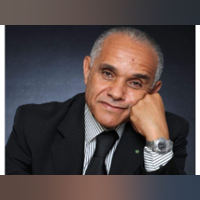
Najib Salmi, une conscience qui s’éteint, un héritage qui demeure 1509

Najib Salmi s’en est allé, et avec lui se referme l’une des plus belles pages du journalisme sportif marocain. Mais, au-delà de l’hommage collectif, c’est aussi une page intime de ma propre vie de chroniqueur, de confrère et d’ami qui se tourne. Il laisse derrière lui un héritage professionnel immense et, surtout, une empreinte humaine indélébile. Il a été sans doute la plus grande plume du sport marocain pendant des décennies. Pendant plus de quarante ans, Najib Salmi a incarné une certaine idée du journalisme sportif, exigeante et responsable. Il a, en fait, initié une école de journalisme sportif, lui qui est tombé dedans un peu par hasard et s’y était plu. Figure centrale du quotidien L’Opinion, dont il a dirigé la page sportive, il a marqué des générations de lecteurs, notamment à travers sa chronique devenue culte, « Les points sur les i », espace rare où la liberté de ton se conjuguait avec la rigueur intellectuelle et le sens de l’intérêt général. Il était à lui seul une institution. Il appartenait à cette génération pour laquelle le journalisme sportif n’était ni divertissement creux ni caisse de résonance des passions aveugles, mais un acte de service public. À une époque où le sport marocain entrait dans l’ère de la professionnalisation, de l’argent et de la médiatisation excessive, sa plume savait dénoncer les dérives, pointer les responsabilités et saluer, avec la même honnêteté, les avancées et les réussites lorsqu’elles étaient réelles. Najib Salmi ne fut pas seulement un grand chroniqueur, il fut aussi un bâtisseur. À la tête de l’Association marocaine de la presse sportive, de 1993 à 2009, il s’est battu pour la reconnaissance du métier, la défense de son éthique et la dignité de ceux qui l’exercent. Il a contribué à inscrire le journalisme sportif marocain dans les instances régionales et internationales, avec une crédibilité forgée sur le sérieux et la constance. N'est ce pas dans un congrès qu'il organisa à Marrakech que notre ami Gianni Merlo fut élu président de l'AIPS. N'est ce pas lui seul qui titra sur Said Aouita jeune prodige alors. Il venait d'établir un nouveau record national des 1500m...Il dira de lui sans se tromper qu'il ira très loin. Il aura été le soutien de générations de grands athlètes. Il était présent à tous les championnats du monde et au jeux olympiques. Il me soutenait ainsi avec force et détermination. Homme de principes, discret mais inflexible sur l’essentiel, il considérait que le respect du lecteur et la véracité de l’information n’étaient pas négociables. Cette rectitude morale, rare dans un environnement souvent soumis aux pressions et aux intérêts, lui a valu d’être reconnu par ses pairs comme une véritable école du journalisme sportif. Abdellatif Semlali, ministre légendaire de la Jeunesse et des Sports, son ami, se plaisait à l’appeler « Monsieur à côté ». Il l’était effectivement. Jamais il n’a été dans le moule de qui que ce soit, même quand, un laps de temps, il avait rejoint Le Matin du Sahara, alors dirigé de main de maître par Moulay Ahmed Alaoui. Pour moi, Najib Salmi n’était pas seulement une référence professionnelle, il était un ami, un frère et un mentor. C’est grâce à sa confiance que j’ai pu, pendant des années, écrire dans les pages sportives de L’Opinion, apprendre le métier au quotidien, ligne après ligne, sous son regard attentif et bienveillant, subissant ses sautes d’humeur et, surtout, la correction du style et de la syntaxe. Il m’a transmis bien plus que des techniques d’écriture : une conception de ce que doit être la chronique fondée sur la probité, le travail de fond et le refus de la facilité. Aujourd’hui encore, si je continue à écrire, c’est aussi parce que demeure cette voix intérieure qu’il a su faire naître, celle qui rappelle qu’on ne trahit ni le sport, ni le lecteur, ni la vérité. Najib Salmi s’est éteint à l’âge de 78 ans, après une longue lutte contre la maladie, laissant un vide immense dans les rédactions de L’Opinion et de Challenge, auxquels il a contribué avec force et assiduité. Il laisse un vide immense dans le cœur de tous ceux qui ont croisé sa route. Il reposera au cimetière des Chouhada à Rabat, là où lui-même avait accompagné tant d’autres amis et connaissances, de proches et de confrères, et beaucoup de ceux qui ont grandi à l’ombre bienveillante de sa plume. Que Dieu l’accueille en Sa miséricorde. À l’ami, au frère, au maître qui m’a montré le chemin, je ne peux dire qu’une chose : merci, Najib, pour les moments délicieux partagés, pour les mots, pour les leçons et pour l’exemple. Les lecteurs regretteront Najib Salmi, la famille, les intimes et moi enterrons Saïd Hejaj. Said Hejaj s'en va paisiblement se reposer. Najib Salmi se racontera lui dans l'histoire.

Aziz Daouda Aziz Daouda

Aziz Daouda

Directeur Technique et du Développement de la Confédération Africaine d'Athlétisme. Passionné du Maroc, passionné d'Afrique. Concerné par ce qui se passe, formulant mon point de vue quand j'en ai un. Humaniste, j'essaye de l'être, humain je veux l'être. Mon histoire est intimement liée à l'athlétisme marocain et mondial. J'ai eu le privilège de participer à la gloire de mon pays .


10200

33.0

April 6: The Moroccan Idea That Conquered the World... 279

April 6 is now etched into the global calendar as the International Day of Sport for Development and Peace. A celebration championed by the United Nations, echoed across all continents, and enthusiastically embraced by millions of athletes, institutions, and enthusiasts. Yet behind this worldwide recognition lies an origin that often goes unnoticed. It’s a Moroccan idea, that of Hamid Kamal Lahlou. The irony is striking. While the world fervently celebrates this day, Morocco—the birthplace of the initiative—sometimes seems to lag behind, as if hesitating to fully claim its paternity. Yes, there have been scattered initiatives and events here and there. But they fall far short of what we might have hoped for. We won’t list the few organized manifestations, so as not to ruffle feathers by omitting any. In any case, there are no major events from the sports authorities, such as the ministry, the National Olympic Committee, or the major Royal Moroccan Sports Federations. Is this simply an oversight, or a more subtle form of distancing? The question deserves to be asked, especially when you know the personality of its originator. Kamal Lahlou is not a consensual figure. Journalist, sports leader, communicator, he has established himself over decades as a singular voice in Morocco’s media and sports landscape. His career is dense: former handball player, originally a physical education teacher and inspector, committed actor in the development of national sports, he has held important responsibilities, notably within the Moroccan National Olympic Committee and the Association of African National Olympic Committees. He remains president of the Royal Moroccan Weightlifting Federation and vice-president of the Mohammed VI Sports Champions Foundation. But beyond titles and roles, it’s his words that stand out and his stance that impresses. Direct, clear, often critical, Lahlou disturbs as much as he inspires. He practices neither doublespeak nor complacency. In an environment where restraint is sometimes elevated to an implicit rule, his frankness cuts through. He points out shortcomings, challenges decision-makers, and defends a demanding vision of sport as a lever for development and national influence. This positioning has earned him as many admirers as detractors and doubtless even more denigrators. Some praise his courage and consistency, others reproach him for a tone deemed too incisive. Still others find nothing to fault him for, yet behind his back, lavish him with gratuitous reprimands. But all agree on one point: Kamal Lahlou is an incontournable figure, impossible to ignore. His patriotism admits no ambiguity. Behind every statement, every critique, emerges a clear ambition: to see the Kingdom take the place it deserves on the international sports scene. The April 6 Day fits precisely into this logic. By proposing to dedicate a date to sport as a vector for peace and development, Lahlou sought not personal legitimation, but recognition of the fundamental role sport can play in modern societies. He thus transcribed, in his own way, the royal vision of sport and the role the country can play on a universal scale in service of peace. So why this relative discretion in Morocco around this day? Is it the price to pay for free speech? The backlash of rivalries that have no place? An implicit way to marginalize a figure deemed too independent? A means to silence an ambitious voice? Or simply a deficit of collective memory? Whatever the answers, or the answer, one reality remains. April 6 is an idea born in Morocco, carried by a Moroccan, and adopted by the entire world. At a time when the country seeks to strengthen its soft power and highlight its successes, it might be time to reconcile origin and celebration. For recognizing this initiative to Kamal Lahlou is not just about honoring a man. Does he really need it? It’s rather about embracing a part of contemporary national and global sports history, and reminding that beyond infrastructure and performances, ideas too can change the world. And if it’s the Kingdom of Morocco at the origin, that’s even better.

Mediterranean: The Great Erasure of the Amazigh in Eurocentric Historical Narrative... 777

The history of relations between the two shores of the Mediterranean is deeply biased. Behind the lazy opposition between a supposedly dynamic North and a South relegated to the margins lies a more serious omission: **the systematic erasure of the determining role of the Amazighs (Berbers, Moors) in the formation of Mediterranean Europe**. This erasure is neither neutral nor accidental; it stems from a genuine ideological construct. Long before the colonial era, Amazigh populations structured most of North African space and held a central place in the political, military, commercial, and cultural dynamics of the Mediterranean, forming essential pillars of its history. They ensured an almost continuous link between sub-Saharan Africa and the northern Mediterranean. From Al-Andalus to medieval Sicily, their imprint is deep and enduring. A symbol of this centrality, the conquest of the Iberian Peninsula in the 8th century was led by Tariq ibn Ziyad (as named in the sources) at the head of a predominantly Amazigh army. Chronicles emphasize its largely Berber composition. This reality is systematically downplayed in favor of an Arab-centered narrative that invisibilizes the predominant Amazigh component. Without the Amazighs, there simply would have been no lasting Muslim implantation in Western Europe and the subsequent impacts. Reducing Al-Andalus to a mere outgrowth of the "Arab world" is a grave falsification by oversimplification. The dynasties that drove its golden age, foremost the Almoravids and Almohads, were of Amazigh origin. Emerging from Saharan and Atlas Berber confederations, they refounded the political balances of North Africa and Al-Andalus, building a Hispano-Moorish civilization that remains vibrant today. This fundamentally Amazigh civilization marked urban and monumental architecture, still visible in Seville, Marrakech, Fez, or Cordoba. It structured religious and legal thought with reformist Malikism among the Almoravids, doctrinal rigor among the Almohads for Muslims, and Maimonides' thought for Jews. It also durably impacted the political and military organization of the western Mediterranean. Southern Spain and Portugal still bear visible and toponymic traces of this Amazigh presence today. Ignoring them mutilates a deeply shared history. To refresh this memory, what better than a little tour of Spain's Extremadura. This influence did not stop at the Andalusian shores. In Sicily and southern Italy in general, particularly Palermo, interactions between North African worlds and European spaces were constant during Islamic and then Norman periods, via military contingents, trade networks, and knowledge transfers. These circulations included a significant Amazigh component, often retroactively dissolved into the vague formula of "Arab influence." Couscous is still present there, accompanied by orange blossom almond sweets. By speaking indistinctly of "Arabs," dominant narratives erase the real plurality of actors and obliterate the African depth of these exchanges. This erasure stems from several cumulative biases. First, **Eurocentrism** and the inability to admit that African populations were co-founders of Mediterranean Europe. Second, **historiographical Arabocentrism** and the tendency to homogenize the Muslim world by invisibilizing its non-Arab components, primarily the Amazighs. Finally, **colonial legacy**, with the need to smooth and hierarchize narratives to legitimize a supposed European civilizational superiority. The result is clear: the Amazighs are relegated to a secondary, folkloric, or local role, even though they were structuring actors of the western Mediterranean. Their impact is unequivocally one of the most important in the region's history. Correcting this bias does not boil down to adding a "Berber" chapter to already-written history books. The narration itself must be reconfigured. It involves reinscribing the Amazighs at the heart of the Mediterranean narrative. Southern Europe is not solely the heir to Rome and Christianity. It is also, in part, the product of North African contributions, particularly Amazigh ones, visible in its political structures, urban landscapes, culinary and clothing arts, certain names, and imaginaries. Isn't the name Maurice an example of indelible impact? The western Mediterranean must be conceived as a space of co-construction, not as a theater of unilateral diffusion from North to South. Recognizing this is not a reflex of identity politics or any ideological claim, but a minimal requirement of scientific rigor. Mediterranean history has been flattened to serve power logics, at the cost of extreme simplification of trajectories and actors. The Amazighs are among the great erased, if not the only ones excluded. Fully reintegrating them into the narrative is not "rewriting" history in the sense of distorting it: it is **repairing** it, by restoring to the Mediterranean its African depth and true complexity. This approach is essential to ease relations in the region and build a solid future for its populations, whether in political, economic, or simply human terms. For centuries, this unbalanced narrative has permeated academic, media, and political discourses. Yet the Mediterranean has always been a sea of circulation, not domination; a space of permanent interactions, not a border between hierarchized worlds. From Antiquity and likely before, it has been a zone of mutual fertilization between African, Levantine, and European civilizations. Archaeology demonstrates this powerfully. Phoenicians, Romans, Carthaginians, Egyptians, Numidians, and of course Amazighs structured its commercial, cultural, and scientific exchanges. The idea of an autonomous Europe, the sole source of modernity, is merely a late reconstruction. Not so long ago on a geological scale, the strait between Morocco and Spain was barely more than one kilometer wide... It falls to historians, teachers, and school systems on both shores to correct this, with a view to a common future founded on an equally shared past.