Think Forward.

Ramadan in Morocco: The Holy Month in the Mirror of Our Excesses... 9287

As Ramadan is here, Morocco shifts its rhythm and clock. Streets slow down by day and light up at night. Mosques fill up, hearts tighten around the essentials: faith, patience, solidarity, piety. *On paper, Ramadan is a month of restraint, piety, and self-focus. In economic reality, it paradoxically becomes a month of excess and waste. In fact, one must conclude with the paradox of the Moroccan table.* A few hours before iftar, markets burst with activity. Bags overflow. Baskets grow heavy. Bills do too. According to data from the High Commission for Planning, food already accounts for the largest share of Moroccan household budgets, especially for modest classes. **During Ramadan, food spending rises sharply, sometimes significantly, per consumption surveys, due to concentrated purchases over a short period and social pressure around the iftar table. Social pressure, but also pressure from the media, particularly television.Citizens are bombarded with messages promoting consumption as a marker of social success.** This translates to an 18% increase in spending. That's no small thing. It also means a sharp rise in demand for food products, not always necessities, putting upward pressure on prices. Yet, a non-negligible portion of this food sadly ends up in the trash. Levels can be alarming. Dumpsters overflow with prepared foods, cakes, pastries, bread, and other flour, butter and sugar based preparations. **According to a FAO study, this waste can reach nearly 85%.** In other words, a citizen spending 1,000 dirhams on food staples throws away the equivalent of 850 dirhams as waste. Astonishing. *Food waste in Morocco is structural, as highlighted by several FAO-backed studies. Ramadan amplifies it through multiplied dishes, domestic overproduction, impulse buys, and abundance seen as synonymous with hospitality and well-being.* The paradox is cruel: at the very moment spirituality calls for moderation, society settles into a display of abundance, in response to a silent social pressure. *Waste isn't just an economic issue. It's become cultural. Overall, a Moroccan citizen throws away about 132 kg of food per year, per a UNEP study. The FAO says 91 kg. Ramadan contributes significantly.* **The ftour or Iftar table has become a space of social representation. Failing to multiply dishes is sometimes seen as a lack of generosity, even stinginess. Chebakia, briouates, harira, multiple juices: the implicit norm demands variety. People put on airs. Ramadan's founding values take a serious hit. Sobriety is forgotten.** This pressure weighs even more on modest households, as recent years' food inflation has eroded purchasing power. When budgets are tight eleven months out of twelve, Ramadan becomes a month of disproportionate financial strain. The holy month turns into a tough budgetary equation. The media have crafted a "Ramadan spectacle." At nightfall, a near-generalized ritual begins: television. National channels concentrate their prime programming around the post-iftar slot. Light series, repetitive sitcoms, hidden cameras, family-oriented telefilms. All backed by unprecedented advertising bombardment. Ramadan has become peak advertising season. Food ads multiply, processed products invade screens, and commercial logic overshadows educational or cultural missions. The month of spirituality becomes an audience battle. Television doesn't create overconsumption alone, but it accompanies it, normalizes it, and sometimes celebrates it. Spirituality is thus put to the test. Ramadan is meant to teach hunger to better understand those who suffer from lack. Yet the contrast is striking: while some families struggle to provide essentials, others throw away surpluses. This contradiction raises questions about the responsibility of public authorities and media figures. Morocco isn't alone. In several Muslim countries, international organizations warn annually about the waste peak during the holy month. It's a recurring issue in regional public policies. But beyond the numbers, the question is moral: how to reconcile fasting and excess? How to preach restraint while practicing abundance? How to refocus the holy month? The solution isn't guilt-tripping or punitive. It's cultural. The duty today is to: - Rehabilitate simplicity in religious discourse. - Value modest tables as a sign of awareness, not poverty. - Encourage food redistribution initiatives. - Rebalance audiovisual programming with more educational, social, and spiritual content. Ramadan doesn't need to be spectacular to be intense. It doesn't need to be costly to be noble. It doesn't need to be abundant to be generous. Ultimately, the question isn't just economic. It's existential: Do we want to *live* Ramadan... or *consume* it? **Waste is unacceptable. Religion explicitly condemns it.**

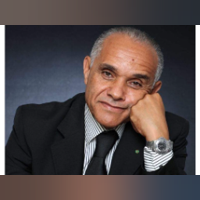
Aziz Daouda Aziz Daouda

Aziz Daouda

Directeur Technique et du Développement de la Confédération Africaine d'Athlétisme. Passionné du Maroc, passionné d'Afrique. Concerné par ce qui se passe, formulant mon point de vue quand j'en ai un. Humaniste, j'essaye de l'être, humain je veux l'être. Mon histoire est intimement liée à l'athlétisme marocain et mondial. J'ai eu le privilège de participer à la gloire de mon pays .


9500

33.0

THE MEDITATIONS - Book I.[1/3] 5646

1. I learned from my grandfather, Verus, to use good manners, and to put restraint on anger. 2. In the famous memory of my father I had a pattern of modesty and manliness. 3. Of my mother I learned to be pious and generous; to keep myself not only from evil deeds, but even from evil thoughts; and to live with a simplicity which is far from customary among the rich. 4. I owe it to my great-grandfather that I did not attend public lectures and discussions, but had good and able teachers at home; and I owe him also the knowledge that for things of this nature a man should count no expense too great. 5. My tutor taught me not to favour either green or blue at the chariot races, nor, in the contests of gladiators, to be a supporter either of light or heavy armed. He taught me also to endure labour; not to need many things; to serve myself without troubling others; not to intermeddle in the affairs of others, and not easily to listen to slanders against them. 6. Of Diognetus I had the lesson not to busy myself about vain things; not to credit the great professions of such as pretend to work wonders, or of sorcerers about their charms, and their expelling of Demons and the like; not to keep quails (for fighting or divination), nor to run after such things; to suffer freedom of speech in others, and to apply myself heartily to philosophy. Him also I must thank for my hearing first Bacchius, then Tandasis and Marcianus; that I wrote dialogues in my youth, and took a liking to the philosopher’s pallet and skins, and to the other things which, by the Grecian discipline, belong to that profession. 7. To Rusticus I owe my first apprehensions that my nature needed reform and cure; and that I did not fall into the ambition of the common Sophists, either by composing speculative writings or by declaiming harangues of exhortation in public; further, that I never strove to be admired by ostentation of great patience in an ascetic life, or by display of activity and application; that I gave over the study of rhetoric, poetry, and the graces of language; and that I did not pace my house in my senatorial robes, or practise any similar affectation. I observed also the simplicity of style in his letters, particularly in that which he wrote to my mother from Sinuessa. I learned from him to be easily appeased, and to be readily reconciled with those who had displeased me or given cause of offence, so soon as they inclined to make their peace; to read with care; not to rest satisfied with a slight and superficial knowledge; nor quickly to assent to great talkers. I have him to thank that I met with the discourses of Epictetus, which he furnished me from his own library. 8. From Apollonius I learned true liberty, and tenacity of purpose; to regard nothing else, even in the smallest degree, but reason always; and always to remain unaltered in the agonies of pain, in the losses of children, or in long diseases. He afforded me a living example of how the same man can, upon occasion, be most yielding and most inflexible. He was patient in exposition; and, as might well be seen, esteemed his fine skill and ability in teaching others the principles of philosophy as the least of his endowments. It was from him that I learned how to receive from friends what are thought favours without seeming humbled by the giver or insensible to the gift. 9. Sextus was my pattern of a benign temper, and his family the model of a household governed by true paternal affection, and a steadfast purpose of living according to nature. Here I could learn to be grave without affectation, to observe sagaciously the several dispositions and inclinations of my friends, to tolerate the ignorant and those who follow current opinions without examination. His conversation showed how a man may accommodate himself to all men and to all companies; for though companionship with him was sweeter and more pleasing than any sort of flattery, yet he was at the same time highly respected and reverenced. No man was ever more happy than he in comprehending, finding out, and arranging in exact order the great maxims necessary for the conduct of life. His example taught me to suppress even the least appearance of anger or any other passion; but still, with all this perfect tranquillity, to possess the tenderest and most affectionate heart; to be apt to approve others yet without noise; to have much learning and little ostentation. 10. I learned from Alexander the Grammarian to avoid censuring others, to refrain from flouting them for a barbarism, solecism, or any false pronunciation. Rather was I dexterously to pronounce the words rightly in my answer, confining approval or objection to the matter itself, and avoiding discussion of the expression, or to use some other form of courteous suggestion. 11. Fronto made me sensible how much of envy, deceit and hypocrisy surrounds princes; and that generally those whom we account nobly born have somehow less natural affection. 12. I learned from Alexander the Platonist not often nor without great necessity to say, or write to any man in a letter, that I am not at leisure; nor thus, under pretext of urgent affairs, to make a practice of excusing myself from the duties which, according to our various ties, we owe to those with whom we live. 13. Of Catulus I learned not to condemn any friend’s expostulation even though it were unjust, but to try to recall him to his former disposition; to stint no praise in speaking of my masters, as is recounted of Domitius and Athenodorus; and to love my children with true affection. 14. Of Severus, my brother, I learned to love my kinsmen, to love truth, to love justice. Through him I came to know Thrasea, Helvidius, Cato, Dion, and Brutus. He gave me my first conception of a Commonwealth founded upon equitable laws and administered with equality of right; and of a Monarchy whose chief concern is the freedom of its subjects. Of him I learned likewise a constant and harmonious devotion to Philosophy; to be ready to do good, to be generous with all my heart. He taught me to be of good hope and trustful of the affection of my friends. I observed in him candour in declaring what he condemned in the conduct of others; and so frank and open was his behaviour, that his friends might easily see without the trouble of conjecture what he liked or disliked.