Think Forward.

Ces nouveaux défenseurs des libertés et de la démocratie.... Partie 2 3020

Avec l'autorisation de mon ami Aziz Boucetta, je me permets ici de partager avec les lecteurs de Bluwr, le billet qu'il a publié dans Panorapost.com, un organe de presse qu'il dirige avec compétence et responsabilité. le titre est édifiant et la raison de sa colère évidente. Le paysage journalistique et celui des réseaux est aujourd'hui submergé, inondé pollué au point de devenir nauséabond. Il est probablement temps de se prononcer et que chacun prenne ses responsabilités mais aussi d’agir en contradicteur de l’imbécilité et de l’indécence. Le lien de la source est au bas de la page. Voici ici le texte tel que signé Aziz Boucetta le 29 janvier 2025. Partie 2: D’autres, de ces « justiciers », sont vulgaires et grossiers : ils braillent, insultent, menacent, s’en prennent aux institutions habituellement ciblées (monarchie, services de sécurité, justice), et promettent des révélations qui ne viennent jamais, parce qu’elles n’existent pas. Dans cette catégorie, il y a les aigris qui veulent compenser des échecs, et attaquent tout et tous, et il y a les mercantiles qui le font pour l’argent (« plus j’insulte, plus je parais prendre des risques, et plus je suis regardé et écouté, et plus j’engrange de l’argent, directement sur les plateformes ou en ‘monnayant’ mon audience »). Ils utilisent les institutions marocaines, tour à tour la monarchie, les services de sécurité, la justice, comme des produits d’appel pour attirer le chaland. Le plus souvent, ils agissent de l’étranger, forts de leurs doubles citoyennetés, et le plus souvent aussi, ils sont en délicatesse avec les justices de leurs pays d’accueil : Dounia Filali en France, Zakaria Moumni ou Jrindo au Canada, Mohamed Hajib en Allemagne. Ils sont passés des attaques contre la monarchie, (c’est toujours payant) aux accusations contre les services qui menaceraient cette même monarchie, et, ce faisant, ils se sont transformé en défenseurs de la monarchie, car c’est désormais encore plus payant !… Souvent, ils sont davantage dans l’extorsion de fonds ou la monétisation de leurs audiences, affichant de grands desseins politiques pour masquer leurs petits calculs financiers. Enfin, une troisième catégorie est celle de ceux qui agissent directement du Maroc. Ils ont au moins la cohérence de critiquer l’environnement dans lequel ils vivent. Mais ceux-là, militants, historiens, journalistes revenants, universitaires (ils ne sont pas si nombreux) pèchent par une sorte de haine du pays et de déni de tout ce qu’il a pu construire et édifier en 50 ans. A leurs yeux, rien de ce qui se fait au Maroc n’est bon ; pour eux, la démocratie reste occidentale ou n’est pas. Pour eux, nous serions tous et toujours en danger si notre système reste le même et, bien évidemment, notre police est une Stasi du 21ème siècle et une Savak en devenir. Certains critiquent et dénoncent tout, régionalisation, industrialisation, normalisation, tout… Ils sont dans l’abus systématique et, bien heureusement, restent dans la confidentialité numérique. L’objectif de tous ces gens ou presque est d’affaiblir l’Etat, ce en quoi ils auraient réussi si l’Etat était faible ou si leurs accusations étaient vraies, étayées et prouvées. Ce qui n’est pas le cas. Mais, pour autant, et en dépit d’une baisse vertigineuse de leurs audiences – les internautes comprenant de plus en plus leurs objectifs –, il est important de protéger et de sauvegarder l’Etat. En outre, le Maroc ne semble pas avoir besoin de ces « lanceurs d’alerte » qui font de l’attaque personnelle une vérité et de la punchline une doctrine ; cette fonction est parfaitement remplie par les journalistes, les vidéastes et surtout les jeunes, les jeunes et encore les jeunes, qui interviennent et corrigent ce qui doit l’être, dénonçant au besoin des travers ou des dysfonctionnements ; la Cour des comptes existe et elle travaille, le HCP est là pour tirer les sonnettes d’alarme, Bank al-Maghrib s’alarme et parfois s’insurge… Les institutions, les corps élus, les services, tout le monde doit pouvoir être critiqué, surveillé, mais dans les règles et dans le respect de la loi et de la justice et de ses jugements, et quand les verdicts sont abusifs, ils sont aussi dénoncés et souvent, corrigés en appel. En effet, il est important de le rappeler, dans un monde où Trump déboule, où l’Europe se cherche mais se perd dans l’intervalle, où Chine et Russie sont de plus en plus intrusives, où la menace de pandémie guette désormais, où l’argent coule à flots et où l’argent n’a plus de limites, les Etats, dont celui du Maroc, reçoivent des coups, mais résistent. Il est important de prendre conscience que dans ce monde, les peuples ont besoin d’Etats forts, stables et visionnaires. Et c’est, bien heureusement, le cas de l’Etat marocain. Pour ceux qui pourraient être amenés à en douter, souvenons-nous de l’action résolue pendant la crise Covid et comparons aux centaines de milliers de morts en Europe et aux Etats-Unis, au nombre effarant de décès dans des pays non structurés, et à la vitesse de réaction et d’anticipation des Marocains ; constatons aussi le nombre d’attentats ici et ailleurs (cette semaine, la DGST a démantelé une cellule terroriste à Had Soualem)… Comme le disait le Nouveau modèle de développement, une société forte et un Etat fort. Il faut le dire et s’en réjouir, puis en prendre conscience, s’en convaincre, et agir en conséquence. Une fois cela établi, il n’est aucunement question d’accorder un chèque en blanc à toutes les institutions ciblées ; elles sont suivies dans leurs actions, lesquelles actions doivent être décortiquées, soumises à l’épreuve de la loi, et le cas échéant dénoncées, critiquées, poursuivies en justice. En définitive, ce sport national qui consiste à mettre à bas tout ce qui est institutionnel doit cesser ; il n’apporte rien au débat national et n’apporte rien à cette mouvance gauchiste qui a vécu et que ces nouveaux « militants », numériques, essaient de ressusciter. Jadis, il fallait protéger les militants dénués de moyens de communication contre un Etat censeur, brutal et liberticide ; aujourd’hui, face à tous ces coups de boutoir, inutiles et intéressés, il importe de protéger l’Etat, tout en surveillant son action, avec les moyens légaux. Aziz Boucetta.

Aziz Daouda Aziz Daouda

Aziz Daouda

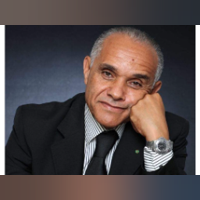
Directeur Technique et du Développement de la Confédération Africaine d'Athlétisme. Passionné du Maroc, passionné d'Afrique. Concerné par ce qui se passe, formulant mon point de vue quand j'en ai un. Humaniste, j'essaye de l'être, humain je veux l'être. Mon histoire est intimement liée à l'athlétisme marocain et mondial. J'ai eu le privilège de participer à la gloire de mon pays .


8100

33.0

THE ADVENTURES OF TOM SAWYER - PREFACE 3806

Most of the adventures recorded in this book really occurred; one or two were experiences of my own, the rest those of boys who were schoolmates of mine. Huck Finn is drawn from life; Tom Sawyer also, but not from an individual—he is a combination of the characteristics of three boys whom I knew, and therefore belongs to the composite order of architecture. The odd superstitions touched upon were all prevalent among children and slaves in the West at the period of this story—that is to say, thirty or forty years ago. Although my book is intended mainly for the entertainment of boys and girls, I hope it will not be shunned by men and women on that account, for part of my plan has been to try to pleasantly remind adults of what they once were themselves, and of how they felt and thought and talked, and what queer enterprises they sometimes engaged in. THE AUTHOR. HARTFORD, 1876.

THE MEDITATIONS - Book I.[1/3] 3920

1. I learned from my grandfather, Verus, to use good manners, and to put restraint on anger. 2. In the famous memory of my father I had a pattern of modesty and manliness. 3. Of my mother I learned to be pious and generous; to keep myself not only from evil deeds, but even from evil thoughts; and to live with a simplicity which is far from customary among the rich. 4. I owe it to my great-grandfather that I did not attend public lectures and discussions, but had good and able teachers at home; and I owe him also the knowledge that for things of this nature a man should count no expense too great. 5. My tutor taught me not to favour either green or blue at the chariot races, nor, in the contests of gladiators, to be a supporter either of light or heavy armed. He taught me also to endure labour; not to need many things; to serve myself without troubling others; not to intermeddle in the affairs of others, and not easily to listen to slanders against them. 6. Of Diognetus I had the lesson not to busy myself about vain things; not to credit the great professions of such as pretend to work wonders, or of sorcerers about their charms, and their expelling of Demons and the like; not to keep quails (for fighting or divination), nor to run after such things; to suffer freedom of speech in others, and to apply myself heartily to philosophy. Him also I must thank for my hearing first Bacchius, then Tandasis and Marcianus; that I wrote dialogues in my youth, and took a liking to the philosopher’s pallet and skins, and to the other things which, by the Grecian discipline, belong to that profession. 7. To Rusticus I owe my first apprehensions that my nature needed reform and cure; and that I did not fall into the ambition of the common Sophists, either by composing speculative writings or by declaiming harangues of exhortation in public; further, that I never strove to be admired by ostentation of great patience in an ascetic life, or by display of activity and application; that I gave over the study of rhetoric, poetry, and the graces of language; and that I did not pace my house in my senatorial robes, or practise any similar affectation. I observed also the simplicity of style in his letters, particularly in that which he wrote to my mother from Sinuessa. I learned from him to be easily appeased, and to be readily reconciled with those who had displeased me or given cause of offence, so soon as they inclined to make their peace; to read with care; not to rest satisfied with a slight and superficial knowledge; nor quickly to assent to great talkers. I have him to thank that I met with the discourses of Epictetus, which he furnished me from his own library. 8. From Apollonius I learned true liberty, and tenacity of purpose; to regard nothing else, even in the smallest degree, but reason always; and always to remain unaltered in the agonies of pain, in the losses of children, or in long diseases. He afforded me a living example of how the same man can, upon occasion, be most yielding and most inflexible. He was patient in exposition; and, as might well be seen, esteemed his fine skill and ability in teaching others the principles of philosophy as the least of his endowments. It was from him that I learned how to receive from friends what are thought favours without seeming humbled by the giver or insensible to the gift. 9. Sextus was my pattern of a benign temper, and his family the model of a household governed by true paternal affection, and a steadfast purpose of living according to nature. Here I could learn to be grave without affectation, to observe sagaciously the several dispositions and inclinations of my friends, to tolerate the ignorant and those who follow current opinions without examination. His conversation showed how a man may accommodate himself to all men and to all companies; for though companionship with him was sweeter and more pleasing than any sort of flattery, yet he was at the same time highly respected and reverenced. No man was ever more happy than he in comprehending, finding out, and arranging in exact order the great maxims necessary for the conduct of life. His example taught me to suppress even the least appearance of anger or any other passion; but still, with all this perfect tranquillity, to possess the tenderest and most affectionate heart; to be apt to approve others yet without noise; to have much learning and little ostentation. 10. I learned from Alexander the Grammarian to avoid censuring others, to refrain from flouting them for a barbarism, solecism, or any false pronunciation. Rather was I dexterously to pronounce the words rightly in my answer, confining approval or objection to the matter itself, and avoiding discussion of the expression, or to use some other form of courteous suggestion. 11. Fronto made me sensible how much of envy, deceit and hypocrisy surrounds princes; and that generally those whom we account nobly born have somehow less natural affection. 12. I learned from Alexander the Platonist not often nor without great necessity to say, or write to any man in a letter, that I am not at leisure; nor thus, under pretext of urgent affairs, to make a practice of excusing myself from the duties which, according to our various ties, we owe to those with whom we live. 13. Of Catulus I learned not to condemn any friend’s expostulation even though it were unjust, but to try to recall him to his former disposition; to stint no praise in speaking of my masters, as is recounted of Domitius and Athenodorus; and to love my children with true affection. 14. Of Severus, my brother, I learned to love my kinsmen, to love truth, to love justice. Through him I came to know Thrasea, Helvidius, Cato, Dion, and Brutus. He gave me my first conception of a Commonwealth founded upon equitable laws and administered with equality of right; and of a Monarchy whose chief concern is the freedom of its subjects. Of him I learned likewise a constant and harmonious devotion to Philosophy; to be ready to do good, to be generous with all my heart. He taught me to be of good hope and trustful of the affection of my friends. I observed in him candour in declaring what he condemned in the conduct of others; and so frank and open was his behaviour, that his friends might easily see without the trouble of conjecture what he liked or disliked.